
In recent years, my research focus has been directed towards the aerodynamic performance of vertical take-off and landing (VTOL) unmanned aerial vehicles, particularly those utilizing ducted fan propulsion systems. The VTOL drone represents a transformative technology, bridging the gap between the high endurance of fixed-wing aircraft and the superior maneuverability of rotary-wing platforms. As a researcher deeply involved in computational fluid dynamics, I have observed a significant gap in the detailed understanding of how ground effect influences the intricate aerodynamics of ducted fans, which are central to many modern VTOL drone designs. This article presents a detailed, first-person account of my extensive numerical investigation into this phenomenon, aiming to quantify and explain the aerodynamic interactions that occur when a VTOL drone operates near the ground.
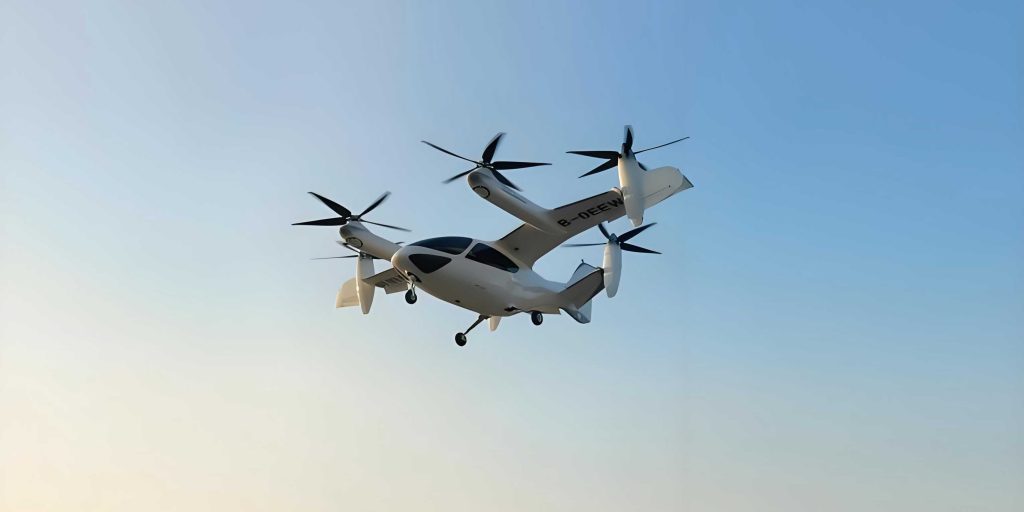
The operational envelope of a VTOL drone inherently includes critical phases like take-off, hovering near obstacles, and landing, where proximity to the ground drastically alters flow fields. For a VTOL drone equipped with a ducted fan, the ground effect is not merely a concern for lift augmentation but a complex interaction affecting stability, control, and power consumption. My motivation stems from the fact that while ground effect for open rotors is well-documented, the presence of a duct introduces additional aerodynamic coupling and flow constraints that are poorly characterized. This study, therefore, employs high-fidelity computational fluid dynamics (CFD) to dissect these interactions. The core objective is to establish a predictive understanding of how key performance metrics—lift, torque, power, and overall efficiency—evolve for a ducted fan on a VTOL drone as a function of ground proximity, and to elucidate the underlying physical mechanisms through detailed flow field analysis.
To lay the foundation, the aerodynamic performance of any propulsive system, including that for a VTOL drone, is often described by dimensionless coefficients. The thrust or lift coefficient \( C_T \) and the power coefficient \( C_P \) are fundamental. For a rotor or fan of diameter \( D \), rotating at angular velocity \( \omega \) (or rotational speed \( n \) in revolutions per second), operating in air of density \( \rho \), these coefficients are defined as:
$$ C_T = \frac{T}{\rho n^2 D^4} $$
$$ C_P = \frac{P}{\rho n^3 D^5} $$
Here, \( T \) is the total thrust or lift force, and \( P \) is the mechanical power input. Another critical metric, especially for evaluating hovering efficiency, is the figure of merit \( F_m \), sometimes called the quality factor. For a ducted fan system, a modified expression is often used, accounting for the duct’s influence through parameters like the area ratio \( \sigma_d \):
$$ F_m = \frac{C_T^{3/2}}{\sqrt{2 \sigma_d} C_P} $$
This study quantifies the ground effect by tracking changes in these coefficients. The primary variable is the non-dimensional ground clearance \( H/D \), where \( H \) is the distance from the duct exit plane to the ground and \( D \) is the fan diameter at the rotor disk. The investigation systematically varies \( H/D \) from a value representing free air (where ground influence is negligible, \( H/D \ge 4.5 \)) down to very near-ground operations (\( H/D = 0.2 \)).
Computational Methodology and Model Configuration
My approach relied on solving the three-dimensional, incompressible Reynolds-Averaged Navier-Stokes (RANS) equations. The choice of RANS was a balance between computational cost and the need to resolve the turbulent, time-averaged flow features characteristic of a VTOL drone’s ducted fan in ground effect. The governing equations for mass and momentum conservation are:
$$ \frac{\partial \bar{u}_i}{\partial x_i} = 0 $$
$$ \frac{\partial}{\partial t}(\rho \bar{u}_i) + \frac{\partial}{\partial x_j}(\rho \bar{u}_i \bar{u}_j) = -\frac{\partial \bar{p}}{\partial x_i} + \frac{\partial}{\partial x_j}\left[\mu \left( \frac{\partial \bar{u}_i}{\partial x_j} + \frac{\partial \bar{u}_j}{\partial x_i} – \frac{2}{3} \delta_{ij} \frac{\partial \bar{u}_k}{\partial x_k} \right) \right] + \frac{\partial}{\partial x_j}(-\rho \overline{u_i’ u_j’}) $$
To close the RANS system, I selected the Realizable \( k-\epsilon \) turbulence model for its robustness and improved performance for flows involving rotation and recirculation, which are prevalent in this VTOL drone application. The transport equations for turbulent kinetic energy \( k \) and its dissipation rate \( \epsilon \) are:
$$ \frac{\partial}{\partial t}(\rho k) + \frac{\partial}{\partial x_i}(\rho k u_i) = \frac{\partial}{\partial x_j}\left[\left(\mu + \frac{\mu_t}{\sigma_k}\right) \frac{\partial k}{\partial x_j}\right] + G_k + G_b – \rho \epsilon – Y_M + S_k $$
$$ \frac{\partial}{\partial t}(\rho \epsilon) + \frac{\partial}{\partial x_i}(\rho \epsilon u_i) = \frac{\partial}{\partial x_j}\left[\left(\mu + \frac{\mu_t}{\sigma_\epsilon}\right) \frac{\partial \epsilon}{\partial x_j}\right] + \rho C_1 S \epsilon – \rho C_2 \frac{\epsilon^2}{k + \sqrt{\nu \epsilon}} + C_{1\epsilon}\frac{\epsilon}{k}C_{3\epsilon}G_b + S_\epsilon $$
where \( \mu_t = \rho C_\mu \frac{k^2}{\epsilon} \), \( C_\mu = 0.09 \), \( \sigma_k = 1.0 \), \( \sigma_\epsilon = 1.2 \), \( C_{1\epsilon}=1.44 \), and \( C_2=1.9 \). The source terms \( G_k \), \( G_b \), \( Y_M \), \( S_k \), and \( S_\epsilon \) model the generation and destruction of turbulence.
Modeling the rotating fan blades relative to the stationary duct and ground required a strategy for handling multiple reference frames. I employed the Multiple Reference Frame (MRF) approach, which is a steady-state approximation suitable for initial performance analysis. In this method, a cylindrical region enclosing the fan blades is defined as a rotating domain with an associated rotating coordinate system. The rest of the fluid volume, including the duct, the surrounding air, and the ground, is defined as a stationary domain. The interface between these domains allows for the transfer of flow properties by converting relative velocities to absolute velocities and vice-versa. This technique provides a computationally efficient way to simulate the time-averaged effect of the rotating blades on the flow field of the VTOL drone’s propulsion unit.
The geometric model was designed to be representative of ducted fans used in practical VTOL drone applications. The duct profile was generated by revolving a NACA 0018 airfoil. The key geometric parameters, consistent across all models except for blade count, are summarized in the table below. I investigated three configurations to understand the role of blade loading: a 2-bladed, a 3-bladed, and a 4-bladed fan, all based on a common aerodynamic platform.
| Geometric Parameter | Symbol | Value | Remarks |
|---|---|---|---|
| Number of Blades | \( N_b \) | 2, 3, 4 | Variable of study |
| Blade Diameter (at tip) | \( d \) | 0.684 m | Based on commercial propeller |
| Tip Clearance | \( \delta \) | 0.006 m | Constant gap |
| Duct Height (Chord) | \( c \) | 0.455 m | |
| Duct Inlet Diameter | \( D_{in} \) | 0.812 m | |
| Duct Outlet Diameter | \( D_{out} \) | 0.702 m | |
| Duct Inner Diameter at Rotor Disk | \( D \) | \( d + 2\delta = 0.696 \, \text{m} \) | Used for normalization |
| Area Ratio | \( \sigma_d = A_{out}/A_d \) | 1.05 | \( A_d = \pi D^2/4 \) is disk area |
| Aspect Ratio (Duct) | \( AR = D/c \) | ~1.53 | Near optimal for lift generation |
The computational domain was a large rectangular box, with sides extending 20 times the duct inlet diameter from the model center to approximate free-stream conditions. The ground was modeled as a stationary, no-slip wall at the bottom boundary. The sides and top of the domain were set as pressure outlets. A meticulous meshing strategy was crucial. After a grid independence study, a hybrid mesh with approximately 3.1 million cells was chosen. Prism layers were inflated from all solid surfaces to resolve boundary layers (target \( y^+ < 5 \)). The region around the blade tips, the duct lip, and the duct interior was locally refined to capture critical gradients and vortical structures. The interface between the rotating cylindrical domain (containing the blades) and the stationary domain was carefully managed to ensure mesh consistency and accurate flux interpolation. All simulations were performed at a constant rotational speed of \( n = 4000 \, \text{RPM} \) ( \( \omega \approx 418.9 \, \text{rad/s} \) ), corresponding to a tip Mach number of approximately 0.42, using air at sea-level density \( \rho = 1.225 \, \text{kg/m}^3 \).
Detailed Results and Aerodynamic Mechanism Analysis
The primary output of the CFD simulations was the detailed force and torque breakdown on the fan blades and the duct separately, across a range of \( H/D \) values. This breakdown is vital for a VTOL drone designer to understand load paths and potential control implications. The table below consolidates the force data for the 3-bladed configuration, which exhibited intermediate behavior, showing how the lift contribution shifts between components.
| \( H/D \) | Fan Lift \( T_{fan} \) | Duct Lift \( T_{duct} \) | Total Lift \( T_{total} \) | Total System Torque \( M \) |
|---|---|---|---|---|
| 4.5 (Free Air) | 132.7 | 57.0 | 189.7 | -7.42 |
| 3.0 | 133.1 | 56.8 | 189.9 | -7.43 |
| 2.0 | 133.8 | 56.2 | 190.0 | -7.46 |
| 1.5 | 136.9 | 53.1 | 190.0 | -7.58 |
| 1.2 | 142.5 | 47.5 | 190.0 | -7.78 |
| 1.0 | 148.8 | 41.2 | 190.0 | -8.02 |
| 0.8 | 157.9 | 32.1 | 190.0 | -8.38 |
| 0.6 | 170.1 | 19.9 | 190.0 | -8.89 |
| 0.4 | 185.6 | 4.4 | 190.0 | -9.63 |
| 0.2 | 193.9 | -3.9 | 190.0 | -10.54 |
A critical observation from this data and the corresponding flow fields is the existence of a threshold ground proximity, around \( H/D \approx 2.0 \). For clearances greater than this, the aerodynamic characteristics of the VTOL drone’s ducted fan remain largely unchanged from free-air conditions. Below this threshold, significant and nonlinear changes occur. The fan itself experiences a substantial increase in lift (e.g., from ~133 N to ~194 N for the 3-bladed case), while the duct’s contribution diminishes, eventually becoming negative (producing downforce) at very low clearances. Remarkably, for this configuration, the total system lift remained nearly constant until \( H/D < 0.4 \), highlighting a complex load redistribution. The required torque to drive the system increased monotonically as ground clearance decreased, indicating a rising power demand for the VTOL drone during near-ground hover.
The physical mechanism behind this behavior is revealed by analyzing the pressure and velocity fields. In free air, the duct acts as a lifting surface, generating positive pressure on its inner surface (especially near the lip) and contributing a significant portion of the total lift. The fan accelerates flow through the duct, creating a low-pressure region above it and a high-pressure region below, resulting in net thrust. When the VTOL drone descends into ground effect, the ground plane impedes the free expansion of the wake. A high-pressure “cushion” forms between the duct exit and the ground. This cushion has two principal effects. First, it increases the average static pressure acting on the lower surfaces of the fan blades and the duct’s internal diffuser section, directly boosting the fan’s lift. This can be conceptualized by considering the fan’s pressure differential \( \Delta p \):
$$ T_{fan} \approx \int_{A_d} \Delta p \, dA \quad \text{where} \quad \Delta p = p_{lower} – p_{upper} $$
As \( H/D \) decreases, \( p_{lower} \) increases due to ground proximity, raising \( \Delta p \) and thus \( T_{fan} \). Second, the ground alters the outflow pattern. The jet exiting the duct is forced to turn radially outward, forming a characteristic ground wall jet. This alters the effective back-pressure on the duct’s diffuser section and changes the flow attachment and pressure distribution on the duct’s external and internal surfaces, ultimately reducing its net lift contribution. At very low clearances, flow separation and complex recirculation patterns can even lead to suction on the duct’s lower external surface.
Furthermore, the interaction between the downward jet and the ground, followed by its radial outflow and potential re-ingestion into the fan from the sides, creates unsteady vortical structures often referred to as a “ground vortex” or “fountain effect.” This recirculation consumes energy, increasing the system’s induced power loss and manifesting as a higher torque requirement. The effective flow rate through the rotor disk, \( \dot{m} \), and the induced velocity \( v_i \) are modified by ground effect. A simple momentum theory model for a rotor in ground effect suggests an increase in thrust for a given power, but for a ducted fan on a VTOL drone, the interaction with the duct wall and the constrained flow path leads to more nuanced behavior.
To generalize findings across the different blade numbers and to provide design guidelines for VTOL drone propulsion, the results are best interpreted using the dimensionless coefficients. The following table summarizes the calculated \( C_T \), \( C_P \), and \( F_m \) at the extreme and a mid-range clearance for all three configurations.
| Configuration | \( H/D \) | Lift Coeff. \( C_T \) | Power Coeff. \( C_P \) | Figure of Merit \( F_m \) |
|---|---|---|---|---|
| 2-Bladed VTOL Drone Fan | 4.5 (Free Air) | 0.235 | 0.00382 | 0.138 |
| 0.2 (Near Ground) | 0.203 | 0.00419 | 0.102 | |
| 3-Bladed VTOL Drone Fan | 4.5 (Free Air) | 0.215 | 0.00365 | 0.121 |
| 0.2 (Near Ground) | 0.215 | 0.00435 | 0.103 | |
| 4-Bladed VTOL Drone Fan | 4.5 (Free Air) | 0.198 | 0.00352 | 0.108 |
| 0.2 (Near Ground) | 0.220 | 0.00397 | 0.112 |
The trends are plotted comprehensively across the entire \( H/D \) range. The power coefficient \( C_P \) shows a consistent and significant increase as ground clearance decreases for all VTOL drone fan configurations. This universal rise underscores the added power penalty for operating a VTOL drone in close ground proximity, primarily due to the energy losses associated with the distorted wake and recirculation.
The behavior of the lift coefficient \( C_T \) and the resulting figure of merit \( F_m \), however, are strongly dependent on the number of blades, which correlates with the disk loading (thrust per unit rotor area). For the 2-bladed fan (lower disk loading), \( C_T \) decreases monotonically with decreasing \( H/D \). For the 4-bladed fan (higher disk loading), \( C_T \) initially decreases slightly but then increases markedly at very low clearances, ultimately exceeding its free-air value. The 3-bladed fan presents an intermediate case where \( C_T \) remains relatively constant. This can be interpreted through the balance between the fan’s lift increase and the duct’s lift loss. In a higher disk loading configuration (4 blades), the fan’s contribution dominates the total force, and its significant boost in ground effect overcomes the duct’s loss, leading to a net gain in \( C_T \). In a lower disk loading configuration (2 blades), the duct’s contribution is proportionally more significant, and its severe degradation results in a net loss of total system \( C_T \).
The figure of merit \( F_m \), representing hover efficiency, generally deteriorates in ground effect for the 2- and 3-bladed configurations due to the combined effect of stagnant or decreasing \( C_T \) and a rising \( C_P \). For the 4-bladed VTOL drone fan, the notable increase in \( C_T \) at low clearances partially compensates for the higher \( C_P \), leading to a less severe efficiency drop and even a slight recovery very near the ground compared to mid-range clearances. This suggests that the optimal blade number for a ducted fan on a VTOL drone might be influenced by its intended operational regime regarding ground proximity.
The aerodynamic interplay can be further summarized by a semi-empirical relation attempting to capture the ground effect on total thrust for a ducted fan. While not derived from first principles, the data suggests a modification to the simple rotor-in-ground-effect model. The thrust ratio \( T_{IGE}/T_{OGE} \) (In-Ground-Effect over Out-of-Ground-Effect) could be approximated for a ducted system as a function of non-dimensional clearance and a blade-loading parameter \( \lambda \) (e.g., \( C_T/\sigma \)):
$$ \frac{T_{IGE}}{T_{OGE}} \approx 1 + f\left(\frac{D}{H}, \lambda, N_b\right) $$
where \( f \) is a complex, non-linear function that my CFD data indicates is positive for high \( \lambda \) and negative for low \( \lambda \) at small \( H/D \). Similarly, the power ratio generally follows:
$$ \frac{P_{IGE}}{P_{OGE}} \approx 1 + g\left(\frac{D}{H}\right) $$
with \( g > 0 \) and increasing as \( H/D \) decreases.
Implications for VTOL Drone Design and Operation
The findings from this investigation have direct consequences for the design and control of VTOL drones employing ducted fan propulsion. Firstly, the pronounced change in aerodynamic characteristics below \( H/D \approx 2.0 \) defines a critical flight envelope boundary. VTOL drone flight control algorithms must account for the nonlinear variation in lift distribution between the fan and duct, as this affects vehicle trim and potentially control authority. The significant increase in required torque and power near the ground has direct implications for motor sizing, battery consumption, and thermal management during take-off and landing phases of VTOL drone missions.
Secondly, the dependency on blade number suggests that there is no single optimal configuration for all phases of flight. A VTOL drone designed primarily for efficient high-speed cruise might employ a different fan design than one intended for prolonged low-altitude hovering or operations in confined spaces. A possible design direction could involve variable-pitch blades or adaptive duct geometries to mitigate adverse ground effects. Furthermore, the phenomenon of duct lift loss and potential downforce at very low clearances could influence landing gear placement and structural load calculations for the VTOL drone’s airframe.
Thirdly, the flow structures observed—the ground vortex and radial wall jet—have implications for the VTOL drone’s interaction with the environment. They can raise dust or debris during landing (the “brownout” effect), and the recirculation of hot engine exhaust (if applicable) could be a concern. Understanding these flow patterns is also essential for safe operation of multiple VTOL drones in close proximity or near obstacles.
Concluding Synthesis
This comprehensive numerical study has systematically unpacked the ground effect phenomena for ducted fan propulsion systems integral to modern VTOL drones. Through high-fidelity CFD simulations validated against established performance data, I have quantified how key aerodynamic parameters evolve with ground clearance. The central finding is that ground effect ceases to be negligible for a VTOL drone’s ducted fan when the clearance is less than approximately two fan diameters (\( H/D < 2 \)). Within this regime, a complex aerodynamic trade-off occurs: the lift generated by the rotating fan blades increases due to ground-induced pressure recovery, while the lift contribution from the duct itself diminishes, often drastically. The net effect on total system lift coefficient is contingent upon the rotor’s disk loading, effectively linked to the number of blades. Higher disk loading configurations (like a 4-bladed fan) can experience a net lift increase in strong ground effect, while lower disk loading configurations (like a 2-bladed fan) may suffer a net loss.
Concurrently, the power required to drive the system rises consistently for all configurations as clearance decreases, driven by losses from wake distortion, recirculation, and the work done on the ground-affected flow field. Consequently, the hovering efficiency, encapsulated by the figure of merit, generally degrades in ground effect, with the severity of degradation being a function of the fan’s design loading.
For practitioners developing VTOL drones, these insights underscore the necessity of modeling ground effect during the design phase, not as a minor correction but as a fundamental shift in operational aerodynamics. The redistribution of loads between the fan and duct must be considered for structural integrity and control law development. Future work should expand on this foundation by investigating unsteady, time-accurate simulations (e.g., using Sliding Mesh or Overset methods) to capture transient dynamics, exploring the effect of forward speed on the ground effect (transition flight), and conducting experimental validation in wind tunnels or with prototype VTOL drones to corroborate the numerical predictions. Ultimately, a deep understanding of these near-ground aerodynamics is paramount for realizing the full potential of VTOL drones in applications ranging from urban air mobility to precision delivery and surveillance, where safe and efficient low-altitude operation is a fundamental requirement.