
The rapid proliferation of unmanned aerial vehicle (UAV) technology across diverse sectors has created a pronounced and critical imbalance between the supply of and demand for skilled professionals. As an entity fundamentally dedicated to bridging the gap between academia and industry, the industrial college stands at a crucial juncture. We must proactively develop and implement effective strategies for cultivating high-tech talent. The imperative to establish a robust pipeline for drone training is not merely an educational objective but a prerequisite for sustaining the healthy and innovative growth of the entire UAV ecosystem. From my vantage point within such an institution, I have observed both the immense potential and the distinct challenges in this endeavor. This analysis delves into the current state of drone training, examines prevailing models and their shortcomings, and proposes targeted countermeasures spanning curriculum design, practical pedagogy, faculty development, and infrastructure. Our collective experience demonstrates that a symbiotic integration of theoretical instruction and hands-on practice significantly elevates student competency, directly enhancing their employability and entrepreneurial potential. By synthesizing multiple educational approaches, we can provide comprehensive support for drone training programs, ultimately yielding substantial outcomes that propel industrial advancement and technological innovation.
The Paramount Importance of Specialized Drone Training
The accelerating integration of drones into commercial, agricultural, logistical, and security frameworks has fundamentally transformed operational paradigms. Consequently, cultivating a workforce proficient in UAV application technology is a strategic necessity. Firstly, effective drone training serves as the primary engine for industry development. While the potential in fields like precision agriculture, last-mile delivery, and infrastructure inspection is vast, this potential remains constrained without a steady influx of qualified personnel. A dedicated drone training pipeline directly fuels innovation and expansion by supplying the requisite human capital.
Secondly, the efficacy and safety of drone operations are intrinsically linked to operator skill. Professional drone training ensures that graduates possess not only the ability to pilot UAVs but also the expertise to perform maintenance, troubleshoot systems, and conduct risk assessments. This comprehensive skill set is vital for ensuring safe and efficient flight operations, mitigating risks to people, property, and the drones themselves. The performance of a trained operator can be conceptualized as a function of knowledge, practical skill, and safety adherence:
$$ P_o = f(K_t, S_p, A_s) $$
Where \( P_o \) represents Operator Performance, \( K_t \) is Theoretical Knowledge, \( S_p \) is Practical Skill Proficiency, and \( A_s \) is Safety Adherence. Maximizing \( P_o \) is the core goal of any drone training program.
Finally, specialized drone training stimulates growth across the broader supply chain. The UAV industry encompasses hardware manufacturing, software development, sensor technology, data analytics, and service provision. By producing graduates skilled in these interconnected areas, drone training initiatives catalyze development along the entire value chain, fostering business growth and creating multifaceted employment opportunities.
Current Landscape and Critical Analysis of Drone Training Models
Prevalent Training Frameworks
Currently, industrial colleges employ several interconnected models for drone training. The most prominent is the establishment of industry-academia partnerships to create practical training bases. These facilities are equipped with contemporary drone platforms, simulators, and mission-specific software, allowing students to operate in environments that closely mirror real-world conditions. Secondly, dedicated coursework forms the theoretical backbone. Typical curricula include subjects such as UAV Aerodynamics and Principles, Flight Control Systems, Remote Sensing and Photogrammetry, and Data Link Communications. The pedagogical approach consciously blends theoretical lectures with concurrent lab sessions.
Furthermore, active participation in national UAV competitions and capstone project development is heavily encouraged. These initiatives provide concrete application scenarios, compelling students to synthesize and apply their knowledge to solve defined problems. A complementary focus is placed on nurturing soft skills; through collaborative research projects and team-based challenges, students develop crucial innovation capacity, project management abilities, and teamwork ethos. The overarching objective of these combined models is to produce adaptable, high-caliber graduates who meet the evolving demands of the drone industry.
Identified Gaps and Systemic Challenges
Despite progress, significant challenges persist within current drone training paradigms, which we have strived to address.
1. Curriculum Lag and Rigidity: UAV technology is a dynamic field. However, some curricular structures remain anchored in traditional aviation or overly broad mechatronics, lacking the depth and agility required for specific application domains like multispectral analysis or autonomous swarm logistics. The curriculum update cycle often lags behind the pace of technological commercialization.
2. Faculty Capacity Constraints: Effective drone training requires instructors who are both academically sound and richly experienced in field applications. There is a notable shortage of such dual-qualified educators. Many faculty members possess strong theoretical backgrounds but limited direct industry exposure, which can create a gap between classroom teaching and practical operational realities.
3. Insufficient Practical Immersion: Drone operations are inherently practical. Constraints related to airspace access, equipment availability, fleet maintenance costs, and liability insurance often limit the scale and frequency of hands-on flight training. Students may graduate with theoretical understanding but lack the confident, hours-long flight experience and mission planning expertise that employers seek.
4. Weak Industry-Academia Integration: While partnerships exist, they are frequently project-based or superficial rather than deeply synergistic. A lack of continuous, embedded collaboration with leading UAV enterprises, service providers, and regulatory bodies means that training programs may not fully align with the latest industry standards, operational workflows, and employment needs, potentially affecting graduate placement rates.
| Challenge Area | Specific Manifestation | Impact on Drone Training Outcomes |
|---|---|---|
| Curriculum | Slow update cycle; generic content | Graduates lack cutting-edge application skills |
| Faculty | Gap in industry practice experience | Teaching may be disconnected from real-world scenarios |
| Practical Training | Limited flight hours; restricted operational scenarios | Low operational confidence and problem-solving ability in the field |
| Industry Linkage | Intermittent, non-strategic collaboration | Skills mismatch; reduced employment relevance |
Strategic Countermeasures for Enhancing Drone Training Efficacy
Optimizing the Curriculum Architecture
The foundation of superior drone training is a dynamic and application-oriented curriculum. We advocate for a modular structure comprising core fundamentals and specialized application tracks. Core modules remain essential: UAV Principles and Design, Flight Dynamics and Control, Navigation and Communication Systems. However, these must be complemented by and integrated with advanced application modules such as UAV-based Remote Sensing for Agriculture, Infrastructure Inspection Methodologies, Logistics and Delivery Network Planning, and UAV Data Processing with AI.
The critical enhancement lies in the pedagogical shift towards a “theory-practice spiral.” Every theoretical concept must be immediately followed or preceded by a hands-on lab or simulation exercise. For instance, learning photogrammetry principles is coupled with a practical session using software like Pix4D or Agisoft Metashape to process drone-captured images. This can be modeled as an integrated learning efficiency function:
$$ L_e = \int_{0}^{T} [\alpha T(t) + \beta P(t)] \, dt $$
Here, \( L_e \) is the cumulative Learning Effectiveness over time \( T \), \( T(t) \) represents the theoretical input at time \( t \), \( P(t) \) represents the practical input at time \( t \), and \( \alpha \) and \( \beta \) are weighting coefficients signifying their relative importance, with \( \beta \) typically needing to be high for effective drone training.
| Curriculum Tier | Sample Course Modules | Primary Teaching Method |
|---|---|---|
| Tier 1: Core Fundamentals | UAV Aerodynamics; Aviation Regulations & Safety; Basic Flight Training | Lecture + Simulation Lab + Controlled Flight Drills |
| Tier 2: Technology Stack | Sensor Systems; Data Links & Cybersecurity; Autonomous Flight Programming | Project-Based Learning; Hardware/Software Integration Labs |
| Tier 3: Application Specialization | Precision Agriculture Workflows; Civil Inspection Protocols; Cinematography & Mapping | Case Studies; Field Projects with Industry Partners; Capstone |
Building a Robust and Practiced-Oriented Faculty
The quality of drone training is directly proportional to the quality of the instructors. Our strategy is two-pronged: quantitative augmentation and qualitative enhancement. To expand the faculty pool, we actively recruit professionals from the UAV industry—former pilots, data analysts, system engineers—and provide pathways for them to acquire pedagogical training. Concurrently, we incentivize and fund our existing academic staff to engage in extended industry sabbaticals, summer internships with partner companies, and certification programs (e.g., FAA Part 107 equivalent, advanced remote pilot certifications).
A “dual-mentor” system for final-year projects is highly effective, where a student is guided by both an academic advisor and an industry expert from a collaborating enterprise. Furthermore, faculty performance evaluation for drone training programs must be reconfigured to value industry engagement, acquired certifications, and successful student placements as highly as traditional research publications. A proposed faculty competency score (\( C_f \)) could be:
$$ C_f = w_1 Q_a + w_2 E_i + w_3 P_s $$
where \( Q_a \) represents Academic Qualification, \( E_i \) represents Industry Experience/Engagement, and \( P_s \) represents Pedagogical Success (student outcomes). Weights \( w_2 \) and \( w_3 \) should be significantly emphasized.
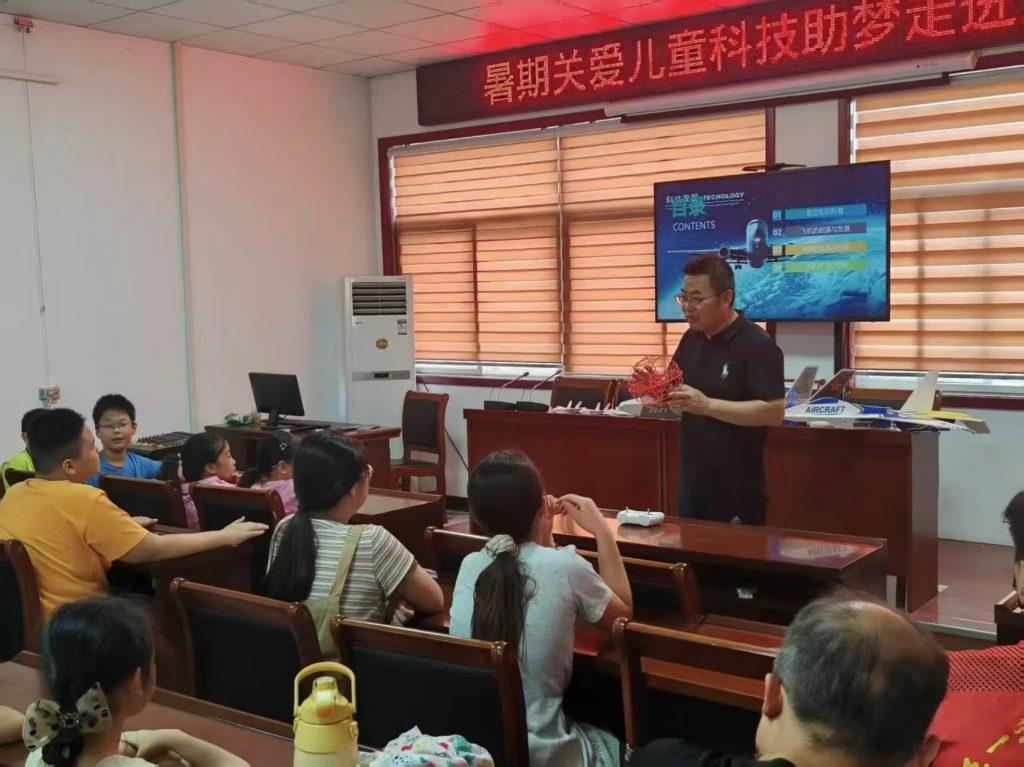
The image above underscores the essence of practical, hands-on drone training, which must be the centerpiece of both student learning and faculty development. Instructors need to be as comfortable on the flight line as they are in the lecture hall.
| Faculty Development Initiative | Description | Expected Outcome |
|---|---|---|
| Industry Immersion Program | Mandatory 3-6 month placement for lecturers in UAV companies | Updated practical knowledge; stronger industry networks |
| Adjunct Professional Hiring | Systematic hiring of part-time instructors from leading firms | Direct infusion of current industry practices into the classroom |
| Technical Certification Support | Funding and time for faculty to obtain advanced pilot/data processing certs | Enhanced credibility and teaching capability in specialized areas |
Establishing Advanced, Industry-Linked Practical Bases
The cornerstone of applied drone training is access to state-of-the-art facilities and real-world operational contexts. Internally, we must invest in building comprehensive UAV labs that go beyond basic flight simulators. These should include: a Fabrication and Maintenance Lab for understanding drone assembly and repair; a Sensor and Payload Integration Lab for experimenting with different cameras, LiDAR, and multispectral sensors; and a Mission Control and Data Analytics Lab equipped with high-performance computing for processing flight data.
Externally, and more crucially, is the deepening of enterprise collaboration. Partnerships should be structured to be mutually beneficial. We establish long-term agreements with drone service providers (DSPs) and manufacturing companies to serve as their regional drone training and testing hub. In return, they provide: 1) Internship Pipelines: Guaranteed slots for our students to work on live projects; 2) Equipment Access/Donation: Latest platforms and software for training; 3) Guest Lectures and Curriculum Review: Ensuring our teaching aligns with market needs. This transforms the training base from a closed educational facility into an open innovation platform. The relationship’s value (\( V_{collab} \)) can be expressed as a function of shared resources and outcomes:
$$ V_{collab} = R_{college}(E, S) + R_{industry}(T, I) $$
where \( R_{college} \) is the resource input from the college (Expertise \(E\), Students \(S\)), and \( R_{industry} \) is the resource input from industry (Technology \(T\), Internship/Projects \(I\)).
Fostering Competence through Competitions and Project-Based Learning
Competitions and complex projects are unparalleled tools for drone training as they simulate high-pressure, real-world problem-solving. Organizing and participating in events like drone racing (for piloting skills), payload delivery challenges (for logistics), or agricultural monitoring hackathons (for data analysis) serves multiple purposes. It dramatically elevates practical skills, forces interdisciplinary teamwork between pilots, programmers, and data analysts, and fosters innovative thinking under constraints.
More systematically, we implement a Project-Based Learning (PBL) pathway throughout the curriculum. First-year students might complete a simple aerial photography project. By their final year, student teams are tasked with end-to-end projects commissioned by real clients—e.g., conducting a topographic survey for a local engineering firm or creating a crop health map for a farm. This PBL pathway ensures that theoretical knowledge is constantly applied, tested, and refined. The competency growth (\( G_c \)) through such a pathway can be seen as a cumulative gain from successive projects of increasing complexity (\(C_n\)):
$$ G_c = \sum_{n=1}^{N} k \cdot C_n \cdot T_n $$
where \( C_n \) is the complexity of project \(n\), \( T_n \) is the teamwork synergy factor for that project, \( k \) is a learning constant, and \( N \) is the total number of projects in the pathway.
| Student Activity Type | Skills Developed | Integration with Drone Training Curriculum |
|---|---|---|
| Technical Competitions (e.g., Search & Rescue Sim) | Advanced Piloting, On-the-fly Problem Solving, System Reliability | Capstone project or advanced flight training module outcome |
| Interdisciplinary Projects (with CS, Agriculture depts.) | Cross-functional Teamwork, Systems Integration, Client Communication | Core component of Application Specialization modules |
| Industry-Sponsored Capstone | Full Project Lifecycle Management, Professional Standards, Reporting | Final semester requirement, directly linked to internship/employment |
Synthesis and Future Trajectory
The mission of cultivating proficient UAV application technology talent is complex but indispensable. For industrial colleges, the path forward requires a holistic and agile approach to drone training. It necessitates moving beyond conventional educational models to embrace a deeply integrated ecosystem where curriculum, faculty expertise, practical facilities, and industry partnerships are continuously aligned and reinforced. The strategies outlined—curricular dynamism, faculty industry immersion, the creation of symbiotic practice bases, and the emphasis on competitive and project-based learning—are not isolated interventions but interconnected components of a robust talent development engine.
The ultimate metric of success for our drone training programs is the seamless transition of graduates into the workforce, where they not only perform tasks but also drive innovation. By committing to this comprehensive framework, industrial colleges can effectively close the talent gap. We can transform from being mere educational providers into becoming vital innovation partners for the industry, co-creating the future of drone technology and its applications. The sustained investment in high-quality drone training today is the most reliable foundation for the technological and economic advancements of tomorrow.