
In recent years, the rapid proliferation of unmanned aerial vehicles (UAVs) has revolutionized various sectors, from agriculture and logistics to surveillance and entertainment. As a researcher deeply involved in aviation security, I have witnessed firsthand the dual-edged nature of this technology. While UAVs offer unprecedented opportunities, their misuse poses significant threats, particularly to airspace safety. General aviation airports, with their smaller scale and flexible flight plans, are especially vulnerable to UAV intrusions. This has propelled the urgent need for robust anti-UAV measures. In this article, I will delve into the current state of anti-UAV technologies, evaluate their effectiveness, and propose integrated management strategies to safeguard our skies. The term “anti-UAV” will be frequently emphasized as it is central to our discussion.
The core of anti-UAV systems lies in their ability to detect, track, and neutralize unauthorized drones. These systems can be broadly categorized into two approaches: hard-kill and soft-kill methods. Hard-kill methods involve physical intervention to disable or destroy the UAV, while soft-kill methods rely on electronic means to disrupt its operations. Each approach has its merits and limitations, which I will explore in detail. To begin, let’s consider the importance of anti-UAV measures at general aviation airports. These airports often lack the extensive resources of major international hubs, making them prime targets for accidental or malicious drone incursions. The consequences can be severe—even a small UAV colliding with an aircraft can cause catastrophic damage. For instance, studies show that a 400-gram drone can shatter a helicopter’s windshield, while a 2-kilogram drone can severely damage a commercial jet’s engine. Therefore, implementing effective anti-UAV solutions is not just an option but a necessity.
Hard-kill anti-UAV techniques are designed to physically intercept drones. One common method is the net-based system, where operators launch nets or specialized meshes to capture UAVs mid-air. This approach is highly effective for single targets and offers the advantage of recovering the drone intact for forensic analysis. For example, systems like the “Sky Net One” have been deployed in China for major event security, achieving interception success rates of up to 80%. The process can be modeled using physics equations. The trajectory of the net launcher and the UAV can be described by kinematic equations. If we denote the launcher’s velocity as \( v_l \) and the UAV’s velocity as \( v_u \), the relative velocity \( v_r \) is given by:
$$ v_r = \sqrt{v_l^2 + v_u^2 – 2 v_l v_u \cos(\theta)} $$
where \( \theta \) is the angle between their paths. The capture success depends on factors like net spread area and timing. However, net-based systems face challenges against swarm attacks due to limited firing rates and operational complexity. Another hard-kill method is destructive neutralization, using kinetic weapons, lasers, or high-power microwaves to obliterate UAVs. While highly effective in military contexts, these methods are unsuitable for general aviation airports because debris from destroyed drones can pose secondary hazards, such as being ingested into aircraft engines. The energy required for destruction can be expressed as:
$$ E = \frac{1}{2} m v^2 + P_{em} t $$
where \( m \) is the drone mass, \( v \) is impact velocity, \( P_{em} \) is electromagnetic power, and \( t \) is exposure time. Given these risks, I recommend that airports avoid destructive anti-UAV systems within flight areas.
| Hard-Kill Anti-UAV Method | Advantages | Disadvantages | Suitability for General Aviation Airports |
|---|---|---|---|
| Net-Based Capture | Non-destructive, recovers drone, flexible deployment | Ineffective against swarms, requires manual aiming | High (for single intrusions) |
| Destructive Neutralization | Immediate elimination, covers wide area | Debris risk, electromagnetic interference, costly | Low (due to safety concerns) |
Soft-kill anti-UAV techniques, on the other hand, use electronic warfare to disrupt UAV operations without physical contact. These methods are often preferred for their precision and reduced collateral damage. Navigation signal spoofing is a prominent soft-kill approach, where false GPS or GNSS signals are broadcast to deceive the drone’s navigation system, causing it to deviate from its course. The effectiveness of spoofing depends on signal strength and algorithm sophistication. The received spoofing signal power \( P_s \) at the drone can be modeled as:
$$ P_s = \frac{P_t G_t G_r \lambda^2}{(4\pi d)^2} $$
where \( P_t \) is transmitter power, \( G_t \) and \( G_r \) are antenna gains, \( \lambda \) is wavelength, and \( d \) is distance. By overriding legitimate signals, spoofing can force drones into safe zones. However, this method must comply with radio frequency regulations to avoid interfering with airport communications. Another soft-kill technique is communication signal jamming, which floods the UAV’s control links with noise, triggering fail-safe modes like hover or return-to-home. The jamming effectiveness ratio \( J \) can be expressed as:
$$ J = \frac{P_j / N_0}{P_c / N_0} $$
where \( P_j \) is jamming power, \( P_c \) is communication power, and \( N_0 \) is noise density. While jamming is powerful, it can disrupt legitimate airport systems if not carefully managed. A more advanced soft-kill method is cyber takeover, where hackers intercept and hijack the UAV’s control channel to steer it away. This requires deep knowledge of drone protocols and is limited to known models. In my experience, soft-kill anti-UAV systems offer scalability but demand rigorous testing to prevent unintended consequences.
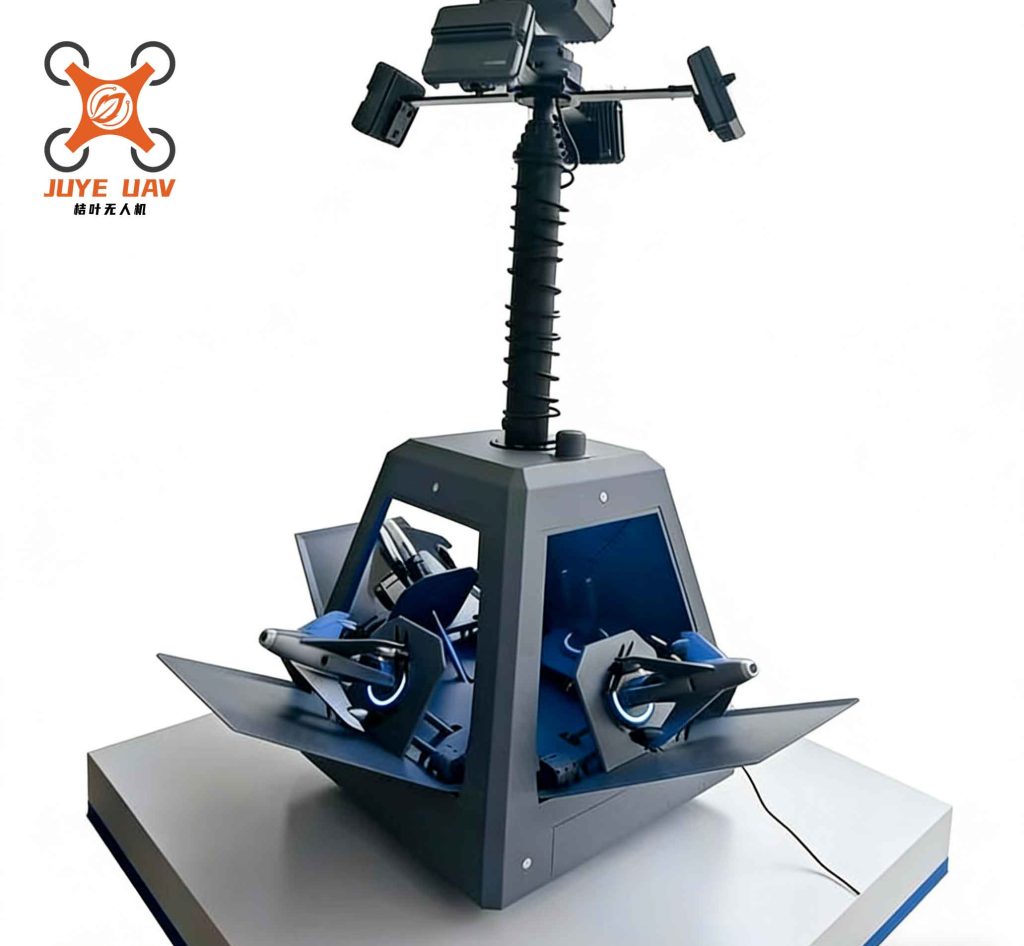
Beyond technological solutions, robust anti-UAV frameworks require comprehensive management strategies. As an advocate for aviation safety, I believe regulatory measures are equally critical. First, clarifying the responsibilities of regulatory bodies is essential. Currently, UAV oversight is fragmented, leading to enforcement gaps. By defining clear mandates for authorities, we can streamline responses to “rogue drone” incidents. For instance, assigning specific agencies to monitor and penalize violations would enhance deterrence. Second, strengthening flight plan审批 processes can reduce unauthorized flights. Many UAV operators bypass approvals due to bureaucratic hurdles. Simplifying审批 for low-risk areas while maintaining strict controls near airports could balance innovation and safety. This can be modeled as an optimization problem:
$$ \text{Minimize } T = \sum_{i=1}^{n} t_i \quad \text{subject to } S \geq S_{\text{min}} $$
where \( T \) is total审批 time, \( t_i \) is time per application, \( S \) is safety level, and \( S_{\text{min}} \) is the minimum safety threshold. Third, improving实名制 registration is vital. Although China mandates registration for UAVs over 250 grams, loopholes exist in verification. Implementing a “one-drone-one-code” system, where each UAV has a unique identifier linked to its owner from production, would enhance traceability. The probability of identifying a rogue drone \( P_{id} \) can be expressed as:
$$ P_{id} = 1 – (1 – p_r)^n $$
where \( p_r \) is registration accuracy and \( n \) is number of drones. Fourth, expanding aviation law education is crucial. Public awareness of no-fly zones, like airport净空 areas, remains low. Through targeted campaigns, we can reduce unintentional intrusions. These management measures complement technological anti-UAV systems, creating a holistic defense.
| Management Measure | Key Actions | Expected Impact on Anti-UAV Efficacy |
|---|---|---|
| Regulatory Clarification | Define agency roles, standardize penalties | High (improves enforcement) |
| Flight Plan审批 Reform | Streamline processes, prioritize risk-based checks | Medium (reduces unauthorized flights) |
| Enhanced Registration | Implement unique codes, verify owner data | High (enables tracking) |
| Public Education | Campaigns on no-fly zones, legal consequences | Medium (prevents accidents) |
Looking ahead, the future of anti-UAV technology at general aviation airports is promising. Based on my research, I propose three key directions. First, deploying certified anti-UAV systems tailored to airport needs is imperative. As discussed, net-based and spoofing systems are most suitable due to their safety profiles. Airports should conduct risk assessments to choose optimal mixes. The overall effectiveness \( E_{\text{total}} \) of a hybrid anti-UAV system can be calculated as:
$$ E_{\text{total}} = \alpha E_h + (1 – \alpha) E_s $$
where \( E_h \) is hard-kill effectiveness, \( E_s \) is soft-kill effectiveness, and \( \alpha \) is weighting factor based on threat level. Second, conditional low-altitude airspace liberalization could mitigate conflicts. By allowing UAVs in designated urban areas while strictly protecting airport vicinities, we can foster innovation without compromising safety. This requires dynamic airspace management models, such as:
$$ A_{\text{open}} = f(D, R, T) $$
where \( A_{\text{open}} \) is open airspace volume, \( D \) is drone density, \( R \) is risk factor, and \( T \) is time. Third, achieving “one-drone-one-code” integration would revolutionize oversight. From manufacturing to disposal, each UAV would be traceable, enabling real-time monitoring and rapid response to incidents. This aligns with IoT trends and could be implemented using blockchain for security. The hash function for drone identity \( H_{\text{id}} \) might be:
$$ H_{\text{id}} = \text{SHA256}(\text{serial} \| \text{owner} \| \text{timestamp}) $$
These advancements will require collaboration among governments, industries, and academia to develop standards and protocols.
In conclusion, anti-UAV technology is a critical component of modern aviation security. Through my analysis, I have highlighted the strengths and weaknesses of various anti-UAV methods, emphasizing that a layered approach—combining hard-kill, soft-kill, and regulatory measures—offers the best protection for general aviation airports. The repeated use of the term “anti-UAV” underscores its importance in this discourse. As UAV technology evolves, so must our defenses. By investing in adaptive systems, promoting responsible management, and fostering public awareness, we can ensure that the skies remain safe for all. The journey toward comprehensive anti-UAV solutions is ongoing, but with concerted effort, we can turn challenges into opportunities for safer air travel.
To further illustrate the technical aspects, let’s consider some mathematical models for anti-UAV system performance. Detection range \( R_d \) for radar-based anti-UAV systems can be derived from the radar equation:
$$ R_d = \left( \frac{P_t G^2 \lambda^2 \sigma}{(4\pi)^3 P_{\text{min}}} \right)^{1/4} $$
where \( \sigma \) is radar cross-section of the UAV, and \( P_{\text{min}} \) is minimum detectable power. For signal jamming, the jamming-to-signal ratio \( J/S \) determines success:
$$ J/S = \frac{P_j G_j R_c^2}{P_c G_c R_j^2} $$
where \( G_j \) and \( G_c \) are antenna gains for jammer and communication, and \( R_c \) and \( R_j \) are distances. These formulas help in designing effective anti-UAV systems. Additionally, cost-benefit analysis for airport deployments can be modeled as:
$$ C_{\text{total}} = C_{\text{tech}} + C_{\text{reg}} + C_{\text{edu}} $$
where \( C_{\text{tech}} \) is technology cost, \( C_{\text{reg}} \) is regulatory compliance cost, and \( C_{\text{edu}} \) is education cost. The benefit \( B \) in terms of reduced incidents can be expressed as:
$$ B = k \cdot \Delta I $$
with \( k \) as a monetary factor and \( \Delta I \) as decrease in intrusion events. Optimizing this ratio is key for sustainable anti-UAV strategies.
Finally, I urge stakeholders to prioritize research and development in anti-UAV technologies. Emerging trends like artificial intelligence for threat prediction and autonomous interception drones hold great potential. By staying proactive, we can build resilient systems that not only counter current threats but also adapt to future challenges. The goal is clear: to create a secure airspace where UAVs and traditional aviation coexist harmoniously, safeguarded by advanced anti-UAV measures.