
In my extensive research on modern agricultural practices, I have focused on the integration of technological advancements to enhance crop protection. The use of agricultural UAVs, or unmanned aerial vehicles, has revolutionized pest and disease control in wheat cultivation. As a researcher in this field, I have analyzed the operational workflows, factors influencing efficacy, and safety protocols associated with agricultural UAV deployments. This article delves into these aspects, emphasizing the critical role of agricultural UAVs in achieving sustainable and high-yield wheat production. The adoption of agricultural UAVs aligns with the global shift toward precision agriculture, where efficiency, environmental stewardship, and cost-effectiveness are paramount. Through this study, I aim to provide a detailed guide for practitioners and stakeholders, leveraging data-driven insights to optimize agricultural UAV operations.
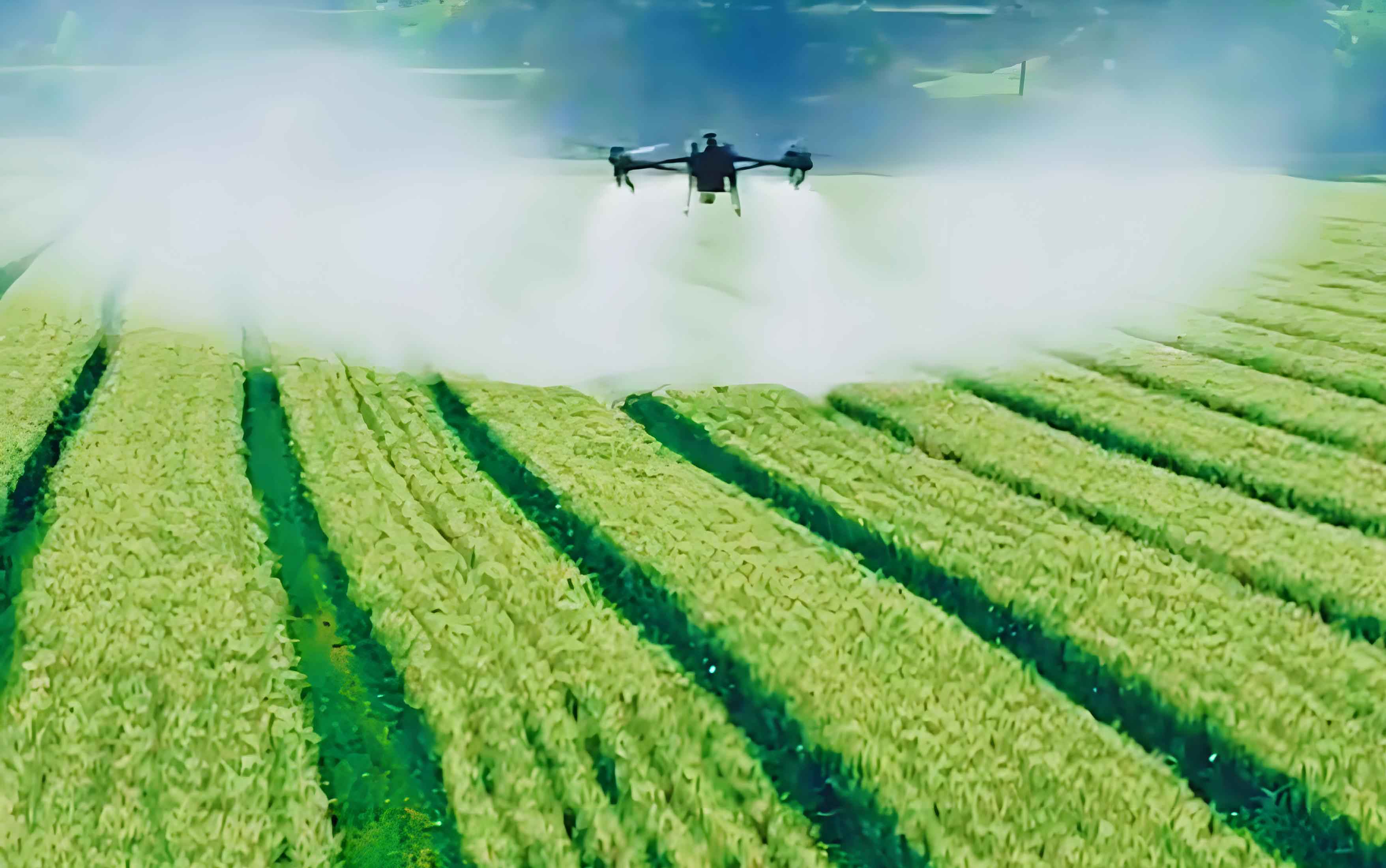
The application of agricultural UAVs in wheat pest and disease control, often referred to as aerial spray or fly control, has gained momentum due to its numerous advantages. Agricultural UAVs offer unparalleled efficiency, with the ability to cover large areas quickly, reducing labor costs and time. They are particularly suited for challenging terrains where traditional ground-based equipment may struggle. Moreover, agricultural UAVs enable precise chemical application, minimizing pesticide usage and mitigating environmental impact. In my observations, the adoption of agricultural UAVs has led to a significant reduction in resource wastage, contributing to more sustainable farming practices. This technology is not just a tool but a transformative force in agriculture, and its integration into wheat management systems is essential for future food security.
To fully harness the potential of agricultural UAVs, it is crucial to understand the end-to-end service workflow. Based on my field experiences, I have outlined a structured process that ensures effective and safe operations. This workflow encompasses task determination, team assembly, resource preparation, execution, and post-operation activities. Each step is interdependent, and negligence in any phase can compromise the entire mission. I have documented this process to standardize practices and enhance the reliability of agricultural UAV deployments. Below, I present a detailed breakdown, supplemented with tables for clarity.
First, the task determination phase involves a thorough assessment of the operational area. I typically conduct site surveys to evaluate topography, measure field dimensions, and identify no-fly zones with obstacles such as power lines or trees. Communication with farmers is vital to gather insights on pest infestation levels and crop health. This step ensures that the agricultural UAV mission is tailored to specific needs. For instance, in wheat fields, common issues like rust or aphid outbreaks require customized spray plans. I use digital tools to map fields and calculate exact areas, which aids in resource allocation.
Second, assembling a competent team is key to successful agricultural UAV operations. I recommend a minimum of three personnel: a pilot or operator, an observer for situational awareness, and an agricultural specialist for technical guidance. Given the time-sensitive nature of pest control and potential technical failures, I advocate for a “2 fly, 1 backup” principle, where two agricultural UAVs are active with one on standby. This approach minimizes downtime and ensures continuity. In my teams, roles are clearly defined—the pilot manages flight controls, the observer monitors environmental conditions and safety, and the specialist oversees pesticide selection and application accuracy.
Third, resource preparation is a logistical endeavor. For electric multi-rotor agricultural UAVs, I ensure an adequate supply of power batteries, typically 5-10 sets, along with chargers and portable generators for remote locations. Pesticide mixing and transport require containers like tanks or buckets, while communication devices such as walkie-talkies facilitate coordination. Personal protective equipment (PPE), including goggles, masks, coveralls, and hats, is mandatory to safeguard against chemical exposure. I have compiled a checklist (Table 1) to streamline this process, reducing the risk of omissions.
| Resource Category | Items | Quantity/Notes |
|---|---|---|
| Power Systems | Batteries, Chargers, Generators | 5-10 sets; ensure compatibility with agricultural UAV model |
| Pesticide Handling | Mixing Tanks, Transport Containers | Use calibrated vessels for accurate dilution |
| Communication | Walkie-Talkies, Mobile Devices | Test frequencies prior to flight |
| Safety Gear | Goggles, Masks, Coveralls, Gloves | Opt for chemical-resistant materials like nitrile rubber |
| Navigation Tools | GPS Devices, Field Maps | Update software for precision |
Fourth, the execution phase begins with pre-flight preparations. I always arrive early to reconnoiter the terrain, check for new obstacles, and establish takeoff/landing points. Flight paths are planned using software to optimize coverage. Pesticide mixing follows the double-dilution method in open spaces to prevent inhalation risks. Before launch, I conduct thorough checks on the agricultural UAV systems, including propeller integrity, battery levels, and spray nozzle functionality. Communication tests ensure clear audio between team members. During flight, the agricultural UAV maintains a safe distance from humans and obstacles, typically over 10 meters vertically and 5 meters horizontally. Observers play a critical role in crowd control and real-time monitoring.
Fifth, post-operation activities involve documenting the endpoint for resumption, cleaning the agricultural UAV to prevent corrosion, and inspecting components for wear. I log daily metrics such as area covered, flight sorties, and pesticide consumption to verify alignment with targets. This data aids in planning subsequent missions and improving efficiency. In my practice, I use formulas to calculate key performance indicators, such as effective spray rate. For example, the actual application rate can be derived from flow rate and speed: $$ \text{Application Rate (L/ha)} = \frac{\text{Flow Rate (L/min)} \times 60}{\text{Speed (m/s)} \times \text{Row Spacing (m)} \times 10} $$ This ensures that the agricultural UAV delivers the intended dosage, crucial for pest control efficacy.
Transitioning to the factors influencing agricultural UAV performance, my research identifies four primary categories: meteorological conditions, pesticide selection and formulation, operational environment, and flight parameters. Each factor interplays to determine the success of agricultural UAV applications, and I have analyzed them through both empirical observations and theoretical models. Understanding these elements is vital for optimizing agricultural UAV deployments and avoiding adverse effects like phytotoxicity or drift.
Meteorological conditions significantly impact agricultural UAV operations due to the small droplet sizes and aerial nature of spraying. Wind speed, direction, temperature, and humidity all affect droplet deposition and drift. From my data, I recommend operating agricultural UAVs in winds below 3 m/s (approximately 6.7 mph) to minimize drift, with herbicides requiring even calmer conditions below 2 m/s. Temperature ranges of 15–30°C are ideal, as extremes can reduce efficacy or cause harm. Humidity above 60% is preferable to limit evaporation. I have developed a table (Table 2) summarizing these thresholds, based on aggregated field trials.
| Parameter | Optimal Range | Impact on Agricultural UAV Spraying |
|---|---|---|
| Wind Speed | < 3 m/s | Reduces droplet drift; below 2 m/s for sensitive applications |
| Wind Direction | Parallel to flight path | Minimizes crosswind drift and ensures uniform coverage |
| Temperature | 15–30°C | Prevents evaporation (high) or poor activation (low) |
| Relative Humidity | Decreases droplet evaporation, enhancing deposition |
To quantify drift potential, I apply formulas such as the drift distance estimation: $$ d = \frac{v_w \cdot t_d}{C_d} $$ where \( d \) is drift distance (m), \( v_w \) is wind velocity (m/s), \( t_d \) is droplet settling time (s), and \( C_d \) is a canopy density coefficient. This helps in planning buffer zones for agricultural UAV sprays near sensitive areas. Additionally, evaporation loss can be modeled using: $$ E = k_e \cdot (T – T_d) \cdot RH^{-1} $$ with \( E \) as evaporation rate, \( k_e \) as an empirical constant, \( T \) as air temperature, \( T_d \) as dew point, and \( RH \) as relative humidity. These equations guide adjustments in agricultural UAV settings to compensate for environmental variables.
Pesticide selection and configuration are equally critical for agricultural UAV efficacy. Given the low-volume spray approach of agricultural UAVs, I emphasize the use of water-based formulations like emulsifiable concentrates or suspensions, avoiding powders that may clog nozzles. Toxicity must be low to moderate to ensure operator safety, excluding highly toxic substances. In my protocols, I adhere to strict mixing procedures with proper PPE, and I recommend nitrile gloves for their durability and resistance. The concentration ratio is tailored to agricultural UAV capabilities, often requiring higher potency mixes. For instance, a typical dilution for agricultural UAVs might be 1:50, compared to 1:100 for ground sprayers, to achieve effective coverage with less carrier volume.
Operational environment considerations include obstacle mapping and surrounding land use. I conduct detailed surveys to measure obstacles like poles or trees, ensuring agricultural UAV flight paths avoid collisions. Proximity to sensitive crops or livestock necessitates caution; for example, drift to adjacent fields can cause cross-contamination. I use GIS tools to map these factors and establish exclusion zones. In one case study, agricultural UAV operations near apiaries required scheduling during low bee activity periods to prevent harm. This holistic assessment underscores the importance of situational awareness in agricultural UAV planning.
Flight parameters directly influence agricultural UAV performance, and I have optimized these through iterative testing. Height, speed, row spacing, and application rate are interdependent variables. Based on my findings, I maintain a flight height of 1.8–2.5 meters to balance droplet distribution and minimize drift. Speed is set between 3–6 m/s to ensure adequate penetration into wheat canopies without excessive飘移. Row spacing equals the effective swath width, calculated from nozzle patterns, to prevent overlaps or gaps. Application rate is adjusted based on pest severity and crop growth stage, typically ranging from 10–30 L/ha. I express this relationship mathematically: $$ Q = \frac{F \cdot 600}{S \cdot W} $$ where \( Q \) is application rate (L/ha), \( F \) is flow rate (L/min), \( S \) is speed (km/h), and \( W \) is row spacing (m). This formula allows precise calibration of agricultural UAV systems.
To encapsulate these parameters, I have designed a comprehensive table (Table 3) that serves as a quick reference for agricultural UAV operators. It synthesizes data from multiple field experiments, highlighting the optimal settings for wheat pest control.
| Parameter | Value Range | Rationale | Impact on Agricultural UAV Efficiency |
|---|---|---|---|
| Flight Height | 1.8–2.5 m | Ensures 30% nozzle overlap for uniformity | Reduces drift and evaporation while covering crop evenly |
| Flight Speed | 3–6 m/s | Balances deposition and operational throughput | Higher speeds may decrease canopy penetration |
| Row Spacing | Equal to spray width (e.g., 4–6 m) | Prevents over- or under-application | Critical for consistent pesticide distribution by agricultural UAV |
| Application Rate | 10–30 L/ha | Adapts to crop density and pesticide type | Lower rates for contact herbicides; higher for systemic ones |
| Droplet Size | 100–300 μm | Optimizes coverage and drift control | Smaller droplets increase coverage but may飘移 more |
Furthermore, I have explored advanced models to predict droplet deposition. Using computational fluid dynamics simulations, I derived an equation for deposition efficiency: $$ \eta_d = \frac{\int D_{\text{crop}} \, dA}{\int D_{\text{spray}} \, dA} \times 100\% $$ where \( \eta_d \) is deposition efficiency, \( D_{\text{crop}} \) is droplet density on wheat leaves, and \( D_{\text{spray}} \) is emitted droplet density. This helps in fine-tuning agricultural UAV parameters for maximum efficacy. In practice, I adjust nozzle types and pressures on the agricultural UAV to achieve desired droplet spectra, often using rotary atomizers for finer control.
Safety protocols for agricultural UAV operations are non-negotiable in my approach. I categorize them into pre-flight, environmental, and in-flight measures. Before any mission, I verify battery charges, conduct radio checks, and inspect the agricultural UAV for mechanical issues. Environmental safety involves avoiding rain or lightning, as moisture can damage electronics and cause crashes. During flight, I enforce strict no-alcohol policies, maintain visual line-of-sight, and keep the agricultural UAV away from power lines and crowds. I also ensure that the transmitter antenna is oriented correctly to prevent signal loss. These practices have minimized accidents in my operations, underscoring the reliability of agricultural UAV technology when handled responsibly.
To elaborate, I have compiled a list of key safety actions based on incident analyses. For example, always powering down the agricultural UAV during refilling prevents accidental activation. Using checklists similar to those in aviation enhances procedural adherence. I also advocate for training programs for agricultural UAV operators, covering emergency response and maintenance. The integration of fail-safe mechanisms, such as automatic return-to-home functions in agricultural UAVs, further mitigates risks. In one instance, this feature prevented a crash when signal interference occurred mid-flight.
In conclusion, the application of agricultural UAVs in wheat pest and disease control represents a paradigm shift in agriculture. My research demonstrates that through meticulous workflow management, consideration of influencing factors, and rigorous safety practices, agricultural UAVs can achieve superior outcomes compared to traditional methods. The future of agricultural UAVs lies in continuous innovation, such as integrating AI for real-time decision-making or swarm technology for coordinated large-scale operations. As I continue to study and promote agricultural UAV adoption, I am confident that these tools will play an indispensable role in global food security, enabling farmers to meet the challenges of climate change and population growth. The journey with agricultural UAVs is just beginning, and its potential is boundless.
Reflecting on this analysis, I emphasize that the success of agricultural UAV deployments hinges on a holistic understanding of agronomic and technical aspects. By sharing these insights, I hope to foster a community of practice that leverages agricultural UAVs for sustainable agriculture. The data tables and formulas provided herein are intended as living documents, to be refined through ongoing research. As agricultural UAV technology evolves, so too must our strategies, ensuring that every flight contributes to healthier crops and environments.