
The foundation of any national economy lies in its agriculture. The modernization of this sector is paramount for ensuring food security, enhancing production efficiency, and fostering rural economic development. In the current era, propelled by advancements in artificial intelligence and big data, alongside an ever-growing demand for precision and intelligence in farming practices, the research, development, and application of high-end intelligent agricultural machinery represent the definitive future of farm equipment. The agricultural UAV stands as a quintessential example of such smart machinery. Leveraging its numerous advantages—efficiency, precision, and flexibility—it is being adopted across an expanding array of agricultural production processes. Data indicates a remarkable 124.2% year-on-year growth in the market size of China’s agricultural UAV sector in 2021, with projections estimating the market to reach 11.5 billion yuan by 2025. While agricultural UAVs are injecting powerful momentum into the transformation from traditional to smart agriculture, their practical application is not without bottlenecks and challenges that necessitate further research and resolution.
I. Current Development Status of Agricultural UAVs
1. Rapidly Expanding Market Scale
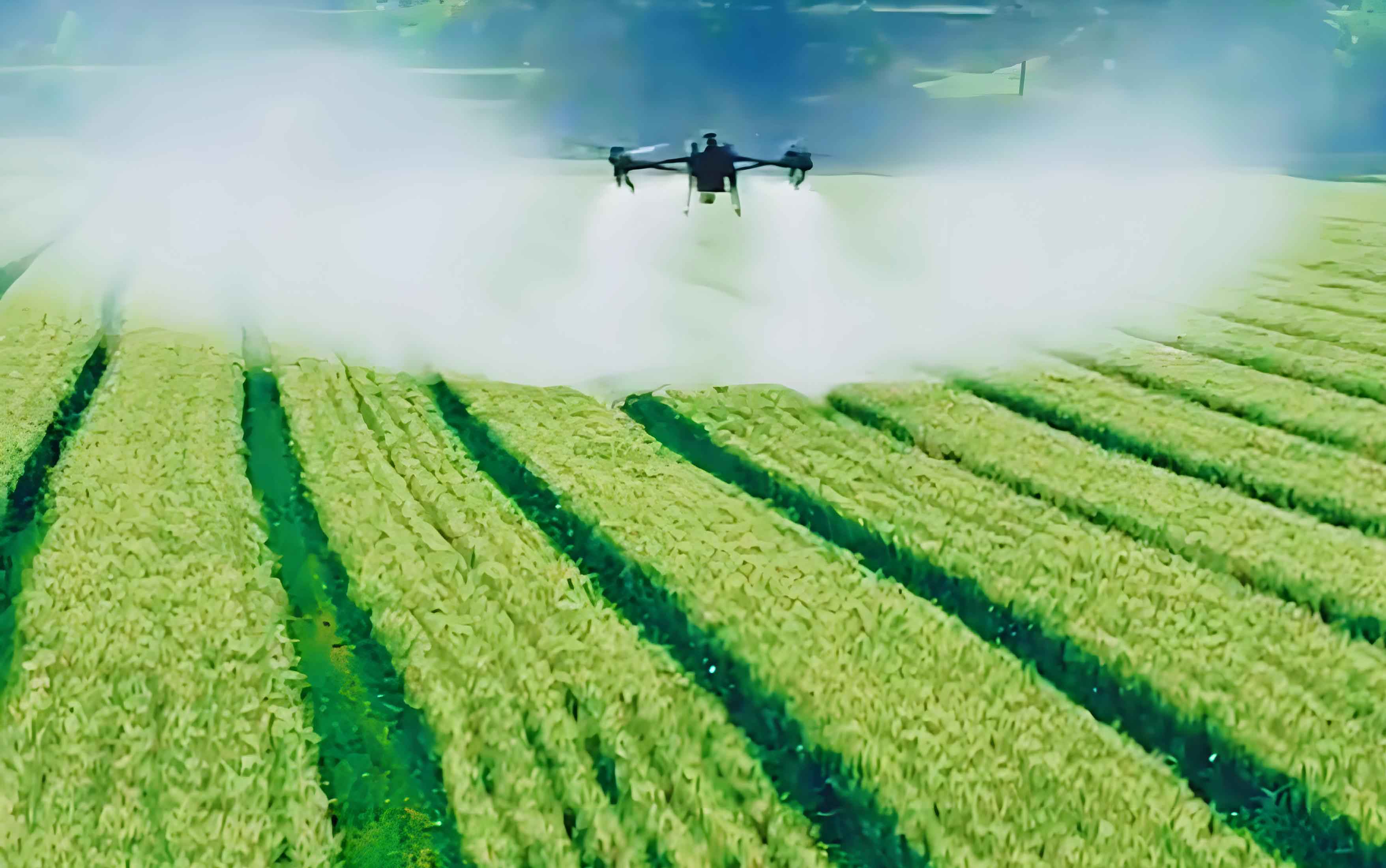
Although their inception in my country was relatively recent, agricultural UAVs have experienced rapid development. The most widely used device within this category is the plant protection UAV. Initial R&D efforts commenced around 2005-2006. A significant milestone was reached in 2010 with the successful development of the first domestically produced plant protection UAV. Policy support began to solidify in 2013 with the promotion of low-altitude, low-volume spraying technology. A pivotal moment arrived in 2017 when plant protection UAVs were included in pilot subsidy programs across numerous provinces, dramatically accelerating adoption. National support for innovation has remained steadfast, with over 35,000 plant protection UAVs included in the national subsidy scope by 2023. The market growth trajectory can be summarized as follows:
| Phase | Timeframe | Key Milestone | Impact |
|---|---|---|---|
| R&D Initiation | 2005-2006 | Commencement of R&D by key institutions. | Laid the foundational technological groundwork. |
| First Prototype | 2010 | Successful development of the first domestic plant protection UAV. | Proved technical feasibility and domestic capability. |
| Initial Policy Support | 2013 | Promotion of low-altitude, low-volume spraying tech. | Began formal integration into agricultural extension systems. |
| Subsidy Pilot | 2017 | Inclusion in national农机购置补贴 pilot programs. | Significantly reduced end-user cost, triggering rapid market expansion. |
| Wide Subsidy & Growth | 2023-Present | Over 35,000 units in national subsidy catalog; market projections to ~$1.6B USD by 2025. | Market entering a phase of规模化 (scale) and规范化 (standardization). |
The compound annual growth rate (CAGR) for the market during its high-growth phase can be modeled. If we denote the market size in year \( t \) as \( S_t \), and the growth rate in year \( t \) as \( g_t \), the size after \( n \) years from a base year \( S_0 \) is given by:
$$ S_n = S_0 \times \prod_{t=1}^{n} (1 + g_t) $$
For instance, the reported 124.2% growth in 2021 implies \( g_{2021} = 1.242 \).
2. Continuous Technological Advancement
The technological prowess of agricultural UAVs has seen significant improvements in flight performance and intelligent obstacle avoidance.
Flight Performance: Payload capacity has increased substantially. This is achieved through the application of novel composite materials like carbon fiber in airframe design. These materials offer high strength-to-weight ratios and corrosion resistance. Monocoque construction techniques minimize flight resistance. The net effect is a higher permissible payload \( P_{max} \), which directly influences operational capability (e.g., area covered per sortie). Flight stability has also improved via optimized control interfaces, navigation systems (heavily reliant on BeiDou/GNSS), and sensor fusion (laser radar, IMUs). These systems allow for real-time adjustment of flight parameters \( \vec{\theta} \) (pitch, roll, yaw, thrust) in response to environmental disturbances \( \vec{d}(t) \), maintaining stable flight according to the dynamics:
$$ M \cdot \ddot{\vec{x}} = \vec{F}_{control}(\vec{\theta}) + \vec{F}_{environment}(\vec{d}(t)) $$
where \( M \) is the mass matrix and \( \vec{x} \) is the position vector.
Intelligent Obstacle Avoidance & Path Planning: This is a critical technology for safe and efficient operation. Modern agricultural UAVs employ sophisticated path-planning algorithms that integrate data from visual systems, multi-spectral sensors, and pre-loaded field maps. The core problem is often formulated as an optimization: find a flight path \( \Gamma \) from start point \( A \) to end point \( B \) that minimizes a cost function \( C(\Gamma) \), which may include factors like flight time \( T \), energy consumption \( E \), and a penalty for proximity to obstacles \( O \):
$$ C(\Gamma) = \alpha \cdot T(\Gamma) + \beta \cdot E(\Gamma) + \gamma \cdot O(\Gamma) $$
subject to constraints: \( \Gamma \subset \text{Feasible Airspace}, \quad \dot{\vec{x}} \leq V_{max}, \quad \text{etc.} \)
Here, \( \alpha, \beta, \gamma \) are weighting coefficients. Advances in real-time processing allow for dynamic re-planning when unexpected obstacles are detected.
3. Diversifying Application Scenarios
While plant protection remains the dominant application, accounting for over 93% of aerial application area as of recent statistics, the role of agricultural UAVs is rapidly expanding into other facets of the production cycle.
| Application | Key Equipment | Data & Action | Benefit |
|---|---|---|---|
| Precision Seeding & Fertilizing | Seeder/Fertilizer hopper, Multispectral sensor, GNSS-RTK. | Soil fertility maps (\( \text{N,P,K} \)) guide variable-rate application. Seeding rate \( \rho_s(x,y) \) is a function of soil potential. | Optimizes input use, improves crop uniformity, reduces cost. |
| Crop Health Monitoring | High-res RGB, Multispectral, Thermal cameras. | Generate indices (e.g., NDVI = \( \frac{NIR – Red}{NIR + Red} \)), identify stress, disease hotspots. | Enables early intervention, targeted scouting, yield prediction. |
| Field Surveying & Analysis | LiDAR, Photogrammetry sensors. | Create Digital Elevation Models (DEMs), analyze soil moisture variability \( \theta_v(x,y) \). | Informs irrigation planning, drainage design, land leveling. |
| Environmental Monitoring | Micro-meteorological and air sampling sensors. | Measure localized temperature \( T \), humidity \( H \), wind, particulate matter. | Provides hyper-local weather data for micro-climate management and pollution tracking. |
The total effective operational area \( A_{total} \) for an agricultural UAV fleet can be expressed as the sum of areas for each application \( j \):
$$ A_{total} = \sum_{j=1}^{m} A_j = A_{spray} + A_{scan} + A_{seed} + \cdots $$
where \( A_{spray} \) currently constitutes the vast majority.
4. Strengthening Policy Support Framework
Policy tailwinds are significant, primarily from two avenues: Low-Altitude Economy policies and direct农机购置补贴 (Agricultural Machinery Purchase Subsidy).
Low-Altitude Economy: The national strategic focus on developing the low-altitude economy, formally included in the Government Work Report, provides a overarching favorable framework. Regulations now provide clearer rules for flight operations and licensing specific to agricultural UAVs.
Subsidy Policies: Direct subsidies remain the most powerful driver for adoption. These policies are implemented at the provincial level, with detailed schemes that categorize agricultural UAVs by specifications (e.g., tank capacity, platform type) and assign a fixed subsidy amount. A generalized subsidy model can be represented. The effective purchase price for a farmer \( P_{eff} \) is:
$$ P_{eff} = P_{market} – S_{subsidy}(L, T) $$
where \( P_{market} \) is the market price, and \( S_{subsidy} \) is a function of药液箱额定容量 (Liquid tank rated capacity, \( L \)) and平台类型 (Platform type, \( T \), e.g., multi-rotor, single-rotor). A simplified subsidy table structure is illustrated below:
| Product Category | Classification Name | Key Configuration Parameters | Subsidy Amount (Monetary Units) |
|---|---|---|---|
| Agricultural (Plant Protection) UAV | 10-20L Multi-rotor | 10L ≤ Tank Capacity < 20L; Multi-rotor. | 6,000 |
| 20-30L Multi-rotor | 20L ≤ Tank Capacity < 30L; Multi-rotor. | 9,000 | |
| 30-50L Multi-rotor | 30L ≤ Tank Capacity < 50L; Multi-rotor. | 12,000 | |
| ≥50L Multi-rotor | Tank Capacity ≥ 50L; Multi-rotor. | 14,400 | |
| 15-25L Single-rotor | 15L ≤ Tank Capacity < 25L; Single-rotor. | 9,000 | |
| ≥25L Single-rotor | Tank Capacity ≥ 25L; Single-rotor. | 12,000 |
Note: Modern subsidy schemes often mandate advanced features like RTK positioning, intelligent battery systems, obstacle avoidance, and electronic geo-fencing as basic eligibility requirements.
II. Challenges Confronting Agricultural UAV Development
1. Incomplete Industry Standardization System
A robust and comprehensive standard system is the bedrock for healthy industry growth. The current landscape for agricultural UAVs has been fragmented.
Deficiencies in Product Standards: For a long time, standards were primarily at the industry, group, or local level, leading to inconsistency. The formal implementation of a national standard for plant protection UAVs in 2024 marked a crucial step forward. However, the standard system remains underdeveloped. It is heavily focused on plant protection, lacking comprehensive standards for other applications (seeding, monitoring, etc.), data transmission protocols, and performance evaluation metrics across the full spectrum of agricultural UAV functionalities.
Issues in Testing & Certification Systems: The process for obtaining subsidy eligibility via product certification is complex and costly. Therefore, the agricultural machinery testing and appraisal system bears a critical “gatekeeping” role in ensuring product quality and safety. Two major problems persist:
- Lack of Unified Testing Standards: Inconsistent testing methodologies between different appraisal bodies can lead to inaccurate or non-comparable results. The measurement of key parameters like effective spraying width \( W_{eff} \), droplet deposition uniformity \( U_d \), or endurance \( T_{flight} \) may vary.
- Shortage of Accredited Institutions: The number of testing institutions with official资质 for agricultural UAVs is severely limited, creating a bottleneck that cannot meet the massive demand for appraisal driven by the subsidy policy.
2. Battery Technology Bottleneck
Energy storage is a fundamental constraint. Current mainstream lithium polymer (LiPo) batteries present a triple challenge for agricultural UAVs:
Limited Energy Density & Flight Time: The trade-off between weight \( m_{bat} \), energy capacity \( E_{bat} \), and flight time \( T \) is severe. For a UAV with total mass \( m \), power consumption \( P \), the theoretical flight time is:
$$ T \approx \frac{E_{bat} \cdot \eta}{P} $$
where \( \eta \) is the system efficiency. Increasing \( E_{bat} \) often increases \( m_{bat} \), which in turn increases \( P \), leading to diminishing returns. This limits the operational window and necessitates frequent battery swaps, reducing effective field time.
Charging Infrastructure in Rural Areas: In remote or underdeveloped agricultural regions, access to reliable, high-power charging stations is a significant practical hurdle, exacerbating the downtime problem.
Safety Concerns: Pushing for higher energy densities intensifies safety risks (thermal runaway, fire). The development of safer chemistries (e.g., lithium iron phosphate – LFP) or solid-state batteries while maintaining high performance remains a key R&D frontier for the agricultural UAV industry.
3. Shortage of Skilled Personnel
The sophisticated nature of agricultural UAVs creates a pronounced demand for multi-skilled talent, a demand that currently outstrips supply.
| Personnel Category | Required Skill Set | Current Gap / Challenge |
|---|---|---|
| R&D & Engineering | Aerodynamics, mechanical/electronic engineering, agronomy, software/algorithm development. | Deep interdisciplinary knowledge is rare. Educational programs are often siloed, not producing enough true “T-shaped” engineers specialized in agricultural UAVs. |
| Operators & Technicians | Flight operation & regulations, basic agronomy, mission planning, data interpretation, maintenance & repair. | Formal, affordable, and accessible training programs are insufficient. Many operators lack the agronomic knowledge to translate data into actionable insights, limiting the value proposition. |
| Data Analysts & Agronomists | Geospatial analysis, remote sensing, data science, crop modeling. | Ability to process and derive meaning from the vast datasets collected by agricultural UAVs is critical yet underdeveloped within traditional agricultural extension services. |
The talent deficit \( \Delta H \) can be seen as a function of time \( t \), where the required workforce \( H_{req}(t) \) grows with market expansion, but the supply \( H_{sup}(t) \) lags due to training and education delays \( \tau \): \( \Delta H(t) = H_{req}(t) – H_{sup}(t – \tau) \).
4. Inadequate Promotion and Service Networks
Effective market penetration relies not just on technology and policy, but also on robust last-mile support, which is often lacking.
Farmer Perception and Trust Barriers: From a farmer’s perspective, several apprehensions hinder adoption:
- Operational Complexity: Fear of complex operation leading to crashes and high repair costs.
- Uncertain ROI: Skepticism about the actual efficacy and cost-effectiveness compared to traditional methods. The perceived benefit \( B_{perceived} \) may be lower than the actual benefit \( B_{actual} \) due to information asymmetry.
- After-Sales Service Risks: Concerns about the availability and cost of maintenance, spare parts, and technical support in rural areas, leading to fears of high machine idle率 (idle rate).
Weak Extension Systems: Traditional agricultural extension services are often not equipped to effectively demonstrate, train, and provide ongoing support for high-tech solutions like agricultural UAVs. This results in low awareness and a persistence of habitual, traditional farming practices.
III. Future Outlook for Agricultural UAVs
1. Sustained Technological Innovation
The innovation trajectory for agricultural UAVs points towards deeper integration, intelligence, and autonomy.
Big Data Fusion and Intelligent Decision-Making: The convergence of advanced sensors, 5G connectivity, and BeiDou-3 high-precision positioning will turn the agricultural UAV into a mobile data node. The future lies in closed-loop systems: Data \( D \) (imagery, spectra, LiDAR) is collected and transmitted to the cloud, where AI models \( M \) analyze it to generate actionable insights or prescription maps \( R \). These are then executed autonomously by the UAV.
$$ D \xrightarrow{M} R \xrightarrow{UAV} \text{Action (Spray, Seed, etc.)} $$
For example, a disease detection model might analyze spectral signatures to calculate a disease severity index \( I_{ds}(x,y) \) and generate a variable-rate spray prescription \( Q_{spray}(x,y) = f(I_{ds}(x,y)) \).
Multi-Objective Optimization for Operations: Future mission planning will involve sophisticated trade-offs. The system will need to solve optimization problems balancing conflicting objectives such as minimizing total operational time \( T_{op} \), minimizing energy use \( E \), maximizing coverage quality \( Q \), and adhering to safety constraints \( S \). This can be framed as finding parameters \( \vec{p} \) that optimize:
$$ \text{Objective: } \min_{\vec{p}} \left[ w_1 \cdot T_{op}(\vec{p}) + w_2 \cdot E(\vec{p}) – w_3 \cdot Q(\vec{p}) \right] $$
$$ \text{Subject to: } S(\vec{p}) \geq S_{min}, \quad \vec{p} \in \text{Feasible Set} $$
where \( w_1, w_2, w_3 \) are importance weights.
2. Swarm Operations and Collaborative Control
A single agricultural UAV has limits; a coordinated swarm unlocks new levels of efficiency and capability. This represents a paradigm shift from single-agent to multi-agent systems in agriculture.
Concept and Workflow: A swarm of \( N \) homogeneous or heterogeneous UAVs can collaboratively complete large-scale tasks. A typical workflow for precision spraying could be:
- Reconnaissance: One or more scout UAVs equipped with high-resolution sensors map the field, identifying pest/disease hotspots. The infestation level \( \lambda(x,y) \) could be modeled as a spatial Poisson process.
- Analysis & Task Allocation: A central controller processes the map and divides the field into \( N \) sub-areas \( \{A_1, A_2, …, A_N\} \), assigning them to available sprayer UAVs to minimize total mission time or travel distance, a classic vehicle routing problem (VRP).
- Collaborative Execution: The swarm executes the plan, with real-time communication to avoid intra-swarm collisions and adapt to dynamic conditions. The total area covered per unit time scales with \( N \), but with coordination overhead \( C(N) \): \( \text{Area Rate} \propto \frac{N}{1 + \kappa \cdot C(N)} \), where \( \kappa \) is a scaling factor.
Benefits: Drastically reduced operation time for large fields, true site-specific management, and robust operation (if one UAV fails, others can cover its area).
3. Industrial Integration and Ecosystem Development
The future agricultural UAV will transcend being merely a field tool and become an integral component of a broader digital agricultural ecosystem and even the rural economy.
| Integration Domain | Potential Application | Impact & Value Creation |
|---|---|---|
| Agricultural Logistics | Transport of high-value, low-weight produce (e.g., saffron, seeds, berries) from remote fields to collection points; delivery of emergency supplies (vaccines for livestock). | Solves “last-mile” logistics challenges in mountainous or island terrains, reduces post-harvest losses, creates a new aerial supply chain layer. |
| Precision Livestock Farming | Monitoring herd location and health via thermal imaging; automated herding in vast pastures; surveying pasture quality. | Reduces labor for herding, enables early illness detection, optimizes pasture utilization. |
| Agri-Tourism & Education | Offering “drone-assisted farming” experiences; using UAVs for spectacular aerial footage of farm landscapes; educational workshops on smart farming. | Diversifies farm income, enhances brand value for “tech-savvy” farms, educates the public on modern agriculture. |
| Insurance & Finance | Providing objective, high-resolution data for crop damage assessment after natural disasters; verifying farm practices for sustainability-linked loans. | Speeds up and improves accuracy of insurance claims, enables new financial products based on verifiable farm data. |
This integration signifies that the value \( V \) of an agricultural UAV platform is no longer just its direct operational output, but also its function as a data gateway and service enabler: \( V_{total} = V_{operation} + V_{data} + V_{ecosystem} \).
IV. Summary and Conclusion
In summary, the agricultural UAV sector is on a compelling growth path, characterized by rapid market expansion, technological sophistication, and diversifying applications, all underpinned by strong policy support. However, this journey is punctuated by significant challenges: an incomplete standardization framework that hinders uniform quality and safety; the persistent bottleneck of battery technology limiting endurance and practicality; a critical shortage of skilled personnel across the value chain; and underdeveloped promotion and service networks that stifle widespread farmer adoption and trust.
Looking ahead, the future is bright and interconnected. Continuous innovation will see agricultural UAVs evolve into intelligent, data-fusing platforms capable of autonomous decision-making. The shift from single units to coordinated swarms will redefine efficiency standards for large-scale farming. Most profoundly, the agricultural UAV will cease to be an isolated tool and will instead become a core node in a digitized agricultural ecosystem, contributing to logistics, finance, tourism, and overall rural revitalization.
As a representative of new quality productive forces in agriculture, the agricultural UAV industry is poised to play an increasingly vital role. By addressing existing challenges and harnessing future technological and integrative trends, it will be instrumental in achieving high-quality agricultural development, safeguarding food and ecological security, and paving the way for a more sustainable and intelligent global food system.