
The application of Unmanned Aerial Vehicle (UAV) drone-based surveying has revolutionized data collection and monitoring within the mining sector. In open-pit mines, characterized by extensive, often complex, and hazardous topography, the UAV drone offers a transformative solution. This technology enables rapid, non-contact acquisition of high-resolution imagery, facilitating the generation of detailed topographic maps, digital surface models, and comprehensive three-dimensional site reconstructions. Historically, surveying in such environments relied on ground-based methods like total stations or Real-Time Kinematic (RTK) GNSS, which are not only time-consuming but also pose significant safety risks to personnel working near unstable highwalls and steep slopes. The UAV drone mitigates these risks entirely by removing the operator from direct exposure to hazardous areas.
Previous research has extensively validated the fundamental feasibility of UAV drone photogrammetry for mining applications. Studies have demonstrated its utility in volumetric calculations for stockpile management and cut-and-fill analysis, dynamic reserve monitoring, high-resolution topographic mapping, slope stability assessment through 3D model generation, and supporting environmental rehabilitation efforts. However, a recurring limitation in much of this existing work is the predominant use of a single type of UAV drone platform for data collection and analysis. Furthermore, these studies often focus solely on the final accuracy of the derived products without a systematic, comparative investigation into the factors influencing that accuracy or the associated operational workflow efficiency. Critical parameters such as flight altitude, the number and configuration of ground control points (GCPs), and the specific capabilities of the UAV drone platform itself (e.g., sensor quality, integrated RTK, terrain-following modes) are frequently treated in isolation or held constant.
This gap presents a practical challenge for surveyors and mine planners. Selecting a UAV drone solution involves balancing accuracy requirements against project timelines, budget, and manpower. Is a high-end, industrial-grade UAV drone always necessary, or can a more compact, cost-effective model achieve sufficient results for certain applications? How does increasing flight altitude to cover a large area more quickly impact the final model’s precision? What is the tangible benefit, in terms of accuracy gain versus time spent, of deploying a dense network of ground control points? To address these pragmatic questions, a holistic comparative study is required.
Therefore, this investigation was conducted with the primary objective of performing a systematic, side-by-side comparison of two distinct and commonly used UAV drone platforms. The study was designed to quantify and analyze the effects of varying operational parameters—specifically flight altitude and the number of GCPs used in data processing—on the final surveying accuracy. Crucially, this analysis is coupled with a detailed assessment of the time investment required for both field operations and office-based data processing under each scenario. The ultimate goal is to provide evidence-based insights that can guide the selection of UAV drone equipment and mission parameters to achieve an optimal balance between accuracy and operational efficiency in challenging open-pit mining environments.
Methodology and Experimental Design
The core of this study is a structured experimental framework designed to isolate and measure the influence of key variables on UAV drone surveying outcomes. The methodology encompasses the selection of the study site and UAV drone platforms, the planning and execution of field data acquisition campaigns under different parameters, and the subsequent office processing of the collected imagery.
Study Area and UAV Drone Platform Selection
The experiment was conducted at a representative dolomite open-pit mine. The site features significant topographic relief, with working benches and highwalls creating a rugged terrain typical of non-coal metallic or industrial mineral operations. This “rugged terrain” characteristic is essential, as it tests the UAV drone’s capability to model steep slopes and vertical faces accurately, which are challenging for photogrammetric reconstruction.
Two UAV drone models were selected for comparison, representing different categories of survey-grade platforms:
- UAV Drone Platform A (Industrial Grade): This is a multi-rotor platform designed for professional and industrial applications. It offers high payload capacity, extended flight endurance, superior wind resistance, and typically requires a separate, high-quality survey-grade camera payload. It supports advanced mission planning, including terrain-following flights based on pre-loaded digital elevation models (DEMs).
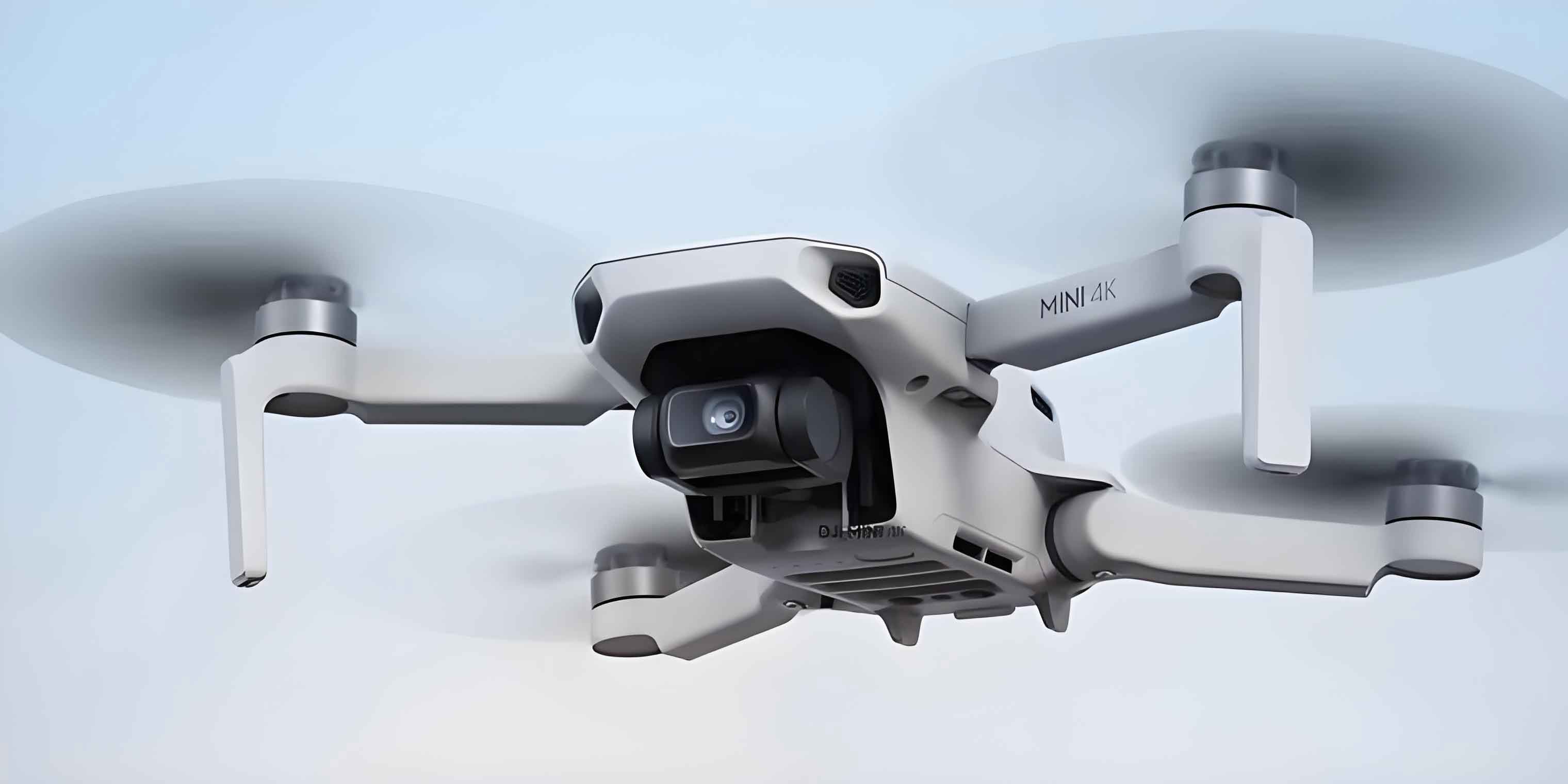
- UAV Drone Platform B (Compact/Mapping Grade): This is a highly portable, lightweight multi-rotor UAV drone. It is often equipped with an integrated, factory-calibrated camera and built-in RTK/GNSS receivers. A key feature of this class is the ability to perform real-time terrain-following using its onboard sensors, simplifying operations in complex terrain. Its operational simplicity and lower cost make it increasingly popular.
The key specifications relevant to surveying for both UAV drone platforms are summarized in the table below.
| Parameter | UAV Drone Platform A (Industrial) | UAV Drone Platform B (Compact) |
|---|---|---|
| Approximate Take-off Weight | > 6 kg | < 2 kg |
| Max Flight Time | > 50 minutes | > 40 minutes |
| Positioning System | RTK-ready (requires compatible payload/module) | Integrated RTK module |
| Typical Sensor | Interchangeable 5-lens oblique camera or LiDAR | Integrated wide-angle & telephoto camera |
| Terrain Following | Based on pre-loaded DEM | Real-time, via onboard sensors |
| Operational Complexity | Higher | Lower |
Field Data Acquisition: Flight Planning and Execution
A rigorous flight campaign was designed to test four distinct operational scenarios for each UAV drone. The study area was flown multiple times, varying the primary flight parameter of altitude. For UAV Drone Platform A, terrain-following mode was enabled for the low-altitude mission using a pre-existing DEM. For UAV Drone Platform B, its native real-time terrain-following function was used. The four flight scenarios were:
- Scenario 1 (S1): Terrain-following flight at approximately 100m above ground level (AGL).
- Scenario 2 (S2): Fixed-altitude flight at 100m AGL.
- Scenario 3 (S3): Fixed-altitude flight at 150m AGL.
- Scenario 4 (S4): Fixed-altitude flight at 200m AGL.
All flights followed a double-grid (“lawnmower”) pattern with a nadir-looking camera angle. To ensure robust 3D reconstruction, particularly of the steep mine faces, high overlap rates were used: 80% frontal overlap and 70% side overlap. The flight speed was kept constant at a moderate setting to ensure image sharpness. The flight boundaries were extended beyond the area of interest to guarantee complete coverage and minimize edge effects in the final models.
Ground Control and Check Points
A network of ten (10) ground control points (GCPs) was strategically deployed across the mining area. These points were placed on stable, well-defined features both on the mine floor and on accessible upper benches to provide vertical and horizontal control throughout the site’s relief. The coordinates of these points were surveyed with high precision using a professional-grade GNSS RTK system, achieving centimeter-level accuracy. These points served a dual purpose: as control points for georeferencing the photogrammetric models and as independent check points for accuracy validation. For the office processing phase, four different GCP usage schemes were applied to the data from each flight scenario:
- Scheme G0: No GCPs used (“Ground Control Free” processing, relying solely on the UAV drone’s onboard RTK positioning data).
- Scheme G3: 3 GCPs used for georeferencing.
- Scheme G5: 5 GCPs used for georeferencing.
- Scheme G7: 7 GCPs used for georeferencing.
In each scheme, the GCPs not used for georeferencing were reserved as check points. This design creates a matrix of test conditions: 2 UAV drone platforms × 4 flight scenarios × 4 GCP schemes = 32 distinct processing and evaluation conditions.
Data Processing and Accuracy Assessment
All aerial imagery was processed using industry-standard Structure-from-Motion (SfM) photogrammetric software. The processing pipeline included image alignment, generation of dense point clouds, mesh creation, and texturing to produce georeferenced 3D models and digital surface models (DSMs) for each of the 32 conditions.
The accuracy of each output was rigorously assessed by comparing the coordinates of the independent check points as measured in the 3D model against their known high-precision GNSS-surveyed coordinates. The discrepancies in the Easting (ΔX), Northing (ΔY), and Elevation (ΔZ) were calculated for each check point. From these discrepancies, standard error metrics were computed to quantify the precision of the UAV drone survey. The root mean square error (RMSE) is used as the primary accuracy indicator:
$$ RMSE_X = \sqrt{\frac{\sum_{i=1}^{n}(X_{model,i} – X_{ref,i})^2}{n}} $$
$$ RMSE_Y = \sqrt{\frac{\sum_{i=1}^{n}(Y_{model,i} – Y_{ref,i})^2}{n}} $$
$$ RMSE_Z = \sqrt{\frac{\sum_{i=1}^{n}(Z_{model,i} – Z_{ref,i})^2}{n}} $$
Where \(n\) is the number of check points. The horizontal RMSE (Planimetric) and the overall 3D RMSE are then derived as:
$$ RMSE_{Horizontal} = \sqrt{RMSE_X^2 + RMSE_Y^2} $$
$$ RMSE_{3D} = \sqrt{RMSE_X^2 + RMSE_Y^2 + RMSE_Z^2} $$
Lower RMSE values indicate higher accuracy. These metrics provide a direct, quantitative measure of how each combination of UAV drone platform, flight height, and GCP scheme performs.
Results: Accuracy and Efficiency Analysis
The analysis of the 32 processed models yielded clear trends regarding the impact of the tested variables on both accuracy and the time required to achieve the final survey product.
Influence of UAV Drone Platform and Flight Altitude on Accuracy
The comparative accuracy between the two UAV drone platforms was consistent across most tested scenarios. The industrial-grade UAV Drone Platform A consistently produced models with lower RMSE values compared to the compact UAV Drone Platform B under equivalent flight altitudes and GCP schemes. For instance, in the terrain-following 100m AGL scenario (S1) with a moderate number of GCPs (Scheme G5), the horizontal accuracy of Platform A was approximately 50% better than that of Platform B.
A strong and expected correlation was observed between flight altitude and accuracy for both UAV drones when using fixed-altitude modes (S2, S3, S4). As the flight altitude increased, the ground sampling distance (GSD) increased, leading to a reduction in image detail and a corresponding decrease in the precision of the 3D reconstruction. This is quantitatively shown in the aggregated results below.
| Flight Scenario | UAV Drone Platform A 3D RMSE | UAV Drone Platform B 3D RMSE |
|---|---|---|
| S1: Terrain 100m | 4.8 | 7.7 |
| S2: Fixed 100m | 6.6 | 9.2 |
| S3: Fixed 150m | 6.8 | 11.3 |
| S4: Fixed 200m | 7.6 | 12.7 |
Furthermore, the terrain-following flight (S1) for both platforms yielded superior results compared to the fixed-altitude flight at the same nominal height (S2). This demonstrates the critical importance of maintaining a consistent distance to the terrain in rugged topography to preserve a uniform and high-resolution GSD across the entire site, which a UAV drone with terrain-following capability is uniquely suited to provide.
Influence of Ground Control Point (GCP) Quantity on Accuracy
The analysis of different GCP schemes revealed a nuanced relationship. The use of GCPs consistently improved the accuracy of models from both UAV drone platforms compared to the ground-control-free (G0) scheme. Relying solely on the UAV drone’s onboard RTK resulted in the highest RMSE values. However, the rate of accuracy improvement diminished as more GCPs were added. A significant jump in precision occurred when moving from zero GCPs (G0) to using three GCPs (G3). The additional benefit gained from increasing the number from five (G5) to seven (G7) was marginal, often within the range of the expected random error. This indicates a point of diminishing returns for GCP investment in this type of environment when using RTK-enabled UAV drones.
| GCP Scheme | UAV Drone Platform A | UAV Drone Platform B |
|---|---|---|
| G0 (0 GCPs) | 5.2 | 8.5 |
| G3 (3 GCPs) | 4.5 | 7.8 |
| G5 (5 GCPs) | 4.1 | 7.4 |
| G7 (7 GCPs) | 3.9 | 7.1 |
Operational Efficiency Analysis: Field vs. Office Time
Beyond accuracy, the total time investment for a UAV drone survey is a critical practical metric. This study broke down the time expenditure into two phases: Field Operation Time and Office Processing Time.
Field Operation Time: This includes the time for site reconnaissance, setting up the UAV drone, executing the flight mission, and crucially, the time spent surveying GCPs. For flights at the same altitude, the actual flight time for both UAV drones was comparable. The major variable was GCP work. Surveying the network of 10 GCPs required approximately 120 minutes. Therefore, scenarios using GCP Schemes G3, G5, and G7 incurred this time cost proportionally (e.g., the time to survey 3, 5, or 7 points), while the G0 scheme required no GCP survey time at all. The compact UAV Drone Platform B often had a slight advantage in field setup time due to its simpler logistics.
Office Processing Time: This was the most striking point of differentiation. Processing the imagery from the industrial UAV Drone Platform A, especially from its high-resolution multi-lens payload, required significantly more computational time. In contrast, processing data from the compact UAV Drone Platform B was vastly faster. On average, the office processing time for Platform B’s data was only 5-10% of the time required to process Platform A’s data for an equivalent area and flight plan. This is attributed to the smaller image file sizes, simpler camera geometry, and potentially more optimized data workflows for the integrated system of the compact UAV drone.
| Task / Platform | UAV Drone Platform A (Industrial) | UAV Drone Platform B (Compact) | Notes |
|---|---|---|---|
| Field: GCP Survey (7 pts) | ~84 min | ~84 min | Same GNSS work required. |
| Field: Flight Ops (S1) | ~75 min | ~70 min | Includes setup, flight, pack-up. |
| Office: Data Processing | ~2100 min (35 hrs) | ~180 min (3 hrs) | To produce final 3D model/DSM. |
| Total Time (G7 Scheme) | ~2259 min (37.7 hrs) | ~334 min (5.6 hrs) | |
| Total Time (G0 Scheme) | ~2175 min (36.3 hrs) | ~250 min (4.2 hrs) | No GCP survey time. |
Discussion and Synthesis
The results of this comparative study illuminate clear trade-offs and optimal strategies for employing UAV drone technology in rugged open-pit mining environments.
The superior absolute accuracy of the industrial-grade UAV Drone Platform A makes it the undisputed choice for applications demanding the highest possible precision, such as monitoring millimeter-level deformations on critical slopes, detailed volumetric analysis of high-value mineral stockpiles, or generating engineering-grade base topographies. Its flexibility to carry different payloads, like LiDAR, also makes it indispensable for projects requiring penetration of vegetation cover on reclaimed areas or surrounding the mine site, a limitation of standard photogrammetric UAV drones.
However, the efficiency analysis reveals a compelling case for the compact UAV Drone Platform B in a wide array of routine mining surveying tasks. For applications like weekly or monthly progress monitoring, compliance reporting, blast pattern design, haul road planning, and general visual inspection, the accuracy delivered by the compact UAV drone—especially when using its real-time terrain-following mode and a minimal GCP scheme—is frequently more than sufficient. The dramatic reduction in office processing time is a transformative advantage. It enables a near-turnaround capability, where data collected in the morning can be processed into actionable models by the afternoon. This accelerates decision-making cycles significantly.
The most efficient operational paradigm identified for routine surveys is deploying a compact UAV drone with integrated RTK in a real-time terrain-following flight mode, coupled with a “minimal GCP” or “GCP-free” processing workflow. This approach eliminates the single most time-consuming and logistically challenging field task: the hazardous and lengthy survey of numerous ground control points. The onboard RTK provides sufficient absolute positioning, while the real-time terrain following ensures optimal image quality over complex relief. The resulting model accuracy, while not matching the pinnacle of the industrial platform, reliably meets the tolerance requirements for 1:500 to 1:1000 scale mapping and volumetric calculations with errors typically under 10 cm in 3D space. This paradigm represents the optimal balance of accuracy, speed, safety, and cost for many day-to-day mining operations.
The law of diminishing returns related to GCPs is a critical finding. For mines implementing RTK-enabled UAV drones, the resource-intensive process of deploying a dense GCP network (e.g., more than 5-6 well-distributed points for a typical pit) may not be justifiable for general monitoring. The marginal accuracy gain does not offset the substantial field time and risk exposure for survey crews. Strategic use of a few (2-4) permanently monumented check points for periodic model validation is a more efficient quality assurance practice.
Conclusion and Future Perspectives
This systematic comparison between two classes of UAV drone platforms under varying operational parameters provides a practical framework for selecting and deploying drone surveying solutions in open-pit mines. The key conclusions are:
- Accuracy Hierarchy: Industrial-grade UAV drones deliver higher absolute accuracy, but compact RTK/UAV drone systems are capable of producing results that satisfy the precision requirements for a majority of operational mining surveys.
- Parameter Impact: Flight altitude and terrain-following capability have a more pronounced impact on model accuracy than the incremental addition of GCPs beyond a minimal network. Maintaining a low, consistent ground sampling distance is paramount.
- Efficiency Frontier: The most significant efficiency gain is achieved in office processing time. Compact UAV drones can reduce data processing times by an order of magnitude compared to industrial systems, enabling rapid project turnaround.
- Recommended Practice: For routine high-frequency monitoring, the use of a compact, RTK-enabled UAV drone operating in real-time terrain-following mode with a minimal GCP strategy offers the optimal balance, maximizing safety (no GCP surveying on slopes), speed, and acceptable accuracy.
Future developments in UAV drone technology will continue to reshape this landscape. The integration of direct georeferencing with post-processed kinematic (PPK) or more robust RTK solutions will further diminish the need for GCPs. The emergence of lightweight, solid-state LiDAR sensors that can be deployed on compact UAV drone platforms promises to bridge the current gap in vegetation penetration capability, potentially making high-detail terrain modeling under foliage routine and efficient. Furthermore, advancements in onboard computing and AI-driven data processing could shift some analysis from the office to the field, providing real-time preliminary results from the UAV drone itself. The continuous evolution of the UAV drone as a tool ensures it will remain at the forefront of innovative and efficient mine surveying and management practices.