
In modern geospatial engineering, the use of DJI UAV technology has revolutionized topographic surveying, particularly for linear infrastructure projects such as rivers, canals, and pipelines. As a professional engaged in engineering surveys and drone-based mapping, I have extensively utilized various DJI drone models, including the DJI Phantom 4 Pro and the DJI Matrice 300 (M300), to assess their performance in belt-shaped terrain mapping. This analysis focuses on comparing these DJI UAV systems in terms of cost, operational efficiency, and accuracy, while also considering the broader applications of DJI FPV systems in rapid data acquisition. The objective is to provide insights for selecting the appropriate DJI drone based on project requirements, ensuring optimal results in large-scale topographic mapping.
Topographic maps serve as fundamental tools in urban planning, land management, and civil engineering, providing critical spatial data. Traditional surveying methods are often time-consuming, labor-intensive, and prone to errors, leading to high field costs. With advancements in DJI UAV technology, drone-based surveying has emerged as a superior alternative, offering high efficiency, precision, and flexibility. Among the popular DJI drone models, the Phantom 4 Pro and M300 stand out for their distinct features. The Phantom 4 Pro, a consumer-grade DJI UAV, is known for its portability and ease of use, whereas the M300, an enterprise-level DJI drone, boasts extended flight time and advanced capabilities. This paper delves into a comparative study of these systems, incorporating mathematical models, tabular data, and empirical results to evaluate their suitability for belt-shaped topography applications.
The study area involved a 1.1 km long and 20 m wide water channel, part of a river management project in a region characterized by varied terrain. The total survey area extended approximately 80 meters on either side of the channel centerline, covering 0.15 km². Data acquisition was performed using the DJI Phantom 4 Pro and DJI M300 drones, equipped with high-resolution cameras. Key parameters, such as flight altitude and overlap rates, were configured based on standard formulas to ensure consistent ground sampling distance (GSD) for 1:500 scale mapping. The performance of these DJI UAVs was assessed through control point analysis, error calculations, and efficiency metrics, providing a comprehensive understanding of their capabilities.
To calculate the flight altitude for achieving the desired GSD, the following formula was applied:
$$ H = \frac{f \times R}{a} $$
where \( H \) is the flight altitude in meters, \( f \) is the focal length of the lens in millimeters, \( R \) is the ground resolution (GSD) in meters, and \( a \) is the pixel size in millimeters. For the DJI Phantom 4 Pro, with a focal length of 8.8 mm, pixel size of 0.0024 mm, and a target GSD of 0.05 m, the altitude was set to 100 m. Similarly, for the DJI M300, featuring a focal length of 56 mm and pixel size of 0.0038 mm, the altitude was determined to be 220 m. These settings ensured comparable data quality, allowing for a fair evaluation of both DJI drone systems.
The specifications of the DJI UAVs used in this study are summarized in Table 1. This comparison highlights the technological differences between the consumer-grade Phantom 4 Pro and the professional-grade M300, which influence their performance in surveying tasks.
| Parameter | DJI Phantom 4 Pro | DJI M300 |
|---|---|---|
| Sensor Type | 1-inch CMOS (13.2 × 8.8 mm) | Full-frame (36 × 24 mm) |
| Focal Length (mm) | 8.8 | 56 |
| Pixel Resolution | 5472 × 3648 (20 MP) | 9504 × 6336 (60 MP) |
| Pixel Size (mm) | 0.0024 | 0.0038 |
| Flight Time (min) | ~30 | ~55 |
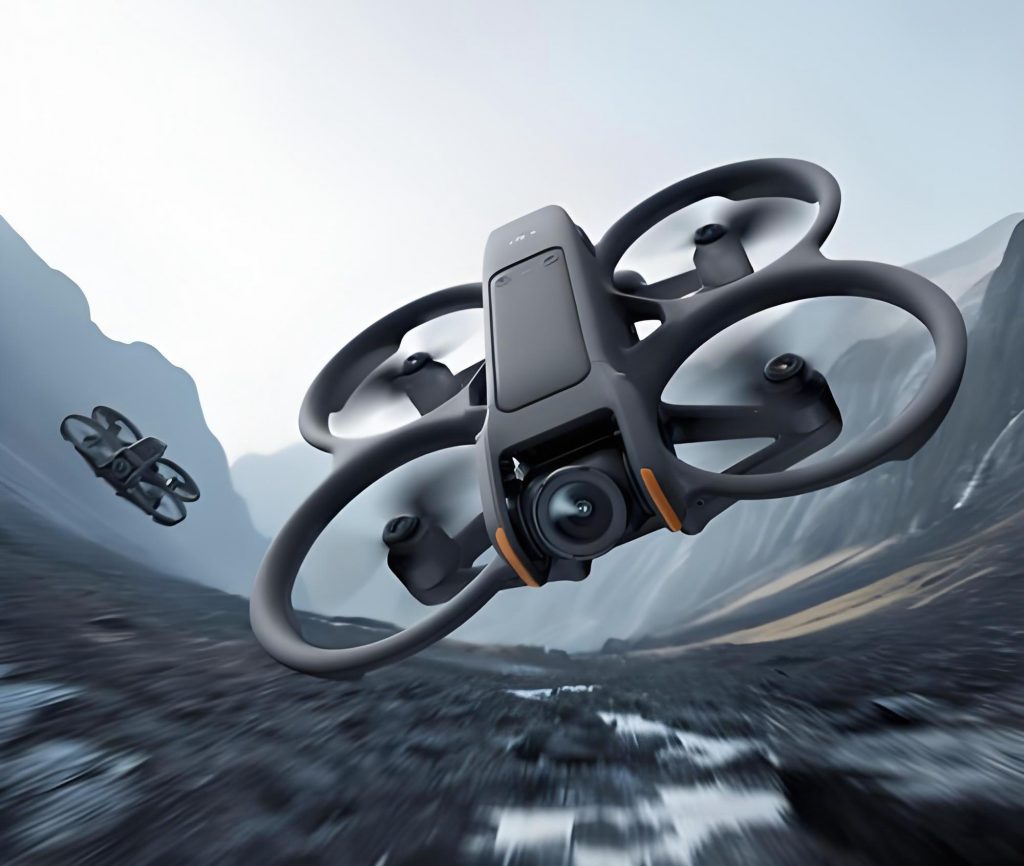
In addition to the DJI Phantom 4 Pro and M300, other DJI drone models like the DJI FPV offer unique advantages for specific scenarios, such as high-speed aerial inspections. However, for precise topographic mapping, the focus remains on systems with robust photogrammetric capabilities. The flight parameters for both DJI UAVs were standardized to maintain consistency, as detailed in Table 2. These settings included lateral and longitudinal overlap rates of 75%, which are essential for generating high-quality 3D models through structure-from-motion (SfM) techniques.
| Parameter | DJI Phantom 4 Pro | DJI M300 |
|---|---|---|
| Flight Altitude (m) | 100 | 220 |
| Lateral Overlap (%) | 75 | 75 |
| Longitudinal Overlap (%) | 75 | 75 |
Control points and check points were established across the survey area at intervals of 200 meters, following a paired configuration to enhance accuracy assessment. A total of 12 control points (denoted as XK series) and 8 check points (JC series) were deployed uniformly. The check points were surveyed using RTK GPS in fast-static mode, achieving root mean square error (RMSE) values compliant with geodetic standards. Data processing was performed using ContextCapture software, which facilitated image matching, 3D model reconstruction, and accuracy evaluation. The DJI UAV imagery was processed to extract spatial coordinates, which were then compared against the ground-truth data from check points.
The accuracy assessment involved calculating the mean errors in planar coordinates (X, Y) and elevation (H). The formulas for planar and elevation errors are as follows:
$$ m_x = \pm \sqrt{\frac{\sum_{i=1}^{n} (x_i – x_0)^2}{n}} $$
$$ m_y = \pm \sqrt{\frac{\sum_{i=1}^{n} (y_i – y_0)^2}{n}} $$
where \( m_x \) and \( m_y \) represent the mean errors in the X and Y directions, respectively; \( x_i \) and \( y_i \) are the measured coordinates from the DJI drone model; \( x_0 \) and \( y_0 \) are the true coordinates from RTK measurements; and \( n \) is the number of check points. The overall planar error \( m_p \) and elevation error \( m_h \) are computed as:
$$ m_p = \pm \sqrt{m_x^2 + m_y^2} $$
$$ m_h = \pm \sqrt{\frac{\sum_{i=1}^{n} (h_i – h_0)^2}{n}} $$
where \( h_i \) is the elevation derived from the DJI UAV data, and \( h_0 \) is the reference elevation. These error metrics are critical for evaluating the compliance of DJI drone outputs with engineering standards, such as GB50026-2020, which specifies tolerance limits for topographic mapping.
The results from the DJI Phantom 4 Pro and M300 are presented in Tables 3 and 4, respectively. These tables display the coordinate differences (\( \Delta X \), \( \Delta Y \), \( \Delta H \)) between the DJI UAV-derived data and the ground control points. The data indicate that both DJI drone systems achieve high planar accuracy, but variations in elevation accuracy are notable due to differences in flight altitude and sensor characteristics.
| Check Point | ΔX (m) | ΔY (m) | ΔH (m) |
|---|---|---|---|
| JC01 | -0.005 | 0.004 | -0.031 |
| JC02 | 0.009 | 0.002 | -0.037 |
| JC03 | 0.009 | 0.001 | -0.033 |
| JC04 | 0.018 | -0.010 | 0.017 |
| JC05 | 0.015 | 0.014 | -0.028 |
| JC06 | 0.013 | -0.011 | 0.032 |
| JC07 | 0.024 | -0.003 | 0.026 |
| JC08 | -0.013 | 0.012 | 0.031 |
| Check Point | ΔX (m) | ΔY (m) | ΔH (m) |
|---|---|---|---|
| JC01 | -0.023 | -0.003 | -0.028 |
| JC02 | 0.006 | 0.023 | -0.061 |
| JC03 | -0.002 | -0.012 | 0.052 |
| JC04 | -0.007 | -0.016 | 0.066 |
| JC05 | -0.039 | 0.019 | 0.090 |
| JC06 | 0.025 | 0.014 | -0.115 |
| JC07 | -0.001 | 0.003 | 0.106 |
| JC08 | -0.025 | 0.021 | -0.129 |
Based on the error calculations, the planar and elevation accuracies for both DJI UAVs are summarized in Table 5. The DJI Phantom 4 Pro, operating at a lower altitude, demonstrated superior elevation accuracy compared to the DJI M300. However, the M300 excelled in operational efficiency, completing the survey in nearly half the time required by the Phantom 4 Pro. This trade-off between accuracy and efficiency is a key consideration when selecting a DJI drone for belt-shaped topography projects.
| DJI UAV Model | Flight Altitude (m) | Survey Time (min) | Planar Error (m) | Elevation Error (m) |
|---|---|---|---|---|
| DJI Phantom 4 Pro | 100 | 23 | 0.0148 | 0.029 |
| DJI M300 | 220 | 12 | 0.0183 | 0.087 |
The discussion revolves around the implications of these findings for practical applications. The DJI Phantom 4 Pro, as a cost-effective DJI drone, is ideal for small to medium-scale projects where high elevation accuracy is paramount. Its simplicity and portability make it suitable for rapid deployments in accessible terrain. In contrast, the DJI M300, with its longer endurance and advanced features, is better suited for large-scale or time-sensitive missions. The integration of multiple payloads, such as LiDAR sensors, further enhances the versatility of this DJI UAV. Additionally, the use of DJI FPV systems could be explored for real-time monitoring and reconnaissance in complex environments, although their application in precision mapping is limited.
Several factors influence the performance of DJI UAVs in topographic surveying. For instance, environmental conditions like vegetation cover and weather can impact data quality. In this study, points obscured by obstacles or affected by rainfall were excluded to minimize errors. Moreover, the choice of software for data processing plays a crucial role. While ContextCapture was used here, other platforms like DJI Terra, Pix4D, or Inpho might yield varying results, highlighting the need for standardized workflows when working with DJI drone data.
In conclusion, both the DJI Phantom 4 Pro and DJI M300 offer distinct advantages for belt-shaped topography surveying. The Phantom 4 Pro provides high accuracy at lower altitudes, making it a reliable choice for detailed mapping, whereas the M300 delivers exceptional efficiency and scalability for extensive projects. The selection of a DJI UAV should be based on specific project requirements, including accuracy tolerances, time constraints, and budgetary considerations. Future research could involve comparative studies with other DJI drone models, such as the DJI FPV, to explore their potential in hybrid surveying approaches. As DJI UAV technology continues to evolve, it will undoubtedly play an increasingly vital role in geospatial engineering, driving innovations in accuracy and automation.
To further optimize the use of DJI drones in surveying, practitioners should consider factors like flight planning, sensor calibration, and data integration. For example, the GSD formula can be adapted for different DJI UAV models by adjusting parameters like focal length and pixel size. Additionally, error propagation models can be developed to predict accuracy under varying conditions. The continuous improvement in DJI drone capabilities, including enhanced batteries and AI-based features, will expand their applicability in challenging terrains. Ultimately, the synergy between DJI UAV hardware and advanced software will redefine the standards of topographic mapping, ensuring that engineers have access to precise, timely, and cost-effective geospatial data.
In summary, this analysis underscores the importance of selecting the right DJI UAV for specific topographic tasks. Whether using the Phantom 4 Pro for its precision or the M300 for its efficiency, DJI drones have proven to be indispensable tools in modern surveying. As technology advances, the integration of systems like DJI FPV could open new avenues for dynamic data acquisition, further solidifying the role of DJI in the geospatial industry.