
The proliferation of unmanned aerial systems has irrevocably altered the modern battlespace. As an analyst deeply invested in the human component of this technological revolution, I observe that the efficacy of a military drone is intrinsically tied to the cognitive prowess of its operator. While significant resources are dedicated to advancing drone hardware, sensor packages, and AI algorithms, a critical—and often underexplored—factor is the systematic cultivation of the operator’s mental capabilities. This discourse aims to synthesize a comprehensive framework for understanding and training the specific cognitive capacities required for modern military drone operations, drawing upon established psychological models and practical training paradigms.
The operational paradigm for a military drone operator is fundamentally distinct from that of a manned aircraft pilot. This distinction creates unique cognitive demands that must be the cornerstone of any effective training program.
1. Human-Machine Decoupling and Sensory Deprivation. The most salient feature is the physical and sensory separation from the aircraft. I operate within a ground control station (GCS), a synthetic environment that presents data through screens and auditory feeds. This creates a state of “sensory impoverishment.” Unlike a pilot who feels aircraft attitude through vestibular and proprioceptive cues, hears engine pitch, and has a broad, immersive visual field, my reality is mediated entirely by data. The field of view from the drone’s camera is narrow, lacking peripheral context. There is no tactile feedback from control inputs or G-forces. This places an extraordinary burden on visual information processing and spatial reasoning to construct an accurate mental model of the drone’s state and its environment. Furthermore, latency in data-link communication introduces a temporal disconnect, requiring predictive judgment and heightened situational awareness to compensate for the delayed reality. The cognitive load for spatial dynamic reasoning is, therefore, significantly higher than in manned aviation.
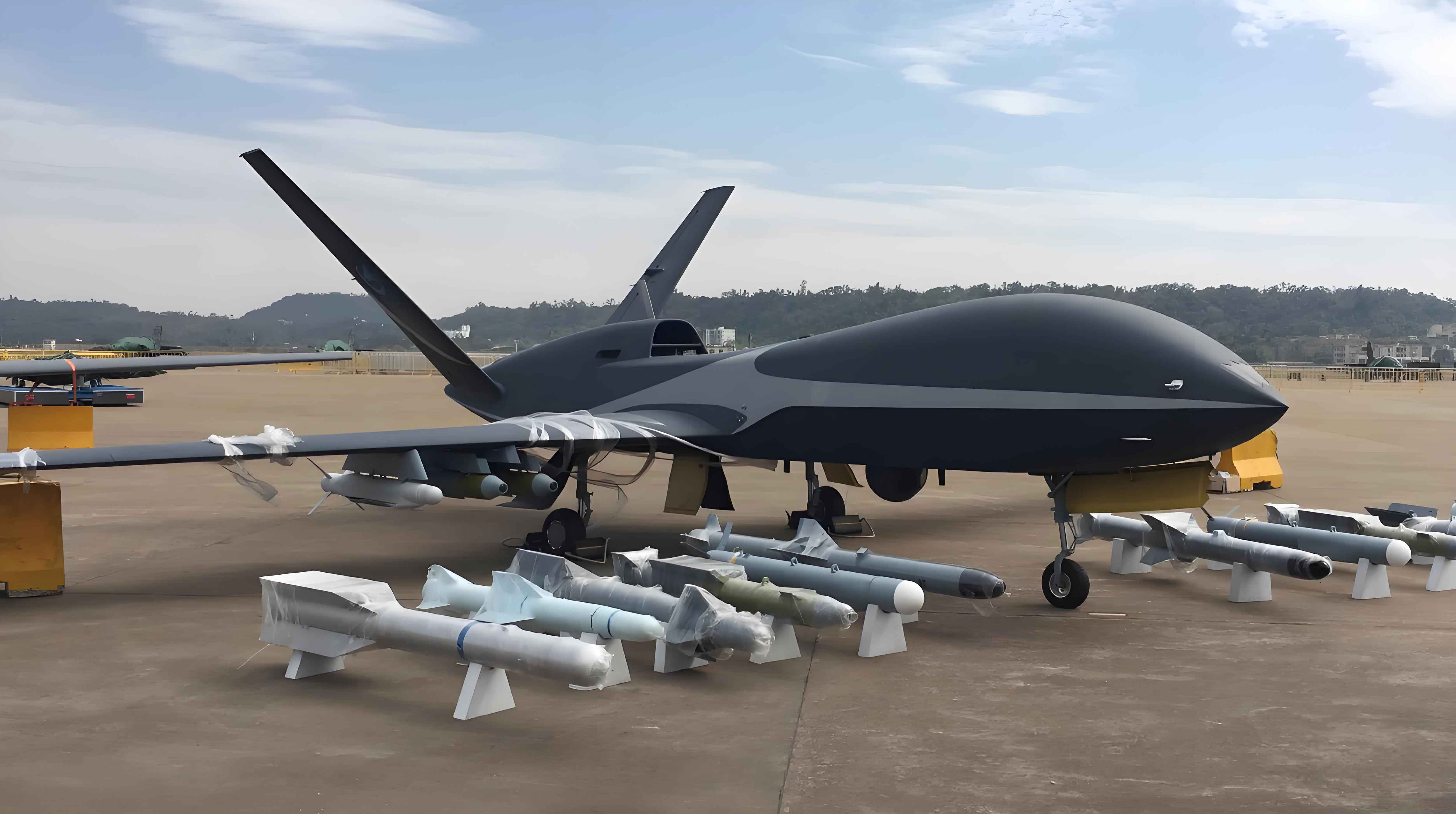
2. High-Stakes Environment and Acute Psychological Stress. The missions undertaken by military drones—often involving persistent intelligence, surveillance, reconnaissance (ISR), and kinetic strikes—are fraught with high-consequence events. The pressure is relentless and multifaceted. An operational error can lead to the loss of a multi-million dollar asset, collateral damage, or mission failure. Studies, such as those analyzing U.S. “Predator” drone mishaps, indicate that operator error, particularly breakdowns in situational awareness, is a leading cause. The psychological toll is documented, with operators reporting high levels of operational stress, anxiety, and an increased risk of conditions like burnout and post-traumatic stress disorder (PTSD). This environment demands not just technical skill, but exceptional stress resilience, emotional regulation, and the cognitive capacity to make sound, ethical judgments under extreme pressure.
3. Endurance Operations and Cognitive Fatigue. The key tactical advantage of a military drone—extended endurance—translates into marathon shifts for its operators. A typical mission may require 8-12 hours of continuous, focused attention on multiple dynamic displays. The GCS environment itself, with potential for noise, poor ergonomics, and artificial lighting, contributes to physiological and mental fatigue. Monitoring streams of data for subtle anomalies, maintaining vigilance during long periods of inactivity punctuated by moments of critical action, and operating on shift-work schedules disrupt circadian rhythms. Chronic fatigue directly impairs core cognitive functions: attention lapses, working memory degrades, and decision-making becomes prone to heuristics and error. Training must, therefore, build not only raw cognitive ability but also cognitive stamina and strategies for mitigating fatigue effects.
Deconstructing the Essential Cognitive Architecture
To systematically train an operator, we must first deconstruct the requisite cognitive abilities. Drawing from occupational analysis systems like O*NET and models of aviation psychology, I propose a framework of seven interdependent core capacities for the military drone operator.
1. Attentional Control. This is the gateway cognitive function. It encompasses:
- Sustained Attention: The ability to maintain focus on repetitive or routine tasks over long durations (e.g., monitoring a satellite feed).
- Selective Attention: The ability to focus on a specific data stream while ignoring irrelevant but salient distractions (e.g., focusing on a target amidst cluttered terrain).
- Divided Attention: The ability to time-share cognitive resources between multiple concurrent tasks (e.g., piloting, monitoring sensor payload, and communicating).
- Attention Switching: The speed and accuracy with which focus can be reallocated from one task or display to another in response to changing priorities.
The finite nature of attentional resources makes their efficient allocation paramount for mission success and safety.
2. Working Memory Capacity. Working memory is the mental “scratchpad” where information is temporarily held and manipulated. It is critical for:
- Integrating new sensor data (e.g., coordinates, bearing) with existing mission parameters.
- Following complex, multi-step procedures (e.g., weapon release protocols).
- Mental calculation and spatial updating.
A robust working memory allows an operator to keep relevant information readily accessible without succumbing to cognitive overload. The Baddeley & Hitch model provides a useful framework:
$$ WM = CE + PL + VSS + EB $$
where $CE$ is the Central Executive (control system), $PL$ is the Phonological Loop (auditory info), $VSS$ is the Visuo-Spatial Sketchpad (visual info), and $EB$ is the Episodic Buffer (integrator).
3. Perceptual Speed and Information Processing. This is the raw speed of cognitive operations. In the time-critical domain of military drone operations, milliseconds matter. It involves:
- Simple and complex reaction time.
- Rapid visual scanning and pattern recognition (e.g., identifying a vehicle type from a grainy image).
- Quick encoding and retrieval of information from long-term memory.
Enhanced perceptual speed allows for quicker orientation to dynamic situations and faster cycle times in the OODA (Observe, Orient, Decide, Act) loop.
4. Spatial Cognition. This is arguably the most critical and challenged ability for a military drone operator due to the lack of direct embodied experience. It includes:
- Spatial Visualization: Mentally rotating, manipulating, or transforming objects represented in two-dimensional displays (e.g., interpreting a drone’s attitude from an icon on a moving map).
- Spatial Orientation: Maintaining awareness of the drone’s position, heading, and altitude relative to terrain, airspace, and targets.
- Spatial Relations: Understanding the geometric relationships between multiple objects in the battlespace (e.g., the relative positions of friendly units, targets, and no-fly zones).
This ability enables the operator to construct a coherent, dynamic 3D mental map from disparate 2D data feeds.
5. Judgment and Decision-Making (JDM). This higher-order function integrates all other capacities. For a military drone operator, JDM often occurs under conditions of:
- Uncertainty: Incomplete or conflicting information.
- Time Pressure: Need for a rapid response.
- Risk: High stakes for incorrect decisions.
- Dynamic Change: Evolving situations.
Effective JDM requires not only procedural knowledge but also metacognition—the ability to think about one’s own thinking, recognize cognitive biases, and apply appropriate decision strategies (e.g., recognition-primed vs. analytical decision-making).
6. Critical and Systems Thinking. This involves the logical analysis of information, identification of cause-and-effect relationships within the complex drone system, and anticipating second and third-order effects of actions. It moves beyond following checklists to understanding the “why” behind procedures, enabling adaptive problem-solving when standard solutions fail.
7. Problem-Solving Ability. This is the practical application of cognitive resources to novel, ill-defined challenges—precisely the types of anomalies and system failures that occur in real operations. Effective problem-solving follows a structured cognitive process: problem identification, representation, strategy formulation (e.g., means-end analysis), and solution evaluation.
A Structured Training Methodology for Cognitive Enhancement
Moving from theory to practice, training must be deliberate, adaptive, and focused on these core capacities. The following table outlines a targeted training matrix.
| Cognitive Capacity | Training Methodology | Key Parameters & Tools | Example Exercise |
|---|---|---|---|
| Attentional Control | Dual/Multi-Task Training, Vigilance Tasks, Flanker/Stroop Tasks. | Task difficulty progression, event rate, distraction density. Computer-based cognitive training platforms. | Operator must maintain precise altitude control while simultaneously identifying specific vehicle types in a streaming video feed and responding to intermittent radio calls. |
| Working Memory | N-back tasks, Complex Span Tasks, Procedural Recall under Interference. | Load level (e.g., 2-back vs. 3-back), modality (visual/spatial/auditory). | A spatial 2-back task where the operator must indicate when the current drone icon position on a map matches the position from two steps earlier, while tracking a list of changing coordinates. |
| Perceptual Speed | Speeded Classification, Visual Search, and Symbol Decoding tasks under time pressure. | Stimulus onset asynchrony (SOA), display complexity, accuracy-speed tradeoff emphasis. | Rapidly compare two arrays of sensor symbols (e.g., radar signatures) and determine if they are identical, with progressively shorter time limits. |
| Spatial Cognition | Mental Rotation Training, Perspective-Taking Exercises, Map-Terrain Correlation Drills. | Angular disparity of rotation, complexity of 3D objects, use of degraded or incomplete visual cues. | Given a top-down map view and a drone’s nose camera view, the operator must quickly sketch the expected left-wing camera view or estimate the drone’s bank angle. |
| Judgment & Decision-Making | Dynamic, Branching Scenario-Based Training (SBT) with After-Action Review (AAR). | Scenario fidelity, ambiguity of information, time pressure, consequence feedback. | In a high-fidelity simulator, manage a military drone with a failing engine near hostile territory. Choices (divert, jettison payload, attempt repair) lead to different consequences, reviewed in depth post-exercise. |
| Systems Thinking | Causal Loop Diagramming, “What-If” Analysis of System Failures. | Complexity of system models (data link, propulsion, flight control, payload). | Given a loss of primary data link, trace the potential cascading effects on navigation, sensor control, and weapon systems, and identify all possible redundant pathways. |
| Problem-Solving | Diagnostic Troubleshooting Simulations, Constraint-Based Challenges. | Ill-structured problems, availability of resources/checklists, requirement for innovative solution generation. | The GCS is simulating a critical software bug. Standard checklists are ineffective. The operator and sensor officer must collaboratively diagnose the root cause from system logs and devise a workaround to complete the mission. |
The effectiveness of training can be conceptualized through a performance function, where operator performance $P$ is a function of innate skill $S$, cognitive load $L$, and fatigue $F$, mitigated by training efficacy $T_e$:
$$ P = T_e \cdot \frac{S}{(L \cdot F)} $$
The goal of cognitive training is to increase $T_e$, thereby boosting effective skill application and resilience to load and fatigue.
Training must also account for the operator’s psychological state. Stress exposure training, which gradually introduces stressors (time pressure, simulated system failures, communication overload) in a controlled environment, builds resilience. Techniques from cognitive-behavioral training, such as cognitive reframing and tactical breathing, can be integrated to enhance emotional regulation under pressure.
Integrating Cognitive Training into a Holistic Training Regime
Cognitive training is not a standalone activity but must be woven into the entire training pipeline for military drone operators, which typically follows three pillars:
1. Theoretical Instruction. This builds the foundational knowledge base (aerodynamics, aviation regulations, meteorology, sensor theory) upon which cognitive processes operate. Understanding the “why” enhances systems thinking and problem-solving.
2. Simulator-Based Training. This is the primary venue for integrated cognitive skills development. Modern high-fidelity simulators allow for the safe, repeatable, and measurable application of all cognitive capacities under increasingly complex and stressful conditions. Scenarios can be tailored to isolate and train specific skills, like spatial disorientation recovery or emergency decision-making.
3. Live Flight Training. This final phase, initially on smaller trainer drones, transfers the honed cognitive skills to the real-world operational environment, with its inherent unpredictability and consequences. The cognitive models developed in simulation are stress-tested and refined.
Discussion: Towards a Comprehensive Support Ecosystem
The role of the military drone operator is cognitively demanding and psychologically taxing. A modern training program must extend beyond skill acquisition to encompass sustained cognitive and psychological support.
Firstly, selection plays a role. While traditional pilot physiological standards (e.g., for G-tolerance) may be relaxed, robust psychological screening for stress resilience, cognitive aptitude (particularly spatial ability and working memory), and ethical reasoning becomes paramount.
Secondly, the operational culture must recognize the unique stressors. Building strong, cohesive crew resource management (CRM) skills within the drone team (pilot, sensor operator, mission coordinator) provides critical social support and error-catching redundancy. Leadership must foster an environment where reporting fatigue, stress, or cognitive uncertainty is encouraged, not stigmatized.
Thirdly, continuous cognitive assessment and support are vital. Just as physical fitness is monitored, periodic cognitive “check-ups” using validated tests can identify degradations due to fatigue or stress. Access to performance psychologists and structured recovery protocols should be standard. The goal is to maintain long-term cognitive readiness and prevent non-combat attrition due to burnout or psychological injury.
In conclusion, the operator is the irreplaceable cognitive core of the military drone system. As drone technology advances towards greater autonomy, the operator’s role will evolve from manual controller to high-level mission supervisor and ethical decision-maker—a role demanding even more sophisticated cognitive skills. A proactive, research-driven, and holistic approach to understanding and training the cognitive architecture of military drone operators is not merely an enhancement; it is a fundamental imperative for building a sustainable, effective, and resilient unmanned force. The future of unmanned warfare will be won not just by superior technology, but by the superior cognitive readiness of those who command it.