
As an observer and participant in the rapid evolution of unmanned aerial systems, I have witnessed the transformative impact of civilian UAVs on modern society. These devices, often referred to as drones, have unlocked new frontiers in low-altitude economics, penetrating sectors from logistics and agriculture to entertainment and surveillance. The global market for civilian UAVs is expanding at a compound annual growth rate exceeding 13%, with sales projected to reach millions of units annually. This proliferation, however, is a double-edged sword. While civilian UAVs offer unparalleled convenience and innovation, their misuse poses escalating security threats, including illicit surveillance, contraband delivery, and airspace violations. Consequently, the development of robust defensive countermeasures has become a critical imperative for ensuring safe and secure skies. In this article, I will delve into the primary methodologies for civilian UAV安防管控, emphasizing technological identification,诱导干预, and physical interception, while incorporating analytical tools like tables and formulas to elucidate these complex systems.
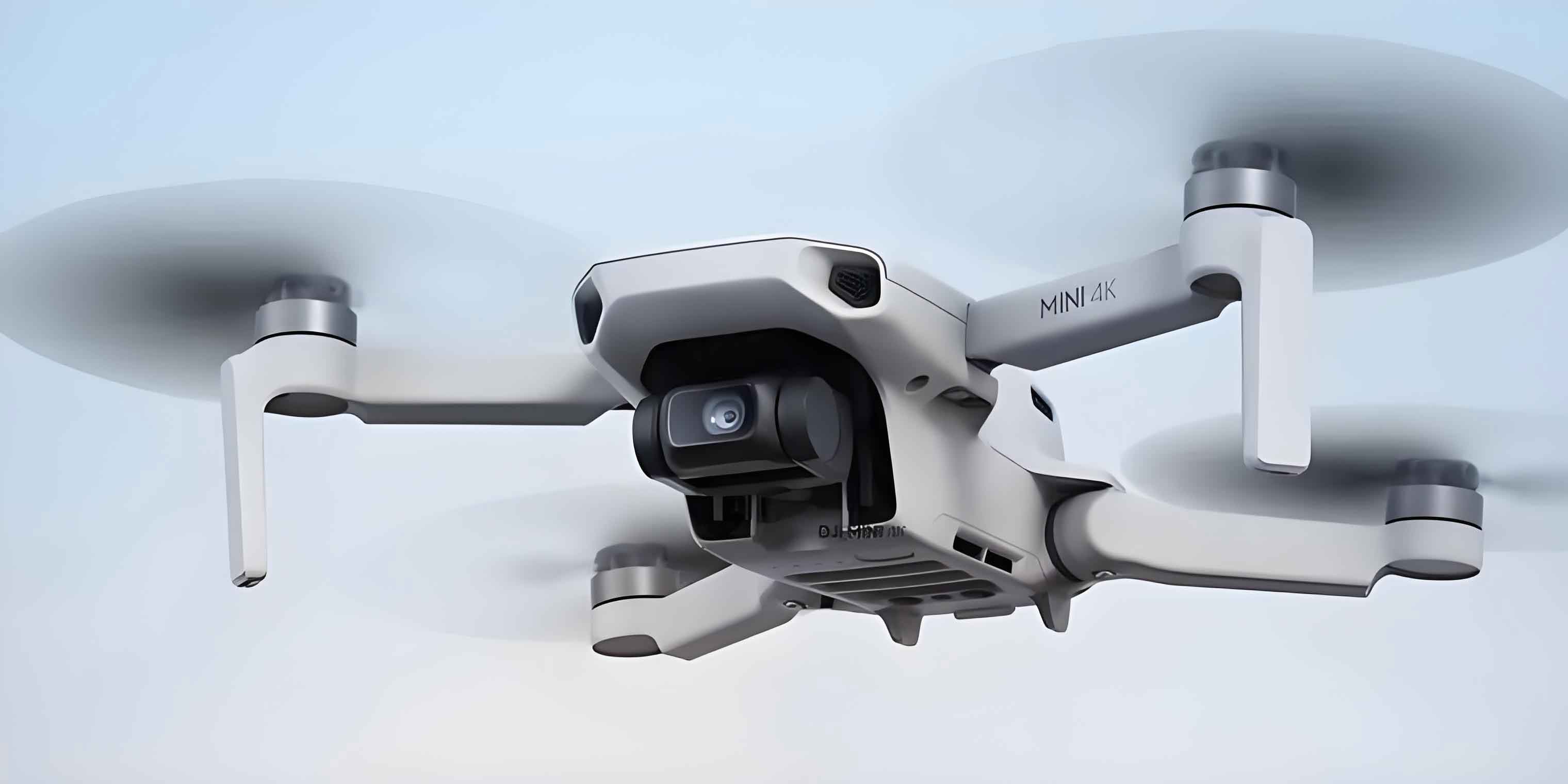
The operational core of a civilian UAV relies on a symphony of technologies: Global Positioning System (GPS) for navigation, Inertial Measurement Units (IMU) for stability, wireless communication for control, and image processing for data acquisition. This technological footprint becomes the Achilles’ heel for detection systems.反技术识别法, or counter-technological identification, leverages this very dependency to pinpoint and classify unauthorized civilian UAVs. Systems integrate sensors like microwave radar, electro-optical devices, acoustic detectors, LiDAR, and data-link sniffers to create a multi-layered detection grid. For instance, a radar-based system can monitor the electronic signals transmitted and received by a civilian UAV, correlating them with GPS data to track its trajectory and identify its model. The detection probability \(P_d\) in such systems can be modeled as a function of signal-to-noise ratio (SNR) and radar cross-section (RCS) of the civilian UAV:
$$P_d = 1 – \Phi\left( \frac{\Theta – \sqrt{2 \cdot \text{SNR} \cdot \text{RCS}}}{\sigma_n} \right)$$
Here, \(\Theta\) is the detection threshold, \(\sigma_n\) is the noise standard deviation, and \(\Phi\) is the cumulative distribution function of Gaussian noise. Advanced systems also employ electronic frequency sensors coupled with high-definition cameras and audio equipment, deployed at critical infrastructures like stadiums, airports, and data centers. These sensors create a detection envelope, continuously scanning for RF signatures unique to civilian UAVs. Furthermore, proactive defensive measures involve exploiting vulnerabilities in the civilian UAV’s software. By accessing open remote ports or wireless networks like the one used by common control applications, security systems can launch defensive cyber-attacks. Through techniques like pairing hijacking or root privilege escalation via specific drone models, control of the intruding civilian UAV can be seized, forcing it to land or return to a designated point. The table below summarizes key identification technologies and their parameters.
| Identification Technology | Primary Sensor | Effective Range | Key Metric | Typical Application |
|---|---|---|---|---|
| Radar-based Detection | Microwave Radar | Up to 8000 m | Radar Cross-Section (RCS) in m² | Long-range perimeter security |
| RF Spectrum Analysis | Software-Defined Radio (SDR) | 100-5000 m | Signal Frequency (Hz) & Modulation | Urban area monitoring |
| Electro-Optical/Infrared (EO/IR) | HD Camera & Thermal Sensor | 100-2000 m | Pixel Resolution & Thermal Contrast | Visual identification and tracking |
| Acoustic Detection | Microphone Array | 50-500 m | Sound Pressure Level (dB) & Frequency | Short-range, low-altitude detection |
| Cyber Takeover | Network Interface | Depends on comms range | Protocol Vulnerability Score | Active neutralization of rogue UAVs |
Once a civilian UAV is detected, the next line of defense involves诱导干预法, or induced intervention techniques. These methods aim to disrupt the normal operation of the civilian UAV without necessarily causing physical damage, often by targeting its navigation and control systems. The most prevalent target is the GPS receiver. A civilian UAV relies on precise GPS coordinates for stable hover and waypoint navigation. By jamming or spoofing GPS signals, the civilian UAV is forced to rely solely on its IMU, which drifts over time due to accumulated error, leading to navigational failure. The position error \(E(t)\) from an IMU alone grows approximately as:
$$E(t) \approx \frac{1}{2} \alpha t^2 + \beta t + \gamma$$
where \(\alpha\) is the accelerometer bias, \(\beta\) is the gyroscope bias, and \(\gamma\) is the initial alignment error. GPS jamming systems transmit high-power radio frequency noise on GPS bands, overwhelming the legitimate signals. A representative system might integrate an electronically scanned array radar, EO/IR tracker, and a directional RF suppressor, capable of disrupting links within a kilometer for micro civilian UAVs. Another ingenious method exploits the physical properties of the civilian UAV’s components. Acoustic interference, for example, targets the MEMS gyroscopes inside the civilian UAV. By emitting sound waves at the resonant frequency of the gyroscope, its output is corrupted, causing instability and crash. The resonant frequency \(f_r\) for a typical MEMS gyroscope is given by:
$$f_r = \frac{1}{2\pi} \sqrt{\frac{k}{m}}$$
where \(k\) is the torsional stiffness and \(m\) is the proof mass. Experiments show that with a sound pressure level of around 140 dB at the resonant frequency, a civilian UAV can be destabilized from distances up to 40 meters. Beyond jamming, spoofing presents a more sophisticated intervention. By broadcasting counterfeit but stronger GPS-like signals, a system can deceive the civilian UAV’s receiver into calculating a false position, velocity, or time. This can gently guide the rogue civilian UAV to a safe landing zone. The effectiveness of spoofing depends on the received signal power ratio between the spoofed signal \(P_s\) and the authentic signal \(P_a\) at the civilian UAV’s antenna:
$$ \text{Spoofing Success Condition: } \frac{P_s}{P_a} > \Gamma $$
where \(\Gamma\) is a threshold typically greater than 1 (often 2-10 dB), accounting for receiver processing gain. The following table contrasts various intervention techniques.
| Intervention Method | Target System | Mechanism | Typical Effective Range | Collateral Risk |
|---|---|---|---|---|
| GPS Jamming | GNSS Receiver | RF noise injection | 500-8000 m | High (affects all GNSS devices in area) |
| GPS Spoofing | GNSS Receiver | Deceptive signal transmission | 100-3000 m | Medium (targeted but requires precision) |
| Command Link Jamming | Radio Control (e.g., 2.4/5.8 GHz) | Directional RF suppression | 100-2000 m | Low to Medium |
| Acoustic Interference | MEMS Gyroscope | Resonance induction | 10-40 m | Very Low |
| Data Link Hijacking | Wi-Fi/Proprietary Protocol | Cyber-exploit & protocol takeover | Line-of-sight comms range | Low (requires specific vulnerability) |
When identification and soft intervention are insufficient or inappropriate for the threat level,暴力拦截法, or kinetic interception methods, come into play. These are direct physical countermeasures designed to incapacitate or capture the intruding civilian UAV. A prominent approach employs another UAV as an interceptor. A larger, more powerful counter-UAV can be deployed to chase and capture the target civilian UAV using a tethered net. Upon proximity, the net is launched or deployed, entangling the rotors of the civilian UAV and causing an immediate loss of lift. The dynamics of such a net capture can be analyzed using projectile motion and drag forces. The throw range \(R\) of a net from an interceptor UAV, assuming simplified ballistic motion in still air, is:
$$R = \frac{v_0^2 \sin(2\theta)}{g}$$
where \(v_0\) is the initial net deployment velocity, \(\theta\) is the launch angle, and \(g\) is gravitational acceleration. In practice, air drag and relative motion make the engagement more complex. For direct energy weaponry, high-energy lasers offer a precise and scalable solution. A laser anti-UAV system focuses a high-power beam onto the hull or critical component of the civilian UAV. The time \(t_{\text{burn}}\) required to penetrate the material is related to the laser power density \(I\) (W/m²) and the material’s specific ablation energy \(Q_{\text{abl}}\) (J/kg):
$$t_{\text{burn}} \approx \frac{\rho \cdot d \cdot Q_{\text{abl}}}{I}$$
where \(\rho\) is material density and \(d\) is thickness. Modern systems can achieve burn-through times of a few seconds for common civilian UAV composites at ranges of several hundred meters. For shorter-range, portable defense, net guns provide a practical solution. These devices use centrifugal force or pneumatic pressure to launch a weighted net that expands in flight, enveloping the civilian UAV. The net’s expansion radius \(r_{\text{net}}\) as a function of launch velocity \(v_l\) and angular speed \(\omega\) of the spinning masses can be approximated by balancing centrifugal force with the net’s structural tension. A simplified relation for the effective capture radius is:
$$r_{\text{net}} \propto \frac{v_l}{\omega}$$
Deployment in the field shows optimal engagement distances of 8 to 10 meters for man-portable net guns. Each kinetic method presents a trade-off between range, selectivity, and potential for collateral damage, as summarized in the comparative table below.
| Kinetic Interception Method | Interception Mechanism | Typical Engagement Range | Key Performance Parameter | Advantages | Disadvantages |
|---|---|---|---|---|---|
| Interceptor UAV with Net | Physical Entanglement | 10-100 m (relative) | Interceptor Speed & Net Deployment Accuracy | Reusable, capture possible | Requires piloting, weather-sensitive |
| High-Power Laser (Laser Cannon) | Thermal Ablation | 200-3000 m | Laser Power (kW) & Beam Quality (M²) | Speed of light engagement, precision | High power consumption, line-of-sight only |
| Portable Net Gun | Projectile Net Launch | 4-15 m | Muzzle Velocity & Net Area Density | Low cost, portable, simple operation | Very short range, single-shot often |
| Projectile-based (e.g., shotgun with net round) | Kinetic Impact & Entanglement | 20-50 m | Projectile Muzzle Energy (J) | Fast response, familiar platform | Risk of falling debris, limited accuracy |
| High-Power Microwave (HPM) | Electromagnetic Pulse (EMP) | 50-1000 m | Radiated Peak Power (GW) | Area effect, no line-of-sight needed | High collateral damage to electronics |
The integration of these diverse countermeasures into a cohesive civilian UAV defense architecture is the current frontier. A layered defense-in-depth strategy is most effective, combining wide-area detection via radar and RF sensors, targeted intervention using jamming or spoofing for compliant neutralization, and finally, kinetic interception as a last resort for hostile or non-responsive threats. The cost-effectiveness \(C_{\text{eff}}\) of such a layered system can be conceptualized as a function of the probability of successful neutralization \(P_n\) and the total system cost \(C_{\text{sys}}\), normalized by the threat severity \(S_t\):
$$C_{\text{eff}} = \frac{P_n \cdot S_t}{C_{\text{sys}}}$$
where \(P_n\) itself depends on the sequential probabilities of detection \(P_d\), classification \(P_c\), and successful engagement \(P_e\) for each layer: \(P_n = 1 – \prod_{i=1}^{n} (1 – P_{d,i} \cdot P_{c,i} \cdot P_{e,i})\). Future trends point towards greater autonomy in counter-UAV systems, leveraging artificial intelligence for faster threat assessment and response selection. AI algorithms can classify civilian UAV types in real-time based on flight patterns and RF signatures, deciding whether to jam, spoof, or intercept. Moreover, the development of standardized protocols for civilian UAV identification and communication (like Remote ID) will aid in separating authorized from unauthorized flights, making defense systems more efficient and reducing false positives. However, as countermeasures advance, so do the evasion techniques for civilian UAVs, such as stealth coatings, AI-powered erratic flight paths, and encrypted communications, ensuring an ongoing technological arms race.
In my assessment, the security of low-altitude airspace hinges on a balanced, adaptive, and legally sound application of these countermeasures. The goal is not to stifle the innovation and benefits brought by civilian UAVs, but to establish a safe operating environment. This requires continuous research into sensor fusion, non-kinetic neutralization, and international cooperation on standards and regulations. As the density of civilian UAVs in our skies increases, so does the necessity for intelligent, scalable, and proportionate defense systems that can protect critical assets and privacy without causing undue disruption. The journey towards secure integration of civilian UAVs into our airspace is complex, but through the diligent application of science and engineering, it is an achievable imperative.