
As an integral part of the modern technological landscape, civilian UAVs (unmanned aerial vehicles) have witnessed exponential growth in recent years. From my perspective as someone deeply involved in the certification and standardization processes, I believe that the rapid expansion of the civilian UAV industry necessitates robust product certification frameworks. These frameworks are crucial not only for ensuring safety and quality but also for fostering innovation and market trust. The fusion of electronic information technology with aviation engineering has endowed civilian UAVs with自动化,智能化, and网络化 characteristics, driving their adoption across diverse sectors such as agriculture, logistics, surveillance, and entertainment. In this context, developing and implementing comprehensive certification rules and testing standards becomes paramount to guide design, production, and usage, thereby safeguarding user interests and promoting industrial advancement.
The certification system for civilian UAV products serves as a government-mandated conformity assessment mechanism, playing an irreplaceable role in enforcing technical regulations, standardizing market秩序, combating counterfeit products, enhancing quality management, and protecting consumers. In my experience, the current landscape of civilian UAV product certification in many regions primarily revolves around voluntary schemes, which, while not mandatory, significantly contribute to elevating industry benchmarks. Key certification types include voluntary certifications like the CQC voluntary certification for civilian UAV products, the voluntary certification for agricultural plant protection UAVs, and the CR certification for civilian UAVs. These certifications typically follow a model comprising type testing, initial factory inspection, and post-certification supervision, ensuring ongoing compliance and performance integrity.
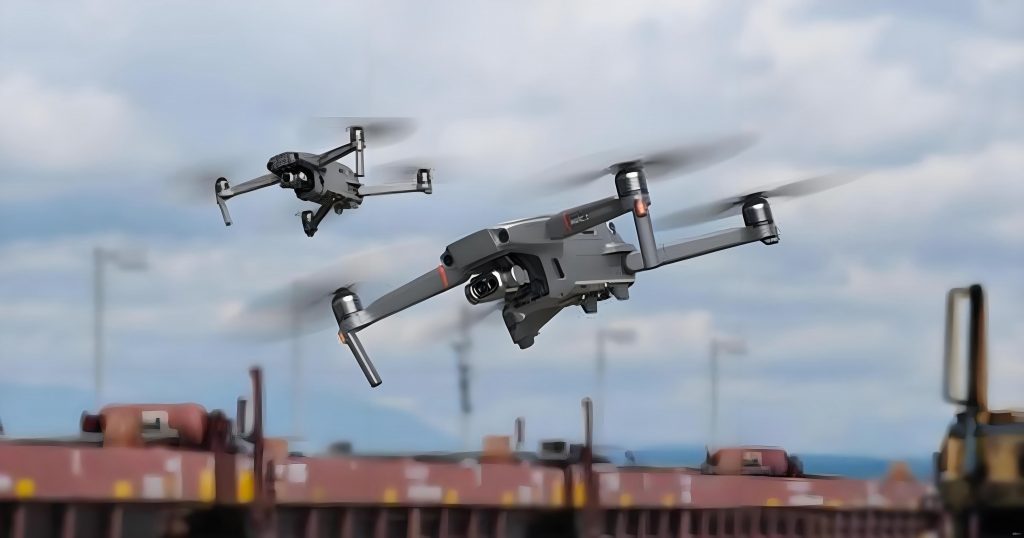
To better understand the certification ecosystem for civilian UAVs, I have compiled the following table summarizing the primary voluntary certification schemes, their implementation rules, and core testing aspects. This table highlights how each certification addresses different facets of civilian UAV performance and safety, emphasizing the multifaceted nature of ensuring reliability in these complex systems.
| Certification Type | Key Implementation Rules | Major Testing Standards | Focus Areas |
|---|---|---|---|
| CQC Voluntary Certification for Civilian UAVs | CQC13-448234-2021, CQC33-482231-2018, CQC16-482232-2018, CQC16-464121-2017 | CQC1639-2021, CQC1641-2021, CQC1637-2021, CQC3326-2018, CQC1642-2021, CQC1643-2021, CQC1620-2018 | Flight performance, general safety, EMC, environmental adaptability, battery safety |
| Voluntary Certification for Plant Protection UAVs | CAM-JS08/A, SAM-JS29/A | NY/T 3213-2018, GB/T 38058-2019, GB/T 4208-2017 | General requirements, performance, safety, environmental adaptability, IP rating |
| Civilian UAV CR Certification | CR-1-04-2021 | CR-1-0301TS-2018 | General safety, safety protection functions, environmental adaptability, EMC |
In my analysis, the testing standards underpinning these certifications are designed to address critical parameters that define the operational integrity of civilian UAVs. For instance, flight performance standards often involve evaluating metrics like stability, maneuverability, and endurance. The endurance of a civilian UAV can be modeled using a simplified formula that relates battery capacity to power consumption. Consider the following expression for estimated flight time, which is pivotal in assessing civilian UAV capabilities:
$$T = \frac{C \cdot \eta}{P}$$
Here, \(T\) represents the flight time in hours, \(C\) is the battery capacity in ampere-hours (Ah), \(\eta\) is the overall efficiency factor (dimensionless, typically between 0.7 and 0.9 for modern civilian UAV systems), and \(P\) is the average power consumption in watts (W). This formula underscores the importance of battery performance in civilian UAV applications, a key area covered by standards such as CQC1642-2021 for lithium batteries.
Moreover, safety considerations for civilian UAVs extend beyond battery issues to encompass structural integrity and electromagnetic compatibility (EMC). Structural strength requirements ensure that the civilian UAV can withstand operational stresses without failure. A common approach involves calculating the safety factor \(SF\) for critical components:
$$SF = \frac{\sigma_{\text{yield}}}{\sigma_{\text{applied}}}$$
In this equation, \(\sigma_{\text{yield}}\) is the yield strength of the material, and \(\sigma_{\text{applied}}\) is the maximum applied stress during flight. Standards mandate that \(SF\) exceeds a minimum threshold, often 1.5 or higher, to account for uncertainties and dynamic loads in civilian UAV operations.
EMC testing, as per standards like CQC1637-2021, ensures that civilian UAVs do not interfere with other electronic devices and are immune to external electromagnetic disturbances. This involves evaluating emission and immunity levels across various frequency bands, which can be represented using logarithmic scales for power density. For example, the radiated emission limit in decibels relative to a microvolt per meter (dBμV/m) at a distance \(d\) can be expressed as:
$$L_{\text{emission}} = 10 \log_{10}\left(\frac{P_{\text{rad}}}{P_0}\right) + 120$$
where \(P_{\text{rad}}\) is the radiated power in watts, and \(P_0\) is a reference power (1 μW). Compliance with such limits is vital for the reliable operation of civilian UAVs in crowded electromagnetic environments.
The environmental adaptability of civilian UAVs, covered by standards like CQC1643-2021, involves testing under extreme conditions such as temperature variations, humidity, and vibration. These tests ensure that civilian UAVs can perform reliably in diverse climates, from arid deserts to humid tropics. A key metric is the operational temperature range, often specified as \(T_{\text{min}}\) to \(T_{\text{max}}\) in degrees Celsius, with performance degradation modeled using Arrhenius-type equations for component lifespan:
$$k = A e^{-\frac{E_a}{RT}}$$
Here, \(k\) is the degradation rate constant, \(A\) is the pre-exponential factor, \(E_a\) is the activation energy, \(R\) is the universal gas constant, and \(T\) is the absolute temperature. This relationship helps in predicting how environmental stresses affect the longevity of civilian UAV components.
Another critical aspect is the positioning safety of civilian UAVs, which relies on navigation systems like GPS. Accuracy requirements are often defined by circular error probable (CEP) metrics, where the radius \(r\) encompasses 50% of position fixes. For civilian UAV applications, standards may specify a maximum CEP, such as 5 meters, to ensure precise operations. The CEP can be derived from statistical distributions of positioning errors, involving standard deviations \(\sigma_x\) and \(\sigma_y\) in horizontal coordinates:
$$CEP \approx 0.589 \sqrt{\sigma_x^2 + \sigma_y^2}$$
This formula highlights the need for high-quality navigation systems in civilian UAVs to avoid accidents and ensure mission success.
To further elucidate the scope of testing standards, I have prepared a table detailing specific parameters and their corresponding test methods as applied to civilian UAV certification. This table illustrates the comprehensive nature of evaluations required to certify a civilian UAV product, covering everything from mechanical resilience to electronic reliability.
| Testing Category | Key Parameters | Standard Reference | Typical Requirements for Civilian UAVs |
|---|---|---|---|
| Flight Performance | Endurance, max speed, hover accuracy | CQC1639-2021, GB/T 38058-2019 | Endurance ≥ 30 min, speed tolerance ±2 m/s, hover drift < 1 m |
| General Safety | Structural strength, propeller guards, emergency landing | CQC1641-2021, NY/T 3213-2018 | SF ≥ 1.5, guards to prevent injury, auto-landing on signal loss |
| Electromagnetic Compatibility | Radiated emissions, immunity to RF fields | CQC1637-2021, CR-1-0301TS-2018 | Emission limits per frequency band, immunity at 10 V/m |
| Battery Safety | Capacity, cycle life, thermal runaway | CQC1642-2021 | Capacity retention ≥ 80% after 500 cycles, no fire under abuse |
| Environmental Adaptability | Temperature range, waterproofing, vibration resistance | CQC1643-2021, GB/T 4208-2017 | Operation from -10°C to 40°C, IP54 rating, vibration profile per standard |
| Information Security | Data encryption, secure communication links | Referenced in general safety standards | Encryption for control and data transmission, anti-hacking measures |
From my viewpoint, the implementation of these certification rules has profound implications for the civilian UAV industry. First, it drives technological innovation by setting clear benchmarks for performance and safety. Manufacturers of civilian UAVs are incentivized to invest in research and development to meet or exceed these standards, leading to advancements in materials, aerodynamics, and control systems. For example, the push for longer endurance in civilian UAVs has spurred improvements in battery energy density and aerodynamic efficiency, which can be quantified using the specific energy \(E_s\) of batteries:
$$E_s = \frac{E}{m}$$
where \(E\) is the energy stored in watt-hours, and \(m\) is the mass in kilograms. Higher \(E_s\) values directly enhance the flight time of civilian UAVs, as seen in the adoption of lithium-polymer and solid-state batteries.
Second, certification facilitates market access and regulatory compliance. In regions like China, certifications such as the voluntary certification for plant protection UAVs are linked to national subsidy policies, enabling farmers to adopt these technologies affordably. This alignment with policy goals accelerates the adoption of civilian UAVs in agriculture, where they optimize pesticide usage and water consumption. The economic impact can be modeled through cost-benefit analysis, where the total cost \(C_{\text{total}}\) of using a civilian UAV for spraying includes initial investment, operational expenses, and savings from reduced input usage:
$$C_{\text{total}} = I + O \cdot t – S$$
Here, \(I\) is the initial cost, \(O\) is the operational cost per hour, \(t\) is the total operational hours, and \(S\) represents savings from efficient resource use. Certification ensures that the civilian UAV meets efficiency standards, maximizing \(S\) and minimizing \(O\).
Third, the evolution of standards, such as the recent mandatory national standard GB 42590-2023 for civilian UAV system safety requirements, reflects a commitment to elevating industry-wide safety levels. This standard mandates stringent requirements across 17 aspects, including EMC, structural strength, and power systems, laying the groundwork for future mandatory certifications. In my opinion, this shift towards stricter regulations will further consolidate the civilian UAV market, weeding out substandard products and fostering consumer trust.
Moreover, certification processes encourage the establishment of testing infrastructure, such as authorized flight zones and检测 centers. For instance, the development of无人机试飞空域 in industrial hubs provides controlled environments for validating civilian UAV performance under real-world conditions. This infrastructure supports the entire ecosystem, from startups to established players, by offering reliable testing services for payload verification, data link testing, and system integration.
To quantify the benefits of certification on civilian UAV reliability, we can consider statistical metrics like mean time between failures (MTBF) and failure rate \(\lambda\). Certification testing often involves accelerated life testing, where the failure rate under normal conditions is estimated from high-stress tests using models like the inverse power law:
$$\lambda_{\text{normal}} = \lambda_{\text{stress}} \left(\frac{S_{\text{stress}}}{S_{\text{normal}}}\right)^n$$
In this equation, \(\lambda_{\text{normal}}\) and \(\lambda_{\text{stress}}\) are failure rates under normal and stressed conditions, respectively, \(S\) represents stress levels (e.g., temperature or vibration), and \(n\) is an exponent derived from material properties. By ensuring that civilian UAVs meet certified MTBF targets, manufacturers can guarantee higher operational reliability, reducing downtime and maintenance costs.
Looking ahead, I believe that the continuous refinement of certification frameworks will be pivotal in addressing emerging challenges for civilian UAVs, such as autonomous operations, swarm coordination, and integration into urban air mobility systems. These advancements will require new standards and testing methodologies, potentially involving complex algorithms for collision avoidance and traffic management. For example, the safety of autonomous civilian UAVs can be assessed using risk models that combine probability of failure \(P_f\) and consequence severity \(C_s\):
$$R = P_f \cdot C_s$$
Certification criteria might mandate that \(R\) remains below a threshold value, derived from societal risk tolerance levels. This approach ensures that as civilian UAVs become more autonomous, they do not compromise public safety.
In conclusion, the certification of civilian UAV products through voluntary and emerging mandatory schemes plays a critical role in shaping the industry’s trajectory. By adhering to rigorous implementation rules and testing standards, stakeholders can enhance product quality, foster innovation, and ensure safe integration into various sectors. The use of quantitative metrics, as illustrated through formulas and tables, provides a solid foundation for evaluating and improving civilian UAV systems. As the technology evolves, so too will the certification landscape, driving the civilian UAV industry toward greater heights of excellence and reliability. Ultimately, a well-regulated environment benefits everyone—from manufacturers and regulators to end-users and the broader society that relies on the transformative potential of civilian UAVs.