
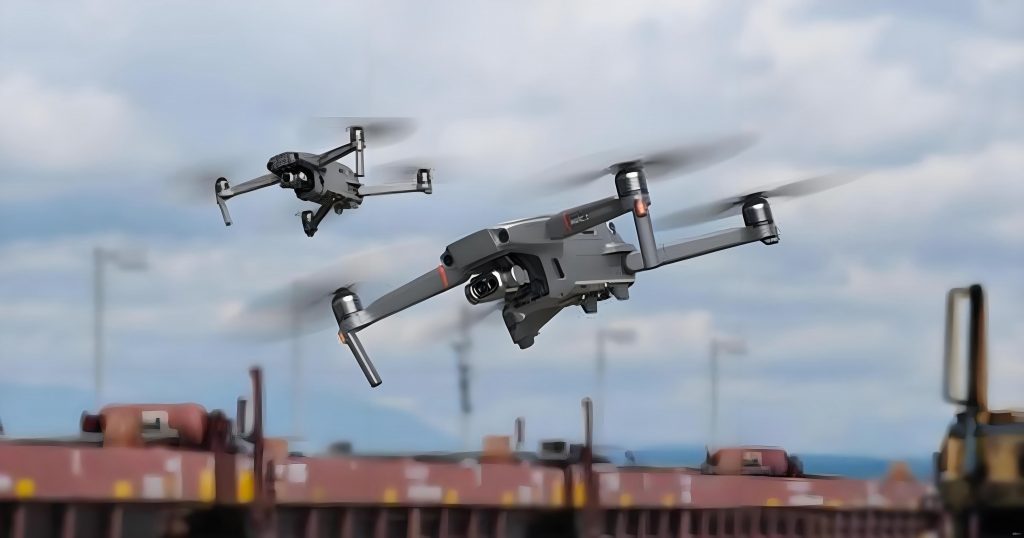
The rapid proliferation of small civilian Unmanned Aerial Vehicles (UAVs) has ushered in a new era of technological convenience for applications ranging from infrastructure inspection to agricultural monitoring. However, this accessibility also presents significant and growing threats to public safety, national security, and personal privacy. Malicious actors can employ low-cost, commercially available drones for illegal surveillance, contraband smuggling, or even as platforms for disruptive attacks. Consequently, the development of robust, reliable, and real-time systems for the automated detection of civilian UAVs has become a critical research frontier in computer vision and security technology.
Traditional radar-based detection systems often struggle with small, low-flying drones due to their minimal radar cross-section and the prevalence of ground clutter. In contrast, electro-optical sensors, operating in the visible and infrared spectra, offer a more viable solution for close-range, low-altitude drone detection in complex environments. The core challenge then shifts to automatically and accurately identifying UAV targets within the image or video data stream provided by these sensors. This task, known as visual object detection, involves localizing all instances of predefined object categories within an image by drawing bounding boxes around them.
For years, classic object detection methodologies relied on handcrafted features like Histogram of Oriented Gradients (HOG) or Scale-Invariant Feature Transform (SIFT), combined with classifiers such as Support Vector Machines (SVMs). These approaches, while pioneering, suffered from limited generalization, poor efficiency due to exhaustive sliding-window searches, and an inability to learn high-level semantic representations from data. The landscape was fundamentally transformed with the advent of Deep Convolutional Neural Networks (DCNNs). DCNNs automate the feature extraction and representation process, learning hierarchical features directly from vast amounts of labeled data. This data-driven paradigm has led to unprecedented accuracy and robustness in generic object detection, establishing DCNN-based methods as the dominant approach. The natural progression has been to apply and adapt these powerful frameworks to the specific and demanding problem of civilian UAV detection.
This article provides a comprehensive survey of the current state of deep learning-based visual detection for small civilian UAVs. We begin by reviewing the foundational DCNN architectures that have shaped modern object detection. Subsequently, we delve into the specific research efforts targeting UAVs, covering available datasets, methods for static images, and more advanced techniques for video sequences. Finally, we analyze the persistent challenges in this domain and discuss promising future research directions.
Foundations: DCNN-Based Object Detection Architectures
The evolution of DCNN-based object detectors can be broadly categorized into two families: two-stage and one-stage detectors, each with distinct operational philosophies and performance trade-offs.
Two-Stage Detectors: Prioritizing Accuracy
Two-stage detectors, as the name implies, decompose the detection process into sequential steps. The first stage generates a sparse set of candidate object proposals, regions likely to contain an object. The second stage classifies each proposal into specific object categories (or background) and refines the coordinates of the proposal’s bounding box. This separation allows for high-quality region suggestions and detailed analysis within each candidate.
- R-CNN (Regions with CNN features): The seminal work that introduced CNNs to object detection. It used an external algorithm (Selective Search) to generate region proposals, warped each region to a fixed size, and processed them through a CNN (e.g., AlexNet) to extract features. These features were then fed into class-specific SVMs for classification. While achieving a significant accuracy boost, it was computationally expensive due to processing thousands of overlapping regions independently.
- Fast R-CNN: Introduced a major efficiency improvement. Instead of cropping and warping regions from the image, it processes the entire image through a CNN once to produce a feature map. Region proposals are then projected onto this feature map, and a Region of Interest (RoI) Pooling layer extracts a fixed-length feature vector for each region. These features are used by fully connected layers for simultaneous classification and bounding-box regression, enabling end-to-end training.
- Faster R-CNN: The key innovation was integrating the proposal generation mechanism into the network itself via a Region Proposal Network (RPN). The RPN shares the convolutional features with the detection network and uses anchor boxes of various scales and aspect ratios to efficiently predict region proposals. This created a fully differentiable, nearly cost-free proposal generation stage, leading to state-of-the-art accuracy for its time.
- Mask R-CNN: An extension of Faster R-CNN that adds a parallel branch for predicting an object mask (segmentation) in addition to the class and box, demonstrating the flexibility of the two-stage paradigm.
One-Stage Detectors: Prioritizing Speed
One-stage detectors forgo the explicit region proposal step. They treat object detection as a single-shot, dense regression and classification problem over a predefined set of anchor points or grids on the image. This design leads to significantly faster inference speeds, making them suitable for real-time applications, often at a slight cost in accuracy, especially for small objects.
- YOLO (You Only Look Once): A pioneering one-stage framework that divides the input image into an S×S grid. Each grid cell is responsible for predicting B bounding boxes and their associated confidence scores, along with C class probabilities. It formulates detection as a single regression problem, enabling impressive real-time performance. Its core limitation was that each grid cell could only predict a limited number of objects, leading to missed detections for small, clustered objects.
- SSD (Single Shot MultiBox Detector): Addressed multi-scale detection by performing predictions on feature maps from multiple layers of the network (both deep and shallow). Lower-level features provide finer spatial detail crucial for small objects. It uses default boxes (anchors) of different aspect ratios and scales on these feature maps to handle object shape and size variation.
- YOLOv3 & Beyond: YOLOv3 incorporated modern architectural improvements like residual connections and feature pyramid networks. It predicts objects at three different scales, using upsampled features from deeper layers and combining them with finer features from earlier layers. This multi-scale prediction significantly improved its ability to detect objects of varying sizes. Subsequent versions (YOLOv4, v5, etc.) introduced various training tricks, new backbone architectures, and modular designs, pushing the speed-accuracy frontier further.
- RetinaNet: Introduced the Focal Loss to tackle the extreme foreground-background class imbalance inherent in one-stage detection. During training, a dense set of anchors is evaluated, most of which are easy background examples. The Focal Loss down-weights the loss contributed by these easy examples, allowing the model to focus on hard, misclassified ones, thereby closing the accuracy gap with two-stage detectors.
The following table summarizes key representative algorithms in this evolution:
| Model | Year | Backbone | Core Characteristics & Impact |
|---|---|---|---|
| R-CNN | 2014 | AlexNet | First to apply CNNs; multi-stage training; slow and memory-intensive. |
| Fast R-CNN | 2015 | VGG16 | Introduced RoI Pooling; shared features for proposals; end-to-end training. |
| Faster R-CNN | 2015 | VGG/ZF | Integrated Region Proposal Network (RPN); unified, efficient architecture. |
| YOLOv1 | 2016 | GoogLeNet | First major one-stage detector; extremely fast; struggled with small objects. |
| SSD | 2016 | VGG16 | Multi-scale feature maps for detection; better accuracy/speed trade-off than YOLOv1. |
| RetinaNet | 2017 | ResNet+FPN | Introduced Focal Loss to solve class imbalance; one-stage accuracy rivaling two-stage. |
| YOLOv3 | 2018 | DarkNet-53 | Feature pyramid predictions; residual blocks; significantly improved small object detection. |
| DETR | 2020 | ResNet | Transformer-based; eliminates anchors and NMS; set-based prediction. |
A critical component in many modern detectors is the Feature Pyramid Network (FPN). It addresses the fundamental challenge of scale variation by constructing a multi-scale feature pyramid from a single input image. A top-down pathway with lateral connections combines high-resolution, semantically weak features from lower layers with low-resolution, semantically strong features from higher layers. This produces feature maps at multiple levels that are rich in both semantic and spatial information. For a feature map at level \(l\), the FPN operation can be summarized as:
$$P_l = \text{Conv}(C_l + \text{Upsample}(P_{l+1}))$$
where \(C_l\) is the feature map from the backbone at level \(l\), and \(P_{l+1}\) is the higher-level, upsampled feature map. This architecture has become a standard module for detecting objects like civilian UAVs that appear at vastly different scales within imagery.
The Pursuit of the Elusive Drone: Datasets and Detection Methods
The performance of data-driven DCNN models is intrinsically linked to the quality and scope of the training data. For civilian UAV detection, the lack of large-scale, diverse, and publicly available benchmarks has been a significant hurdle. Nevertheless, several datasets and challenges have emerged to propel the field forward.
Existing Datasets and Their Challenges
| Dataset | Modality | Key Characteristics & Challenges |
|---|---|---|
| Anti-UAV | Visible + IR | Contains challenging sequences with small targets, fast motion, occlusion, and complex backgrounds (clouds, buildings). Serves as a benchmark for video UAV tracking and detection. |
| Drone-vs-Bird | Visible | Focuses on long-range detection, containing extremely small targets (often <20 pixels). The primary challenge is discriminating tiny drones from birds, requiring fine-grained feature analysis. |
| Self-Collected Datasets (e.g., UAVData) | Primarily Visible | Often larger in image count, featuring diverse drone models against varied backgrounds (urban, forest, coastal). They address the data scarcity issue but lack standardization for direct comparison between different research works. |
A common and severe challenge across all datasets is the small object problem. When a drone is far from the sensor, it may occupy only a few dozen pixels, providing minimal texture and shape information for the network to learn from. The feature representation for such a small area in a deep network can be extremely coarse, leading to missed detections. This is mathematically evident in the receptive field growth. The effective receptive field of a neuron in a deep layer is large, often encompassing much of the image. A tiny object occupies only a minuscule fraction of this receptive field, making its distinctive features easy to “dilute” amidst background clutter. Formally, if an object of size \(s_o\) pixels is contained within a receptive field of size \(R_f\), the signal-to-noise ratio for the object’s features can be problematic when \(s_o^2 / R_f^2\) is very small.
Detection Methods for Static Images
Most initial efforts apply generic object detectors directly to the UAV detection task, followed by domain-specific adaptations.
- Direct Application & Tuning: Standard models like Faster R-CNN, SSD, and YOLO are trained on UAV datasets. A crucial step for anchor-based detectors (Faster R-CNN, YOLO) is to recluster the training data to generate anchor boxes that match the typical aspect ratios and sizes of drones, which are often different from common objects like people or cars.
- Enhancing Small Drone Detection:
- Multi-Scale Feature Fusion: Building upon FPN, many works design enhanced feature fusion pathways. For example, a detector might predict at four or five different scales instead of three to better capture the wide size range of drones, from nearby (large) to distant (tiny).
- Context Aggregation: Since a tiny drone alone offers few features, leveraging the surrounding context is vital. Methods may expand the region around a candidate proposal or use attention mechanisms to gather relevant contextual information from a wider area to aid classification.
- Super-Resolution Preprocessing: Some approaches employ a deep learning-based super-resolution network to upscale the input image or feature maps before detection, aiming to recover details lost in small, low-resolution drone patches.
- Mitigating Data Scarcity:
- Transfer Learning: This is the standard practice. A model is first pre-trained on a massive generic dataset (like ImageNet or COCO) to learn fundamental visual features (edges, textures, shapes). The model’s backbone is then fine-tuned on the smaller, specific UAV dataset, allowing it to adapt its general knowledge to the particularities of drones.
- Data Augmentation: Advanced augmentation techniques are critical for UAV datasets. Beyond standard flips and rotations, methods specific to the problem are used: simulating motion blur (as drones move fast), adding varying degrees of Gaussian noise (modeling sensor noise), and compositing drones onto new backgrounds to increase scene diversity. This helps the model learn invariances and generalize better to unseen conditions.
- Infrared (IR) Detection: Detecting civilian UAVs in IR imagery presents a different set of challenges. IR sensors provide thermal signatures, making them effective at night or through light fog, but images have lower resolution, less texture, and higher noise. Approaches here often involve specialized preprocessing (e.g., contrast enhancement) and networks tailored for the unique characteristics of thermal images. The small, dim target problem is even more pronounced in IR, leading to research on specialized low-level feature fusion and spatial-temporal filtering within deep learning frameworks.
Advancing to Video Detection
Static image detectors ignore a critical source of information: motion. In video, the temporal dimension provides powerful cues for distinguishing a moving drone from static background clutter or other moving nuisances like birds.
- Motion as a Feature: The most common approach is to compute optical flow between consecutive frames, which estimates the motion vector for each pixel. This motion information can be used in several ways:
- As an additional input channel to the detection network, creating a spatio-temporal feature cube.
- To align and aggregate features from neighboring frames onto a key frame, improving feature quality and consistency (e.g., Flow-guided Feature Aggregation).
- To identify regions with independent motion for generating candidate proposals, reducing the search space.
Deep optical flow networks (e.g., FlowNet, RAFT) have made computing dense, accurate flow tractable.
- Temporal Feature Networks: Architectures like 3D Convolutions, Recurrent Neural Networks (RNNs), or Transformers can be employed to process sequences of frames directly, learning to extract and integrate spatio-temporal features end-to-end. For example, a 3D CNN can learn spatio-temporal filters that activate on characteristic drone motion patterns.
- Temporal Consistency & Tracking: A powerful paradigm is to combine a strong image-level detector with a tracking algorithm. Detections are linked across frames based on motion and appearance similarity, forming tracks. This allows for:
- Smoothing of detection scores over time (a flickering detection becomes stable).
- Recovery of missed detections in individual frames through track interpolation.
- Application of track-level classifiers that can analyze the object’s motion trajectory to reject false alarms (e.g., a bird’s flapping vs. a drone’s translational motion). The trajectory of a civilian UAV often follows smoother, more kinematic patterns compared to erratic biological motion.
Persistent Challenges and Future Horizons
Despite significant progress, reliable civilian UAV detection in unconstrained environments remains an open problem. The core challenges are multifaceted:
- The Extreme Small-Object Problem: When a drone is a mere few pixels, it lacks the visual structure that DCNNs excel at recognizing. This is a fundamental sensor resolution limitation.
- Complex and Dynamic Backgrounds: Clutter from clouds, trees, buildings, and other moving objects (birds, vehicles) creates a high rate of potential false alarms. Distinguishing a small drone from a bird is exceptionally difficult at long ranges.
- Adversarial Conditions: Fast motion causes blur, changing viewpoints cause dramatic appearance variation, and occlusion (by trees, structures) can hide the target partially or completely.
- Generalization and Data Scarcity: Models trained on one set of drones and backgrounds may fail on new, unseen types. Creating datasets that encompass the long-tail of real-world scenarios is immensely difficult.
Future research is likely to progress along several promising vectors:
- Beyond Pure Vision: Sensor Fusion: The most robust systems will fuse data from multiple sensor modalities. Combining visible cameras, infrared thermal cameras, radar, and even microphones (for acoustic signature) provides complementary information. Deep learning architectures for multimodal fusion (early, late, or hybrid) will be key. IR can find the target at night, radar can provide precise range/velocity, and visible light can offer high-resolution identification.
- Advanced Temporal Reasoning: Moving from simple optical flow or frame stacking to more sophisticated spatio-temporal modeling. Graph Neural Networks could model relationships between objects and scene elements over time. Vision Transformers adapted for video could capture long-range dependencies in both space and time to understand contextual scenes and object interactions.
- Efficient and Robust Architectures: For deployment on edge devices (like the sensors themselves), model efficiency is paramount. Research into neural architecture search for drone-specific detectors, model compression, and quantization will continue. Furthermore, improving model robustness against adversarial attacks, extreme weather artifacts, and severe motion blur is crucial for real-world reliability.
- Self-Supervised and Unsupervised Learning: To break the dependency on massive labeled datasets, leveraging unlabeled video data is essential. Self-supervised learning techniques can pre-train models using pretext tasks like frame prediction, motion segmentation, or contrastive learning across modalities, learning useful representations without bounding box annotations.
- Physics-Informed and Explainable Models: Incorporating domain knowledge, such as basic flight dynamics or aerodynamic constraints, could help filter improbable detections. Furthermore, developing more explainable AI for this safety-critical application is important, allowing operators to understand why a system made a particular detection decision.
Conclusion
The detection of small civilian UAVs using deep learning represents a critical intersection of computer vision advancement and pressing security needs. The field has matured rapidly, transitioning from applications of generic object detectors to the development of more specialized architectures that address scale variance, motion ambiguity, and data limitations. While challenges related to detecting minuscule targets in complex, dynamic environments persist, the trajectory of research points towards more integrated, intelligent, and efficient systems. The future of civilian UAV detection lies not in a single algorithm, but in synergistic systems that combine multi-modal sensing, sophisticated spatio-temporal reasoning, and robust, efficient deep learning models capable of operating reliably in the open world.