
In the contemporary era, the proliferation of civilian unmanned aerial vehicles (UAVs), commonly known as drones, has transformed various sectors, including agriculture, logistics, surveillance, and entertainment. As a first-person perspective, we delve into the intricacies of managing these devices to balance innovation with safety. The civilian UAV market has seen exponential growth, driven by technological advancements and decreased costs, leading to widespread adoption. However, this surge has introduced significant challenges in low-altitude airspace management, necessitating a robust control system. This article explores the necessity of such a system, analyzes global and domestic approaches, and proposes a framework for effective civilian UAV governance, emphasizing the repeated use of the term “civilian UAV” to underscore its centrality.
The imperative for strengthening the civilian UAV control system arises from multiple dimensions. Firstly, the accessibility of civilian UAVs has led to rampant unauthorized flights, often termed “black flights,” which jeopardize air traffic safety, public security, and critical infrastructure. Incidents at major airports, such as disruptions in Chengdu and Shenzhen, highlight the vulnerabilities. Secondly, civilian UAVs possess dual attributes as consumer products and aircraft, creating regulatory ambiguities. Current frameworks involve overlapping jurisdictions among civil aviation, industrial, and public security agencies, resulting in gaps that hinder comprehensive oversight. Thirdly, technological limitations, such as the lack of standardized communication and tracking systems in many civilian UAVs, impede real-time monitoring. Thus, a holistic control system is essential to mitigate risks while fostering the positive economic and social contributions of civilian UAVs.
To contextualize this discussion, we examine international approaches to civilian UAV management. Organizations like the International Civil Aviation Organization (ICAO) and national bodies such as the Federal Aviation Administration (FAA) in the United States and the European Aviation Safety Agency (EASA) have developed risk-based regulations. These emphasize classification by weight and usage, integration into air traffic management, and operator certification. For instance, the FAA’s Part 107 rules mandate registration for small civilian UAVs and restrict flights near airports, while EASA’s open-specific-certified categories align regulation with operational risk. In contrast, domestic efforts in China are fragmented, with multiple agencies involved but lacking cohesive legislation. The following table summarizes key international and domestic practices for civilian UAV control.
| Region/Entity | Core Regulatory Principle | Management Structure | Notable Policies for Civilian UAVs | Technological Emphasis |
|---|---|---|---|---|
| United States (FAA) | No-harm principle; balancing innovation and safety for civilian UAVs | Centralized under FAA; dedicated UAV Integration Office | Part 107 for small civilian UAVs; mandatory registration; remote ID rule | UTM development; sense-and-avoid research |
| European Union (EASA) | Risk-proportional regulation of civilian UAVs | Centralized under EASA; three-tier categorization | EU Regulations 2019/945 and 2019/947; operator registration | Geo-fencing; U-space implementation |
| International (ICAO) | Minimization of hazards from civilian UAV operations | Standards aligned with manned aviation; global coordination | SARPs for remotely piloted aircraft systems (RPAS) | Global tracking standards; interoperability frameworks |
| Japan | Strict zoning for civilian UAV flights | Ministry of Land, Infrastructure, Transport and Tourism (MLIT) | Aviation Law revisions; no-fly zones around airports and densely populated areas | Drone detection systems at critical sites |
| Australia | Risk-based management of civilian UAVs | Civil Aviation Safety Authority (CASA) | Part 101 rules; registration for drones over 250g; operator accreditation | ADS-B like tracking for larger civilian UAVs |
| China | Developing; multi-agency oversight for civilian UAVs | CAAC, MIIT, public security bureaus; no central authority | Interim provisions from CAAC; local no-fly ordinances; registration pilots | Research on anti-drone technology; UTM trials |
The effectiveness of civilian UAV control measures can be quantitatively assessed using risk models. For example, the overall risk \( R \) associated with civilian UAV operations in a given airspace can be expressed as a sum of individual incident risks:
$$ R = \sum_{i=1}^{n} P_i \times C_i $$
where \( P_i \) represents the probability of incident \( i \) (e.g., collision, privacy breach), and \( C_i \) denotes its consequence (e.g., economic loss, safety impact). Control systems aim to reduce \( R \) by lowering \( P_i \) through prevention (e.g., geo-fencing) or mitigating \( C_i \) via response protocols. Another metric, the control efficiency \( E \), measures the system’s performance:
$$ E = 1 – \frac{N_{\text{actual}}}{N_{\text{potential}}} $$
where \( N_{\text{actual}} \) is the number of incidents occurring under control, and \( N_{\text{potential}} \) is the estimated incidents without control. For civilian UAV density management, we can use a traffic flow model. Let \( D \) be the drone density in a low-altitude zone, \( V \) the average velocity, and \( A \) the airspace area. The conflict probability \( P_c \) between civilian UAVs and other objects can be approximated as:
$$ P_c = k \cdot D \cdot V \cdot A $$
where \( k \) is a constant factor accounting for operational rules and technology. Implementing control measures like altitude stratification or time-slot allocation can reduce \( P_c \) by modifying these variables.
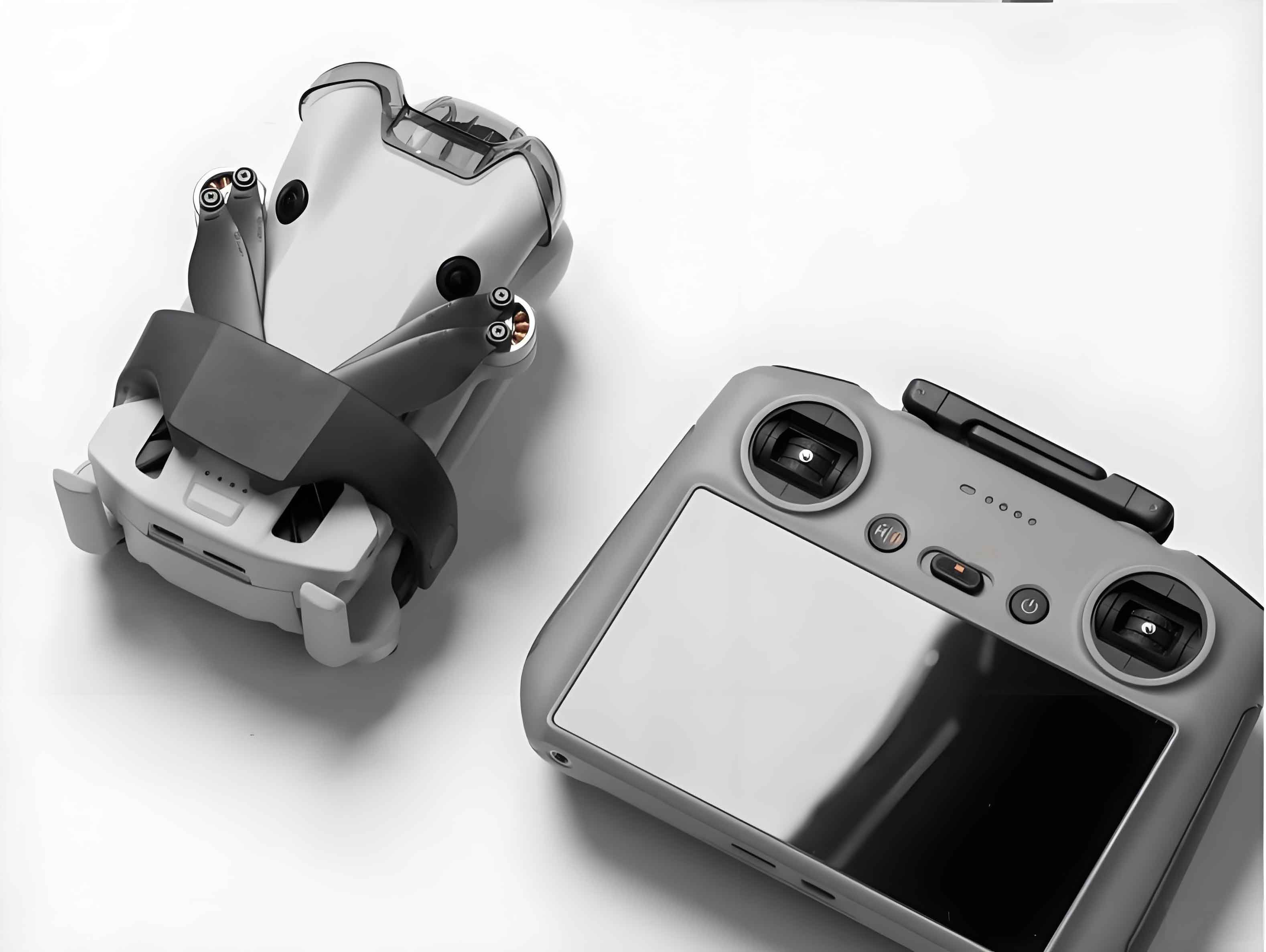
As illustrated, the complexity of low-altitude airspace with multiple civilian UAVs necessitates advanced control systems. This visual underscores the need for integrated management to prevent conflicts and ensure safe coexistence with manned aircraft.
Technological measures for civilian UAV control encompass detection, identification, and mitigation. Detection systems often rely on radar, radio frequency (RF) scanners, or acoustic sensors. The detection probability \( P_d \) can be modeled as a function of drone cross-section \( \sigma \), range \( r \), and system sensitivity \( S \):
$$ P_d = 1 – e^{-\frac{\sigma \cdot S}{r^2}} $$
Mitigation techniques include RF jamming, GPS spoofing, and net capture. The success rate \( M \) of mitigation depends on factors like drone type and environmental conditions. A composite score for a control system \( CS \) might be:
$$ CS = \alpha \cdot P_d + \beta \cdot M + \gamma \cdot R_{\text{reduction}} $$
where \( \alpha, \beta, \gamma \) are weighting coefficients reflecting priorities. International experiences show that soft measures like jamming are cost-effective for civilian UAVs, while hard-kill methods pose secondary risks. Research in countries like the U.S. focuses on autonomous sense-and-avoid systems, which can be described by algorithms for obstacle detection. For instance, a simple avoidance maneuver might use vector calculations: if a civilian UAV at position \( \vec{p} \) detects an obstacle at \( \vec{o} \), the avoidance vector \( \vec{v}_a \) could be:
$$ \vec{v}_a = \frac{\vec{p} – \vec{o}}{\|\vec{p} – \vec{o}\|} \cdot v_{\text{max}} $$
where \( v_{\text{max}} \) is the maximum evasion speed. Such technological integrations are crucial for civilian UAV safety.
Domestically, the civilian UAV landscape in China is characterized by rapid growth but regulatory lag. The Civil Aviation Administration of China (CAAC) has issued interim provisions, yet comprehensive laws are absent. Key challenges include: multi-agency coordination (CAAC, MIIT, public security), lack of standardized manufacturing norms, and limited public awareness. The following table contrasts domestic issues with potential solutions inspired by international best practices for civilian UAVs.
| Domestic Challenge for Civilian UAVs | International Inspiration | Proposed Solution Framework | Expected Impact on Civilian UAV Safety |
|---|---|---|---|
| Fragmented regulatory authority | FAA’s centralized UAV office in the U.S. | Establish a National Civilian UAV Management Center under a lead agency | Streamlined oversight; reduced jurisdictional conflicts |
| Absence of mandatory registration for all civilian UAVs | FAA and EASA registration requirements | Implement a nationwide registration system with unique digital IDs for each civilian UAV | Enhanced traceability; deterrence of malicious use |
| Limited technical standards for civilian UAV safety features | EASA’s standardized geo-fencing and remote ID | Develop and enforce technical standards for geo-fencing, ADS-B out, and encrypted communication | Improved interoperability and accident prevention |
| Insufficient air traffic management for low-altitude civilian UAVs | NASA’s UTM project and Singapore’s trials | Deploy a UTM system integrated with existing ATC for real-time civilian UAV tracking | Safe integration with manned aviation; optimized airspace use |
| Inadequate operator training and certification | CASA’s accreditation system in Australia | Create tiered certification programs based on civilian UAV weight and application complexity | Reduced operator error; increased compliance |
| Weak payload control for civilian UAVs | Japanese regulations on prohibited items | Define allowed payload categories; require permits for sensitive equipment like cameras or sprayers | Prevention of privacy violations and hazardous activities |
Building on these analyses, we propose a multifaceted approach to strengthen the civilian UAV control system. First, inter-departmental collaboration must be institutionalized. We recommend forming a cross-agency task force with representatives from civil aviation, industry, public security, and local governments. This body would coordinate policy formulation, incident response, and data sharing for civilian UAVs. A unified information platform could log all civilian UAV flights, leveraging blockchain for security. Second, manufacturing and sales regulation should be tightened. All civilian UAV producers must adhere to design standards, and distributors must verify buyer registration. A supply chain formula can ensure compliance: let \( Q \) be the quantity of civilian UAVs sold, \( R_{\text{reg}} \) the registration rate, and \( C_{\text{comply}} \) the compliance cost. The regulatory effectiveness \( E_{\text{reg}} \) is:
$$ E_{\text{reg}} = \frac{Q \cdot R_{\text{reg}}}{C_{\text{comply}}} $$
Higher \( E_{\text{reg}} \) indicates better oversight per unit cost. Third, technical standards must evolve. We advocate for mandatory installation of remote identification (Remote ID) modules in all civilian UAVs above a certain weight threshold. The signal strength \( S_{\text{ID}} \) required for reliable identification can be derived from the Friis transmission equation:
$$ S_{\text{ID}} = P_t + G_t + G_r – 20 \log_{10}\left(\frac{4 \pi d}{\lambda}\right) $$
where \( P_t \) is transmit power, \( G_t \) and \( G_r \) are antenna gains, \( d \) is distance, and \( \lambda \) is wavelength. Fourth, air traffic management modernization is critical. A UTM system for civilian UAVs should include dynamic geofencing, where no-fly zones are updated in real-time based on events. The airspace capacity \( K \) for civilian UAVs can be estimated using a modified queuing model:
$$ K = \frac{\mu}{\lambda} \cdot A_{\text{zone}} $$
where \( \mu \) is service rate (flights processed per hour), \( \lambda \) is arrival rate of civilian UAV flights, and \( A_{\text{zone}} \) is zone area. Fifth, operator training should be rigorous. Certification levels could range from basic (for hobbyist civilian UAVs) to advanced (for commercial operations). Training effectiveness \( T_e \) can be measured as:
$$ T_e = \frac{N_{\text{certified}}}{N_{\text{total}}} \cdot \frac{1}{t_{\text{incident}}} $$
where \( N_{\text{certified}} \) is certified operators, \( N_{\text{total}} \) is total operators, and \( t_{\text{incident}} \) is time between incidents. Sixth, payload management requires clear guidelines. A risk score \( RS_{\text{payload}} \) for a civilian UAV payload can be calculated based on weight, hazard level, and mission type:
$$ RS_{\text{payload}} = w_1 \cdot W + w_2 \cdot H + w_3 \cdot M $$
with weights \( w_1, w_2, w_3 \) and parameters \( W \) (weight), \( H \) (hazard index), \( M \) (mission criticality). Payloads exceeding a threshold \( RS_{\text{max}} \) would require special permits. Seventh, continuous research and development in anti-drone technology is essential. Investment in R&D can be optimized using a return-on-investment (ROI) formula specific to civilian UAV control:
$$ ROI = \frac{B_{\text{security}} + B_{\text{economic}}}{C_{\text{R&D}}} $$
where \( B_{\text{security}} \) is security benefit from reduced threats, \( B_{\text{economic}} \) is economic gain from safer operations, and \( C_{\text{R&D}} \) is R&D cost.
To synthesize these recommendations, we present a phased implementation plan for the civilian UAV control system. Phase 1 (Short-term: 1-2 years) focuses on establishing legal foundations and registration. Phase 2 (Medium-term: 3-5 years) involves deploying UTM and technical standards. Phase 3 (Long-term: 5+ years) aims at full integration and international harmonization. Each phase’s success can be evaluated using key performance indicators (KPIs), such as incident reduction rate and operator compliance rate. For instance, the incident reduction rate \( IRR \) over time \( t \) is:
$$ IRR(t) = \frac{I_0 – I(t)}{I_0} \times 100\% $$
where \( I_0 \) is baseline incident count before implementation, and \( I(t) \) is count at time \( t \). Regular audits and public feedback loops will ensure adaptability.
In conclusion, the management of civilian UAVs is a complex yet vital endeavor in the modern technological landscape. As we have discussed, a comprehensive control system must balance innovation with safety, drawing on international experiences while addressing domestic specificities. By fostering collaboration, standardizing processes, leveraging technology, and prioritizing training, we can mitigate the risks associated with civilian UAVs and unlock their full potential for societal benefit. The journey requires persistent effort, but with a structured approach, the vision of safe and efficient civilian UAV integration into our airspace is achievable. Let us embrace this challenge with diligence and foresight, ensuring that civilian UAVs serve as tools for progress rather than sources of peril.