
The rapid proliferation of civilian Unmanned Aerial Vehicles (UAVs) represents one of the most dynamic shifts in modern aviation. From emergency response and environmental monitoring to precision agriculture and infrastructure inspection, the applications for civilian UAV technology are expanding at an unprecedented pace. This explosive growth, however, has been accompanied by significant safety concerns. Incidents involving unauthorized civilian UAV flights near airports, both domestically and internationally, and near-misses with manned aircraft have captured public attention and underscored the urgent need for a coherent regulatory framework. Consequently, aviation authorities worldwide have prioritized the development of robust airworthiness and safety management systems for drones.
This article examines the current global landscape of civilian UAV airworthiness management, analyzing the approaches taken by leading international aviation bodies. It then synthesizes these insights to propose a foundational regulatory framework tailored to the unique challenges and opportunities presented by the integration of civilian UAV operations into national airspace systems. The core thesis is that effective regulation must be proportionate, risk-based, and adaptable, moving beyond a one-size-fits-all model derived from traditional manned aviation.
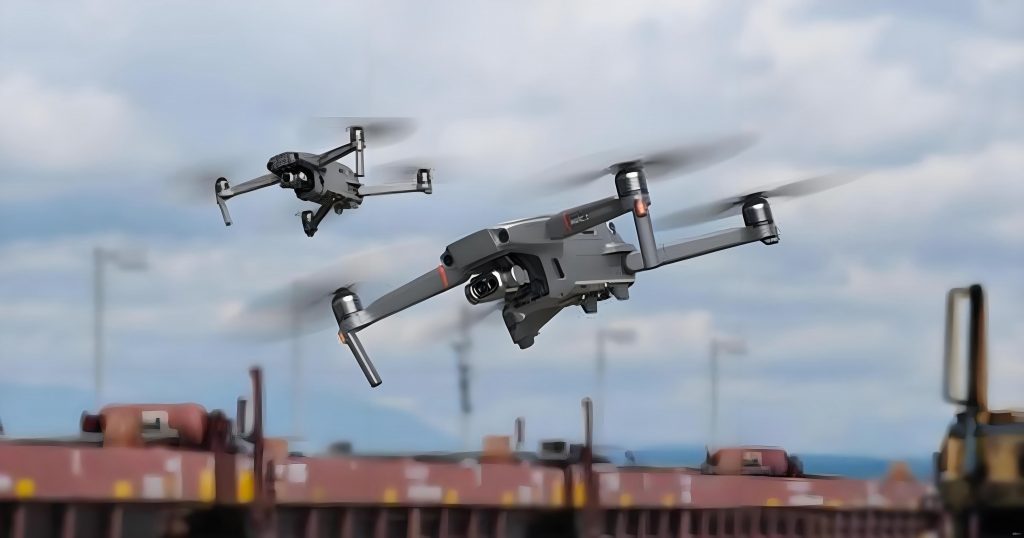
The diversity of civilian UAV operations is staggering. A small rotorcraft inspecting a power line poses a fundamentally different risk profile than a large fixed-wing vehicle transporting medical supplies between cities. Therefore, the regulatory philosophy must evolve from prescribing identical technical standards for all vehicles to managing the total system risk associated with each operation. This risk ($R$) can be conceptually modeled as a function of the vehicle’s potential kinetic energy, the operational environment’s complexity, and the population density over which it flies:
$$R = f(E_{kinetic}, C_{environment}, D_{population})$$
where $E_{kinetic}$ represents the kinetic energy (a function of mass and velocity), $C_{environment}$ accounts for airspace class and proximity to obstacles/airports, and $D_{population}$ models the density of people on the ground. A risk-proportionate regulatory framework establishes distinct categories with corresponding regulatory requirements that scale with the estimated risk level.
International Landscape of Civilian UAV Airworthiness Management
The development of international norms for civilian UAV regulation has been a collaborative, albeit complex, process. Leading organizations have established foundational documents that guide national authorities.
International Civil Aviation Organization (ICAO)
ICAO provides the overarching global framework. Through its Unmanned Aircraft Systems Study Group (UASSG), which includes member states and organizations like EASA, FAA, and EUROCAE, ICAO has developed the foundational document Doc 10019, Manual on Remotely Piloted Aircraft Systems (RPAS). This manual outlines a high-level regulatory philosophy aimed at minimizing hazards to people, property, and other aircraft. It advocates for a regulatory structure adapted from, but not identical to, the existing manned aircraft framework. Key principles include:
- Design and Production Approval: Adaptation of existing design assurance systems (e.g., DO-178/ED-12 for software, DO-254/ED-80 for hardware) and production oversight mechanisms for civilian UAV systems.
- Command and Control (C2) Link: Recognition of the C2 link as a critical safety item, requiring specific airworthiness considerations for reliability, integrity, and security, fundamentally different from traditional avionics.
- Remote Pilot Station (RPS) Certification: Treating the ground control station as part of the aircraft system, requiring human-factor assessments and hardware/software certification.
ICAO’s work is pivotal in promoting global harmonization, though it deliberately leaves detailed technical standards to regional and national authorities.
European Union Aviation Safety Agency (EASA)
EASA has developed one of the most advanced and explicit risk-based frameworks through its “Concept of Operations for Drones” and subsequent regulatory acts (EU 2019/945 & 2019/947). Its core principle is that “civilian UAV operations shall be regulated in a manner proportionate to the risk.” This is operationalized through a three-category classification system:
| Category | Risk Level | Key Operational Limits | Airworthiness Focus | Oversight Mechanism |
|---|---|---|---|---|
| Open | Low | Visual Line of Sight (VLOS), max altitude 120m, safe distance from people, weight < 25kg (subcategories C0-C4). | CE class marking based on product standards (e.g., noise, speed, geo-awareness). No individual airworthiness certificate. | Market surveillance; pilot competency via online training/test. |
| Specific | Medium | Beyond VLOS (BVLOS), over assemblies of people, etc. Operations not covered by ‘Open’ standard scenarios. | Operational Safety Risk Assessment (SORA) required. Airworthiness demonstrated via declared means or specific airworthiness standards. | National Aviation Authority (NAA) grants operational authorization based on submitted risk assessment. |
| Certified | High | Equivalent risk to manned aviation (e.g., transport of people, dangerous goods, operation over dense urban areas). | Full type certification, design & production organization approval, akin to manned aircraft (CS-23, CS-25, etc., with special conditions for UAV-specific systems). | Full EASA/NAA oversight throughout design, production, and maintenance lifecycle. |
The EASA model is particularly noteworthy for its introduction of the SORA methodology for the ‘Specific’ category. SORA provides a standardized process to identify hazards, determine the required level of robustness for Ground Risk (impact on people) and Air Risk (mid-air collision), and define mitigation measures. The final robustness level can be expressed as a target level of safety (TLS), influencing the required technical and operational specifications for the civilian UAV system.
Federal Aviation Administration (FAA)
The FAA’s approach, historically more operation-centric, is governed by the FAA Modernization and Reform Act of 2012 and subsequent Part 107 rules for small unmanned aircraft (under 55 lbs). Its philosophy emphasizes integration without reducing existing levels of aviation safety. Key mechanisms include:
- Part 107: For low-risk, commercial small civilian UAV operations (VLOS, daylight, under 55 lbs). Focus is on operator certification (Remote Pilot Certificate) and operational limits, with minimal prescriptive airworthiness standards for the vehicle itself.
- Part 21.17(b) – Special Class Airworthiness Certification: For civilian UAV systems that do not fit existing type certification rules (e.g., large or novel-configuration drones). The FAA issues “Special Conditions” to address UAV-specific hazards like lost link procedures and C2 link security.
- Type Certification Basis: For UAVs seeking standard type certificates, the FAA develops a certification basis by adapting relevant parts of existing manned aircraft regulations (FAR Parts 23, 25, 27, 29) and adding novel requirements. The process is often guided by industry consensus standards from organizations like ASTM International and RTCA.
A comparative summary of these international approaches is useful:
| Aspect | ICAO (Philosophical Guide) | EASA (Risk-Proportionate Model) | FAA (Integration-Focused Model) |
|---|---|---|---|
| Core Philosophy | Harmonized global framework, minimize hazard. | Regulation proportionate to the risk of the operation. | Integration without degrading current safety levels. |
| Classification Basis | Implied by RPAS types and operations. | Explicit: Open, Specific, Certified based on risk. | Primarily weight-based (e.g., <55 lbs under Part 107) with case-by-case for larger. |
| Airworthiness for Low Risk | Not specified in detail. | Product safety standards (CE marking), no individual certificate. | Operator-centric rules (Part 107), no aircraft airworthiness cert for small UAVs. |
| Key Risk Tool | High-level safety management principles. | Standardized Risk Assessment (SORA). | Case-by-case assessment, use of waivers/exemptions. |
Development of Technical Airworthiness Standards
While regulatory frameworks provide the “what,” technical standards define the “how.” The absence of mature, universally accepted airworthiness codes for civilian UAV has driven significant work by standards development organizations (SDOs).
The most influential body in this area has been the Joint Authorities for Rulemaking on Unmanned Systems (JARUS). JARUS, comprising experts from over 60 national authorities, aims to create a single set of technical, safety, and operational requirements. Its landmark document, CS-LURS (Certification Specification for Light Unmanned Rotorcraft Systems), provides a crucial template. CS-LURS was adapted from the manned aircraft specification CS-VLR (Very Light Rotorcraft), demonstrating a pragmatic approach to leveraging existing knowledge. The adaptation involved:
- Identifying Applicable Sections: Manned aircraft requirements for structures, flight performance, and systems were reviewed for applicability to unmanned operations.
- Modifying for Unmanned Context: Requirements assuming an on-board pilot were modified or removed. For example, cockpit instrument requirements were replaced by requirements for data presentation at the Remote Pilot Station.
- Adding UAV-Specific Sections: Entirely new sections were added to address unique civilian UAV failure conditions, such as:
- Lost C2 Link: Defining predictable and safe flight termination procedures.
- System Safety Assessment (SSA): Re-focusing failure condition classification from crew/passenger safety to ground and air risk. A catastrophic failure may be redefined not by loss of the aircraft but by its uncontrolled impact in a populated area.
The mathematical formulation for a UAV-specific Failure Condition Classification might be:
$$Severity_{UAV}(FC) = P_{impact} \times C_{impact}$$
Where $P_{impact}$ is the probability of an uncontrolled ground impact and $C_{impact}$ is the expected consequence (a function of kinetic energy and population density). This differs fundamentally from the manned aircraft approach centered on the probability of the failure condition itself.
The relationship between source (manned) and derived (unmanned) standards can be summarized as:
| Manned Aircraft Standard (e.g., CS-VLR) | Action for UAV Adaptation | Result in UAV Standard (e.g., CS-LURS) |
|---|---|---|
| Section 1301: Function & Installation (Cockpit) | Replace “cockpit” with “Remote Pilot Station”; modify human-machine interface requirements for remote operation. | New Section: RPS Design and Human Factors. |
| Section 671: Control Systems | Extend to include C2 link as part of the primary flight control system; add requirements for latency, integrity, and availability. | Expanded Section on Flight Control, including C2 Link. |
| Section 1309: Equipment & Systems | Re-define “Major,” “Hazardous,” and “Catastrophic” failure conditions based on ground/air risk, not onboard occupant risk. | Revised System Safety Assessment Process with new severity definitions. |
| N/A | Create entirely new requirement. | New Section: Contingency Procedures (e.g., Lost Link, Flight Termination). |
Other SDOs like RTCA (SC-228) and EUROCAE (WG-105) are building upon JARUS outputs to develop more detailed Minimum Operational Performance Standards (MOPS) for critical civilian UAV systems, such as Detect-and-Avoid (DAA) and C2 links, which are essential for BVLOS and certified category operations.
Proposing a Risk-Proportionate Framework: A Synthesis for Modern Regulation
Synthesizing international best practices, a forward-looking regulatory framework for civilian UAV airworthiness must be built on the following pillars: Risk-Based Categorization, Industry-Centric Oversight for Lower Tiers, and Full-Lifecycle Certification for Higher Tiers. This framework moves beyond simply copying manned aircraft rules and instead creates a tailored ecosystem.
Pillar 1: A Three-Tiered Regulatory Classification
Inspired by but refining existing models, the classification should be explicitly tethered to a quantified or qualifiable risk assessment.
Tier 1: The Open Category (Minimal Regulation). This tier encompasses very low-risk operations. Regulatory energy is focused on limiting operational parameters and ensuring basic product safety, not on individual aircraft certification. Key elements include:
- Weight/Speed/Kinetic Energy Ceilings: Defining clear upper limits. For example, a maximum kinetic energy threshold could be set: $E_{max} = \frac{1}{2} m_{max} v_{max}^2$ where $m_{max}$ is 4kg and $v_{max}$ is 50 km/h.
- Mandatory Safety Features: Geo-fencing, remote identification (Remote ID), and automatic return-to-home upon low signal.
- Oversight: Relies on market surveillance for product compliance and simple, accessible online testing for operator awareness. Law enforcement handles违规 operations.
Tier 2: The Specific Operations Category (Risk-Assessed Authorization). This is the crucial, flexible middle tier for medium-risk civilian UAV applications. It employs a standardized risk assessment methodology (like SORA) to grant operational authorizations. The airworthiness demonstration is part of this risk mitigation strategy.
- Airworthiness via Declared Means or Specific Standards: For lower-risk operations within this tier, the operator may declare compliance with recognized industry consensus standards (e.g., ASTM F3322 for small UAS). For higher-risk scenarios, the authority may require compliance with specifications like JARUS CS-LURS or equivalent.
- Role of Industry Bodies: This tier is ideal for delegating substantial oversight to qualified aviation associations or industry consortia. These bodies could:
- Develop and maintain best practice guides for common operation types (e.g., linear infrastructure inspection).
- Accredit third-party organizations to conduct and validate safety risk assessments on behalf of the authority.
- Maintain registries of approved operators, vehicles, and risk assessments.
- Authority Role: The Civil Aviation Authority (CAA) sets the overall risk assessment methodology, approves the industry bodies, and audits the system. It directly reviews only the most complex or novel applications.
Tier 3: The Certified Category (Full Type Certification). This tier applies to civilian UAV operations where the risk profile is analogous to commercial manned aviation (e.g., air taxi services, long-range cargo transport). Here, the traditional, rigorous airworthiness management system is fully applied, but with UAV-specific adaptations.
- Certification Basis: A hybrid set of requirements formed from applicable sections of existing manned aircraft certification specifications (CS-23/25/27/29) plus Special Conditions or Means of Compliance for UAV-unique systems:
- C2 Link reliability and security.
- Detect-and-Avoid (DAA) system performance.
- Flight termination system design and reliability.
- Adapted continued airworthiness procedures.
- Oversight: Direct, comprehensive CAA oversight of the design organization (Design Organization Approval – DOA), production (Production Organization Approval – POA), and continuing airworthiness management. This requires significant CAA resources and expertise.
Pillar 2: Enabling Technologies and Digital Management
A modern civilian UAV regulatory system must be digitally native. Key technological enablers include:
- Unified Traffic Management (UTM)/U-Space: A digital ecosystem for coordinating low-altitude drone traffic, providing services like dynamic geo-fencing, traffic information, and conflict resolution.
- Remote Identification (Remote ID): A digital license plate, enabling real-time identification of drones by authorities and other airspace users.
- Digital Airworthiness Records: Blockchain or secure distributed ledger technology could be used to maintain immutable, accessible records of a civilian UAV‘s design approvals, maintenance history, and modifications.
Pillar 3: A Dynamic and Collaborative Regulatory Process
The pace of civilian UAV innovation necessitates a regulatory process that is more agile than the decade-long cycles typical of manned aviation. This can be achieved through:
- Regulatory Sandboxes: Allowing innovators to test novel concepts in a limited real-world environment under close CAA supervision, informing the development of new rules.
- Performance-Based Regulation (PBR): Moving from prescriptive design rules (“the wing spar shall be made of X material”) to stating safety objectives (“the structure shall withstand loads Y with a probability of Z”). This grants industry flexibility in meeting safety goals through novel means.
- Strengthened International Harmonization: Active participation in JARUS, ICAO, and other forums to align core principles, classifications, and technical standards, reducing market fragmentation for civilian UAV manufacturers.
Conclusion
The integration of civilian UAV into the global airspace is not merely a technical challenge but a fundamental test of regulatory adaptability and innovation. A successful approach cannot be a monolithic transposition of manned aircraft rules. Instead, it must be a sophisticated, layered system that differentiates between a child’s toy quadcopter and an autonomous cargo air vehicle. The proposed framework—centered on risk-proportionate categorization, leveraging industry collaboration for medium-risk operations, and applying adapted but rigorous certification for high-risk applications—provides a viable path forward. By embracing enabling digital technologies and fostering an agile, collaborative regulatory culture, aviation authorities can ensure the immense economic and social benefits of civilian UAV technology are realized without compromising the hard-won safety of our shared skies. The future of civilian UAV airworthiness lies not in more regulation, but in smarter, more targeted, and more collaborative regulation.