
In recent years, the rapid advancement of drone technology has revolutionized various sectors, with civilian drones playing an increasingly pivotal role in applications ranging from agriculture and logistics to disaster response and urban management. As an autonomous or remotely piloted aircraft, drones, or Unmanned Aerial Vehicles (UAVs), offer unparalleled flexibility, cost-effectiveness, and the ability to perform high-risk tasks without endangering human lives. This paper aims to delve into the classification of drones, with a particular focus on platform configurations, and propose a simplified kinematic model for drones in cruising flight. I will explore the diverse categories of civilian drones, analyze their performance metrics, and derive motion equations that can aid in navigation and control systems. The emphasis throughout will be on civilian drones, as their proliferation in low-altitude airspace presents unique challenges and opportunities for integration into existing transportation frameworks.
The term “civilian drones” refers to UAVs used for non-military purposes, such as commercial, recreational, or public service operations. Initially developed for defense and reconnaissance, drones have now permeated civilian domains due to improvements in sensor technology, navigation systems, and affordability. The versatility of civilian drones stems from their ability to overcome limitations of ground-based systems, offering enhanced accessibility, speed, and reliability. For instance, in agriculture, civilian drones are employed for crop monitoring and spraying; in logistics, they enable last-mile delivery; and in emergency services, they assist in search-and-rescue missions. This widespread adoption necessitates a thorough understanding of drone types and their kinematic behaviors to ensure safe and efficient operations. In this paper, I will first categorize drones based on regulatory and structural aspects, then analyze their motion dynamics, and finally introduce a simplified model for cruising phases.
To begin, the classification of civilian drones can be approached from two perspectives: operational management and platform configuration. From an operational standpoint, civilian drones are regulated to mitigate risks in airspace. According to aviation authorities, drones can be divided into open, specific, and certified categories based on factors like weight, operational scope, and risk assessment. For example, open-category civilian drones, such as micro or light drones, pose minimal risk and are subject to fewer restrictions, often operating within visual line-of-sight. Specific-category civilian drones, which include medium-sized drones or those flying beyond visual line-of-sight, require risk assessments and additional controls. Certified-category civilian drones, typically large or high-performance models, undergo rigorous airworthiness checks similar to manned aircraft. This classification ensures that civilian drones are managed proportionally to their potential hazards, fostering innovation while maintaining safety. The table below summarizes these categories based on weight and operational parameters, highlighting the diversity within civilian drones.
| Category | Takeoff Weight (kg) | Description |
|---|---|---|
| Open | 0 to 1.5 | Micro or light drones with low risk, often used for recreational or simple commercial tasks. |
| Specific | 1.5 to 25 | Medium drones requiring risk assessments for operations in complex environments. |
| Certified | Above 25 | Large or high-risk drones subject to full airworthiness certification. |
Beyond regulatory classifications, civilian drones are distinguished by their platform configurations, which directly influence their performance and suitability for various tasks. The primary configurations include fixed-wing, multi-rotor, compound-wing, and tilt-rotor drones. Each configuration offers unique advantages and drawbacks, making it essential to evaluate them based on key performance indicators. Fixed-wing civilian drones generate lift via aerodynamic surfaces, enabling high-speed, long-endurance flights but requiring runways for takeoff and landing. Multi-rotor civilian drones, such as quadcopters, achieve vertical takeoff and landing (VTOL) through multiple rotors, offering excellent maneuverability in confined spaces but with limited speed and range. Compound-wing civilian drones combine fixed-wing and multi-rotor elements, allowing VTOL and efficient cruising, though at the cost of increased weight and complexity. Tilt-rotor civilian drones feature rotors that can tilt between vertical and horizontal positions, providing seamless transition between VTOL and high-speed flight, but with mechanical intricacies that raise maintenance challenges. To compare these configurations, I have rated them on metrics like takeoff convenience, cost, control difficulty, cruise performance, payload ratio, and system reliability, as shown in the table below. This analysis underscores how civilian drones can be tailored to specific applications, from urban delivery to aerial surveillance.
| Performance Indicator | Fixed-Wing | Multi-Rotor | Compound-Wing | Tilt-Rotor |
|---|---|---|---|---|
| Takeoff Convenience | Low (requires runway) | High (VTOL capable) | Medium (VTOL with compromises) | High (VTOL capable) |
| Operational Cost | Low (efficient cruise) | High (high energy consumption) | Medium (moderate efficiency) | High (complex maintenance) |
| Control Difficulty | Low (stable flight) | Medium (requires precise control) | High (dual-mode management) | High (complex transitions) |
| Cruise Performance | High (speed and range) | Low (limited endurance) | Medium (balanced performance) | Medium (good speed with trade-offs) |
| Payload Ratio | High (aerodynamic efficiency) | Low (weight from multiple rotors) | Medium (additional structures) | Medium (tilt mechanisms add weight) |
| System Reliability | Medium (few moving parts) | Low (single motor failure can cause crash) | Medium (redundancy in some designs) | Low (complex mechanics increase failure risk) |
The performance of civilian drones is intrinsically linked to their kinematic behavior, which governs how they move through space. To model this, I consider a drone as a six-degree-of-freedom rigid body, described using coordinate systems and Euler angles. Two primary coordinate systems are used: the ground frame (XgYgZg), fixed to the Earth with axes pointing north, east, and downward, and the body frame (XbYbZb), attached to the drone’s center of mass with axes aligned along its longitudinal, lateral, and vertical directions. The drone’s motion consists of translation (linear movement) and rotation (angular movement), which are coupled in three-dimensional space. The velocity components in the ground frame, [ẋg, ẏg, żg], relate to those in the body frame, [u, v, w], through a transformation matrix dependent on the Euler angles: roll (φ), pitch (θ), and yaw (ψ). This relationship is expressed as:
$$
\begin{bmatrix}
\dot{x}_g \\
\dot{y}_g \\
\dot{z}_g
\end{bmatrix}
=
\begin{bmatrix}
\cos\theta \cos\psi & -\cos\phi \sin\psi + \sin\phi \sin\theta \cos\psi & \sin\phi \sin\psi + \cos\phi \sin\theta \cos\psi \\
\cos\theta \sin\psi & \cos\phi \cos\psi + \sin\phi \sin\theta \sin\psi & -\sin\phi \cos\psi + \cos\phi \sin\theta \sin\psi \\
-\sin\theta & \sin\phi \cos\theta & \cos\phi \cos\theta
\end{bmatrix}
\begin{bmatrix}
u \\
v \\
w
\end{bmatrix}
$$
Similarly, the angular velocity in the ground frame, [φ̇, θ̇, ψ̇], is derived from the body frame angular rates [p, q, r] using:
$$
\begin{bmatrix}
\dot{\phi} \\
\dot{\theta} \\
\dot{\psi}
\end{bmatrix}
=
\begin{bmatrix}
1 & \sin\phi \tan\theta & \cos\phi \tan\theta \\
0 & \cos\phi & -\sin\phi \\
0 & \sin\phi \sec\theta & \cos\phi \sec\theta
\end{bmatrix}
\begin{bmatrix}
p \\
q \\
r
\end{bmatrix}
$$
These equations form the basis for simulating drone dynamics, but they can be computationally intensive for real-time applications, especially for civilian drones operating in constrained environments. Therefore, I propose a simplified model for the cruising phase, where the drone maintains a constant altitude and undergoes primarily planar motion. In this scenario, the vertical component of velocity is negligible, and the motion can be approximated in two dimensions. The heading angle (χ), defined as the angle between the drone’s longitudinal axis and north, governs directional changes. According to Dubins path theory, the rate of change of heading is related to the bank angle (φ) and speed (v) by:
$$
\dot{\chi} = \frac{g \tan\phi}{v}
$$
where g is the gravitational acceleration. This equation assumes coordinated turns and small angles, which are reasonable for cruising civilian drones. Given initial conditions at time t0, such as position (x0, y0), speed v0, acceleration a, bank angle φ, and time increment Δt, the state at time t can be computed as:
$$
v_t = v_0 + a \cdot \Delta t
$$
$$
\chi_t = \chi_0 + \frac{g \tan\phi}{v_t} \cdot \Delta t
$$
$$
x_t = x_0 + v_t \cos\chi_t \cdot \Delta t
$$
$$
y_t = y_0 + v_t \sin\chi_t \cdot \Delta t
$$
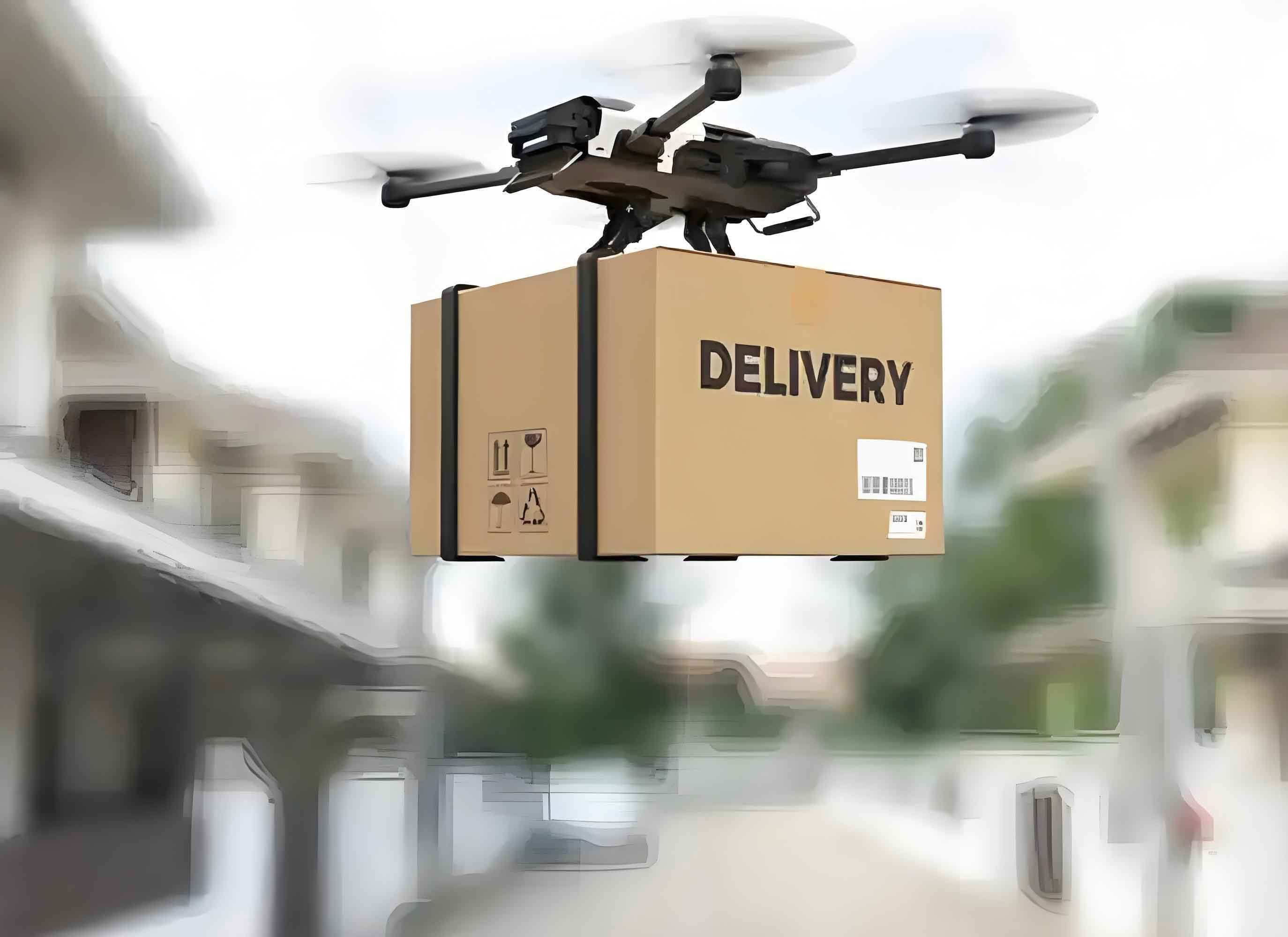
This simplified model reduces computational complexity while capturing essential kinematics for path planning and control of civilian drones. It is particularly useful for applications like delivery or surveillance, where drones follow predetermined routes at steady speeds. To illustrate a practical use case, consider a civilian drone deployed for package delivery in urban areas; the model can predict its trajectory based on speed and turning constraints, ensuring efficient navigation around obstacles.
The integration of civilian drones into low-altitude airspace requires not only robust kinematic models but also considerations of safety, regulation, and technology. For instance, the performance ratings in Table 2 highlight trade-offs that designers must balance when developing civilian drones for specific tasks. Multi-rotor civilian drones excel in takeoff convenience and hover capability, making them ideal for inspections or photography, but their poor cruise performance limits range. Fixed-wing civilian drones offer superior endurance for mapping or monitoring large areas, yet their need for runways restricts deployment in dense urban settings. Compound-wing and tilt-rotor civilian drones attempt to bridge these gaps, but at the cost of higher complexity and cost. These distinctions underscore why a one-size-fits-all approach is inadequate for civilian drones; instead, tailored solutions based on configuration are essential.
To further elucidate the kinematic aspects, let’s delve into the derivation of the simplified model. The Dubins equation, $\dot{\chi} = \frac{g \tan\phi}{v}$, arises from balancing centrifugal force during a turn with the horizontal component of lift. For a civilian drone in a coordinated turn, the bank angle φ relates to the turn radius R by $R = \frac{v^2}{g \tan\phi}$. Since the heading rate is $\dot{\chi} = \frac{v}{R}$, substitution yields the equation above. This model assumes constant speed and bank angle over Δt, which is valid for short intervals in cruising flight. In practice, civilian drones may experience variations due to wind or control inputs, but the model serves as a foundational tool for trajectory prediction. Expanding this, I can incorporate acceleration terms to account for speed changes, enhancing accuracy for civilian drones performing dynamic maneuvers.
Another critical aspect is the impact of platform configuration on kinematics. For example, multi-rotor civilian drones achieve turns by differential rotor speeds, leading to rapid heading changes but with energy inefficiency. Their motion equations involve additional terms for thrust and torque, which can be simplified in cruising if rotor dynamics are neglected. Fixed-wing civilian drones, conversely, rely on aerodynamic surfaces for control, resulting in smoother turns described by the bank angle relationship. The simplified model applies well to both, but with different constraints: for multi-rotor civilian drones, φ might be limited by stability margins, whereas for fixed-wing civilian drones, it is bounded by stall conditions. This interplay between configuration and kinematics necessitates adaptive models for civilian drones, which I plan to explore in future work.
In terms of applications, civilian drones are transforming industries through their kinematic capabilities. In agriculture, they follow pre-programmed paths for crop spraying, requiring precise position and speed control. The simplified model aids in generating these paths efficiently. In disaster response, civilian drones navigate complex terrains to deliver supplies, where quick heading adjustments are crucial. The model’s reliance on bank angle and speed allows for real-time replanning. Moreover, in urban air mobility, civilian drones must integrate with air traffic systems, and simplified kinematics facilitate communication and coordination. The table below extends the performance analysis to include kinematic parameters, such as maximum turn rate and cruise speed, for each platform configuration, emphasizing how these factors influence civilian drone operations.
| Configuration | Max Turn Rate (rad/s) | Typical Cruise Speed (m/s) | Kinematic Model Complexity |
|---|---|---|---|
| Fixed-Wing | 0.1 – 0.5 | 15 – 30 | Low (simplified Dubins model applicable) |
| Multi-Rotor | 1.0 – 2.0 | 5 – 15 | Medium (requires rotor dynamics for accuracy) |
| Compound-Wing | 0.2 – 0.8 | 10 – 20 | High (dual-mode transitions increase complexity) |
| Tilt-Rotor | 0.3 – 1.0 | 12 – 25 | High (tilt mechanisms introduce nonlinearities) |
The data in Table 3 reveals that multi-rotor civilian drones offer high maneuverability but at lower speeds, while fixed-wing civilian drones provide efficient cruising with moderate turn rates. This has implications for path planning: for instance, in delivery networks, fixed-wing civilian drones might be used for long-haul segments, whereas multi-rotor civilian drones handle last-meter deliveries. The kinematic model must adapt to these differences, and the simplified version offers a unified framework by focusing on common variables like speed and bank angle. To enhance it, I can integrate environmental factors, such as wind disturbances, which affect civilian drones significantly. The wind-relative velocity can be included in the equations, modifying the heading rate as $\dot{\chi} = \frac{g \tan\phi}{v} + \frac{w_w}{v}$, where w_w is the wind component perpendicular to the path. This extension improves realism for civilian drones operating in outdoor settings.
Looking ahead, the evolution of civilian drones will likely see increased autonomy and collaboration. Swarms of civilian drones could perform coordinated tasks, such as agricultural monitoring or infrastructure inspection, requiring distributed kinematic models. The simplified equations can be extended to multi-agent systems by incorporating collision avoidance terms. For example, the position update for each civilian drone in a swarm might include repulsive forces from neighbors, leading to:
$$
x_t^i = x_0^i + v_t^i \cos\chi_t^i \cdot \Delta t + F_{\text{rep}} \cdot \Delta t
$$
where $F_{\text{rep}}$ is a function of inter-drone distances. This aligns with the trend toward intelligent civilian drones that adapt their kinematics based on real-time data. Moreover, advancements in sensor fusion, using GPS, IMUs, and computer vision, will enable more accurate state estimation, refining the kinematic models for civilian drones.
In conclusion, this paper has explored the classification and kinematics of civilian drones, highlighting their diverse platform configurations and proposing a simplified motion model for cruising flight. Through tables and equations, I have analyzed performance metrics and derived relationships that facilitate efficient navigation. Civilian drones, whether fixed-wing, multi-rotor, compound-wing, or tilt-rotor, each offer unique advantages shaped by their kinematic properties. The simplified model, based on Dubins theory, provides a practical tool for trajectory prediction and control, essential for integrating civilian drones into low-altitude airspace. As technology progresses, further refinements to these models will support the safe and widespread adoption of civilian drones across numerous sectors, ultimately enhancing productivity and innovation in the era of unmanned aviation.