
As a key contributor to standardization initiatives, I am excited to elaborate on the recent developments in national standards that significantly impact the civil drone sector and related technologies. These standards are designed to enhance safety, interoperability, and efficiency, paving the way for widespread adoption and innovation. In this article, I will delve into the specifics of the mandatory requirements for civil drone systems and the parallel advancements in Time-Sensitive Networking (TSN) standards, which support industrial applications that could integrate with civil drone operations. Throughout, I will emphasize the critical role of standardization in fostering a robust ecosystem for civil drones, ensuring they meet stringent safety and performance criteria while enabling seamless communication in complex networks.
The civil drone industry has seen rapid growth, and with it, the need for comprehensive regulatory frameworks. Recently, a mandatory national standard for civil unmanned aircraft systems was published, marking a milestone in ensuring the safety and reliability of these devices. This standard applies to micro, light, and small unmanned aircraft, excluding model aircraft, and introduces 17 mandatory clauses covering aspects such as electronic fence, remote identification, and emergency response. These requirements are backed by corresponding test methods, which I will summarize in a detailed table. The implementation of this civil drone standard is expected to streamline the entire lifecycle of drone operations, from manufacturing to decommissioning, thereby reducing risks and promoting public trust. As we move forward, the civil drone market is poised to expand further, driven by these standardized safety measures that address potential hazards like unauthorized access or mid-air collisions.
| Requirement Category | Description | Test Method Overview |
|---|---|---|
| Electronic Fence | Defines virtual boundaries to restrict drone flight in prohibited or sensitive areas, using geofencing technology. | Validation through GPS signal simulation and software-based boundary tests to ensure compliance with predefined zones. |
| Remote Identification | Mandates that drones broadcast unique identification data during operation for tracking and accountability. | Testing of broadcast protocols using RF analyzers and verification of data integrity under various environmental conditions. |
| Emergency Response | Specifies procedures for automatic or manual emergency actions, such as forced landing or return-to-home functions. | Simulated emergency scenarios assessing response times and system reliability through controlled field trials. |
| Propulsion System Safety | Ensures the reliability of motors and propellers to prevent failures during flight. | Durability testing under stress conditions and performance checks using torque and thrust measurements. |
| Communication Security | Requires encryption and secure data links to protect against unauthorized access or hacking. | Penetration testing and cryptographic validation using standardized security protocols. |
| Battery Management | Sets standards for battery life, charging safety, and thermal stability to avoid fires or power loss. | Cycle testing, overcharge protection checks, and temperature monitoring in lab environments. |
| Payload Integration | Defines requirements for attaching and operating payloads like cameras or sensors safely. | Mechanical stress tests and compatibility assessments with various payload types. |
| Navigation Accuracy | Ensures precise positioning using GNSS or other systems to maintain intended flight paths. | Accuracy verification through comparative analysis with reference points in open-sky and urban settings. |
| Collision Avoidance | Mandates systems to detect and avoid obstacles, enhancing operational safety. | Testing with obstacle-rich environments using sensors like LiDAR or cameras to evaluate detection ranges and reaction times. |
| Data Logging | Requires recording of flight data for post-incident analysis and compliance auditing. | Verification of data storage integrity and retrieval capabilities under different flight durations. |
| Environmental Resilience | Sets limits for operation in various weather conditions, such as wind or rain. | Exposure tests in controlled climatic chambers to assess performance degradation. |
| User Interface Safety | Ensures that control interfaces are intuitive and prevent unintended operations. | Usability studies and error rate assessments in simulated user interactions. |
| Radio Frequency Compliance | Requires adherence to RF emission standards to avoid interference with other devices. | Spectrum analysis and compliance testing with regulatory limits in anechoic chambers. |
| Structural Integrity | Defines material and design standards to withstand physical stresses during flight. | Vibration and impact tests using standardized mechanical rigs. |
| Software Update Mechanisms | Mandates secure and reliable methods for firmware and software updates. | Testing update processes for integrity, rollback capabilities, and vulnerability checks. |
| Noise Emission Control | Sets acoustic limits to minimize noise pollution in urban areas. | Sound level measurements at specified distances and frequencies in anechoic environments. |
| Interoperability | Ensures compatibility with other systems and standards for seamless integration. | Conformance testing with reference implementations and multi-vendor setups. |
The civil drone standard not only addresses immediate safety concerns but also contributes to a broader standardization framework. For instance, the electronic fence requirement leverages geofencing algorithms that can be modeled mathematically. Consider the calculation for a geofence boundary: let the drone’s position be represented by coordinates (x, y, z), and the restricted zone defined by a set of vertices. The condition for intrusion can be expressed as a Boolean function: $$ \text{Intrusion} = \begin{cases} 1 & \text{if } \min(distance) \leq \text{threshold} \\ 0 & \text{otherwise} \end{cases} $$ where the distance is computed using the Euclidean formula: $$ distance = \sqrt{(x – x_c)^2 + (y – y_c)^2 + (z – z_c)^2} $$ for a circular zone centered at (x_c, y_c, z_c). This mathematical approach ensures precise implementation in civil drone systems, enhancing their reliability in diverse environments.
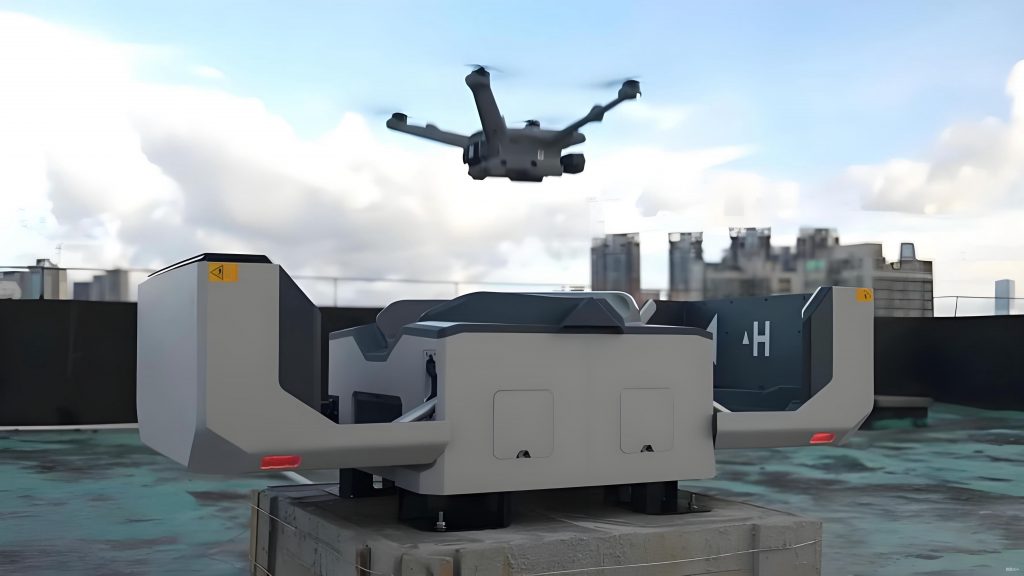
Beyond civil drone specifications, the publication of Time-Sensitive Networking (TSN) standards represents a leap forward in industrial communication, which can indirectly benefit civil drone operations by enabling reliable data exchange in control systems. These TSN standards focus on providing deterministic latency and seamless integration between heterogeneous networks, such as those used in industrial IoT applications that might interface with civil drone infrastructures. For example, one standard outlines the technical requirements for adapting Real-Time Ethernet to TSN, which involves frame mapping and priority handling. The mapping process can be described using a transformation function: $$ F_{TSN} = T(F_{Ethernet}) $$ where \( F_{Ethernet} \) is the incoming Ethernet frame and \( F_{TSN} \) is the resulting TSN frame after applying priority mapping rules. This ensures that time-critical data, such as that from civil drone sensors, receives the necessary bandwidth and low-latency treatment.
Another TSN standard addresses the fusion mapping between OPC Unified Architecture (OPC UA) and TSN, which is crucial for integrating operational technology (OT) and information technology (IT) systems. This fusion enables civil drone data to be seamlessly incorporated into larger industrial networks, supporting applications like automated inspection or delivery systems. The mapping mechanism involves translating OPC UA publish/subscribe flows into TSN streams, which can be modeled as: $$ S_{TSN} = M(S_{OPC UA}) $$ where \( S_{OPC UA} \) represents the OPC UA stream and \( M \) denotes the mapping function that allocates resources based on time-sensitive requirements. To quantify the latency benefits, consider the end-to-end delay formula for a TSN network: $$ D_{total} = \sum_{i=1}^{n} (d_{proc,i} + d_{queue,i} + d_{trans,i}) $$ where \( d_{proc} \) is processing delay, \( d_{queue} \) is queuing delay, and \( d_{trans} \) is transmission delay at each node i. By minimizing these delays through standardized configurations, civil drone systems can achieve more predictable performance in real-time scenarios.
| Standard Aspect | Key Focus | Potential Impact on Civil Drone Applications |
|---|---|---|
| Frame Mapping | Defines how Ethernet frames are adapted to TSN requirements, including priority and timing adjustments. | Enhances reliability of drone communication links in crowded spectra, supporting command and control functions. |
| OPC UA Integration | Specifies the fusion of OPC UA with TSN for unified data exchange across OT and IT layers. | Facilitates seamless data flow from civil drones to cloud platforms, improving analytics and decision-making. |
| Configuration Management | Outlines requirements for network setup, including centralized configuration and flow modeling. | Simplifies deployment of drone fleets in complex environments, ensuring consistent network performance. |
| Deterministic Latency | Ensures predictable delay for time-critical traffic through scheduling and synchronization. | Reduces latency in civil drone video streaming or sensor data, critical for autonomous operations. |
| Interoperability | Promotes compatibility between diverse devices and protocols in industrial settings. | Allows civil drones to integrate with existing infrastructure, such as smart city networks. |
The configuration management aspect of TSN standards is particularly important for scalable deployments, as it defines how networks are modeled and controlled. For instance, the centralized network configuration can be represented using a graph model where nodes are switches and edges are links, with flows characterized by parameters like period and deadline. The scheduling of flows can be optimized using a formula such as: $$ \min \sum_{f \in F} w_f \cdot L_f $$ where \( F \) is the set of flows, \( w_f \) is a weight indicating priority, and \( L_f \) is the latency for flow f. This optimization ensures that high-priority data from civil drones, such as emergency signals, are transmitted with minimal delay. Additionally, the use of data modeling languages in these standards allows for precise specification of network properties, which can be extended to civil drone communication protocols to ensure uniformity and reduce integration costs.
As we reflect on these advancements, it is clear that the civil drone sector stands to gain immensely from such standardized approaches. The mandatory requirements for civil drones provide a solid foundation for safety, while the TSN standards offer the backbone for reliable data exchange in increasingly connected ecosystems. For example, in applications like agricultural monitoring or infrastructure inspection, civil drones rely on real-time data transmission that can be guaranteed through TSN mechanisms. The synergy between these standards and civil drone technologies will likely drive innovation, leading to more autonomous and efficient operations. Moreover, the mathematical models embedded in these standards, such as those for latency calculation or mapping functions, enable rigorous testing and validation, ensuring that civil drone systems perform reliably under various conditions.
Looking ahead, the ongoing evolution of standardization will continue to shape the civil drone landscape. Future iterations may incorporate more advanced features, such as AI-driven safety checks or enhanced interoperability with 5G networks, further solidifying the role of civil drones in modern society. By adhering to these standards, stakeholders in the civil drone industry can mitigate risks, reduce costs, and accelerate market adoption. In conclusion, the recent publications represent a significant step forward, and as someone involved in these efforts, I am confident that they will foster a safer and more innovative environment for civil drone development and deployment. The continuous emphasis on civil drone requirements in standardization frameworks ensures that these technologies remain at the forefront of technological progress, benefiting societies worldwide.