
In recent years, the civil drone industry has experienced rapid growth, with these devices playing increasingly vital roles in fields such as aerial photography, agricultural protection, logistics, emergency response, and power inspections. However, as technology advances, civil drones not only bring convenience but also pose unprecedented challenges to national security, public safety, and personal safety. From the perspective of public security authorities, we must address these risks proactively. The evolving landscape of civil drone usage demands a robust management framework to mitigate potential threats. This paper explores the security risks, current management dilemmas, and proposes a comprehensive control system from a public security standpoint, emphasizing the need for collaborative governance and advanced technological integration.
The proliferation of civil drones has introduced complex security dimensions that require immediate attention. We, as public security agencies, are tasked with ensuring low-altitude safety while fostering economic development. This involves balancing regulatory measures with innovation support. Below, we analyze key areas of concern, employing mathematical models and structured tables to summarize findings and recommendations. The goal is to establish a sustainable management ecosystem that minimizes risks associated with civil drone operations.
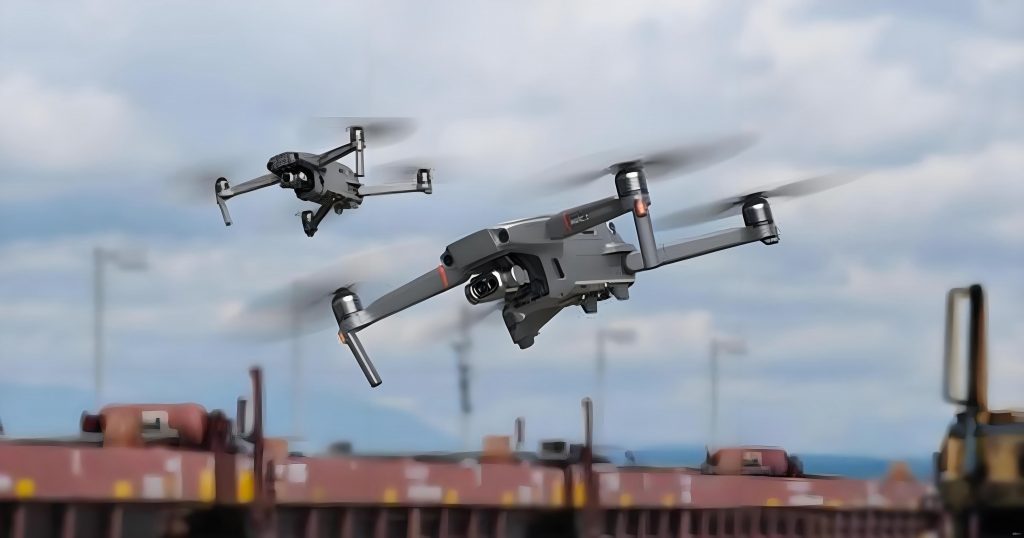
Security risks linked to civil drones can be categorized into national, public, and personal domains. For national security, civil drones may be exploited for espionage, where sensitive information is gathered from military or government facilities. Terrorist groups could weaponize civil drones for attacks, leveraging their affordability and stealth. Additionally, border security is compromised as civil drones facilitate smuggling and illegal immigration due to their low detectability. Public safety risks include disruptions to civil aviation, such as collisions with aircraft, and interference with large public events or transportation systems. Personal safety concerns involve property damage, physical injuries from crashes, and privacy violations through unauthorized surveillance. To quantify these risks, we define a risk assessment model. Let $R$ represent the overall risk level, which can be expressed as:
$$ R = \sum_{i=1}^{n} P_i \times C_i $$
where $P_i$ is the probability of a risk event $i$ occurring, and $C_i$ is the consequence severity. For civil drone incidents, $P_i$ might relate to factors like flight frequency and operator compliance, while $C_i$ could include economic impact or threat to human life. A detailed breakdown is provided in Table 1, highlighting specific risk types and examples.
| Risk Category | Specific Risks | Examples |
|---|---|---|
| National Security | Espionage, Terrorist Attacks, Border Threats | Unauthorized filming of sensitive sites; drone-borne explosives; smuggling operations |
| Public Safety | Aviation Disruption, Social Disorder, Traffic Interference | Flight delays due to drone incursions; panic at events; collisions with infrastructure |
| Personal Safety | Property Damage, Physical Harm, Privacy Invasion | Crashes into buildings; injuries from falls; illicit recording of private spaces |
Managing civil drones presents several dilemmas for public security authorities. Identification and tracking are hindered by the small size, high mobility, and low radar cross-section of many civil drone models. Traditional detection systems, such as radar and optical sensors, struggle in complex environments. For instance, the probability of detecting a civil drone can be modeled using a detection function:
$$ P_d = 1 – e^{-\lambda A t} $$
where $P_d$ is the detection probability, $\lambda$ is the sensor sensitivity, $A$ is the effective area, and $t$ is time. In urban settings, $P_d$ decreases due to obstructions. Moreover,基层反制技术匮乏; many units rely on limited handheld jammers, which are ineffective against advanced civil drones using frequency hopping or pre-programmed routes. Coordination between government departments and within public security agencies is often fragmented, leading to inefficiencies. Routine监管 is challenged by the sheer number of civil drones; as of 2023, over 1.2 million civil drones were registered in China, making it difficult to monitor all activities. Enforcement varies, with light penalties failing to deter violations. Table 2 summarizes these challenges and their impacts.
| Challenge Area | Description | Impact |
|---|---|---|
| Identification and Tracking | Low detectability of small, low-altitude civil drones; limitations of radar and optics | Increased undetected incidents; higher security gaps |
| Countermeasure Technology | Inadequate anti-drone equipment; reliance on basic jammers | Ineffective response to sophisticated civil drone threats |
| Inter-Agency Coordination | Lack of integrated mechanisms between military, aviation, and local authorities | Delayed responses; inefficient resource use |
| Routine Supervision | High volume of civil drones; ease of illegal modifications | Proliferation of unregulated flights |
| Law Enforcement | Inconsistent penalties; low deterrence effect | Recurring violations; public complacency |
To address these issues, we propose a comprehensive civil drone management system centered on public security leadership. This system involves multiple layers: leadership and management, defense and countermeasures, professional forces, basic control, practical training, and support保障. For cooperative civil drones, we advocate for integrated监管 systems using technologies like remote broadcast identification, which acts as an electronic license plate. For non-cooperative civil drones, advanced sensing and communication technologies, such as integrated sensing and communication (ISAC), can enhance detection. The overall effectiveness $E$ of the management system can be expressed as:
$$ E = \alpha L + \beta D + \gamma F + \delta B + \epsilon T + \zeta S $$
where $L$, $D$, $F$, $B$, $T$, and $S$ represent scores for leadership, defense, forces, basic control, training, and support, respectively, and $\alpha, \beta, \gamma, \delta, \epsilon, \zeta$ are weighting coefficients based on local priorities. A framework of this system is outlined in Table 3, detailing components and implementation strategies.
| System Component | Key Elements | Implementation Strategies |
|---|---|---|
| Leadership and Management | Inter-departmental coordination; clear public security leadership | Establish provincial/city-level task forces; regular联席会议 |
| Defense and Countermeasures | Layered defense: fixed, mobile, and event-based deployments | Use of radar, radio frequency analysis, and ISAC for non-cooperative civil drones |
| Professional Forces | Specialized teams at city, district, and street levels | Train治安 and特警 units; involve all police branches in civil drone oversight |
| Basic Control | Data platforms; risk assessment models; graded management | AI-driven analytics; community outreach to register civil drone users |
| Practical Training | Simulated exercises; cross-regional drills; expert collaboration | Incorporate anti-drone tactics into annual training; use AI tools for scenario planning |
| Support保障 | Talent recruitment; technology partnerships; budget allocation | Attract specialists; fund R&D for civil drone countermeasures; secure annual budgets |
In the defense subsystem, we emphasize cost-effective, wide-area coverage for civil drone monitoring. For cooperative civil drones, technologies like wide-area identification solutions enable real-time tracking and data logging. The detection range $R_d$ for such systems can be approximated by:
$$ R_d = \sqrt{\frac{P_t G_t G_r \lambda^2}{(4\pi)^3 P_{\text{min}}}} $$
where $P_t$ is transmit power, $G_t$ and $G_r$ are antenna gains, $\lambda$ is wavelength, and $P_{\text{min}}$ is minimum detectable power. For non-cooperative civil drones, ISAC leverages high-frequency beams and multi-antenna systems to estimate position, velocity, and direction. The threat level $T_l$ of a non-cooperative civil drone can be assessed using a fuzzy logic model:
$$ T_l = \frac{w_1 \cdot V + w_2 \cdot P + w_3 \cdot I}{w_1 + w_2 + w_3} $$
where $V$ is velocity, $P$ is proximity to critical infrastructure, $I$ is intent indicators, and $w_i$ are weights. This allows for targeted countermeasures based on risk.
Professional force development is crucial. We recommend a three-tier structure: city-level specialized teams for major events, district-level units for daily operations, and street-level involvement for localized control. Training should include radio theory, equipment operation, and实战 simulations. Regular “red-blue” exercises, where defenders counter simulated civil drone threats, hone skills. Additionally, collaboration with academia and industry ensures access to cutting-edge civil drone technologies.
Basic control relies on big data and AI. By building databases of civil drone registrations and flight patterns, we can predict and prevent incidents. A risk prediction model might use machine learning:
$$ \hat{Y} = \sigma(W \cdot X + b) $$
where $\hat{Y}$ is the predicted risk score, $X$ is input features (e.g., flight frequency, user history), $W$ and $b$ are model parameters, and $\sigma$ is an activation function. This enhances proactive management of civil drone activities.
Support systems must address talent, technology, and funding. Recruiting experts in civil drone technology and securing budgets for equipment upgrades are essential. We advocate for policies that incentivize innovation in civil drone security, ensuring long-term sustainability.
In conclusion, the rapid expansion of civil drone applications underscores the urgency for effective security management. As public security authorities, we must lead in constructing a multi-faceted system that combines regulatory oversight with technological advancement. By fostering collaboration across sectors and continuously refining our approaches, we can mitigate the risks posed by civil drones while supporting their beneficial uses. This ongoing effort requires dedication and innovation to safeguard national and public interests in the era of low-altitude economy.