
The rapid evolution of civil drone technology has transformed various sectors, including logistics, urban air mobility, and public safety, driving the growth of the low-altitude economy. However, this expansion introduces complex challenges related to safety, reliability, and airworthiness, which are critical for sustainable development. As a researcher in this field, I have observed that the interdependence of these three pillars forms the foundation for ensuring public trust and operational integrity. This article systematically examines the core requirements and strategies for civil drones, emphasizing the need for innovative technologies, regulatory frameworks, and standardized practices. Through detailed analysis, including tables and mathematical models, I aim to provide a holistic perspective on addressing these challenges, with a focus on enhancing the resilience of civil drone systems in dynamic environments.
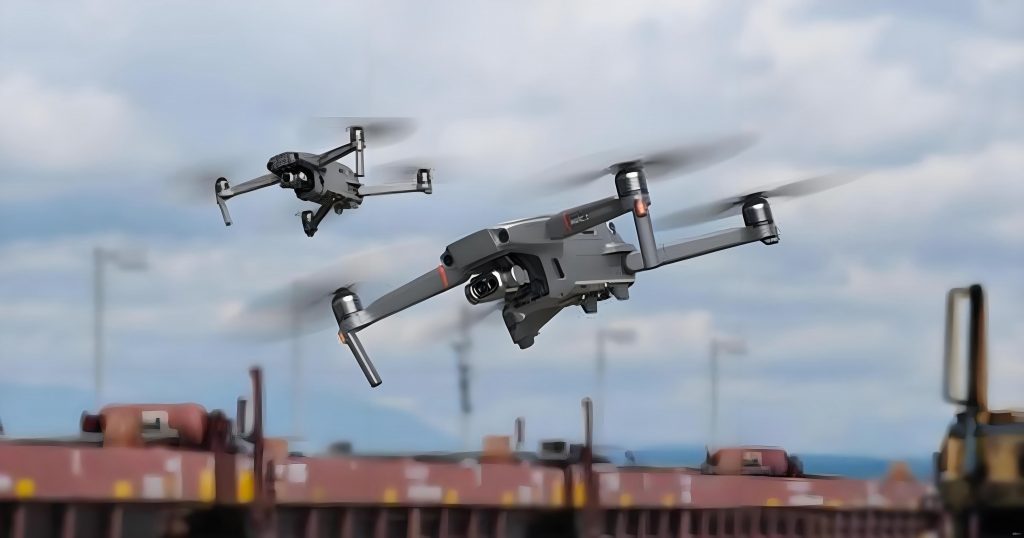
The proliferation of civil drones has led to increased integration into sensitive airspaces, such as urban areas and critical infrastructure zones. This shift necessitates robust safety mechanisms to prevent accidents and mitigate risks. For instance, the reliability of civil drone components, like batteries and communication systems, directly impacts their ability to operate safely in crowded environments. In my assessment, the core safety requirements for civil drones include high-precision collision avoidance in complex settings, fail-safe mechanisms for critical systems, cybersecurity protections, and user-friendly interfaces. These elements are essential for maintaining airspace order and public confidence. To illustrate, the probability of a safety incident can be modeled using a risk function, where the failure rate $\lambda$ and exposure time $t$ influence the overall risk $R$: $$R = 1 – e^{-\lambda t}$$ This equation highlights the importance of reducing failure rates through improved reliability, which is a key aspect of civil drone design.
In terms of safety strategies, a multi-layered approach is vital. For example, the integration of artificial intelligence (AI) in perception and avoidance systems can enhance a civil drone’s ability to navigate obstacles autonomously. Additionally, regulatory measures, such as risk-based frameworks like the Specific Operations Risk Assessment (SORA), help tailor safety requirements to the operational context of civil drones. The following table summarizes the alignment between core safety needs and corresponding strategies for civil drones:
| Core Safety Requirement | Key Strategy |
|---|---|
| High-robustness collision avoidance in dynamic environments | Development of AI-driven sense-and-avoid (SAA) technologies |
| Fail-safe mechanisms for critical system failures | Implementation of redundancy and fault-tolerant designs |
| Cybersecurity and data protection in open networks | Adoption of encrypted communication and intrusion detection systems |
| Operator competency and intuitive human-machine interfaces | Standardized training programs and user-centric interface design |
Reliability is another cornerstone for civil drone performance, directly influencing mission success and operational costs. From my perspective, the reliability of a civil drone depends on the durability of hardware components, the robustness of software systems, and the stability of communication links. For instance, the mean time between failures (MTBF) for a civil drone’s propulsion system can be expressed as: $$\text{MTBF} = \frac{1}{\lambda_{\text{system}}}$$ where $\lambda_{\text{system}}$ is the aggregate failure rate of all components. This metric is crucial for predicting maintenance intervals and ensuring the civil drone remains operational under varying environmental stresses, such as extreme temperatures or electromagnetic interference.
To address reliability challenges, strategies like predictive maintenance (PdM) and accelerated life testing (ALT) are essential. For example, using sensor data to monitor the health of a civil drone’s battery can preempt failures and extend its lifespan. The table below outlines the relationship between reliability requirements and strategies for civil drones:
| Core Reliability Requirement | Key Strategy |
|---|---|
| Hardware durability and environmental adaptability | Use of high-reliability components and advanced manufacturing processes |
| Software robustness and verifiability | Application of model-based design and rigorous testing protocols |
| Stable, high-bandwidth communication links | Integration of adaptive control and anti-jamming technologies |
| System-level resilience to challenging conditions | Implementation of environmental sensing and dynamic adjustment algorithms |
Airworthiness ensures that civil drones comply with established safety standards throughout their lifecycle, from design to decommissioning. In my view, the airworthiness of a civil drone is not merely about initial certification but involves continuous compliance and adaptation to evolving regulations. For instance, the airworthiness probability $A$ for a civil drone can be modeled as a function of design conformity $C_d$, manufacturing quality $Q_m$, and operational maintenance $M_o$: $$A = C_d \times Q_m \times M_o$$ This emphasizes the need for holistic management to maintain airworthiness, especially as civil drones incorporate new technologies like autonomous systems.
Key strategies for enhancing airworthiness include developing risk-based regulatory frameworks and fostering international harmonization of standards. For example, aligning civil drone certifications with global bodies like the FAA and EASA can facilitate market access. The following table details airworthiness requirements and strategies for civil drones:
| Core Airworthiness Requirement | Key Strategy |
|---|---|
| Risk-appropriate certification standards and procedures | Establishment of graded, risk-based management systems (e.g., SORA) |
| Efficient and competent certification processes | Adoption of automated testing and digital twin simulations |
| Continuous compliance across the lifecycle | Implementation of quality management and ongoing airworthiness systems |
| International standardization and mutual recognition | Participation in global standard-setting and bilateral agreements |
The interdependence of safety, reliability, and airworthiness is fundamental to the success of civil drone operations. From my analysis, reliability serves as the foundation for safety, as a civil drone with high reliability is less prone to failures that could lead to accidents. Similarly, airworthiness formalizes these attributes into regulatory compliance, creating a “triad” of assurance. For example, the overall system integrity $I$ of a civil drone can be represented as: $$I = f(S, R, A)$$ where $S$ denotes safety, $R$ reliability, and $A$ airworthiness. This function underscores that improvements in one area positively influence the others, reinforcing the need for integrated approaches in civil drone development.
Looking ahead, the integration of AI and the expansion into urban air mobility (UAM) will pose new challenges for civil drone safety, reliability, and airworthiness. For instance, AI algorithms in autonomous civil drones may introduce unpredictability, requiring advanced verification methods. Moreover, the increasing complexity of civil drone swarms necessitates enhanced communication reliability and fault tolerance. To address this, I propose a collaborative framework involving policymakers, industry stakeholders, and researchers to foster innovation while maintaining rigorous standards. The future of civil drones hinges on continuous investment in research, adaptive regulations, and global cooperation to ensure they meet the demands of emerging applications safely and efficiently.
In conclusion, the civil drone industry must prioritize the synergistic development of safety, reliability, and airworthiness to achieve long-term sustainability. Through technological advancements, such as AI and predictive maintenance, and regulatory improvements, like international harmonization, civil drones can overcome current limitations. As a proponent of this field, I believe that a proactive, multi-stakeholder approach will unlock the full potential of civil drones, enabling them to contribute significantly to economic and social progress while minimizing risks.