
As a researcher in the field of public safety and technology governance, I have observed the rapid evolution of civil drones with both fascination and concern. These devices, once primarily military tools, have proliferated into civilian life, offering unprecedented benefits in areas like photography, agriculture, and logistics. However, this growth brings significant challenges to national security, public safety, and individual privacy. In my analysis, the existing regulatory frameworks are struggling to keep pace with the dynamic risks posed by civil drones, leading to gaps in oversight and control. Drawing from my experience, I believe that adopting a stakeholder perspective can provide a holistic approach to managing these risks, emphasizing collaboration among all involved parties to achieve a balance between innovation and safety.
The stakeholder theory, which I find highly relevant here, originated in corporate governance but has since been applied to various sectors, including public policy. It posits that the success and sustainability of any system depend on the active participation and support of all key stakeholders. In the context of civil drones, this means moving beyond traditional top-down regulation to involve multiple actors who have a vested interest in safe operations. From my perspective, the primary stakeholders include regulatory authorities, industry players such as manufacturers and sellers, and end-users like organizations and individuals. Each group has distinct interests: regulators focus on social welfare, industry on economic gains, and users on functional benefits. By aligning these interests through coordinated action, we can create a layered control system that minimizes blind spots and enhances overall safety. This approach resonates with me because it acknowledges the limitations of any single entity in addressing complex, technology-driven risks.
In my view, the current challenges in civil drone management are multifaceted and require urgent attention. One major issue is the lack of comprehensive regulatory foundations. Existing laws and standards are often fragmented and insufficient to cover the entire lifecycle of civil drones, from production to disposal. For instance, while some countries have implemented registration systems, the enforcement remains weak due to ambiguous legal frameworks. Another problem is the模糊的监管主体, with multiple agencies—such as aviation authorities, industrial departments, and public security bodies—overlapping in responsibilities without clear coordination. This leads to bureaucratic inefficiencies and vulnerabilities. Additionally, technological滞后 is a critical concern. Civil drones are evolving faster than detection and countermeasure technologies; their small size, low flight altitudes, and use of non-metallic materials make them hard to monitor with conventional systems. As I see it, these困境 collectively exacerbate the risks of incidents like unauthorized flights over sensitive areas or accidents causing personal injury.
| Challenge | Description | Potential Impact |
|---|---|---|
| Regulatory Gaps | Insufficient laws and standards for drone operations, leading to “black flights.” | Increased security breaches and legal ambiguities. |
| Unclear Authorities | Multiple agencies with overlapping roles, causing coordination failures. | Delayed responses to incidents and inefficient resource use. |
| Technological Lag | Detection and countermeasure systems unable to keep up with drone advancements. | Higher risk of undetected intrusions and attacks. |
To quantify the risk dynamics, I often use a simple formula to represent the overall risk associated with civil drones: $$ R = P \times I $$ where \( R \) is the total risk, \( P \) is the probability of an incident (e.g., unauthorized flight), and \( I \) is the impact (e.g., safety threat). By involving stakeholders, we can reduce \( P \) through better prevention and \( I \) through coordinated response, thus lowering \( R \). Another useful concept is the利益平衡 equation: $$ B = \sum (S_i \times W_i) $$ where \( B \) is the overall benefit, \( S_i \) is the contribution of stakeholder \( i \), and \( W_i \) is their weight based on influence. This highlights how collaborative efforts can maximize benefits while minimizing risks.
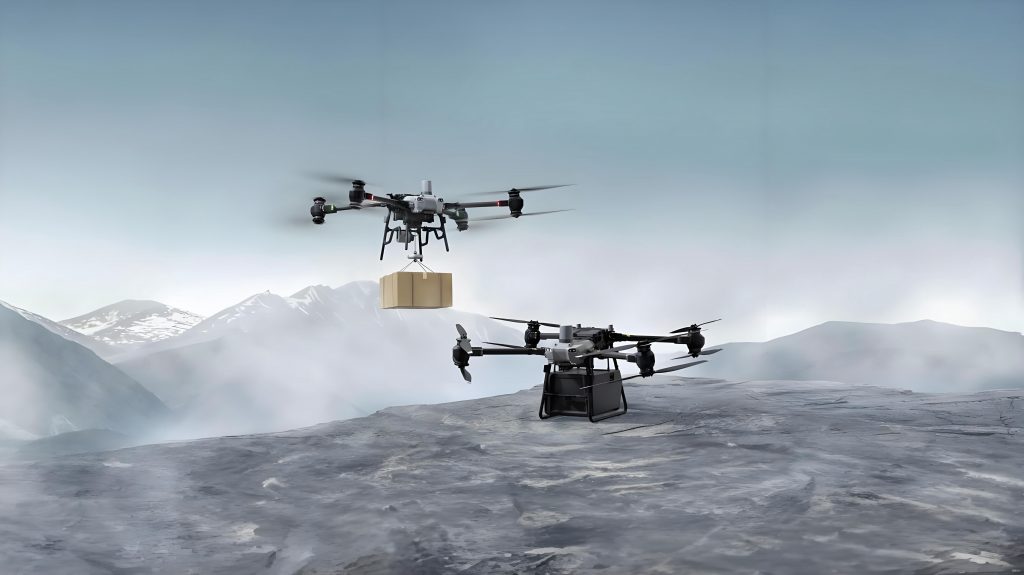
From my standpoint, addressing these challenges requires proactive leadership from regulatory bodies. As a key stakeholder, authorities must establish robust legal frameworks and standards. For example, aviation agencies should refine flight regulations, while industrial departments set production benchmarks. In my experience, this can involve drafting specific rules for civil drone operations, such as mandatory geofencing and real-time monitoring. Moreover, public security organs can integrate drone data into their platforms for better oversight. I advocate for a centralized approach where governments facilitate stakeholder dialogues, promoting policies that encourage innovation while ensuring safety. This aligns with the stakeholder theory, as regulators act as orchestrators, bridging gaps between different groups.
Industry players, including manufacturers and sellers, also have a crucial role to play. As I see it, they must embrace corporate social responsibility by prioritizing safety in design and distribution. For instance, manufacturers should invest in R&D to enhance civil drone features like collision avoidance and secure communication. A formula I find helpful for evaluating safety investments is: $$ C_{safe} = k \times \frac{1}{R_{incident}} $$ where \( C_{safe} \) is the cost of safety measures, \( k \) is a constant, and \( R_{incident} \) is the reduced incident rate. By minimizing \( R_{incident} \), industry can justify higher \( C_{safe} \) as a long-term benefit. Sellers, on the other hand, should maintain detailed records and educate buyers on compliant usage. In my opinion, industry associations can foster self-regulation through codes of conduct, creating a culture of accountability that complements governmental efforts.
| Stakeholder Group | Primary Responsibilities | Expected Outcomes |
|---|---|---|
| Regulatory Authorities | Develop laws, set standards, coordinate enforcement, and promote public awareness. | Enhanced legal clarity and reduced unauthorized activities. |
| Industry Players | Ensure product safety, innovate countermeasures, and provide user training. | Higher reliability of civil drones and fewer accidents. |
| End-Users | Adhere to regulations, participate in training, and report incidents promptly. | Increased operational safety and community trust. |
End-users, including organizations and individuals, must exercise self-discipline and active participation. In my view, users are often the first line of defense against civil drone risks. Organizations should implement internal policies, such as regular audits and training programs, to ensure compliant operations. For individuals, I emphasize the importance of understanding local laws and joining community groups to share best practices. From a mathematical perspective, the effectiveness of user compliance can be modeled as: $$ E_{comp} = \frac{N_{compliant}}{N_{total}} \times 100\% $$ where \( E_{comp} \) is the compliance rate, \( N_{compliant} \) is the number of users following rules, and \( N_{total} \) is the total user base. By increasing \( E_{comp} \), we can significantly reduce the likelihood of incidents. I believe that fostering a sense of collective responsibility among users can lead to spontaneous order, where peer monitoring and support enhance overall safety.
In conclusion, as I reflect on the complexities of civil drone management, the stakeholder approach offers a viable path forward. By integrating the efforts of regulators, industry, and users, we can overcome the current困境 and build a resilient system. This requires continuous dialogue, technological innovation, and a shared commitment to safety. From my experience, such collaboration not only mitigates risks but also unlocks the full potential of civil drones for societal benefit. As we move forward, I am optimistic that this multi-faceted strategy will address the evolving challenges, ensuring that civil drones serve as tools of progress rather than sources of conflict.