
In recent years, the rapid advancement of technology, including 5G networks, artificial intelligence, and optimization algorithms, has significantly propelled the development of civil drone systems. As a low-cost, highly maneuverable, and versatile tool, the civil drone has found applications in diverse fields such as agricultural plant protection, geographic mapping, aerial photography, logistics delivery, and emerging areas like fire rescue and urban traffic management. The expanding use of civil drones has led to a substantial increase in their market size. Currently, China dominates the global civil drone market, accounting for approximately 70% of sales. According to industry statistics, the global civil drone market surpassed $30.4 billion in 2022, with an annual growth rate of over 15%, and is projected to reach $66 billion by 2025. However, the proliferation of civil drones has also raised serious safety concerns due to management vulnerabilities, resulting in numerous incidents that threaten public security and airspace safety. In this article, I will analyze the current state of civil drone safety management, focusing on regulatory frameworks, the intrinsic safety of civil drones, and flight safety aspects, while offering insights into future management strategies.
The safety of civil drone operations is paramount, as failures can lead to accidents involving collisions, data breaches, or privacy violations. I will begin by examining the regulatory landscape governing civil drones, which forms the foundation for safe operations. Subsequently, I will delve into the intrinsic safety of civil drones, covering both the airframe and system components, and then discuss flight safety issues such as obstacle avoidance and collision risk in mixed airspace. Throughout this analysis, I will incorporate tables and mathematical formulations to summarize key points and enhance understanding. The goal is to provide a comprehensive overview that highlights the importance of robust safety measures for civil drones, ensuring their sustainable integration into our airspace.
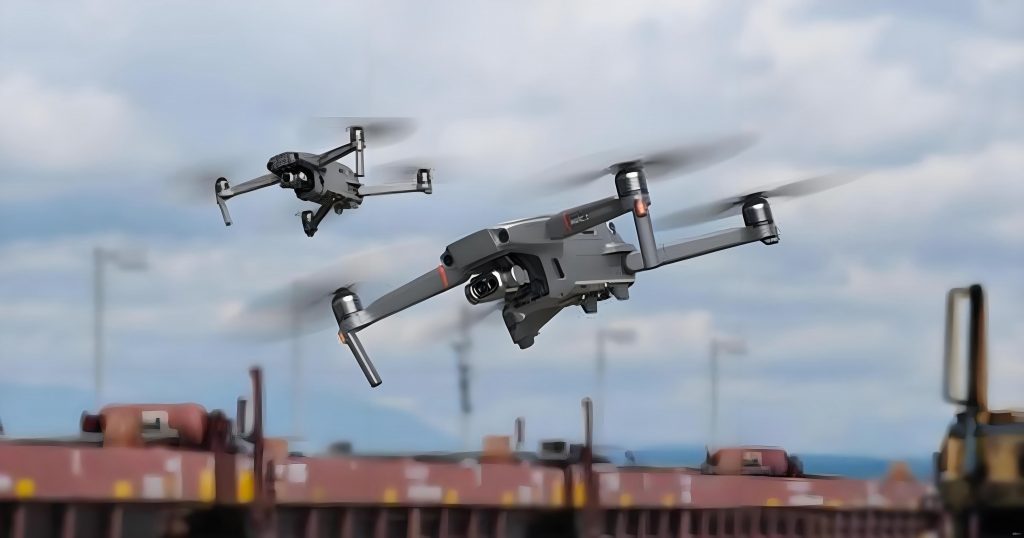
Regulatory frameworks play a critical role in ensuring the safe operation of civil drones. Internationally, organizations like the International Civil Aviation Organization (ICAO) have established guidelines to standardize civil drone operations. For instance, ICAO’s Manual on Remotely Piloted Aircraft Systems (RPAS), published in 2015, provides a comprehensive framework for aspects such as air traffic control, airworthiness, and operator responsibilities. Similarly, the U.S. Federal Aviation Administration (FAA) has enacted regulations like Part 107, which outlines rules for small civil drones, including operational limits and pilot certifications. In China, the Civil Aviation Administration of China (CAAC) has introduced various regulations, such as the “Interim Provisions on the Operation of Light and Small Unmanned Aircraft” and the recent “Interim Regulations on the Flight Management of Unmanned Aircraft,” which categorize civil drones into types like micro, light, small, medium, and large, with corresponding requirements for airworthiness and operator licensing. These regulations aim to mitigate risks associated with civil drone operations, but gaps remain, particularly in data privacy and adapting to rapid technological changes. To illustrate the evolution of these regulations, I have compiled a table summarizing key milestones.
| Organization/Country | Regulation/Standard | Year | Key Provisions |
|---|---|---|---|
| ICAO | Annex 2 Amendment | 2012 | First inclusion of RPAS in air rules; requirements for design, airworthiness, and operator qualifications. |
| ICAO | Doc 10019 (RPAS Manual) | 2015 | Comprehensive guidelines for RPAS operations, including ATC integration and safety management. |
| FAA (U.S.) | Part 107 | 2016 | Rules for small civil drones: speed, altitude limits, and remote pilot certifications. |
| CAAC (China) | Interim Regulations on Flight Management | 2023 | Categorization of civil drones; airworthiness requirements for medium/large types; no license needed for micro/light. |
| CAAC (China) | Safety Requirements for Civil Unmanned Aircraft Systems | 2023 | Mandatory safety standards for civil drone design and operation, supporting the interim regulations. |
The effectiveness of these regulations can be modeled using risk assessment frameworks. For example, the safety risk for a civil drone operation can be expressed as a function of hazard probability and severity. Let \( R \) represent the risk level, \( P \) the probability of a hazardous event, and \( S \) the severity of its consequences. Then, the risk can be quantified as:
$$ R = P \times S $$
In the context of civil drone regulations, \( P \) might relate to the likelihood of incidents due to non-compliance, and \( S \) to the potential damage. Regulatory measures aim to reduce \( P \) through strict adherence and monitoring. For instance, the FAA’s safety risk management policy defines categories of hazards and mitigation measures, which can be integrated into a probabilistic model. Suppose we have \( n \) hazard types, each with a probability \( p_i \) and severity \( s_i \). The total risk \( R_{\text{total}} \) can be computed as:
$$ R_{\text{total}} = \sum_{i=1}^{n} p_i \cdot s_i $$
By implementing regulations that lower \( p_i \) or \( s_i \), the overall risk for civil drone operations decreases, enhancing safety. However, the dynamic nature of civil drone technology necessitates continuous updates to these frameworks.
Moving to the intrinsic safety of civil drones, this encompasses the airframe and system components. The airframe of a civil drone, whether fixed-wing, multi-rotor, or hybrid, directly impacts its stability and durability. For example, fixed-wing civil drones typically have a wing-fuselage structure with beams, skins, and frames, while multi-rotor types (e.g., quadcopters, hexacopters) offer varying levels of stability based on the number of arms. Mechanical failures, such as battery or motor issues, are common causes of accidents in civil drones. In my analysis, I have observed that material quality, manufacturing processes, and design compatibility are critical factors. A poorly constructed civil drone may suffer from corrosion, deformation, or cracks under prolonged use, increasing the risk of failure. To assess the reliability of a civil drone airframe, we can use a failure rate model. Let \( \lambda \) denote the failure rate per hour of operation, and \( T \) the total operational time. The probability of no failure \( P_{\text{no-fail}} \) can be modeled with an exponential distribution:
$$ P_{\text{no-fail}} = e^{-\lambda T} $$
For instance, if a civil drone has a failure rate of \( \lambda = 0.001 \) failures per hour, the probability of operating without failure for 100 hours is \( e^{-0.001 \times 100} \approx 0.905 \). Improving materials and design can reduce \( \lambda \), thereby enhancing the safety of civil drones.
| Drone Type | Structure | Common Applications | Typical Failure Risks | Reliability Indicators |
|---|---|---|---|---|
| Fixed-Wing | Wing-fuselage with beams and frames | Mapping, surveillance | Structural fatigue, wing damage | High endurance, lower stability in hover |
| Multi-Rotor (Quadcopter) | Multiple arms with rotors | Aerial photography, delivery | Motor/battery failure, vibration issues | Good maneuverability, moderate reliability |
| Hybrid VTOL | Combination of fixed-wing and rotor systems | Urban mobility, emergency response | Complex mechanical faults | Versatile but higher maintenance needs |
The system components of a civil drone, including the control station, data link, and payload devices, are equally vital for safety. The control station serves as the command center, enabling real-time monitoring and task planning. Advanced control stations incorporate modules for data communication, flight status display, and route planning, which help operators detect and respond to unsafe conditions promptly. The data link, operating in frequency bands like Ku, K, S, L, or C, ensures communication between the civil drone and ground station. Its reliability can be measured by the signal-to-noise ratio (SNR), which affects data transmission quality. For a data link with bandwidth \( B \) and noise power \( N \), the maximum data rate \( C \) in bits per second is given by Shannon’s formula:
$$ C = B \log_2 \left(1 + \frac{S}{N}\right) $$
where \( S \) is the signal power. A higher SNR allows for more robust communication, reducing the risk of loss of control for the civil drone. Payload devices, such as cameras or sensors, enhance the civil drone’s ability to monitor environments, but their integration must not compromise the airframe’s integrity. In summary, optimizing both airframe and system components is essential for the intrinsic safety of civil drones.
Flight safety for civil drones involves obstacle avoidance and collision risk management, particularly in mixed airspace shared with manned aircraft. Obstacle avoidance techniques can be categorized into global path planning and local collision avoidance methods. Global planning, used for known static obstacles, employs algorithms like particle swarm optimization (PSO), A* search, genetic algorithms, and rapidly exploring random trees (RRT). For example, in PSO, the position \( \vec{x}_i \) and velocity \( \vec{v}_i \) of a particle (representing a potential path for the civil drone) are updated iteratively to minimize a cost function \( f(\vec{x}) \), which might include distance to obstacles and energy consumption. The update equations are:
$$ \vec{v}_i(t+1) = w \vec{v}_i(t) + c_1 r_1 (\vec{p}_i – \vec{x}_i(t)) + c_2 r_2 (\vec{g} – \vec{x}_i(t)) $$
$$ \vec{x}_i(t+1) = \vec{x}_i(t) + \vec{v}_i(t+1) $$
where \( w \) is the inertia weight, \( c_1 \) and \( c_2 \) are acceleration coefficients, \( r_1 \) and \( r_2 \) are random numbers, \( \vec{p}_i \) is the personal best position, and \( \vec{g} \) is the global best position. This approach helps the civil drone find optimal paths while avoiding static obstacles like buildings or trees.
Local collision avoidance, suited for dynamic obstacles, uses methods like velocity obstacle (VO) and artificial potential field (APF). In APF, the civil drone is repelled by obstacles and attracted to the goal. The total potential \( U_{\text{total}} \) at a point \( \vec{p} \) is:
$$ U_{\text{total}}(\vec{p}) = U_{\text{att}}(\vec{p}) + U_{\text{rep}}(\vec{p}) $$
where \( U_{\text{att}} \) is the attractive potential from the goal, and \( U_{\text{rep}} \) is the repulsive potential from obstacles. For a circular obstacle of radius \( r \) centered at \( \vec{p}_o \), the repulsive potential can be defined as:
$$ U_{\text{rep}}(\vec{p}) = \begin{cases}
\frac{1}{2} k \left( \frac{1}{|\vec{p} – \vec{p}_o|} – \frac{1}{r} \right)^2 & \text{if } |\vec{p} – \vec{p}_o| \leq r \\
0 & \text{otherwise}
\end{cases} $$
where \( k \) is a gain constant. The force acting on the civil drone is the negative gradient of \( U_{\text{total}} \), guiding it away from threats. These algorithms enable civil drones to react to unexpected obstacles, such as birds or other aircraft, enhancing flight safety.
| Algorithm Type | Key Methods | Applicability | Advantages | Limitations |
|---|---|---|---|---|
| Global Path Planning | PSO, A*, Genetic Algorithms, RRT | Static obstacles in known environments | Optimal path finding; efficient for pre-planned routes | Requires full environment knowledge; less responsive to dynamics |
| Local Collision Avoidance | Velocity Obstacle, Artificial Potential Field | Dynamic obstacles in uncertain environments | Real-time reactivity; handles sudden threats | May lead to local minima; computationally intensive |
In mixed airspace, collision risk between civil drones and manned aircraft is a major concern. The sense-and-avoid (SAA) system for civil drones defines multiple boundaries to manage separation. These include the collision zone, collision avoidance boundary, autonomous separation zone, autonomous separation boundary, and controlled separation zone. The collision risk \( P_c \) for a civil drone encountering a manned aircraft can be estimated using a kinematic model. Suppose the relative position between the civil drone and an intruder is \( \vec{r} \), and the relative velocity is \( \vec{v} \). The time to closest approach \( t_{\text{ca}} \) is given by:
$$ t_{\text{ca}} = -\frac{\vec{r} \cdot \vec{v}}{|\vec{v}|^2} $$
If \( t_{\text{ca}} \) is positive and less than a threshold \( T_{\text{thresh}} \), and the minimum separation distance \( d_{\text{min}} \) is below a safe value \( D_{\text{safe}} \), a collision risk exists. Mathematically, \( d_{\text{min}} \) can be computed as:
$$ d_{\text{min}} = |\vec{r} + \vec{v} \cdot t_{\text{ca}}| $$
Regulations often set \( D_{\text{safe}} \) based on the size and speed of the civil drone. For instance, in terminal areas, the minimum safe separation might be derived from empirical data. Research has shown that for a civil drone operating near airports, maintaining a vertical separation of 500 feet and a horizontal separation of 1 nautical mile can reduce collision probability significantly. However, the uniqueness of civil drones, such as the separation of operator and aircraft, necessitates tailored approaches. Operator training is crucial; in China, the CAAC’s “Regulations on the Management of Civil Unmanned Aircraft Pilots” mandates certifications and training hours to ensure proficiency. Similarly, the FAA requires remote pilots to assess risks and maintain visual line-of-sight for small civil drones. Enhancing operator skills through simulation and real-world practice can mitigate human error, a common factor in incidents.
To summarize, the safety of civil drone operations hinges on a multi-faceted approach involving regulations, technological advancements, and operational practices. Based on my analysis, I propose three key recommendations for future civil drone safety management. First, regulatory frameworks must be continuously refined to address evolving challenges, such as data privacy and interoperability. This includes developing standards for civil drone manufacturers and operators, fostering industry collaboration. Second, technological innovations should focus on improving the intrinsic safety of civil drones through better materials, robust system designs, and advanced algorithms for autonomy. For example, integrating machine learning with path planning could enhance obstacle avoidance for civil drones in complex environments. Third, air traffic management systems need optimization, including precise airspace segmentation and the application of AI for dynamic route planning, to accommodate the growing number of civil drones in mixed airspace. By implementing these strategies, we can ensure that civil drones operate safely and efficiently, unlocking their full potential for societal benefit.
In conclusion, the civil drone industry is poised for continued growth, but safety remains a critical enabler. Through comprehensive regulations, technological enhancements, and proactive management, we can mitigate risks and harness the advantages of civil drones. As I have discussed, this involves a holistic view of safety—from the design table to the skies—ensuring that every civil drone flight contributes positively to our interconnected world.