
As a researcher in the field of technology and law, I have observed the rapid evolution of civil drone technology, which is revolutionizing industries such as logistics, agriculture, and surveillance. The term ‘civil drone’ refers to unmanned aerial vehicles used for non-military purposes, and their proliferation has ushered in a new era of low-altitude economy. However, this growth is accompanied by significant privacy concerns, as civil drones are increasingly implicated in unauthorized surveillance and data collection. In this article, I will explore the legal frameworks needed to address civil drone privacy infringement, drawing on global experiences and proposing actionable solutions. The integration of civil drones into daily life demands a balanced approach that fosters innovation while safeguarding individual rights.
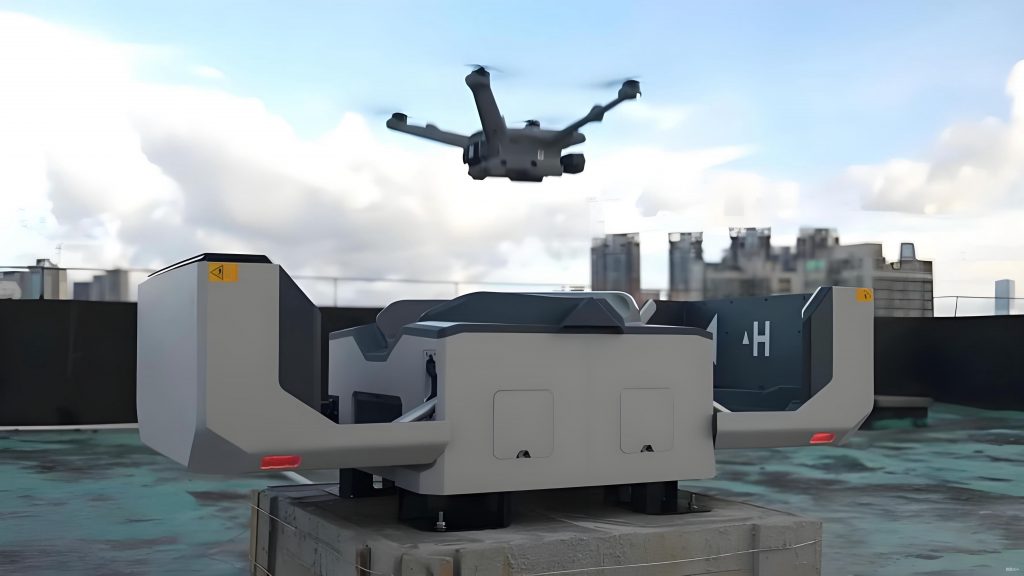
The concept of privacy, as it relates to civil drone operations, encompasses both the right to private life tranquility and the protection of personal information. In legal terms, privacy can be modeled using a risk assessment formula, where the probability of infringement is a function of drone accessibility and regulatory gaps. For instance, consider the equation: $$ P_i = A_d \times R_g $$ where \( P_i \) represents the probability of privacy infringement, \( A_d \) denotes the accessibility of civil drones, and \( R_g \) indicates regulatory gaps. This formula highlights how easily available civil drones and weak laws increase privacy risks. Moreover, the classification of civil drones based on weight, structure, and usage further complicates regulation. Below is a table summarizing common civil drone categories and their typical applications, which illustrates the diversity of devices that can potentially invade privacy.
| Drone Type | Weight Category | Common Uses | Privacy Risks |
|---|---|---|---|
| Multi-rotor | Light (under 250g) | Photography, recreation | High (e.g., peeping into homes) |
| Fixed-wing | Medium (250g-25kg) | Agricultural monitoring, mapping | Medium (e.g., data collection without consent) |
| Hybrid | Large (over 25kg) | Logistics, emergency services | Low to medium (e.g., tracking individuals) |
In recent years, the civil drone industry has expanded exponentially, with global market projections indicating sustained growth. The low-altitude economy, driven by civil drone deployments, is estimated to contribute significantly to GDP in many countries. However, this expansion has led to a surge in privacy infringement incidents involving civil drones. For example, cases where civil drones are used to spy on residential areas or collect personal data without authorization have become commonplace. The table below provides a statistical overview of civil drone-related privacy complaints in various regions, underscoring the urgency of regulatory action.
| Region | Annual Complaints (2023) | Common Infringement Types | Trend Increase (%) |
|---|---|---|---|
| North America | 1,200 | Unauthorized filming, data harvesting | 25 |
| Europe | 950 | Invasion of private spaces, stalking | 30 |
| Asia | 1,500 | Peeping, live streaming without consent | 40 |
The legal underpinnings of privacy protection must be adapted to address the unique challenges posed by civil drones. In many jurisdictions, existing laws do not explicitly cover the aerial intrusion capabilities of civil drones. For instance, the right to private life tranquility, which includes freedom from disturbance in one’s home, can be violated when a civil drone hovers outside a window. This infringement can be quantified using a privacy impact score: $$ I_p = S_v \times T_d $$ where \( I_p \) is the impact on privacy, \( S_v \) is the sensitivity of the violated space (e.g., bedroom vs. public park), and \( T_d \) is the duration of intrusion. Civil drones, with their ability to linger undetected, often result in high impact scores, necessitating stricter laws.
Analyzing case studies of civil drone privacy breaches reveals patterns of behavior among operators. Many incidents stem from a lack of legal awareness, where users of civil drones do not realize that capturing images or data without consent constitutes an infringement. Additionally, the technical capabilities of civil drones, such as high-resolution cameras and long flight times, exacerbate these risks. To mitigate this, I propose a regulatory model that includes mandatory education for civil drone operators. This could involve a certification process where applicants learn about privacy laws, as outlined in the formula for operator compliance: $$ C_o = K_p \times A_t $$ where \( C_o \) is compliance level, \( K_p \) is knowledge of privacy norms, and \( A_t \) is adherence to training. By improving \( K_p \), we can reduce the incidence of civil drone-related privacy violations.
International experiences in regulating civil drones offer valuable lessons. In the United States, for example, the Federal Aviation Administration (FAA) has implemented rules that require civil drone registration and privacy education for operators. Similarly, European countries like France and Germany have strict registration mandates and no-fly zones to protect sensitive areas from civil drone intrusions. Japan’s approach includes weight-based registration and penalties for unauthorized flights. The table below compares these regulatory frameworks, highlighting best practices for civil drone governance.
| Country | Key Regulations | Privacy Protections | Effectiveness Score (1-10) |
|---|---|---|---|
| USA | FAA registration, privacy awareness courses | Restrictions on flying over private property | 7 |
| France | Mandatory registration for drones >250g, no-fly zones | Respect for privacy in urban areas | 8 |
| Japan | Drone identification, flight bans in dense areas | Protection against stalking and data collection | 6 |
To enhance legal规制 for civil drone privacy, I recommend a multi-faceted approach. First, legislation should define clear no-fly zones for civil drones around residential and sensitive areas, with penalties for violations. This can be modeled using a deterrence equation: $$ D = F \times P_d $$ where \( D \) is deterrence effect, \( F \) is the fine amount, and \( P_d \) is the probability of detection. Increasing \( P_d \) through better monitoring of civil drone activities can significantly reduce infringements. Second, establishing a dedicated regulatory body for civil drones would streamline enforcement, integrating technologies like geofencing and RFID tracking to monitor flights. Third, public education campaigns should raise awareness about civil drone risks and self-protection measures, such as using signal jammers against intrusive civil drones.
In terms of technological solutions, anti-civil drone systems are crucial for preventing privacy breaches. These include radar detection and signal interference tools that can disable unauthorized civil drones. The effectiveness of such systems can be expressed as: $$ E_t = A_c \times R_t $$ where \( E_t \) is the effectiveness of anti-civil drone technology, \( A_c \) is accuracy in detection, and \( R_t \) is response time. Investing in research to improve \( E_t \) will help combat civil drone-related privacy threats. Additionally, empowering individuals to take action against offending civil drones, such as through legal provisions for self-defense, could deter potential infringers.
Looking ahead, the future of civil drone regulation must balance innovation with privacy rights. As civil drone technology advances, with developments in AI and autonomous flight, the potential for privacy infringement grows. Therefore, continuous updates to laws and international cooperation are essential. The formula for sustainable civil drone integration is: $$ S = I \times P_p $$ where \( S \) is sustainability, \( I \) is innovation rate, and \( P_p \) is privacy protection level. By maintaining a high \( P_p \), we can ensure that civil drones contribute positively to society without compromising individual freedoms.
In conclusion, the rise of civil drones presents both opportunities and challenges for privacy protection. Through comprehensive legal frameworks, public education, and technological innovations, we can mitigate the risks associated with civil drone operations. As I have discussed, a proactive approach that includes strict regulations and global benchmarks will foster a harmonious environment where civil drones can thrive responsibly. The key lies in collective effort—governments, industries, and citizens must collaborate to uphold privacy standards in the age of civil drones.