
As a vital carrier of new technologies and advanced productivity, civil drones have emerged as a significant component in the evolution of aviation sectors worldwide. In recent years, the independent research and development capabilities in the civil drone domain have substantially improved, leading to a remarkable expansion of the industry scale and establishing a prominent international advantage. To further strengthen the development prowess of the civil drone sector and enhance the modernization of its industrial and supply chains, this analysis delves into the current state, core challenges, and prospective directions. By offering insights and recommendations, this discussion aims to support the ongoing growth and innovation in the civil drone industry.
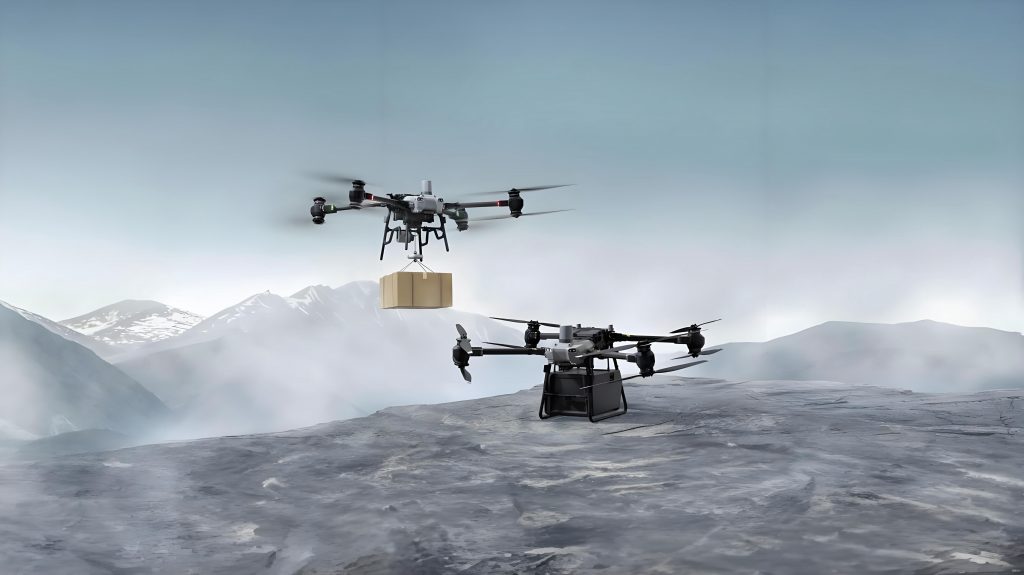
The global civil drone industry has witnessed a significant resurgence, with the market size reaching $117.7 billion in 2021, representing a growth rate of 25.2% compared to the previous year. This recovery underscores the resilience and adaptability of the civil drone market amid fluctuating global supply chains and trade dynamics. A dominant share of this growth is attributed to the civil drone sector in one region, which accounts for 81.5% of the global total, followed by contributions from other major economies. The diversity of products, innovative designs, and competitive pricing have solidified the position of this region as a primary manufacturing hub for civil drones worldwide.
Within the domestic landscape, the distribution of the civil drone industry reveals concentrated growth in specific areas. In 2021, the overall industry scale amounted to 652 billion units, with a growth rate of 22.8%. The central-southern region continues to lead, contributing substantially to the national total. The following table summarizes the regional distribution of the civil drone industry over recent years, highlighting the shifts and concentrations in various parts of the country.
| Region | 2020 Industry Scale (Billion Units) | 2021 Industry Scale (Billion Units) | 2021 Share (%) |
|---|---|---|---|
| Central-Southern | 425 | 490 | 75 |
| Eastern | 47 | 66 | 10 |
| Northern | 40 | 60 | 9 |
| Southwestern | 11 | 22 | 3 |
| Northwestern | 6 | 11 | 2 |
| Northeastern | 2 | 4 | 1 |
The growth in these regions can be modeled using a simple exponential function to project future trends. For instance, the annual growth rate for the civil drone industry is given by the formula: $$ G = \left( \frac{S_{2021} – S_{2020}}{S_{2020}} \right) \times 100\% $$ where \( S_{2020} \) and \( S_{2021} \) represent the industry scales in 2020 and 2021, respectively. Applying this to the central-southern region, we get: $$ G = \left( \frac{490 – 425}{425} \right) \times 100\% \approx 15.3\% $$ This indicates a robust expansion, driven by increased investment and innovation in the civil drone sector.
In terms of application scenarios, the civil drone industry is bifurcated into industrial-grade and consumer-grade segments. Industrial-grade civil drones dominate, accounting for 61% of the total market in 2021, with applications spanning security surveillance, emergency response, energy inspection, and agricultural plant protection. Consumer-grade civil drones, particularly those used for aerial photography, make up the remaining 39%. The table below provides a detailed breakdown of this structure, emphasizing the evolving roles of civil drones in various sectors.
| Category | 2020 Industry Scale (Billion Units) | 2021 Industry Scale (Billion Units) | 2021 Share (%) |
|---|---|---|---|
| Industrial-Grade Civil Drones | 330 | 400 | 61 |
| Consumer-Grade Civil Drones | 202 | 253 | 39 |
The market share for industrial-grade civil drones can be expressed mathematically as: $$ P_{\text{industrial}} = \frac{I_{\text{industrial}}}{I_{\text{total}}} \times 100\% $$ where \( I_{\text{industrial}} \) is the industrial-grade scale and \( I_{\text{total}} \) is the total industry scale. For 2021, this calculates to: $$ P_{\text{industrial}} = \frac{400}{652} \times 100\% \approx 61.3\% $$ This highlights the critical role of industrial applications in driving the civil drone industry forward.
Leading enterprises in the civil drone sector have demonstrated competitive advantages, with several firms ranking among the top globally. In 2021, half of the world’s top ten drone companies originated from this region, reflecting a strong foundation in innovation and market presence. Additionally, investment activities in the civil drone domain remain vibrant, with numerous promising companies attracting capital and achieving milestones such as public listings. This dynamism underscores the potential for sustained growth and technological advancement in the civil drone industry.
Despite these achievements, the development of the civil drone industry faces several challenges. First, the industrial system’s advantages have not been fully leveraged, resulting in an underdeveloped support ecosystem. The civil drone field is highly interdisciplinary, involving areas like aviation equipment, electronics, 5G communication, artificial intelligence, and big data. However, integration across these domains remains suboptimal, leading to issues such as high integration costs for complete products, delays in payload development, and insufficient attention to counter-drone technologies. Moreover, the service infrastructure for the civil drone industry is still immature; while some public testing platforms exist, there is a lack of specialized platforms for innovation and resource integration, as well as national-level innovation carriers.
Second, the gradient cultivation of high-quality enterprises has not yet formed a cohesive structure, and independent innovation capabilities require strengthening. With over 12,000 companies in the civil drone sector, the quality varies significantly. Currently, there are only a handful of champion firms and specialized “little giant” enterprises, indicating a shortage of innovative and high-quality players. Furthermore, innovation in core components like integrated control chips, dedicated onboard sensors, actuators, power batteries, and carbon fiber composites lags behind. This is compounded by product homogenization in multi-rotor civil drones, while vertical take-off and landing fixed-wing drones and their market applications remain underdeveloped.
Third, the legal and regulatory framework is incomplete, and industry supervision needs enhancement. The absence of top-level legislation conflicts with the growing demand for civil drone flights, resulting in fragmented management across multiple departments. Differentiation in managing various types of civil drones is unclear, and airspace management requires finer granularity. Additionally, regulatory methods and capacity building lag behind the increasing number of unmanned aircraft. Improvements are needed in areas like electronic fencing and supervision platforms, and current airworthiness and operational approval processes are not fully aligned with the rapid development of civil drone operations.
To address these issues, several recommendations are proposed for advancing the civil drone industry. First, establish a market demand and application scenario-driven model for industry-academia-research collaboration. Encourage key sectors such as logistics and surveying to publish technology demands through “unveiling and commanding” initiatives, enhancing product adaptability to specific scenarios and optimizing payload integration. By fostering collaboration, stakeholders in the civil drone ecosystem can exchange ideas, enrich product portfolios, and improve the development of civil drone flight platforms.
Second, optimize the gradient cultivation system for high-quality enterprises. Develop a tiered system comprising specialized “little giants,” manufacturing champions, and leading firms. Guide these enterprises to consolidate industrial resources through mergers, capital operations, and strategic partnerships, thereby enhancing the competitiveness and risk resilience of the civil drone supply chain. Encourage small and medium-sized civil drone companies to pursue specialized and innovative paths, exploring diverse commercialization avenues for civil drones.
Third, refine the top-level design of laws and regulations. Under the leadership of central air traffic management committees, strengthen the顶层设计 of laws and related reforms. Accelerate the revision and improvement of civil aviation laws, promote legislation for drone flight management interim regulations, and clarify provisions for civil drones in relevant legal frameworks. This will help define the responsibilities of various entities and streamline regulatory processes for the civil drone industry.
Fourth, expedite the low-altitude airspace reform process. Use pilot reforms in key regions as a catalyst, ensuring alignment with national low-altitude airspace reform guidelines. Simplify approval procedures, enhance the precision of airspace management, and establish an airspace environment conducive to the development of civil drones. This will facilitate smoother operations and innovation in the civil drone sector.
Looking ahead, several trends are poised to shape the future of the civil drone industry. Information security in drone systems is becoming a new focus for users. Civil drone system information security involves protecting hardware, software, and data integrity, accuracy, and confidentiality during communication. With frequent incidents of malicious interference disrupting data transmission, users are increasingly prioritizing security. As civil drones penetrate professional scenarios, they will more often participate in production activities or law enforcement, making data and information security paramount. Thus, the information security level of civil drones will emerge as a key “new performance” metric.
The civil drone market in security applications is expected to become a rapidly expanding new track. While agricultural plant protection remains the largest application for industrial-grade civil drones, sectors like security and power inspection are gaining traction. In security, civil drones are exploring diverse scenarios such as firefighting, patrols, event security, forest protection, and park management. The growth of specialized police drone units further amplifies this potential. Projections indicate that the demand for industrial-grade civil drones in security will enter a rapid expansion phase, potentially doubling the market size and establishing it as a new growth avenue for the civil drone industry.
Drone power systems may become a new focal point for overcoming application bottlenecks. The power system is a core constraint affecting flight stability, duration, and the capacity for functional payloads. Currently, civil drone platforms are sensitive to weight and flight time, requiring task plans based on payload weight in certain industries, which limits optimal efficiency. As next-generation information technologies integrate more deeply with civil drones, they may evolve from data collection tools to combined data collection and processing units. This shift will demand greater power supply capabilities and payload capacities from civil drone power systems, making them a critical area for innovation to unlock new applications.
Lastly, the integration of civil drones with system solutions could offer new experiences in multi-scenario applications. For example, in agriculture, civil drones combined with unmanned vehicles and IoT devices can handle tasks like fertilizing, seeding, and pest control, while remote sensing drones and smart systems monitor and analyze fields. This holistic approach provides a complete system solution. In consumer domains, initiatives like combining smart connected cars with civil drones are emerging, potentially leading to novel consumer experiences involving multiple unmanned products.
In summary, the civil drone industry is at a pivotal juncture, with significant opportunities and challenges ahead. By addressing systemic issues, fostering innovation, and adapting to evolving trends, the civil drone sector can achieve sustainable growth and continue to revolutionize various industries. The continued emphasis on civil drone development will be crucial for maintaining a competitive edge and driving global advancements in this dynamic field.