
In recent years, the proliferation of civil drone technology has introduced numerous benefits across various sectors, including logistics, agriculture, and entertainment. However, this rapid adoption has also led to significant security concerns due to unauthorized or malicious operations. As a researcher in this field, I have observed that civil drone incidents, such as illegal surveillance, smuggling, and disruptions to critical infrastructure, are becoming increasingly common. This paper aims to provide an in-depth analysis of civil drone detection and countermeasures technologies, focusing on their principles, advantages, disadvantages, and optimal application scenarios. By integrating mathematical models and comparative tables, I seek to offer a structured approach to selecting and deploying these technologies based on environmental factors and threat levels.
The threats posed by civil drone can be categorized into three primary types. First, the drone itself may cause harm due to mechanical failures, collisions, or crashes, potentially leading to fires or other secondary disasters, especially since many civil drone are constructed from lightweight, flammable materials like plastics. Second, the payloads carried by civil drone, such as cameras, speakers, or even hazardous substances, can directly endanger personal safety, public order, and national security. For instance, a civil drone equipped with a camera could intrude on private areas, while one carrying explosives might be used in terrorist attacks. Third, the communication links of civil drone, including control, telemetry, and video transmission, can cause radio frequency interference, though this is generally less harmful compared to other threats. Regulations, such as no-fly zones over airports and sensitive facilities, underscore the need for effective detection and countermeasures systems to mitigate these risks.
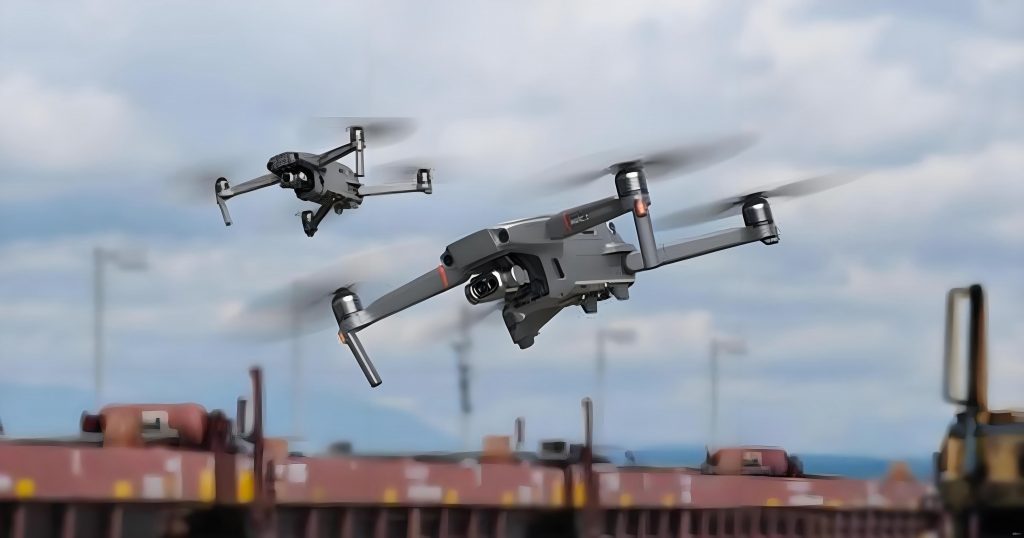
Detection is the foundational step in countering unauthorized civil drone operations, as it enables the identification and localization of these devices before they can cause harm. Various detection technologies have been developed, each with distinct mechanisms and suitability for different environments. In my analysis, I consider four primary detection methods: radar, radio frequency spectrum, electro-optical, and acoustic detection. Radar detection relies on the reflection of electromagnetic waves to identify civil drone. The basic radar equation can be expressed as:
$$P_r = \frac{P_t G_t G_r \lambda^2 \sigma}{(4\pi)^3 R^4 L}$$
where \(P_r\) is the received power, \(P_t\) is the transmitted power, \(G_t\) and \(G_r\) are the antenna gains, \(\lambda\) is the wavelength, \(\sigma\) is the radar cross-section of the civil drone, \(R\) is the range, and \(L\) represents system losses. This method offers long-range capabilities and rapid response but can be affected by the small size and material composition of civil drone, leading to false alarms. Radio frequency spectrum detection involves monitoring and analyzing the radio signals used by civil drone for control and communication. It compares these signals against a database of known civil drone signatures. The signal-to-noise ratio (SNR) is critical here:
$$\text{SNR} = \frac{P_s}{P_n}$$
where \(P_s\) is the signal power and \(P_n\) is the noise power. This technique is effective in various environmental conditions and can identify specific civil drone models, but it requires continuous updates to the signature database and may struggle with encrypted or frequency-hopping signals. Electro-optical detection uses visible or infrared light to capture images of civil drone. For visible light, the performance depends on ambient light conditions, while infrared detection relies on thermal contrasts, which can be modeled using Planck’s law for blackbody radiation. Acoustic detection analyzes the sound waves generated by civil drone propellers and motors, comparing them to pre-recorded acoustic profiles. Although cost-effective, this method is susceptible to environmental noise and requires a comprehensive and updated database of civil drone acoustic signatures.
To summarize these detection technologies, I have compiled a comparative table that highlights their key characteristics. This table serves as a quick reference for evaluating their suitability in different scenarios involving civil drone.
| Detection Technology | Principle | Advantages | Disadvantages |
|---|---|---|---|
| Radar | Electromagnetic wave reflection | Long range, accurate positioning, fast response | Affected by civil drone size and material, prone to false alarms |
| Radio Frequency Spectrum | Signal acquisition and comparison | Environment-independent, precise civil drone identification | Passive, requires updated database, challenges with encrypted signals |
| Electro-optical | Image capture in visible or infrared bands | Visible light cost-effective for daytime; infrared useful at night | Visible light affected by visibility; infrared sensitive to heat sources |
| Acoustic | Sound wave analysis and matching | Low cost, easy deployment | Noise interference, needs updated civil drone sound database |
Once a civil drone is detected, countermeasures must be applied to neutralize the threat. Countermeasures technologies can be broadly classified into four categories: interference and disruption, physical capture, kinetic destruction, and signal deception. Interference and disruption methods involve jamming the civil drone’s navigation or control signals. For example, GPS jamming emits signals in the satellite navigation bands to disrupt the civil drone’s positioning system, which can be modeled as:
$$J = \frac{P_j G_j}{4\pi R^2}$$
where \(J\) is the jamming power density, \(P_j\) is the jammer power, \(G_j\) is the jammer antenna gain, and \(R\) is the distance to the civil drone. This approach is simple and non-destructive but may interfere with other devices. Physical capture techniques include net-based systems or trained birds of prey to ensnare the civil drone. These methods preserve the civil drone for forensic analysis but are typically effective only at short ranges. Kinetic destruction employs weapons like lasers, microwaves, or conventional arms to damage or destroy the civil drone. Laser systems, for instance, use focused energy to burn critical components, with the energy transfer described by:
$$E = \frac{P_l t}{A}$$
where \(E\) is the energy density, \(P_l\) is the laser power, \(t\) is the exposure time, and \(A\) is the target area. While effective, these methods carry risks of secondary damage. Signal deception techniques, such as spoofing, transmit false GPS or control signals to take over the civil drone or lead it to a safe location. This requires cracking the civil drone’s communication protocol, which can be complex but offers a non-destructive means of control.
The following table provides a detailed comparison of countermeasures technologies for civil drone, outlining their mechanisms, benefits, and limitations to aid in selection.
| Countermeasures Category | Specific Method | Principle | Advantages | Disadvantages |
|---|---|---|---|---|
| Interference and Disruption | GPS Jamming | Emit jamming signals in navigation bands | Easy to implement, non-destructive to civil drone | Interferes with other navigation systems |
| Interference and Disruption | Control Signal Jamming | Jam civil drone control frequencies | Non-destructive | Disrupts legitimate communications, safety risks |
| Physical Capture | Net-based Capture | Entangle civil drone rotors | Preserves civil drone for analysis | Short-range effectiveness |
| Physical Capture | Bird of Prey | Trained birds capture civil drone | Simple and rapid | Unpredictable, requires extensive training |
| Kinetic Destruction | Laser Weapons | Focus energy to burn components | Direct and fault-tolerant | Large equipment, secondary hazards |
| Kinetic Destruction | Microwave Weapons | Overload civil drone electronics with microwaves | No precise aiming needed | Limited range |
| Signal Deception | GPS Spoofing | Transmit false navigation signals | Can redirect civil drone safely | Pollutes electromagnetic environment |
| Signal Deception | Control Signal Spoofing | Hijack civil drone control via protocol cracking | Gains control of civil drone | May affect nearby legitimate civil drone |
Applying these detection and countermeasures technologies effectively requires a nuanced understanding of the specific environment and potential risks. In my experience, the choice of technology should be tailored to the scenario to maximize effectiveness while minimizing collateral damage. For large-scale public events, such as sports games or concerts, the primary concern is the safety of dense crowds. Here, detection could combine visible light electro-optical systems during the day with radio frequency methods at night, as they are less affected by environmental clutter. Countermeasures should avoid kinetic options to prevent debris hazards; instead, GPS jamming or spoofing can safely redirect the civil drone to a designated area. The probability of successful detection in such scenarios can be estimated using a composite model:
$$P_d = 1 – \prod_{i=1}^{n} (1 – P_{d_i})$$
where \(P_d\) is the overall detection probability and \(P_{d_i}\) is the probability for each deployed detection system, emphasizing the benefit of layered approaches for civil drone threats.
In airport and surrounding areas, where radio sensitivity is high, detection should prioritize electro-optical and acoustic methods to avoid electromagnetic interference. Patrols and video surveillance can supplement these systems. For countermeasures, physical capture techniques are preferable to preserve evidence, though kinetic methods might be used in isolated zones. Border regions, characterized by vast open spaces, allow for multiple detection technologies to be deployed simultaneously. Countermeasures could include birds of prey for discreet neutralization, supported by interference methods to de-escalate potential conflicts. In high-risk zones like power plants or chemical storage facilities, where fires or contamination are concerns, rapid detection via radar and radio frequency is crucial. Countermeasures must prioritize signal deception to seize control of the civil drone without causing explosions or leaks. The effectiveness of signal deception can be modeled based on the signal strength ratio:
$$\text{SIR} = \frac{P_{\text{deception}}}{P_{\text{legitimate}}}$$
where a higher signal-to-interference ratio (SIR) increases the likelihood of successfully deceiving the civil drone.
For sensitive areas such as military bases or prisons, a multi-faceted approach is necessary, considering both electromagnetic cleanliness and security protocols. Detection might integrate radar and electro-optical systems, while countermeasures could involve decisive kinetic actions if the civil drone poses an immediate threat. In all cases, the integration of these technologies into a unified platform enhances coordination and response times. As civil drone technology evolves, with advancements in autonomy and stealth, detection and countermeasures systems must adapt. Future research should focus on artificial intelligence for real-time civil drone identification and adaptive jamming techniques that minimize environmental impact. Moreover, international standards for civil drone operations could help harmonize these efforts, reducing the global risk from malicious civil drone activities.
In conclusion, the challenge of civil drone detection and countermeasures is multifaceted, requiring a balanced approach that considers technological capabilities, environmental factors, and potential secondary effects. Through this analysis, I have highlighted the importance of selecting appropriate technologies based on specific scenarios, such as public events, critical infrastructure, and border areas. The use of mathematical models and comparative tables aids in optimizing these choices, ensuring that civil drone threats are mitigated efficiently. As the civil drone landscape continues to change, ongoing innovation and collaboration will be essential to safeguarding airspace and public safety. By leveraging a combination of detection and countermeasures methods, stakeholders can address the diverse risks posed by civil drone while fostering responsible usage of this transformative technology.