
In recent years, the civil drone industry has experienced exponential growth globally, driven by advancements in technology and reduced hardware costs. Since 2013, factors such as lower production expenses and technological breakthroughs have propelled the civil drone sector into a rapid development phase. Statistical data indicate that from 2015 to 2018, the compound annual growth rate of civil drone usage in China reached 77.4%, with the market scale expanding to 21 billion yuan in 2019, reflecting a 56.72% year-on-year increase. Despite the challenges posed by the pandemic, the civil drone market demonstrated resilience, surging unexpectedly in 2021. With the maturation of positioning systems like BeiDou and the integration of artificial intelligence, the industry is projected to exceed 100 billion yuan by 2023. Civil drones are broadly categorized into industrial-grade and consumer-grade types. Consumer-grade civil drones, in particular, have gained popularity due to their affordability, ease of operation, portability, and superior imaging capabilities, significantly lowering the barriers to aerial photography. However, this accessibility has led to a rise in unauthorized flights, commonly referred to as “black flight,” where operators fly civil drones without adhering to regulations, resulting in incidents that threaten public safety, aviation security, and national security. For instance, events such as disruptions to commercial flights and injuries from失控 drones highlight the urgent need for effective regulation. The introduction of the “Interim Regulations on the Flight Management of Unmanned Aircraft” by the State Council and Central Military Commission on May 31, 2023, aims to address these gaps by providing a legal framework for civil drone operations. From a public security perspective, this regulation empowers authorities to take preliminary actions and implement technical controls, yet it leaves room for interpretation in daily enforcement, underscoring the necessity to define “black flight” behaviors clearly and develop targeted strategies.
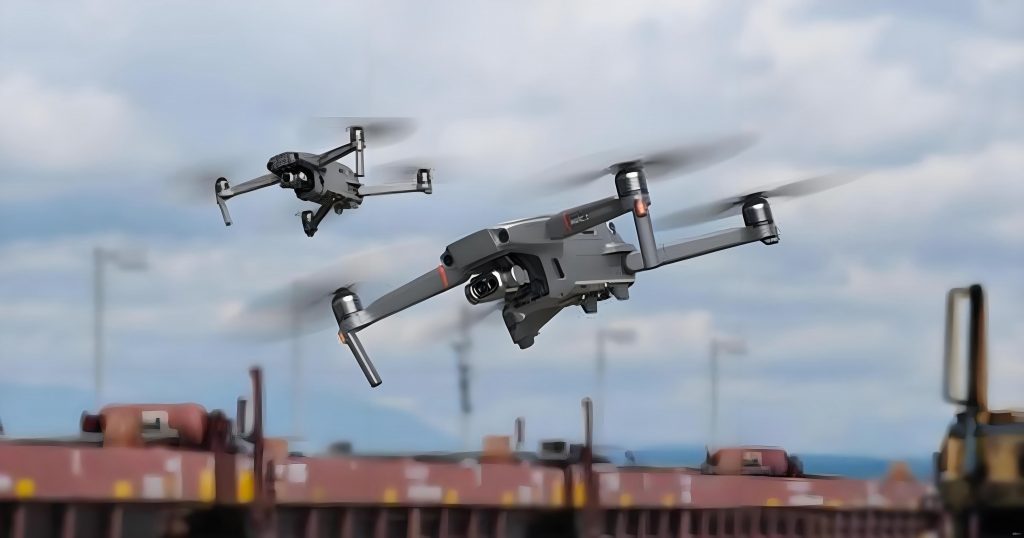
The term “civil drone” specifically refers to unmanned aircraft that lack an onboard pilot, incorporate built-in flight control systems, and are used for non-military, non-police, and non-customs purposes. This definition excludes model aircraft, unmanned free balloons, and tethered balloons, as model aircraft differ in construction, usage, and control mechanisms, often operating within designated areas like aviation camps. In the context of public security, focusing on civil drones is practical due to their prevalence in incidents of unauthorized flights. “Black flight” is not a formally defined legal term but generally denotes illegal or non-compliant operations of civil drones. Subjectively, it can involve both intentional and negligent actions, as some operators may be unaware of regulations. Objectively, based on the Interim Regulations, “black flight” can be identified through three primary scenarios: lack of operator certification, failure to register the civil drone, and absence of pre-approved flight applications. These criteria help law enforcement quickly assess violations during patrols or public reports.
To elaborate, operator certification requirements vary depending on the civil drone type. The Regulations classify civil drones into five categories based on empty weight and maximum takeoff weight, as summarized in Table 1. For example, micro and lightweight civil drones do not require a license for flights in non-controlled airspace, but operators must demonstrate proficiency and awareness of risks. In controlled airspace, such as areas exceeding 120 meters in altitude, certification becomes mandatory. Common licenses include those issued by civil aviation authorities, which are recognized for legal operations. During enforcement, officers must verify the civil drone type and flight zone to determine if certification is needed; non-compliance constitutes “black flight.”
| Type | Empty Weight (kg) | Maximum Takeoff Weight (kg) | Certification Requirement |
|---|---|---|---|
| Micro | 0 < W ≤ 0.25 | 0 < W ≤ 0.25 | None in non-controlled airspace; training required in controlled airspace |
| Lightweight | 0.25 < W ≤ 4 | 0.25 < W ≤ 7 | None in non-controlled airspace; license required in controlled airspace |
| Small | 4 < W ≤ 15 | 7 < W ≤ 25 | License required for most operations |
| Medium | W > 15 | 25 < W ≤ 150 | License mandatory |
| Large | W > 150 | W > 150 | License mandatory |
Secondly, civil drone registration is compulsory under the Regulations. Owners must register their civil drones in the national实名登记信息系统 (Real-name Registration Information System) and affix a registration mark containing a QR code on the aircraft. This allows authorities to scan and verify details during checks. Failure to register results in penalties, emphasizing the importance of traceability for civil drone operations.
Thirdly, flight applications must be submitted in advance for operations in controlled airspace. While micro, lightweight, and small civil drones are exempt in approved zones, flights in restricted areas require prior approval. The risk of “black flight” can be modeled using a basic probability equation: $$ P(\text{black flight}) = 1 – \prod_{i=1}^{n} (1 – p_i) $$ where \( p_i \) represents the probability of non-compliance in each of the \( n \) criteria (certification, registration, approval). This formula highlights how multiple factors contribute to overall risk, guiding enforcement priorities.
From a public security standpoint, enforcing these regulations faces several dilemmas. First,处罚依据与标准各异 (penalty bases and standards vary) across regions. For similar “black flight” incidents, such as flying civil drones near railway lines, some jurisdictions apply the “Railway Safety Management Regulations” while others use the “Public Security Administration Punishment Law,” leading to inconsistent fines or detention periods. This inconsistency undermines the deterrent effect and fairness in civil drone regulation.
Second,执法培训与处置经验缺乏 (lack of training and handling experience) among frontline officers is evident. As civil drone-related incidents are relatively new, many police lack the expertise to identify “black flight” behaviors promptly. Without standardized procedures and specialized knowledge, responses become hesitant, exacerbating risks. For instance, the annual number of such cases is low, reducing opportunities for practical experience.
Third,处置介入时间滞后 (delayed intervention timing) occurs due to limited preemptive data. Civil drones are easily purchased and transported, but registration information is stored in civil aviation databases, not directly accessible to police. This results in reactive measures, often after public reports or incidents, hindering proactive management of civil drone threats.
Fourth,打击手段单一,震慑不足 (limited countermeasures and insufficient deterrence) characterize current approaches. Civil drone “black flight” often involves short-duration, low-altitude flights that are hard to track. While specialized units have anti-drone equipment, most local police lack such resources and training. The scarcity of prosecutions—with penalties ranging from fines to short-term detention—fails to convey a strong message, as shown in 2021 data where only a minority of cases led to severe punishments.
To address these challenges, several countermeasures are proposed. First,明确公安机关职责,完善执法规范 (clarify public security organs’ responsibilities and improve enforcement norms) is crucial. Authorities should establish dedicated teams, equip them with basic civil drone detection tools, and develop detailed operational guidelines. By aligning with the Interim Regulations, provinces can create tailored implementation plans that balance crackdowns on illegal activities with support for the civil drone industry’s growth. Regular training on these norms will enhance consistency and efficiency.
Second,组建专业执法机构,提升执法能力水平 (form specialized enforcement agencies and enhance执法 capability) is recommended. A dedicated civil drone supervision department, akin to a “drone management office,” could centralize oversight, integrate emergency plans, and coordinate with other agencies. Police academies should incorporate civil drone courses into curricula, using both online and offline methods to build expertise. For example, a risk assessment formula like $$ R = H \times V \times C $$ can be taught, where \( R \) is the risk level, \( H \) is the hazard probability, \( V \) is the vulnerability of the area, and \( C \) is the consequence severity. This helps prioritize responses to civil drone incidents.
Third,分级筛选管理,重点管控打击 (implement tiered management and targeted control) can optimize resources. Leveraging data from systems like the Unmanned Aircraft Traffic Management Information Service System (UTMISS), authorities can classify civil drone flights into cooperative and non-cooperative categories. Cooperative civil drones—those with minor violations—can receive automated warnings via apps or SMS, reducing police workload. For non-cooperative civil drones, such as those used maliciously in sensitive zones, rapid-response teams equipped with advanced countermeasures should be deployed. This approach ensures focused efforts on high-risk civil drone activities.
Fourth,引导增强自律意识,树立安全飞行理念 (promote self-discipline and safe flight awareness) among users is vital. Through community outreach, online platforms, and网格化 (grid-based) management, police can educate civil drone enthusiasts on regulations. Sharing case studies of penalties for “black flight” can foster compliance, while public campaigns encourage citizens to report suspicious civil drone operations, creating a collective security culture.
In conclusion, civil drone “black flight” poses significant threats to aviation, public, and national security. By accurately defining these behaviors and applying laws flexibly, public security organs can mitigate risks while supporting the civil drone industry’s sustainable development. Strengthening regulatory frameworks, enhancing professional training, and fostering public cooperation are key to ensuring that civil drone technologies benefit society safely. As the industry evolves, continuous adaptation of enforcement strategies will be essential to address emerging challenges in civil drone management.