
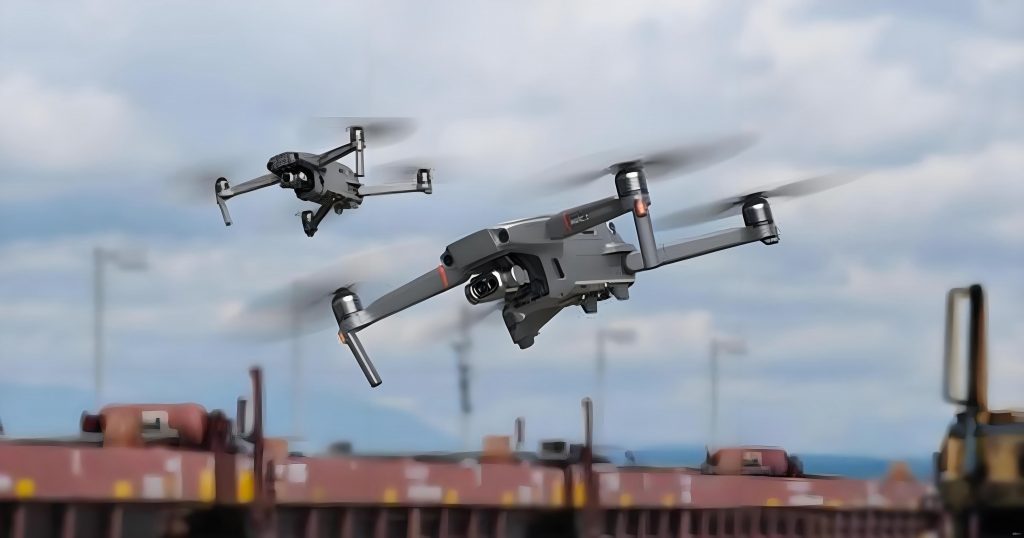
In recent years, the civil drone industry has experienced rapid growth, driven by factors such as reduced hardware costs and technological breakthroughs. Since 2013, the civil drone market in China has entered a period of significant opportunity, with statistics showing an average annual compound growth rate of 77.4% from 2015 to 2018. By 2019, the market size for civil drones reached 21 billion yuan, a year-on-year increase of 56.72%. Despite the challenges posed by the pandemic, the industry saw explosive growth in 2021, with market scale rising against the trend. With the maturation of the BeiDou positioning system and the gradual improvement of emerging technologies like artificial intelligence, the industry scale is projected to exceed 100 billion yuan by 2023. The civil drone market is primarily divided into industrial-grade and consumer-grade categories. Unlike industrial-grade civil drones, which are often expensive, consumer-grade civil drones offer advantages such as excellent shooting performance, ease of operation, portability, and affordable prices, significantly lowering the barrier to aerial photography. However, the increasing prevalence of “black flight”—unauthorized or non-compliant operations of civil drones—has led to numerous incidents threatening public safety, personal property, and even national security. For instance, in 2013, an incident in Beijing resulted in multiple civilian flights being diverted and delayed due to unauthorized civil drone operations, leading to criminal charges for the individuals involved. More recently, in the first half of 2023, several cases of civil drone black flight have been reported, including one in Nanning where a tourist’s mishandling of a civil drone caused injury to a performer, and another in Hangzhou involving the illegal modification of a civil drone’s electronic fence and unauthorized flights in restricted areas. These events highlight the regulatory gaps in the management of civil drones and the conflict between the industry’s rapid development and outdated management mechanisms.
On May 31, 2023, the State Council and the Central Military Commission promulgated the “Interim Regulations on the Flight Management of Unmanned Aircraft” (hereinafter referred to as the “Regulations”), which fill the legal void in unmanned aircraft management. These regulations provide a framework for promoting the sustainable development of the civil drone industry, improving supervision mechanisms, and ensuring safe and orderly flight activities. For public security authorities, the “Regulations” grant powers such as initial intervention and necessary technical control measures in emergencies. However, as the “Regulations” are aimed at multiple supervisory authorities responsible for civil drones, the guidance for public security mechanisms and daily law enforcement remains broad, leading to challenges in practical application. Therefore, addressing the increasing number of civil drone incidents that disrupt public order and safety requires accurately defining illegal flight behaviors, enforcing laws and regulations, and developing targeted governance strategies. This article, from a public security perspective, explores the concept of civil drone black flight, identifies law enforcement dilemmas, and proposes countermeasures to enhance regulatory and response capabilities, thereby safeguarding aviation, public, and national security.
The term “civil drone” is often used interchangeably with “civil unmanned aircraft” in administrative regulations and normative documents. In local regulations such as the “Zhejiang Province Regulations on Public Safety Management of Unmanned Aircraft” and the “Xiamen City Measures for Public Safety Management of Civil Unmanned Aircraft,” the latter term is predominantly employed. Unmanned aircraft is an overarching category that includes remotely piloted aircraft, autonomous aircraft, and model aircraft, with the first two collectively referred to as drones. However, model aircraft differ significantly from civil drones in terms of construction, purpose, and control methods, as they lack automatic flight control systems and are typically operated within designated airspace, such as aviation camps. Consequently, the “Regulations” specify that model aircraft will be managed under separate provisions by sports authorities in collaboration with other departments. From a public security standpoint, the majority of black flight incidents involve remotely piloted or autonomous civil drones, making them the primary focus of discussion. Thus, for the purposes of this article, “civil drone” is defined as an aircraft without an onboard pilot, equipped with its own flight control system, and used for non-military, non-police, and non-customs purposes, excluding model aircraft, unmanned free balloons, and tethered balloons. This definition ensures a targeted approach to the most relevant and impactful aspects of civil drone operations in public security contexts.
Civil drone black flight is not a precise legal concept but generally refers to illegal or non-compliant flight operations of civil drones. Subjectively, the term “black” implies intentional or covert actions, but in practice, many operators of civil drones may act out of negligence or ignorance of regulations, encompassing both intentional and negligent behavior. Objectively, the “Regulations” do not explicitly list what constitutes black flight; broadly, any unauthorized or unapproved flight of a civil drone falls under this category. For public security authorities, quickly identifying black flight during routine patrols or in response to reports involves assessing three key scenarios based on the “Regulations”:
First, the operator lacks a valid flight license. The “Regulations” classify civil drones into five types based on empty weight and maximum takeoff weight, as summarized in Table 1. Micro and light civil drones do not require a license for flight in non-controlled airspace, but operators must be proficient in operation and aware of risks. In controlled airspace, training and assessment are necessary. Most consumer-grade civil drones fall into the micro and light categories, so determining black flight depends on whether the flight occurs in controlled airspace, such as areas above 120 meters in altitude. If the civil drone type or airspace requires a license and the operator cannot produce one, the flight is illegal. Common licenses include the CAAC Civil Drone Pilot License, ASFC Drone Pilot License, UTC Drone Operator Certificate, and AOPA Civil Drone Pilot Certificate, with CAAC and AOPA being officially recognized for legal flight operations.
| Type | Empty Weight (kg) | Maximum Takeoff Weight (kg) |
|---|---|---|
| Micro | 0 < W ≤ 0.25 | 0 < W ≤ 0.25 |
| Light | 0.25 < W ≤ 4 | 0.25 < W ≤ 7 |
| Small | 4 < W ≤ 15 | 7 < W ≤ 25 |
| Medium | W > 15 | 25 < W ≤ 150 |
| Large | W > 150 | W > 150 |
Second, the civil drone is not registered. According to the “Regulations,” owners of civil drones must complete real-name registration through the Civil Aviation Administration of China’s “Civil Unmanned Aircraft Real-Name Registration Information System.” This involves submitting product and personal details and affixing a registration mark containing a QR code to the civil drone. During inspections, public security authorities should verify the presence of this mark and scan the code to confirm compliance. Failure to register constitutes black flight and may result in fines or corrective orders.
Third, flight applications lack prior approval. The “Basic Rules for Flight in China” mandate that all flights be pre-applied and approved. The “Regulations” simplify this for micro, light, and small civil drones in suitable airspace, but flights in controlled airspace require application to air traffic management agencies at least one day in advance. If operators cannot provide approval documents when required, the flight is illegal, and penalties may apply, especially in sensitive areas where detention and further investigation might be necessary.
Public security authorities face several dilemmas in enforcing regulations against civil drone black flight. Analysis of penalty outcomes from 2021 shows that fines were imposed in 5 cases, administrative detention in 2, criminal detention in 1, and warnings in 2. Most incidents involving civil drones do not cause actual harm, and operators often cooperate, leading to lenient penalties like fines or warnings, along with confiscation of equipment. Only severe cases, such as tampering with electronic fences or entering no-fly zones, result in detention. The enforcement challenges include:
Inconsistent penalties and standards across regions. For similar violations, such as flying civil drones near railway lines, some authorities apply the “Railway Safety Management Regulations” while others use the “Public Security Administration Punishment Law,” leading to disparities in fines and sanctions. For example, local regulations in Zhejiang and Shenzhen set different fine thresholds for modifying civil drones or disabling electronic fences, creating “unequal punishment for the same offense.”
Lack of training and experience in handling civil drone incidents. Black flight of civil drones is a relatively new type of offense, and frontline officers may struggle with identification and response due to infrequent exposure and insufficient specialized training. Without clear procedural guidelines for defining behaviors, emergency response, and post-incident penalties, officers may hesitate or mishandle cases. The scarcity of precedent cases further complicates effective enforcement.
Delayed intervention in civil drone operations. Since civil drones are not strictly regulated in sales, purchases, or transportation, public security authorities cannot accurately estimate the number of civil drones in their jurisdictions. Although registration is required, information is held by civil aviation departments and not readily accessible to police, hindering proactive prevention and timely response. Most interventions rely on public reports or warnings from other departments, often occurring after risks have materialized.
Limited countermeasures and deterrent effects. The random nature of civil drone black flight, combined with short flight durations and low altitudes, makes tracking and打击 difficult. While authorities can respond quickly to reports, locating operators and forcing landings is challenging without specialized equipment. Basic police units rarely have access to civil drone detection and countermeasure tools, which require skilled operation, reducing the effectiveness and震慑 of enforcement actions.
To address these challenges, public security authorities should adopt a multi-faceted approach to govern civil drone black flight. The following countermeasures are proposed:
Clarify the responsibilities of public security authorities and improve law enforcement standards. Although the “Regulations” allow reports to multiple agencies, the public typically contacts local police first for civil drone incidents. Thus, authorities should allocate resources to form specialized response teams, equip them with basic civil drone countermeasure tools, and develop detailed procedures. Provincial and municipal public security organs should create tailored implementation plans that balance打击 crime and supporting the civil drone industry’s growth. Widespread training on the “Regulations,” compilation of enforcement guides, and standardization of processes are essential to enhance effectiveness.
Establish professional law enforcement agencies and enhance capabilities. Currently, public security agencies focus on police aviation through the Police Aviation Management Office under the Ministry of Public Security, but this does not cover civil drones. A dedicated department for civil drone supervision, similar to a “vehicle management office,” could improve daily management and integrate civil drone safety into emergency plans. This department should monitor key personnel, collect intelligence on illegal flights, and guide other units in执法 issues. Police training schools and online platforms should offer courses on civil drone applications and countermeasures, incorporating them into regular training programs to boost overall competency.
Implement tiered management and targeted打击. Using data from the Civil Aviation Administration’s Unmanned Aircraft Traffic Management Information System (UTMISS), public security authorities can collaborate with civil aviation and traffic management departments to build regional platforms for civil drone management. For cooperative civil drones—those operated unintentionally or negligently—the platform can issue automated warnings via app or SMS, prompting corrections and conserving resources. For non-cooperative civil drones, such as self-assembled or maliciously operated ones, and in critical areas or during major events, emergency plans should be activated. Specialized teams within units like special police can be equipped with advanced countermeasure tools to form rapid response units, ensuring real-time coordination and effective intervention to prevent harm.
Promote self-discipline and safe flight practices. Through community outreach, public security authorities can engage frequent users of civil drones, such as enthusiasts and professionals, via grid-based management. Regular seminars or online groups can provide guidance and updates on regulations. Publicizing penalized cases of civil drone black flight can serve as both a deterrent and an educational tool, fostering compliance. For the general public, social media platforms like WeChat, Weibo, and TikTok can be used to share educational content on civil drone safety, encouraging reports of suspicious activities and cultivating a culture of responsible civil drone usage.
In conclusion, civil drone black flight poses significant threats to military, public, and national security. Public security authorities must accurately identify and regulate such behaviors using legal frameworks, while guiding operators toward compliant flight. As supervisors, they should exercise the powers and responsibilities granted by the “Regulations” to ensure safety, while also fostering the positive societal applications of civil drones and supporting the industry’s healthy development. By addressing enforcement dilemmas through standardized procedures, professional training, and public engagement, authorities can mitigate risks associated with civil drone operations.
To further illustrate the risk assessment in civil drone operations, consider the following formula that models the potential risk $R$ of a civil drone incident:
$$R = P \times I$$
where $P$ represents the probability of a black flight event occurring, and $I$ denotes the impact in terms of safety or security damage. This can be refined to account for factors such as the type of civil drone and the environment. For instance, the probability $P$ might be influenced by the operator’s compliance level $C$, the effectiveness of enforcement $E$, and the complexity of the airspace $A$. A more detailed model could be:
$$P = f(C, E, A) = \alpha C + \beta E + \gamma A$$
where $\alpha$, $\beta$, and $\gamma$ are weighting coefficients based on empirical data. Similarly, the impact $I$ could be expressed as a function of the civil drone’s weight $W$ and the sensitivity of the location $S$:
$$I = g(W, S) = \delta W + \epsilon S$$
with $\delta$ and $\epsilon$ as parameters. Such models can aid in prioritizing resources for civil drone management.
Additionally, the efficiency of law enforcement responses to civil drone black flight can be quantified using a response time formula. Let $T_{response}$ be the total time from incident report to resolution, which includes detection time $T_d$, decision time $T_c$, and action time $T_a$:
$$T_{response} = T_d + T_c + T_a$$
Optimizing this for civil drone incidents involves minimizing each component through technology and training. For example, improving detection systems for civil drones can reduce $T_d$, while streamlined procedures can cut $T_c$.
In summary, the integration of analytical approaches with practical measures will strengthen the governance of civil drone activities, ensuring that the benefits of this technology are realized without compromising safety.