
In this article, I explore the rapid evolution and future prospects of civil drone applications in the Chengdu-Chongqing region, a key economic zone in China. As an emerging technology, civil drones have transformed industries such as entertainment, agriculture, industry, and commerce, becoming a vital component of general aviation. During the “13th Five-Year Plan” period, the civil drone industry was recognized as a growth driver for the national economy, and it continues to be a strategic focus in the “14th Five-Year Plan” era. The Chengdu-Chongqing area, with its unique economic and policy advantages, offers a fertile ground for advancing civil drone applications. I will delve into the current state, trends, and innovative developments, emphasizing the role of digitalization, clustering, and route-based applications. Throughout this discussion, I aim to highlight how civil drones are driving efficiency and innovation, supported by data, formulas, and tables to provide a comprehensive analysis.
The rise of the Chengdu-Chongqing economic circle as a national strategy has accelerated infrastructure and policy support for technological advancements, including civil drones. This region, encompassing parts of Sichuan and Chongqing, is poised to become a hub for civil drone innovation, leveraging its industrial base and collaborative platforms. I begin by outlining the definition and trends of civil drones, then move to their application research status, followed by an in-depth look at the Chengdu-Chongqing context, and conclude with future directions. Along the way, I incorporate formulas to model key aspects, such as cost-benefit analysis and performance metrics, and tables to summarize data on application domains and technological progress. By doing so, I provide a holistic view that underscores the transformative potential of civil drones in this dynamic region.
Definition and Trends of Civil Drones
Civil drones, or unmanned aerial vehicles (UAVs), are aircraft operated without a human pilot onboard, controlled remotely or autonomously via pre-programmed systems. They are categorized based on technology, such as multi-rotor, fixed-wing, or hybrid models, and by weight, ranging from micro to large categories exceeding 5.7 tons. In recent years, the civil drone sector has witnessed exponential growth, driven by advancements in control systems, power efficiency, and materials science. As I analyze the trends, three key directions emerge: intelligence, cost reduction, and multi-drone collaboration.
First, intelligence in civil drones refers to the integration of artificial intelligence (AI), IoT, and cloud computing to enable autonomous decision-making. For instance, AI algorithms allow civil drones to adapt to dynamic environments, reducing the need for constant human intervention. This can be modeled using a simple autonomy index formula: $$ A = \frac{S}{T} $$ where \( A \) represents the autonomy level, \( S \) is the number of successful autonomous decisions, and \( T \) is the total decisions made. Higher values of \( A \) indicate greater intelligence, leading to applications in complex scenarios like disaster response or precision agriculture.
Second, cost reduction is achieved through innovations in materials, energy storage, and manufacturing processes. The trend toward “one drone, multiple functions” lowers per-unit costs, making civil drones more accessible. I estimate the cost-effectiveness using a formula: $$ C_e = \frac{B}{C} $$ where \( C_e \) is the cost-effectiveness ratio, \( B \) is the benefits derived (e.g., time saved, data collected), and \( C \) is the total cost. As \( C_e \) increases, civil drones become more viable for widespread use, such as in small-scale farming or urban logistics.
Third, multi-drone collaboration involves fleets of civil drones working together to accomplish tasks that are too complex or hazardous for single units. This relies on distributed control systems and real-time data sharing. The efficiency of such clusters can be expressed as: $$ E_c = \frac{N \times U}{D} $$ where \( E_c \) is the cluster efficiency, \( N \) is the number of drones, \( U \) is the utilization rate, and \( D \) is the delay in task completion. Higher \( E_c \) values demonstrate the superiority of collaborative civil drone applications in areas like large-scale mapping or emergency services.
To summarize these trends, I present Table 1, which outlines the key characteristics and impacts of each trend on civil drone development.
| Trend | Description | Impact on Civil Drones |
|---|---|---|
| Intelligence | Integration of AI and autonomous systems | Enhanced decision-making, reduced human oversight |
| Cost Reduction | Use of new materials and multifunctional designs | Lower prices, broader adoption in diverse sectors |
| Multi-Drone Collaboration | Fleet-based operations with shared data | Improved efficiency in complex tasks |
These trends are reshaping the civil drone landscape, making them indispensable in modern economies. In the Chengdu-Chongqing area, they align with regional goals of technological innovation and industrial upgrading.
Current Research on Civil Drone Applications
Research on civil drone applications has expanded globally, focusing on both consumer and industrial uses. In the Chengdu-Chongqing context, studies highlight the dominance of civil drones in administrative services, firefighting, agriculture, and energy inspection. For example, civil drones account for approximately 40-45% of applications in public services, 25% in firefighting, 10-13% in agriculture, and 17% in energy sectors. This distribution reflects the versatility of civil drones, but also points to untapped potential in areas like logistics and environmental monitoring.
In terms of technological maturity, civil drones are often segmented into high-end, mid-range, and low-end categories. High-end civil drones feature advanced sensors and longer endurance, while low-end models cater to recreational users. Research indicates that a balanced development across these segments is crucial for sustainable growth. I model the market penetration of civil drones using a logistic growth formula: $$ P(t) = \frac{K}{1 + e^{-r(t – t_0)}} $$ where \( P(t) \) is the penetration rate at time \( t \), \( K \) is the carrying capacity (maximum potential market share), \( r \) is the growth rate, and \( t_0 \) is the inflection point. This formula helps predict how quickly civil drones might dominate specific sectors in Chengdu-Chongqing.
Moreover, challenges such as regulatory gaps, lack of standardized quality assessments, and communication network limitations have been identified in civil drone research. For instance, inadequate drone registration systems and varying legal frameworks hinder seamless integration. To address this, I propose a risk assessment formula for civil drone operations: $$ R = P \times I $$ where \( R \) is the risk level, \( P \) is the probability of an incident, and \( I \) is the impact severity. By minimizing \( R \) through better policies, civil drone applications can become safer and more reliable.
Table 2 provides a snapshot of civil drone application areas based on recent studies, emphasizing their prevalence and growth potential in the Chengdu-Chongqing region.
| Application Area | Prevalence (%) | Key Functions |
|---|---|---|
| Administrative Services | 40-45 | Surveillance, data collection |
| Firefighting | 25 | Emergency response, monitoring |
| Agriculture | 10-13 | Crop monitoring, spraying |
| Energy Inspection | 17 | Infrastructure checks, maintenance |
This research underpins the need for targeted innovations in civil drone technology, particularly in the Chengdu-Chongqing area, where economic policies favor rapid adoption.
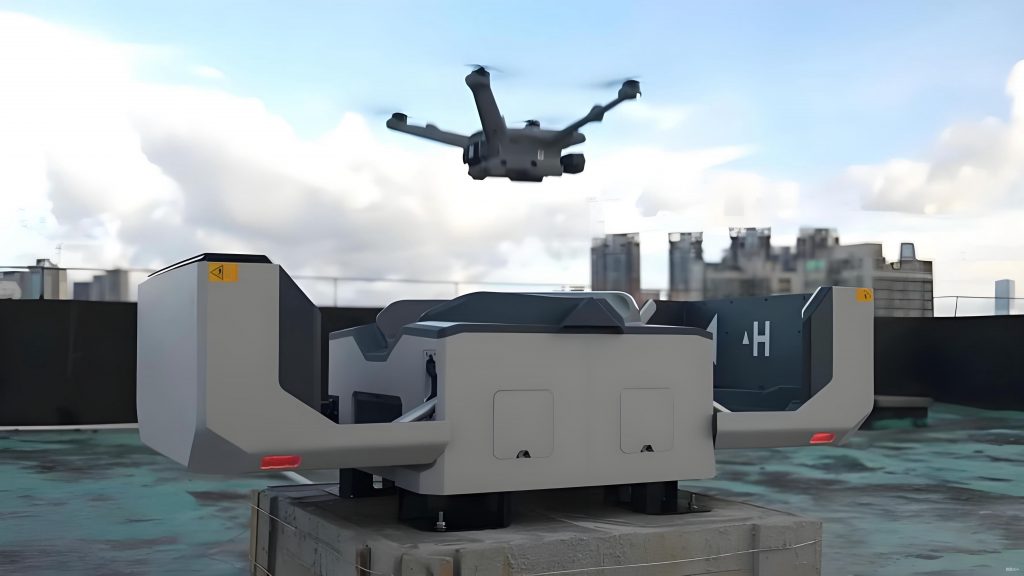
Civil Drone Applications in the Chengdu-Chongqing Area
The Chengdu-Chongqing region has made significant strides in developing civil drone applications, fueled by government support, industrial clusters, and technological breakthroughs. I observe that the area’s civil drone ecosystem is characterized by a complete industrial chain, innovative platforms, and relentless R&D efforts. This has positioned civil drones as key enablers of regional development, from agriculture to logistics.
First, the industrial chain for civil drones in Chengdu-Chongqing is increasingly robust, covering R&D, manufacturing, services, and application. Numerous enterprises, ranging from startups to established firms, contribute to this ecosystem. For example, industrial parks dedicated to civil drones facilitate the production of竞技 drones, consumer-grade models, and custom professional units. The economic impact can be quantified using a value-added formula: $$ V = S – I $$ where \( V \) is the value added by civil drone activities, \( S \) is the total sales revenue, and \( I \) is the intermediate inputs. A positive \( V \) indicates a thriving civil drone sector that boosts local GDP.
Second, innovation platforms are flourishing, with government-led initiatives promoting open data and technical support. These platforms integrate IoT, AI, and 5G to enhance civil drone capabilities, such as in emergency management systems. The efficiency of such platforms can be measured as: $$ E_p = \frac{O}{T} $$ where \( E_p \) is the platform efficiency, \( O \) is the output (e.g., number of successful missions), and \( T \) is the time invested. High \( E_p \) values in Chengdu-Chongqing demonstrate the region’s commitment to leveraging civil drones for public welfare.
Third, technical攻关 and product development are accelerating, with projects focused on large cargo civil drones and smart manufacturing. Collaborative efforts between universities, research institutes, and companies drive innovations in endurance and payload capacity. I model the performance improvement of civil drones using a learning curve formula: $$ C_n = C_0 \times n^{-b} $$ where \( C_n \) is the cost after \( n \) units produced, \( C_0 \) is the initial cost, and \( b \) is the learning rate. As \( b \) increases, civil drones become more affordable and efficient, enabling broader applications in Chengdu-Chongqing.
Table 3 summarizes the key aspects of civil drone development in the Chengdu-Chongqing area, highlighting the synergies between industry, innovation, and technology.
| Aspect | Description | Impact on Civil Drones |
|---|---|---|
| Industrial Chain | Integrated R&D, manufacturing, and services | Comprehensive ecosystem for civil drone growth |
| Innovation Platforms | Government and enterprise collaborations | Enhanced data sharing and application scenarios |
| Technical Breakthroughs | Focus on endurance and smart features | Higher performance and reliability of civil drones |
These elements collectively foster a conducive environment for civil drone applications, setting the stage for advanced digital and clustered uses in the region.
Future Development of Civil Drones in Chengdu-Chongqing
Looking ahead, the future of civil drones in Chengdu-Chongqing is poised for transformative growth, centered on digitalization, clustering, and route-based applications. As I project these developments, I emphasize their alignment with national strategies and local economic goals. Civil drones will increasingly serve as data hubs, collaborative networks, and standardized transport solutions, driving efficiency across sectors.
Digitalization involves equipping civil drones with advanced sensors and data processing capabilities, enabling real-time analytics in fields like smart city management. The data throughput of a civil drone can be modeled as: $$ D_t = R \times T $$ where \( D_t \) is the total data processed, \( R \) is the data rate, and \( T \) is the operational time. Maximizing \( D_t \) allows civil drones to support cloud-based services and AI-driven insights, essential for applications in environmental monitoring or traffic control in Chengdu-Chongqing.
Clustering refers to the deployment of civil drone fleets for coordinated tasks, such as in agriculture or disaster relief. The scalability of such clusters can be expressed as: $$ S_c = \frac{N_{\text{max}}}{N_{\text{min}}} $$ where \( S_c \) is the scalability factor, \( N_{\text{max}} \) is the maximum number of drones in a cluster, and \( N_{\text{min}} \) is the minimum required for basic operations. High \( S_c \) values indicate robust civil drone systems capable of handling large-scale challenges in the region.
Route-based applications entail the establishment of dedicated flight paths for civil drones, particularly in logistics. This addresses issues like urban congestion and rural accessibility. The efficiency of a civil drone route network can be calculated as: $$ E_r = \frac{D}{F} $$ where \( E_r \) is the route efficiency, \( D \) is the distance covered, and \( F \) is the fuel or energy consumed. Optimizing \( E_r \) through route planning reduces costs and enhances the sustainability of civil drone operations in Chengdu-Chongqing.
Table 4 outlines the future directions for civil drone applications, detailing their potential benefits and implementation challenges in the Chengdu-Chongqing context.
| Direction | Description | Benefits |
|---|---|---|
| Digitalization | Integration with IoT and big data | Improved decision-making and service delivery |
| Clustering | Fleet-based operations for complex tasks | Enhanced efficiency and fault tolerance |
| Route-Based Applications | Standardized flight paths for logistics | Faster and safer transport solutions |
These advancements will not only elevate the role of civil drones in Chengdu-Chongqing but also set benchmarks for other regions, fostering a new era of intelligent and interconnected aerial systems.
Conclusion
In conclusion, the civil drone industry in the Chengdu-Chongqing area represents a dynamic fusion of technology, policy, and market demand. As I have discussed, civil drones are evolving toward greater intelligence, affordability, and collaboration, with applications spanning from agriculture to emergency services. The region’s strong industrial base and innovation platforms provide a solid foundation for future growth, particularly in digital, clustered, and route-based domains. By embracing these trends, Chengdu-Chongqing can harness the full potential of civil drones to drive economic development and improve quality of life. I am confident that continued investment in research and collaboration will ensure that civil drones remain at the forefront of strategic emerging industries, contributing to a smarter and more connected world.