
In recent years, I have observed the rapid expansion of civil drone applications from personal consumer entertainment to diverse sectors such as agriculture, power, policing, logistics, surveying, firefighting, public safety, and healthcare. The emergence of electric vertical take-off and landing unmanned aircraft (EVTOL) for urban air mobility has become one of the most focused areas in international aviation technology, with over 200 companies globally investing in product development. Airworthiness certification for civil aircraft is an internationally recognized practice, and Europe, the United States, and China have all conducted substantial airworthiness certification work for civil drone systems. In China, significant progress has been made in building the airworthiness management system and conducting type certification practices for civil drones, fostering a healthy, orderly, and open regulatory environment for the industry. Civil drone regulation is now a critical issue that needs urgent resolution, and airworthiness certification for medium and large civil unmanned aircraft systems is a global consensus. This article delves into the requirements, practices, and trends in civil drone airworthiness certification, emphasizing the importance of risk-based approaches and systemic management.
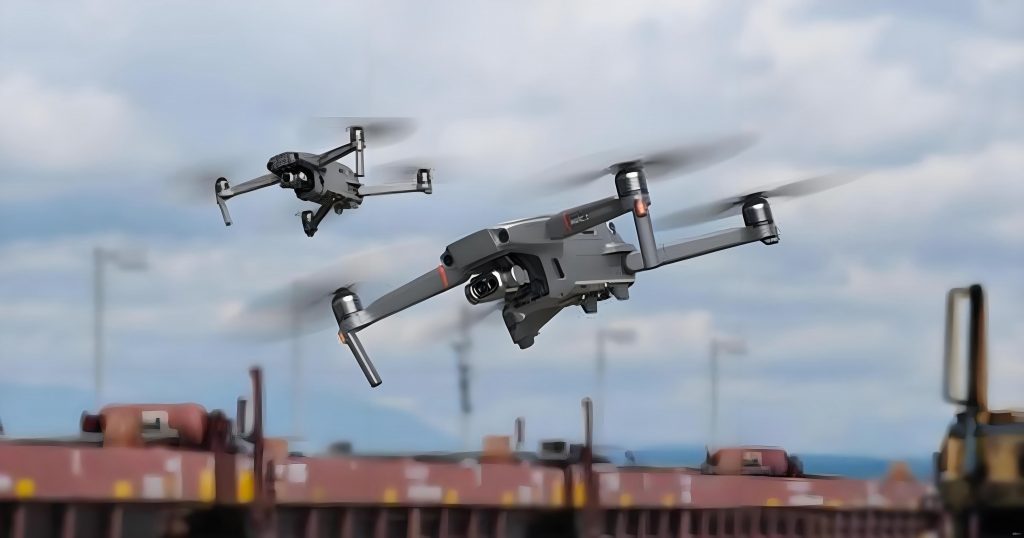
As I explore the airworthiness certification requirements for civil drones, it is essential to understand the regulatory framework. In April 2023, China’s State Council passed the “Interim Regulations on the Flight Management of Unmanned Aircraft (Draft),” which serves as the top-level administrative regulation, mandating that medium and large civil drone systems with a maximum take-off weight exceeding 25 kilograms must obtain relevant airworthiness permits. This highlights the growing emphasis on safety and standardization in the civil drone industry. The Civil Aviation Administration of China (CAAC) has made strides in developing the airworthiness management system and standards. For instance, on December 19, 2022, the CAAC Aircraft Airworthiness Certification Department issued the “Procedures for the Airworthiness Certification Management of Civil Unmanned Aircraft Systems” (AP-21-AA-2022-71), which outlines design approval, production approval, and airworthiness approval requirements. These procedures categorize certification into normal, restricted, and transport classes, specifying the management methods and processes applicable to each type of civil drone system.
The certification process is grounded in risk-based principles, where the CAAC considers factors such as product characteristics, operational scenarios, novelty, and complexity to determine the appropriate review method, safety objectives, and airworthiness standards. The core of airworthiness certification involves product review and system review of the type design and production units. Product review focuses on establishing the type certification basis—the applicable certification standards—where applicants demonstrate compliance through analysis, calculations, tests, and flight tests. The CAAC verifies this compliance by reviewing engineering data, witnessing tests, conducting certification flights, and inspecting manufacturing processes. System review ensures that applicants have the necessary organizational structure, responsibilities, procedures, and resources to establish and maintain an effective design assurance system, enabling proper control and supervision of type design and modifications. This shift from product-focused to system-focused management is crucial for enhancing the airworthiness capabilities of civil drone manufacturers, moving from a compliance-driven to a proactive “I want airworthiness” mindset.
In terms of specific airworthiness standards, the CAAC has released technical standards like the “Airworthiness Standards for High-Risk Cargo Fixed-Wing Unmanned Aircraft Systems (Trial)” (CAAC Airworthiness Issuance [2020] No. 1) and the “Airworthiness Standards for Medium- and High-Risk Unmanned Helicopter Systems (Trial)” (CAAC Airworthiness Issuance [2020] No. 7), which are acceptable as certification standards. However, due to the wide spectrum and diverse configurations of civil drones, there is no unified technical standard; instead, the “case-by-case” principle is applied, with special conditions issued for specific types, such as the “Special Conditions for the EH216-S Unmanned Aircraft System.” This flexible approach allows for tailored certification bases that address the unique risks of each civil drone model.
To illustrate the risk assessment in civil drone airworthiness, I often refer to a simplified formula that encapsulates the relationship between risk factors: $$ Risk = P \times S $$ where \( P \) represents the probability of a hazardous event, and \( S \) denotes the severity of its consequences. This formula helps in setting safety objectives for civil drone operations, such as ensuring that the probability of catastrophic failures is below a threshold like \( 10^{-9} \) per flight hour for transport category civil drones. Another useful equation is the safety margin calculation: $$ Safety Margin = \frac{Design Load}{Operating Load} $$ which ensures that civil drone structures can withstand expected stresses during flight. These mathematical models support the certification process by quantifying safety requirements.
In practice, the CAAC has actively engaged in type airworthiness certification for civil drones. For example, it has completed the type certification for the HY100 large drone system and the TP16/20/30/10 series of medium multi-rotor plant protection drone systems, issuing Type Certificates (TC) for these models. Additionally, the CAAC has accepted over 10 drone type certification applications, reflecting the growing maturity of the civil drone industry. The table below summarizes some of these applications, highlighting the diversity in civil drone types and their certification statuses. This practical experience underscores the importance of continuous learning and adaptation in airworthiness processes for civil drones.
| Model Type | Category | Certification Status |
|---|---|---|
| Manned Unmanned Aircraft | Transport | Under Review |
| Large Fixed-Wing Unmanned Transport | Transport | Under Review |
| Large Fixed-Wing Unmanned Transport | Transport | Under Review |
| Large Vertical Take-Off and Landing Fixed-Wing Drone | Restricted | Under Review |
| Large Fixed-Wing Drone | Normal | Under Review |
Another aspect I consider is the classification of civil drones based on risk levels, which can be represented in a table to clarify the certification requirements. For instance, the CAAC employs a risk matrix that combines operational risk and drone category to determine the level of scrutiny required. This approach ensures that resources are allocated efficiently, focusing on high-risk civil drones while facilitating innovation in lower-risk areas. The table below outlines this risk-based classification for civil drone airworthiness certification.
| Drone Category | Operational Risk Level | Certification Requirements |
|---|---|---|
| Agricultural Medium Drone | Low | Relaxed product review; emphasis on basic safety |
| Manned Unmanned Aircraft | High | Stringent review similar to manned aircraft; high safety standards |
| Cargo Fixed-Wing Drone | Medium to High | Moderate review; specific standards for payload and operations |
| Consumer Mini Drone | Very Low | Minimal certification; focus on general guidelines |
Looking ahead, the development trends in civil drone airworthiness certification are shaped by several key factors. First, risk-based graded management will remain a fundamental principle. The CAAC will classify civil drones according to their type and operational risk, implementing differentiated certification policies. For example, agricultural medium drones with low operational risk will face significantly relaxed product review requirements, whereas manned civil drone systems will undergo strict certification processes comparable to those for manned aircraft, with safety requirements not lower than those for equivalent manned planes. This trend emphasizes the need for scalable approaches that balance safety and innovation in the civil drone sector.
Second, there is a strong shift from product management to system management. In my view, this transformation is vital for building a sustainable civil drone industry. The focus is on enabling manufacturers to develop robust design assurance systems through organizational and procedural improvements. During type certification, review teams will prioritize “monitoring the organization and system” over “monitoring individuals and products,” fostering a culture where civil drone enterprises take greater responsibility for airworthiness. This approach enhances their autonomous certification capabilities, making system competence a key factor in obtaining type certificates for civil drones. I often express this through a formula for organizational effectiveness: $$ Organizational Effectiveness = \frac{Resources \times Procedures}{Time} $$ which highlights how efficient resource allocation and clear procedures can reduce certification timelines for civil drones.
Third, encouraging the conversion of technological innovations into standard requirements is crucial. Civil drones serve as key platforms for new aviation technologies, and the airworthiness management system is evolving from traditional regulator-driven rulemaking to collaborative efforts between industry and authorities. In current certification projects, applicants work with the CAAC to develop project-specific special conditions as airworthiness standards. This participatory approach allows industrial stakeholders to contribute their technical expertise, solidifying experiences from projects into formal standards. For instance, innovations in EVTOL civil drones might lead to new criteria for battery safety and autonomous systems, captured in equations like: $$ Battery Safety Index = \frac{Energy Density \times Cycle Life}{Failure Rate} $$ This index could be used to set benchmarks for civil drone power systems. By involving industry in standard-setting, the regulatory framework becomes more adaptive, supporting advanced technologies in the civil drone field.
In conclusion, the future of civil drone airworthiness certification will likely focus on restricted category drone systems and manned unmanned aircraft, with an emphasis on harmonizing international standards. The iterative process of certification, supported by mathematical models and risk assessments, will continue to evolve. For example, the probability of failure for critical systems in civil drones can be modeled using: $$ P_{failure} = 1 – e^{-\lambda t} $$ where \( \lambda \) is the failure rate and \( t \) is time, aiding in the design of safer civil drones. As the civil drone industry grows, these developments will ensure that airworthiness certification remains a cornerstone of safety and reliability, driving innovation while protecting public interests. The integration of tables, formulas, and systemic approaches will be instrumental in navigating the complexities of civil drone certification, ultimately contributing to a robust and dynamic aviation ecosystem.
Throughout this discussion, I have emphasized the multifaceted nature of civil drone airworthiness, from regulatory requirements to practical applications and future directions. The use of risk-based methods, system-oriented management, and collaborative standard-setting will define the next era of civil drone certification. As technologies advance, continuous refinement of these processes will be necessary to address emerging challenges, ensuring that civil drones can safely and efficiently integrate into global airspace. The journey toward comprehensive airworthiness for civil drones is ongoing, and by embracing these trends, stakeholders can foster a environment where innovation and safety go hand in hand.