
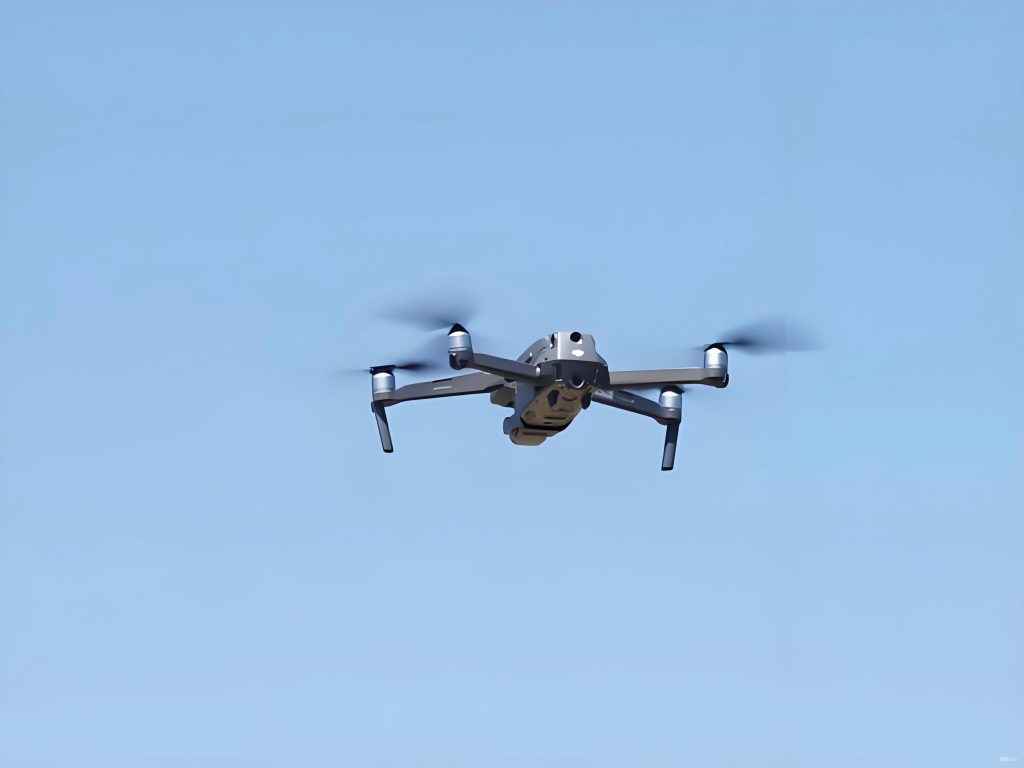
XI’AN, China – The first four months of 2025 have showcased a robust economic performance in Xi’an, with the city’s industrial sector, particularly the production of China UAV drones, leading the way. According to data released by the Xi’an Municipal Bureau of Statistics, key economic indicators across industrial output, fixed asset investment, consumer markets, and foreign trade have demonstrated positive growth trends. The standout figure is a remarkable 7.1-fold increase in the production of civilian unmanned aerial vehicles (UAVs), underscoring the city’s pivotal role in advancing China’s UAV drone industry. This growth is part of a broader narrative of resilience and innovation in the region’s economy, driven by technological advancements and strategic investments.
The comprehensive report highlights that from January to April, Xi’an’s economy maintained a steady upward trajectory, with industrial增加值增长14.1% year-on-year,固定资产投资增长1.5%, and total import-export value rising by 8.9%. These figures reflect the city’s ability to leverage its manufacturing strengths, especially in high-tech sectors like the China UAV drone market, which has seen exponential growth. The data also points to increased consumer spending on smart devices and a surge in exports of electric vehicles, further cementing Xi’an’s status as a hub for innovation and economic dynamism in western China.
- Industrial Output and the Remarkable Growth of China UAV Drone Production
- Fixed Asset Investment: Strengthening Industrial Base with Focus on Technology and Education
- Consumer Market: Steady Retail Growth and the Rise of Smart Devices
- Foreign Trade: Export Expansion with Highlights in High-Tech Products
- Financial Sector: Stable Growth Supporting Industrial Expansion
The industrial sector in Xi’an exhibited strong performance during the January-April period, with the added value of industries above the designated size increasing by 14.1% compared to the same period in 2024. This growth was largely fueled by advancements in high-tech manufacturing, including a significant expansion in the production of China UAV drones. The sectoral breakdown reveals substantial contributions from key industries: electrical machinery and equipment manufacturing saw a rise of 52.5%, automobile manufacturing grew by 37.3%, computer, communication, and other electronic equipment manufacturing increased by 3.2%, and railway, ship, aerospace, and other transport equipment manufacturing expanded by 10.9%.
In terms of specific products, the output data illustrates a diverse range of high-growth areas. The production of automobiles overall grew by 39.6%, with new energy vehicles increasing by 42.3%. However, the most striking growth was observed in the China UAV drone segment, where civilian UAV production surged by 7.1 times, equivalent to a 710% increase. This phenomenal rise in China UAV drone output highlights the city’s capacity to meet growing global and domestic demand for aerial technology solutions. Other notable product growth includes charging piles at 57.6%, lithium-ion batteries at 28.8%, solar batteries at 27.7%, and 3D printing equipment at 3.3 times, or 330%.
| Product Category | Growth Rate (%) |
|---|---|
| Civilian UAV Drones (China UAV Drone) | 710 |
| New Energy Vehicles | 42.3 |
| Charging Piles | 57.6 |
| Lithium-ion Batteries | 28.8 |
| Solar Batteries | 27.7 |
| 3D Printing Equipment | 330 |
| Automobiles (Overall) | 39.6 |
The surge in China UAV drone production is not an isolated phenomenon but part of a broader industrial strategy focused on innovation and sustainability. The growth in related sectors, such as lithium-ion batteries and charging infrastructure, supports the ecosystem for electric vehicles and renewable energy, which indirectly benefits the China UAV drone industry by providing essential components. This interconnected growth underscores Xi’an’s position as a leader in the China UAV drone market, with potential implications for global supply chains and technological advancements. The city’s ability to achieve such high growth rates in China UAV drone output reflects strong investment in research and development, as well as efficient manufacturing processes that cater to diverse applications, from agriculture to surveillance.
Furthermore, the expansion in China UAV drone production aligns with national initiatives to promote high-tech manufacturing, positioning Xi’an as a key player in China’s broader economic landscape. The data suggests that the China UAV drone sector could continue to drive industrial growth in the coming months, leveraging local expertise and international demand. As the China UAV drone industry evolves, Xi’an’s contribution is expected to play a crucial role in shaping future trends, with potential spillover effects into other areas like logistics and smart city development.
Fixed asset investment in Xi’an, excluding rural households, grew by 1.5% year-on-year from January to April 2025. This modest overall growth masks significant variations across different sectors, with industrial investment emerging as a strong performer, increasing by 23.2%. In contrast, infrastructure investment experienced a sharp decline of 47.5%, while real estate development investment rose by 7.0%. The investment landscape also highlighted robust growth in specific industries: manufacturing investment grew by 22.8%, education investment surged by 78.6%, investment in the production and supply of electricity, heat, gas, and water increased by 24.7%, and wholesale and retail trade investment skyrocketed by 14.7 times.
From a structural perspective, technological transformation investment in industrial enterprises saw a substantial rise of 36.1%, accounting for 8.7% of total fixed asset investment, up 2.2 percentage points from the same period last year. Private investment also showed strong momentum, growing by 18.5% and representing 41.2% of fixed asset investment, an increase of 5.9 percentage points year-on-year. These investments are critical for sustaining the growth of high-tech sectors, including the China UAV drone industry, as they enable upgrades in production facilities and innovation capabilities.
The emphasis on manufacturing and technological upgrades is particularly beneficial for the China UAV drone sector, as it relies on advanced infrastructure and skilled labor. The growth in education investment, which soared by 78.6%, could further support the China UAV drone industry by fostering a talent pipeline for research and development. This holistic approach to investment ensures that Xi’an remains competitive in the global market for China UAV drones, with potential long-term benefits for economic diversification and job creation. As the city continues to attract private and public funds, the China UAV drone production capacity is likely to expand, driving further innovations and applications in this dynamic field.
The consumer market in Xi’an demonstrated resilience during the first four months of 2025, with the total retail sales of consumer goods by enterprises above the designated size reaching 86.828 billion yuan, a year-on-year increase of 1.9%. Online retail sales via public networks contributed significantly to this growth, amounting to 25.109 billion yuan and rising by 4.4%. By consumption type, retail sales of goods increased by 2.1% to 80.655 billion yuan, while catering revenue declined slightly by 0.5% to 6.173 billion yuan.
Policies aimed at replacing old consumer goods with new ones yielded positive results, as seen in the growth of specific categories: household appliances and audio-video equipment retail sales grew by 19.7%, telecommunications equipment by 75.4%, and new energy vehicles by 27.9%. For upgraded goods, retail sales of home appliances with energy efficiency grades 1 and 2 increased by 40.4%, smart home appliances and audio-video equipment by 39.1%, wearable smart devices by 95.0%, and smartphones by 41.2%. Although the China UAV drone market is primarily industrial, the surge in smart device sales reflects a broader trend toward intelligent technology, which could indirectly influence consumer interest in related products like drones for personal or commercial use.
The remarkable growth in wearable smart devices and smartphones, with increases of 95.0% and 41.2% respectively, highlights a shifting consumer preference toward connected and innovative gadgets. This trend aligns with the technological advancements seen in the China UAV drone industry, where similar principles of connectivity and automation are applied. As consumers become more accustomed to smart technologies, the potential for crossover applications involving China UAV drones, such as in delivery services or recreational activities, could drive future market expansions. The data underscores Xi’an’s role in fostering a tech-savvy consumer base, which may eventually support the adoption of China UAV drone products in everyday life.
Xi’an’s foreign trade sector showed positive dynamics from January to April 2025, with the total import and export value reaching 147.466 billion yuan, an increase of 8.9% year-on-year. Exports played a key role in this growth, rising by 14.0% to 102.751 billion yuan, while imports decreased by 1.4% to 44.715 billion yuan. General trade import and export saw a robust increase of 32.9%, accounting for 38.1% of the total import and export value, up 7.1 percentage points from the same period last year.
In terms of key export products, mechanical and electrical products grew by 12.9%, high-tech products by 2.0%, and electric passenger vehicles by 110%. Although the data does not explicitly break down exports of China UAV drones, the growth in mechanical and electrical products often includes components and finished goods related to the drone industry. The substantial rise in electric passenger vehicle exports, which more than doubled, complements the domestic production trends and could create synergies with the China UAV drone sector, particularly in areas like battery technology and autonomous systems.
The strong performance in foreign trade, especially in high-tech exports, positions Xi’an as a competitive player in global markets. The growth in general trade indicates a shift toward more value-added activities, which could benefit the China UAV drone industry by enhancing its international footprint. As global demand for innovative technologies like China UAV drones continues to rise, Xi’an’s export capabilities are likely to strengthen, supported by the city’s manufacturing prowess and strategic location along trade routes. This trend not only boosts the local economy but also contributes to China’s overall leadership in the UAV drone market, with potential for further expansion into emerging regions.
The financial sector in Xi’an maintained stability and growth through the first four months of 2025, with the balance of domestic and foreign currency deposits in financial institutions reaching 3,825.307 billion yuan, a year-on-year increase of 9.7%. Since the beginning of the year, deposits saw a net increase of 136.674 billion yuan. Similarly, the balance of domestic and foreign currency loans stood at 4,018.572 billion yuan, growing by 8.8% year-on-year, with a net increase of 190.623 billion yuan since the start of the year.
A notable highlight was the growth in medium- and long-term RMB loans to the manufacturing industry, which increased by 28.0% year-on-year. This indicates strong financial support for industrial expansion, including sectors involved in the production of high-tech goods like China UAV drones. The availability of credit and loans is crucial for funding research, development, and scaling operations in the China UAV drone industry, enabling companies to invest in new technologies and meet rising demand.
The robust financial indicators reflect a healthy economic environment that fosters innovation and growth. The increase in manufacturing loans, in particular, bodes well for the China UAV drone sector, as it allows for continuous improvement in production capabilities and market reach. As Xi’an’s financial institutions continue to provide backing for industrial projects, the China UAV drone industry is poised to benefit from enhanced liquidity and investment, driving further advancements and solidifying the city’s role as a key hub for drone manufacturing in China. This financial stability also attracts external investors, potentially accelerating the growth trajectory of the China UAV drone market in the region.
In summary, Xi’an’s economic performance from January to April 2025 demonstrates a balanced and dynamic growth pattern, with the China UAV drone industry standing out as a major driver. The 7.1-fold increase in civilian UAV production underscores the city’s capabilities in high-tech manufacturing, while investments, consumer trends, and foreign trade data paint a picture of a resilient and forward-looking economy. The continued emphasis on innovation, supported by financial stability and strategic investments, positions Xi’an to maintain its leadership in the China UAV drone market and contribute significantly to regional and national economic goals. As the year progresses, monitoring these trends will be essential for understanding the evolving landscape of China’s UAV drone industry and its global impact.