
The advent of the low-altitude economy, powered by unmanned aerial vehicle (UAV) technology, represents a transformative force in modern agriculture. In China, where ensuring the security of edible oil supply is a strategic imperative, the integration of UAV drone systems into crop breeding programs is accelerating innovation. Traditional phenotypic screening in oilseed crops like soybean, rapeseed, and peanut has long been a bottleneck, reliant on labor-intensive, destructive, and subjective manual measurements. This severely limits the scale and speed of genetic gain. The China UAV drone ecosystem, supported by national policy and rapid technological advancement, offers a solution through high-throughput phenotyping (HTP). By equipping UAV platforms with advanced sensors, breeders can now capture multidimensional phenotypic data—morphological, physiological, and biochemical—across vast breeding populations and critical growth stages with unprecedented speed and precision. This capability is crucial for dissecting complex traits, identifying stress-tolerant genotypes, and ultimately linking phenotype to genotype for accelerated selection. This article explores the technological framework, analytical pipelines, and specific applications of China UAV drone technology in empowering oilseed crop breeding, while addressing current challenges and future horizons.
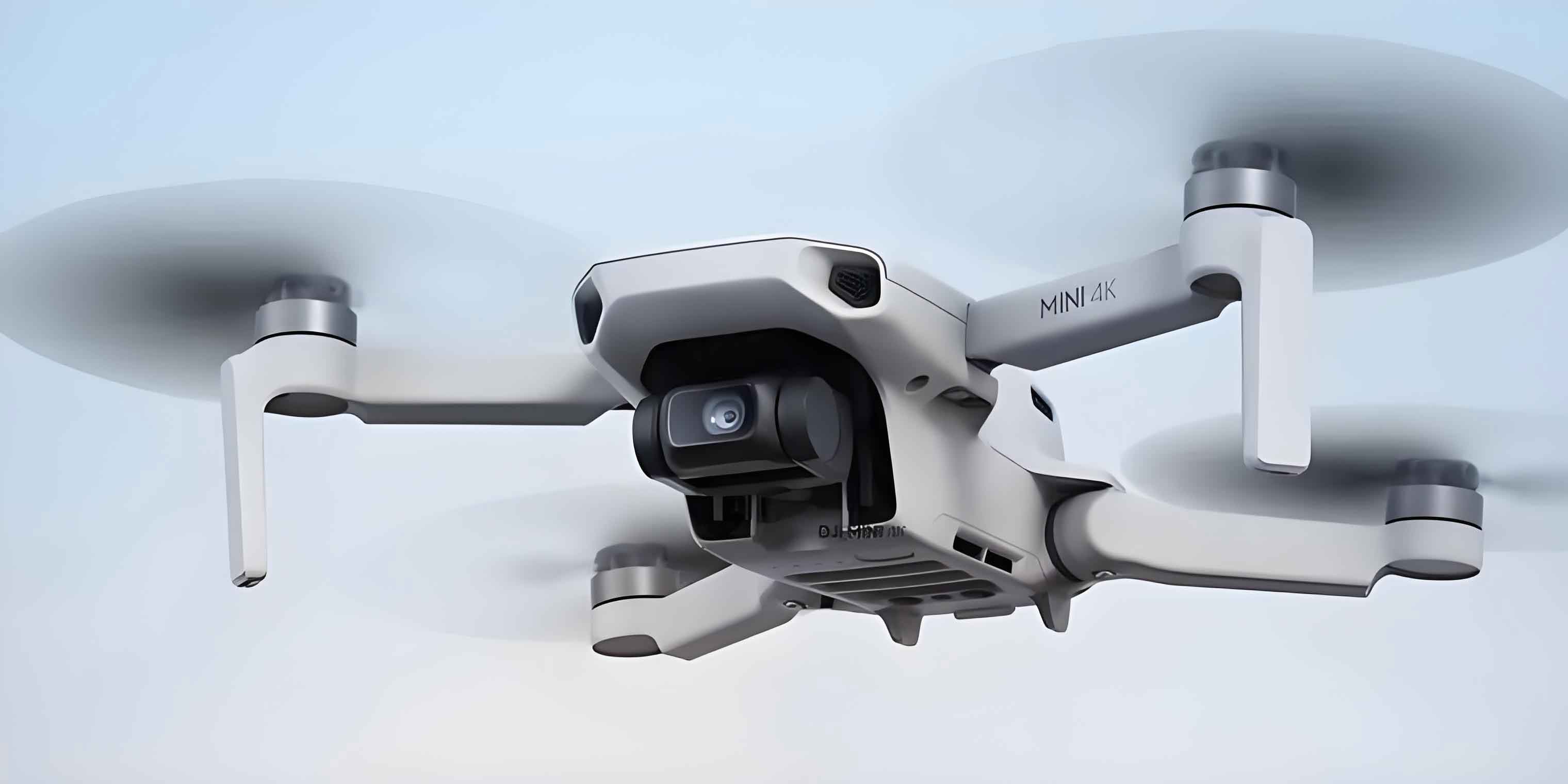
The propulsion of the low-altitude economy in China is fundamentally anchored in strategic policy directives. The sector’s elevation to a national strategic emerging industry, underscored by its inclusion in the Government Work Report, has catalyzed a supportive regulatory environment. Key legislation has streamlined airspace management for civilian UAV operations, providing the legal foundation for their widespread application in agriculture. This top-down support has fostered a robust industrial ecosystem. The upstream sector, led by global pioneers, focuses on the R&D and manufacturing of UAV drone platforms, flight control systems, and specialized sensors. Downstream, a thriving service market offers specialized scouting and data acquisition, directly benefiting breeding stations and farms. Local innovation hubs exemplify this synergy, where policy incentives attract full industry chains, accelerating technology transfer from lab to field and solidifying China‘s position in smart agriculture technologies.
The efficacy of a China UAV drone system for breeding hinges on its core technological components: precision navigation, the aerial platform, and the sensor payload.
Navigation and Guidance: High-precision positioning is non-negotiable for breeding trials where plot- or plant-level accuracy is required. While Global Navigation Satellite Systems (GNSS) provide basic location data, Real-Time Kinematic (RTK) technology enhances this to centimeter-level accuracy. RTK works by using a fixed base station to calculate signal errors and transmit corrections to the UAV drone in real-time. This precision ensures exact georeferencing of imagery, allowing repeated flights over identical paths for temporal studies. China‘s BeiDou Navigation Satellite System (BDS), with its unique hybrid constellation, offers a reliable and autonomous high-precision service, ensuring data security and technological sovereignty for domestic UAV applications.
| System | Operator | Orbital Constellation | Typical Open-Service Accuracy | Key Advantage for China UAV Application |
|---|---|---|---|---|
| BeiDou (BDS) | China | GEO+IGSO+MEO | < 2.6 m (Asia-Pacific) | Autonomous control, superior signal stability in region, short message service. |
| GPS | USA | MEO | 3-5 m | Global availability, mature technology. |
| Galileo | EU | MEO | < 1 m | High civilian accuracy. |
| GLONASS | Russia | MEO | 2.8-7.4 m | Performance at high latitudes. |
UAV Platforms: The choice of platform dictates the operational scope. Multi-rotor UAV drones are the workhorses for plot-level phenotyping due to their vertical take-off and landing (VTOL), hover capability, and flexibility. Fixed-wing platforms excel in covering large areas for resource mapping. VTOL fixed-wing hybrids are emerging for large-area, high-resolution tasks in complex terrain. The evolution of agricultural UAVs in China shows a clear trend towards higher payload capacity and integrated intelligence, enabling them to carry heavier, more sophisticated sensor suites.
| Platform Type | Key Advantages | Key Limitations | Primary Breeding Application |
|---|---|---|---|
| Multi-rotor | VTOL, hovering, high maneuverability, lower cost. | Limited flight endurance and payload. | High-resolution phenotyping of small plots, stress monitoring. |
| Fixed-wing | Long endurance, fast coverage of large areas. | Requires runway/launcher, cannot hover. | Large-scale canopy health and yield potential assessment. |
| VTOL Fixed-wing | Long endurance + VTOL capability. | Higher cost, complex control. | Phenotyping in fragmented or hilly terrain. |
Sensor Payloads: Sensors are the “eyes” of the UAV drone, each capturing different phenotypic dimensions. A typical China UAV drone system for breeding may integrate several of these.
| Sensor Type | Information Captured | Key Breeding Applications | Typical Derived Metrics/Indices |
|---|---|---|---|
| RGB (Visible Light) | Morphology, color, texture. | Plant height, canopy cover, stand count, flowering assessment, visual disease scoring. | Canopy Height Model (CHM), various color indices (e.g., ExG – Excess Green). |
| Multispectral | Reflectance in discrete bands (e.g., Red, Red-edge, NIR). | Vegetation health, chlorophyll/content estimation, biomass prediction. | NDVI, GNDVI, NDRE. $$NDVI = \frac{(R_{NIR} – R_{Red})}{(R_{NIR} + R_{Red})}$$ |
| Hyperspectral | Continuous, narrow-band reflectance spectra. | Precise nutrient status, early disease detection, biochemical trait estimation. | Specific spectral absorption features, derivative spectra for pigment content. |
| Thermal Infrared | Canopy temperature. | Drought stress screening, irrigation scheduling. | Canopy Temperature (Tc), Crop Water Stress Index (CWSI). $$CWSI = \frac{(T_c – T_{wet})}{(T_{dry} – T_{wet})}$$ |
| LiDAR | 3D point cloud, structural metrics. | Biomass estimation, 3D canopy architecture, lodging assessment. | Plant height, canopy volume, leaf area density, gap fraction. |
The value of China UAV drone data is unlocked through a structured pipeline of processing and analysis. The workflow begins with meticulous flight planning over the breeding nursery, ensuring optimal overlap and resolution. Post-flight, images are stitched and geometrically corrected using Structure-from-Motion (SfM) photogrammetry to create orthomosaics and Digital Surface Models (DSMs). For spectral data, radiometric calibration converts digital numbers to reflectance. The core step is feature extraction, where quantitative traits are derived. Canopy height, for instance, is calculated by subtracting the Digital Terrain Model (DTM) from the DSM: $CHM = DSM – DTM$. Vegetation indices are computed from spectral band math. Advanced computer vision and deep learning models are deployed for tasks like plant counting or disease lesion segmentation. Extracted features are then aggregated by plot or plant, linked to genotype information, and stored in centralized databases for analysis.
Data analysis employs a hierarchy of models. Traditional statistical methods like linear mixed models are used to estimate breeding values and heritability from the HTP data. Machine learning algorithms, particularly ensemble methods like Random Forest or Gradient Boosting, are powerful for building predictive models, e.g., using early-season vegetation indices to forecast final yield. Deep learning, especially Convolutional Neural Networks (CNNs), revolutionizes image analysis, enabling automated, high-accuracy detection and counting of organs like flowers or pods directly from UAV drone imagery. The emergence of large AI models presents a future where multimodal data (imagery, weather, genomics) can be fused for predictive breeding decisions and knowledge discovery.
The application of China UAV drone HTP is tailored to the specific phenology and breeding objectives of major oilseed crops. For soybean, time-series tracking of canopy development (using NDVI curves) can identify maturity groups and predict yield potential. In rapeseed, a crop with complex architecture, 3D point clouds from LiDAR or SfM are invaluable for estimating biomass and analyzing structural traits related to lodging resistance. Direct counting of yellow flowers from RGB imagery provides an objective measure of floral abundance. For peanut, where pods develop underground, predictive models linking above-ground canopy growth dynamics (captured via multi-temporal UAV flights) to final pod yield have shown high accuracy, enabling indirect selection for yield. In sunflower, deep learning models can automatically detect and count capitula from UAV drone imagery, a direct yield component.
A primary strength of UAV drone phenotyping is in screening for abiotic and biotic stress tolerance. Drought tolerance screening leverages thermal sensors. Under water deficit, stomatal closure reduces transpirational cooling, raising canopy temperature. A UAV drone equipped with a thermal camera can rapidly identify genotypes that maintain cooler canopies (indicating better water status) or exhibit slower declines in vegetation indices under stress. This allows high-throughput screening of hundreds of genotypes in field conditions. Similarly, for disease resistance, multispectral and hyperspectral sensors can detect subtle changes in leaf reflectance preceding visible symptoms, enabling quantitative assessment of disease severity across a breeding population for traits like sclerotinia stem rot in rapeseed or leaf spot in peanut.
The ultimate power of HTP is realized through integration with genomics. The high-dimensional, precise phenotypic data from China UAV drone platforms provide excellent input for genome-wide association studies (GWAS) and genomic selection (GS). For example, temporal phenotypic data on canopy recovery after waterlogging can be converted into a dynamic tolerance index. GWAS using this index can uncover novel genetic loci controlling complex stress responses. Similarly, plot-level yield predictions or canopy architecture traits from UAV drone data can serve as the phenotypic backbone for training GS models, increasing selection accuracy for difficult-to-measure traits and shortening breeding cycles.
Despite the promise, challenges remain in fully deploying China UAV drone technology in breeding. Data processing and management of large, multi-temporal datasets require robust cyber-infrastructure. There is a need for standardized protocols for trait extraction specific to each oilseed crop to ensure data comparability across studies and years. The cost of advanced sensors (e.g., hyperspectral, LiDAR) and the expertise needed for data analysis can be barriers for smaller breeding programs. Furthermore, environmental variability (e.g., illumination, wind) can introduce noise, necessitating robust calibration and analysis methods.
The future of China UAV drone-enabled breeding lies in integrated systems and smarter analytics. The convergence of “Space-Air-Ground” monitoring will provide a holistic view, where satellites outline regional environmental patterns, UAV drones capture detailed field phenotypes, and ground sensors monitor rhizosphere conditions. Advances in edge computing will allow real-time data processing on the UAV drone itself. The development of lightweight, crop-specific AI models and their integration into large language models could offer intuitive decision support, translating complex phenotypic patterns into actionable breeding advice. Nationally, the construction of digital germplasm resource platforms that integrate standardized UAV drone-derived phenomics data with genomic information will be a strategic asset, accelerating the mining of superior alleles for China‘s oilseed crop improvement.
In conclusion, the China UAV drone ecosystem is fundamentally reshaping oilseed crop breeding. By breaking the phenotyping bottleneck, it enables a data-driven breeding paradigm where complex traits can be dynamically quantified, selected, and linked to their genetic basis at scale. As a cornerstone of the low-altitude economy, this technology aligns with national goals for food and oil security. Ongoing advancements in platform autonomy, sensor miniaturization, and artificial intelligence will further deepen its impact. The integration of HTP into mainstream breeding operations promises to significantly accelerate the development of high-yielding, resilient, and quality oilseed varieties, enhancing the sustainability and competitiveness of agriculture in China and beyond.