
In a significant development for the unmanned aerial vehicle industry, the Chinese Artificial Intelligence Society has announced the 2024 Wu Wenjun Artificial Intelligence Science and Technology Award recipients, with the “Low-Altitude Intelligent Perception Key Technologies and Applications” project claiming the first prize in the Scientific and Technological Progress category. This project, spearheaded by Tianjin University’s Machine Learning and Data Mining team in partnership with Yifei Zhikong (Tianjin) Technology Co., Ltd., Tiandy Technologies Co., Ltd., and other entities, represents a monumental leap forward for China UAV drone capabilities, providing a robust foundation for the expansion of the low-altitude economy. The breakthrough addresses long-standing obstacles in drone functionality, paving the way for enhanced applications across various sectors.
Unmanned aerial vehicles, commonly known as drones, have proven indispensable in managing major emergencies and critical operations worldwide. However, the core technology underpinning their effectiveness—low-altitude intelligent perception—has been hampered by persistent challenges. “The advancement of low-altitude intelligent perception technology is pivotal for the progression of China’s low-altitude economy,” remarked Professor Hu Qinghua of Tianjin University during an interview. He identified three primary technical bottlenecks that have historically plagued China UAV drone systems: impaired clarity in perception, inaccuracies in target identification, and limited field of view coverage.
- Impaired Clarity in Perception
- Inaccuracies in Target Identification
- Limited Field of View Coverage
Adverse meteorological conditions, such as rain, snow, fog, and haze, drastically reduce environmental visibility, causing a severe decline in the image recognition accuracy of China UAV drones. This “cannot see clearly” issue stems from the inability of existing methods to accurately model the noise properties of complex media and the absence of cross-modal dynamic learning mechanisms, which are essential for recovering critical feature information from degraded images. For instance, in scenarios like sandstorms or heavy precipitation, traditional perception models fail to adapt, leading to unreliable data capture and analysis for China UAV drone operations.
The combination of high-speed drone flight and dynamic ground target movement often results in imaging blur and misalignment. Current approaches are constrained by rigid motion assumptions, making them ineffective at eliminating blur and artifacts caused by rapid imaging. This “inaccurate perception” problem undermines the precision of China UAV drone systems in tasks such as tracking fast-moving objects or conducting detailed inspections, where even minor errors can have significant consequences in applications like border surveillance or disaster response.
Single-drone perspectives inherently suffer from restricted viewpoints, leading to gaps in global spatial information. Existing techniques that rely on projective geometry constraints yield incomplete three-dimensional spatial data and struggle with accurately determining topological relationships in occluded areas. This “incomplete field of view” issue hampers the ability of China UAV drones to handle complex遮挡 scenarios, such as urban environments with multiple obstructions, reducing their effectiveness in comprehensive monitoring and mapping missions.
“These limitations have critically impeded the deployment of China UAV drones in vital national domains, including infrastructure inspection, public security, water resource monitoring, and emergency search and rescue operations,” Professor Hu emphasized. “Addressing these challenges is imperative to accelerate the growth of China’s low-altitude perception technology and foster the development of the low-altitude economy industry.” The urgency to resolve these issues has driven intensive research and innovation, culminating in the award-winning project.
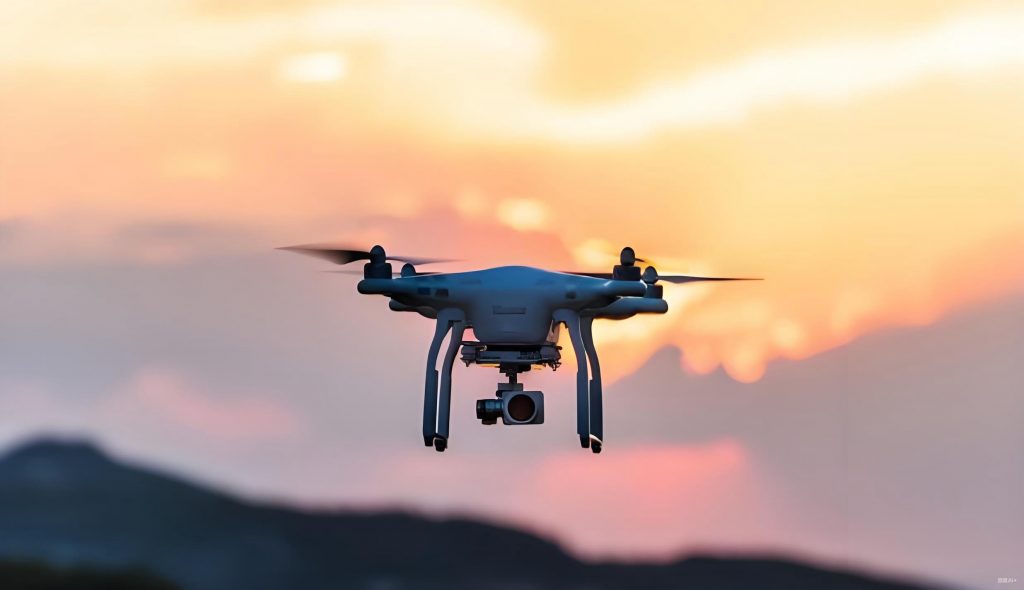
To overcome these hurdles, the Tianjin University team introduced three core technological innovations that redefine the capabilities of China UAV drone systems. These advancements not only enhance perception accuracy but also ensure adaptability across diverse environments, marking a transformative step for the industry.
- All-Weather Perception Technology for Low-Altitude Complex Environments
- Autonomous Evolution Technology for Low-Altitude Perception Foundation Models
- Multi-Drone Cross-View Collaborative Perception Technology
As the low-altitude economy expands, the deficiencies of drone perception in harsh weather and complex lighting conditions have become increasingly apparent. “Traditional perception models utilize static parameters to process multi-modal information, rendering them inadequate for scenarios involving heavy fog, sandstorms, or low light,” explained Professor Zhu Pengfei from Tianjin University. The team pioneered a “degradation-restoration bidirectional coupling” theoretical framework, which addresses the theoretical complexities of multi-factor interferences. They also developed a “perception-calculation-decision” dynamic closed-loop system that allows the perception system to self-adjust to environmental changes, and created a scenario-driven multi-source sensor dynamic fusion engine that surpasses the constraints of conventional weight allocation methods. These innovations have led to a 6.3 percentage point improvement in target tracking accuracy under adverse weather conditions and a 13.2% enhancement in target detection performance in low-light environments for China UAV drones, significantly boosting their reliability in critical missions.
Data serves as the cornerstone of artificial intelligence learning, yet in the low-altitude perception field,原始数据 often suffers from low annotation accuracy and high cleaning costs. The challenge is compounded by imaging blur caused by high-speed drone flight combined with ground target motion, which impedes the extraction of meaningful information. To tackle this, the research team established VisDrone, the world’s largest open data platform for low-altitude visual perception. Leveraging this dataset and the powerful Ascend computing infrastructure at the Tianjin Artificial Intelligence Computing Center, they constructed a foundational model for low-altitude perception. By incorporating uncertainty perception modeling, the system can autonomously evaluate data quality and continuously refine its perceptual capabilities. A “human-in-the-loop” feedback mechanism was also implemented, fostering a closed-loop interaction between data annotation and model evolution. This approach has substantially increased the adaptability and precision of China UAV drone systems, enabling them to learn effectively from diverse and dynamic real-world conditions.
When drone clusters operate in complex three-dimensional spaces, the limited perspective of individual units often results in blind spots, and multi-source data can suffer from misalignment during cross-view matching. “The difficulty lies in achieving seamless coordination among multiple drones to cover expansive areas without gaps or errors,” Professor Zhu noted. The team innovated by developing a collaborative perception framework based on cross-view information adaptive interaction matching. This includes dynamic interaction matching templates and intelligent search area generation mechanisms, facilitating coordinated tracking of single targets by multiple drones. Additionally, a local-global multi-granularity matching strategy was adopted to enhance perception in multi-target scenarios. In single-target tracking, multi-drone collaboration increased success rates by 15.6%, while in multi-target environments, a formation of 30 China UAV drones successfully achieved precise capture of three high-speed机动 vehicles, demonstrating the technology’s potential for large-scale, complex operations.
The practical applications of these technological breakthroughs have already yielded substantial benefits across multiple industries, revolutionizing traditional practices and setting new standards for efficiency and safety. The integration of these innovations into China UAV drone systems has unlocked unprecedented capabilities in various sectors.
In the realm of public safety, the combination of all-weather perception and multi-drone collaborative technologies has dramatically improved response capabilities in disaster relief and border patrol scenarios. For example, during forest fires, clusters of China UAV drones can penetrate thick smoke to pinpoint fire sources in real-time, while the autonomous evolution models dynamically adjust monitoring strategies based on changing conditions. This has the potential to drastically reduce emergency response times and enhance situational awareness. In urban management, these systems accurately identify anomalies such as illegal constructions or traffic accidents, contributing to more efficient city governance and resource allocation. The reliability of China UAV drones in these contexts underscores their value in safeguarding public welfare and infrastructure.
Within the industrial sector, this technology体系 has transformed conventional operational models. In wind power maintenance, all-weather perception technology enables earlier detection of turbine faults, improving預判 accuracy and reducing downtime. For agricultural applications, China UAV drones enhance the precision of pesticide and fertilizer application, promoting sustainable farming practices by minimizing chemical usage and environmental impact. These advancements not only boost productivity but also align with global trends toward automation and eco-friendly solutions, positioning China UAV drone technology as a leader in industrial innovation.
Emergency防汛 operations have also seen remarkable improvements. Even under severe weather conditions, drones equipped with all-weather perception technology can operate stably, quickly reaching designated areas to provide real-time现场 data for flood control efforts. The autonomous evolution technology enhances system adaptability and intelligence, allowing for better identification and analysis of防汛 situations. Multi-drone cross-view collaborative perception ensures comprehensive monitoring and data fusion, increasing accuracy and efficiency while keeping human personnel out of harm’s way. The deployment of China UAV drones in such critical scenarios highlights their role in enhancing disaster resilience and protecting communities.
From an economic perspective, these technologies have catalyzed the development of two primary product categories: single-unit intelligence and cluster coordination. Cumulative sales have reached 334,000 units, generating approximately 28.2637 billion yuan in revenue over the past three years. This financial success reflects the growing demand for advanced China UAV drone solutions and their integration into mainstream markets. As technologies like artificial intelligence and 5G communications continue to evolve, low-altitude intelligent perception is poised to expand into new domains, including smart city initiatives, environmental protection, traffic management, and agricultural monitoring. The ongoing innovation in China UAV drone systems promises to deliver even greater societal benefits, reinforcing their role in ensuring security and improving quality of life.
In summary, the award-winning project represents a watershed moment for China UAV drone technology, overcoming historical limitations and opening up new possibilities for the low-altitude economy. The synergistic combination of all-weather perception, autonomous evolution, and multi-drone collaboration has set a new benchmark for intelligent perception systems worldwide. As these advancements are adopted more broadly, China UAV drones are expected to play an increasingly vital role in addressing global challenges, from climate change to urbanization, solidifying their position as a cornerstone of modern technological progress.