
In the rapidly evolving landscape of global logistics, the integration of low-altitude economies is revolutionizing traditional supply chains, with China at the forefront of this transformation. The emergence of low-altitude logistics, powered by unmanned aerial vehicles (UAVs), is not only enhancing efficiency and reducing costs but also fostering the development of new productive forces in the transportation sector. Recent milestones, such as the successful test flights of cross-city drone delivery routes, underscore the potential of this innovative approach. However, as the industry scales, it faces hurdles including airspace management complexities, safety gaps, and infrastructure deficits. Addressing these issues is crucial for unlocking the full potential of low-altitude logistics in China.
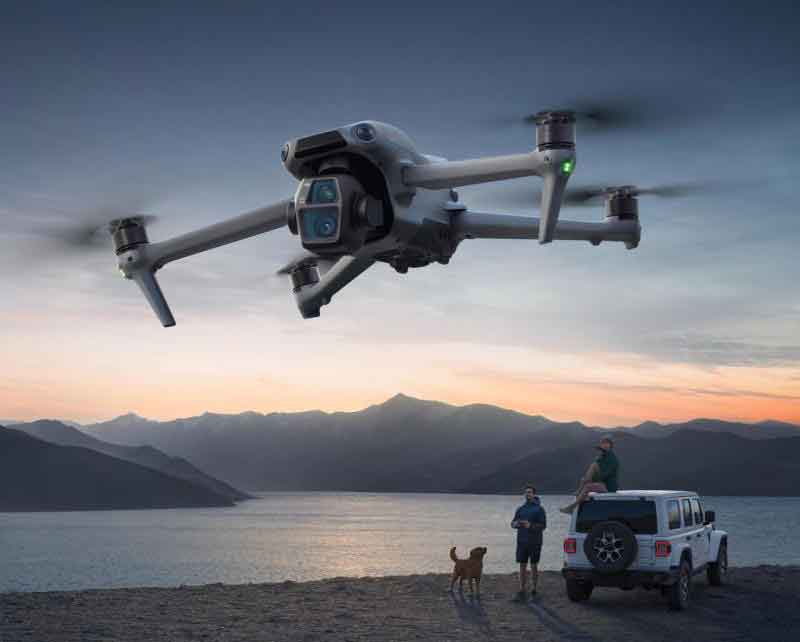
The growth of China UAV logistics has been accelerated by a series of pilot projects and regional initiatives. For instance, on May 13, the first low-altitude logistics test verification route in Northeast China completed its inaugural flight, validating drone delivery pathways in real-world conditions. Similarly, on April 1, a cross-city low-altitude logistics route between Guangzhou and Dongguan was launched, marking the successful trial of the nation’s first cross-border e-commerce drone delivery line. These achievements highlight the practical applications of China drone technology in streamlining logistics operations, particularly in urban and intercity contexts. According to data from the Civil Aviation Administration of China, the low-altitude economy is projected to reach a market size of 1.5 trillion yuan by 2025, expanding to 3.5 trillion yuan by 2035. Specifically for low-altitude logistics, estimates indicate a market value of 120 billion to 150 billion yuan in 2025, potentially surging to 450 billion to 605 billion yuan by 2035.
1. Recent Developments in China UAV Logistics
The adoption of China drone systems in logistics has gained momentum through various regional experiments. In Northeast China, the test route demonstrated the feasibility of using UAVs for efficient cargo transport, reducing delivery times in complex terrains. Meanwhile, the initiative showcased how China UAV technology can facilitate cross-border e-commerce, with drones carrying goods from the Huangpu Comprehensive Bonded Zone. These efforts are part of a broader trend, as seen in Zhejiang Province, where 11 low-altitude economic “pilot zones” were designated in April to encourage innovation. Additionally, in February, Shenzhen launched the nation’s first integrated “air-ground” smart logistics operation center, further embedding China drone solutions into urban supply chains. By January, the Guangdong-Hong Kong-Macao Greater Bay Area had initiated regular commercial operations of low-altitude logistics routes, with companies like reporting daily drone takeoffs and landings ranging from 800 to 2,000 flights, handling over 12,000 shipments. These examples illustrate how China UAV logistics are transitioning from theoretical concepts to tangible, scalable operations.
2. Market Potential and Economic Impact
The expansion of China drone logistics is driven by its cost-effectiveness and efficiency gains, positioning it as a key component of the country’s digital transformation. Industry analyses suggest that the global low-altitude economy is growing at an annual rate of approximately 11%, with applications spanning transportation, agriculture, and construction. In China, the low-altitude logistics sector is poised to capitalize on this trend, as evidenced by the projected market sizes. To provide a clearer overview, the table below summarizes key market forecasts for China UAV logistics:
| Year | Low-Altitude Economy Market Size (in trillion yuan) | Low-Altitude Logistics Market Size (in billion yuan) |
|---|---|---|
| 2025 | 1.5 | 120-150 |
| 2035 | 3.5 | 450-605 |
This data, derived from reports such as the “2024 China Low-Altitude Logistics Development Report” by the Chain上 Digital Industry Research Institute, emphasizes the significant role China drone technologies will play in shaping future logistics networks. The integration of UAVs not only reduces operational costs but also enhances delivery speed, making it ideal for last-mile solutions in densely populated areas. As more regions adopt China UAV systems, the cumulative economic impact is expected to drive innovation in related industries, such as manufacturing and data management.
3. Challenges in Airspace Management and Infrastructure
Despite the progress, the development of China UAV logistics faces several obstacles. Airspace management remains a primary concern, with issues such as regional disparities in regulations, insufficient legal frameworks, and safety risks. Currently, airspace control in China is not uniformly systematized, leading to complexities in coordinating low-altitude flights. For example, the gradual opening of airspace from 120 meters to 300 meters, and potentially 600 meters in pilot cities, indicates a shift but also highlights the need for standardized protocols. Kang Jian, Vice President of the Chain上 Digital Industry Research Institute, notes that the lack of a cohesive airspace classification system and streamlined application processes can hinder the scalability of China drone operations. Moreover, infrastructure gaps pose additional challenges. Low-altitude logistics rely on a robust network of support facilities, including digital management systems, communication networks, navigation aids, and landing sites. The “2024 China Low-Altitude Logistics Development Report” points out that as China UAV activities increase in density and frequency, the infrastructure must adapt to heterogeneous, high-complexity environments. This includes ensuring reliable communication and monitoring systems to prevent accidents and protect privacy, which are critical for gaining public trust.
4. Strategies for Overcoming Barriers
To address these challenges, experts and policymakers propose multi-faceted approaches. In airspace management, there is a push for reform through digitalization and smarter coordination. Kang Jian suggests implementing clear airspace classification standards and simplifying approval procedures to reduce regional variations. Establishing a unified low-altitude flight service platform could integrate resources and enhance safety, facilitating the growth of China UAV logistics. Additionally, expanding airspace resources—such as the planned elevation increases to 600 meters in试点 cities—would provide more operational flexibility for China drone networks. On the infrastructure front, investments in airports and landing points are essential. Drawing from experiences in ground transportation, a three-tier facility system—comprising low-altitude logistics hubs, stations, and points—could optimize drone operations and improve service efficiency. This would involve upgrading hardware and software components to handle the high frequency of China UAV movements. Furthermore, policy and standardization efforts are crucial. The Chinese government has already taken steps, such as the “General Aviation Equipment Innovation Application Implementation Plan (2024-2030)” issued by the Ministry of Industry and Information Technology and other departments, which encourages drone demonstrations for intercity transport and last-mile delivery. Local governments are also experimenting with tailored solutions; for instance, the in Zhejiang and the smart logistics center in Shenzhen serve as models for nationwide adoption. To ensure consistency, recommendations from national figures, like those from the National People’s Congress, advocate for centralized legislation and data-sharing standards to regulate China drone activities effectively.
5. Policy and Regulatory Frameworks
Government support is pivotal in nurturing the low-altitude logistics ecosystem. In March 2024, the “General Aviation Equipment Innovation Application Implementation Plan (2024-2030)” explicitly promoted the demonstration , including UAV-based intercity and last-mile delivery. This aligns with local initiatives, such as the Guangdong-Hong Kong-Macao Greater Bay Area’s commercial operations, which have demonstrated the viability of China UAV logistics on a larger scale. During the National People’s Congress sessions, representatives like proposed delegating low-altitude airspace management to local governments to enhance efficiency, while emphasized the need for a unified national management system based on successful provincial experiments. Moreover, Wu Weiwei, a representative from Zhejiang, recommended that the Civil Aviation Administration establish industry standards for data collection and sharing, ensuring that China drone operations adhere to privacy and security protocols. These policy measures aim to create a conducive environment for innovation, balancing growth with regulatory oversight. As China UAV technologies evolve, continuous updates to technical standards and flight rules will be necessary to maintain safety and interoperability in the rapidly expanding low-altitude sector.
6. Future Outlook and Global Context
The prospects for China drone logistics are immensely promising, driven by technological advancements and strategic investments. Globally, the low-altitude economy is expanding, with UAV applications diversifying into sectors like emergency response and environmental monitoring. In China, the focus on low-altitude logistics is expected to catalyze the formation of new industrial chains, encompassing manufacturing, flight services, and systems. The “2024 China Low-Altitude Logistics Development Report” highlights that by 2035, the sector could account for a substantial portion of the overall low-altitude market, with China UAV networks enabling faster, more resilient supply chains. However, achieving this vision requires addressing current limitations through collaborative efforts among government, industry, and academia. As Kang Jian notes, summarizing pilot experiences into national laws and standards will be key to scaling China drone logistics sustainably. With ongoing innovations and a supportive policy landscape, low-altitude logistics in China is set to redefine modern transportation, offering a blueprint for other nations exploring similar technologies.
In conclusion, the rise of low-altitude logistics in China, centered on UAV and drone technologies, represents a significant shift in the logistics industry. While challenges in airspace management, infrastructure, and regulation persist, proactive measures—such as digital airspace reforms, infrastructure upgrades, and standardized policies—are paving the way for growth. The successful implementation of China UAV systems in regions like the Greater Bay Area and Northeast China demonstrates the tangible benefits of this approach, from reduced costs to enhanced efficiency. As the market expands, continued emphasis on safety, innovation, and international collaboration will ensure that China drone logistics not only meets domestic demands but also contributes to global advancements in the low-altitude economy. With projections pointing to multi-trillion-yuan markets in the coming decades, the journey of China’s low-altitude logistics is just beginning, promising a future where the skies become integral to everyday logistics solutions.