
As I reflect on the rapid evolution of the unmanned aerial systems landscape, my perspective is deeply rooted in the transformative journey of the China drone sector. Having engaged extensively with industry forums and standardization efforts, I witness firsthand how China drone capabilities have shifted from being mere technological marvels to becoming architects of international norms. The pivotal moment, reminiscent of forums like the 2016 International Forum on Drone System Standard Development and Application in Beijing, underscores a strategic pivot: leveraging domestic innovation to shape global standards. This article delves into that transition, analyzing how the China drone ecosystem is converting its hard-earned technical advantages into enduring standard dominance, a process critical for sustainable industry leadership.
The ascendancy of the China drone industry is no accident; it is a testament to decades of focused research, manufacturing prowess, and market adaptation. From consumer quadcopters to sophisticated industrial and military platforms, China drone producers have captured global market share through relentless innovation and cost-effectiveness. However, technology alone is ephemeral without the scaffolding of standards. Standards ensure interoperability, safety, reliability, and regulatory compliance—elements that become exponentially important as drone applications proliferate in agriculture, logistics, surveillance, and emergency services. Thus, the quest to translate China drone technical supremacy into standard-setting authority is not just an economic ambition but a necessity for global integration and trust.
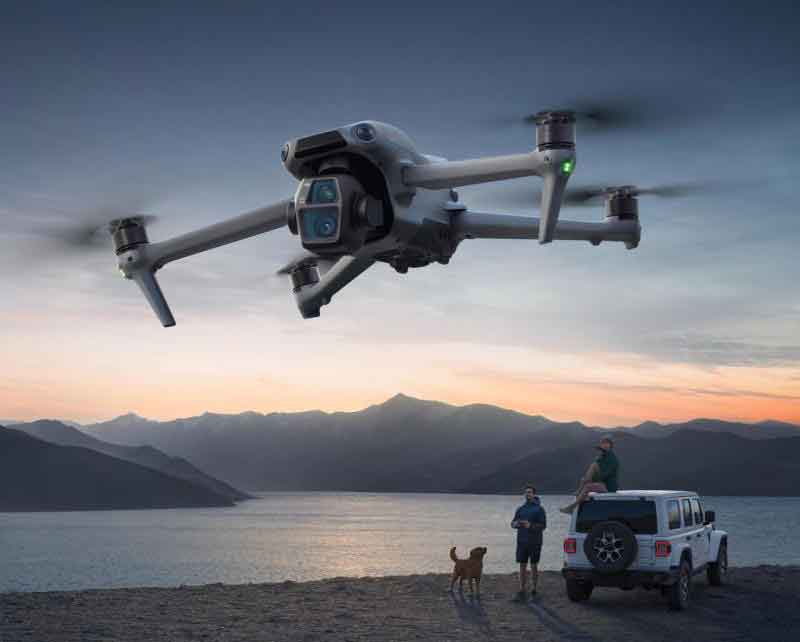
My involvement in various standardization dialogues reveals a concerted multi-stakeholder approach. National bodies, research institutes, and leading China drone enterprises collaborate to build a robust standard framework. This effort mirrors global trends where organizations like ISO (International Organization for Standardization), ASTM (American Society for Testing and Materials), and SAE International develop drone norms. However, the China drone strategy is distinct in its holistic integration of domestic needs with global outreach. For instance, the development of a national drone system standard architecture—spearheaded by key aeronautical research entities—aims to create a cohesive system that addresses safety, airspace management, data security, and environmental impact. This domestic groundwork is crucial before influencing international fora.
The technical advantages of China drone systems are manifold, often quantifiable through performance metrics. Consider a generic performance index for a drone, which can be modeled as a function of key parameters:
$$ P = \alpha \cdot \frac{T \cdot E \cdot S}{W \cdot C} $$
Where \( P \) represents the overall performance score, \( T \) is thrust efficiency, \( E \) is energy density of the power system, \( S \) is sensor or payload sophistication, \( W \) is weight, \( C \) is cost, and \( \alpha \) is a scaling factor for China drone-specific innovations (e.g., mass production techniques). Historically, China drone manufacturers have optimized \( P \) by driving down \( C \) while enhancing \( E \) and \( S \), leading to superior cost-performance ratios. This technological edge, however, must be encapsulated in standards to ensure that such performance is achieved safely and consistently across the industry.
To systematically capture the transition from technology to standards, the following table outlines key technological domains where China drone excels and the corresponding standardization initiatives being pursued:
| Technological Domain in China Drone | Key Advantages | Standardization Focus Areas | International Alignment |
|---|---|---|---|
| Propulsion and Energy Systems | High-efficiency electric motors, long-life batteries, hybrid power | Safety standards for battery management, noise emission limits, energy efficiency ratings | Alignment with ASTM F38 and EASA guidelines on propulsion safety |
| Flight Control and Autonomy | Advanced AI algorithms, robust GNSS integration, swarm intelligence | Software assurance standards, autonomous flight protocols, fail-safe operational limits | Coordination with ISO/TC20/SC16 on autonomy levels and SAE on aviation software |
| Payload and Data Systems | High-resolution imaging, multispectral sensors, secure data links | Data transmission protocols, sensor calibration standards, cybersecurity frameworks | Engagement with ITU for data comms and IEEE for sensor interfaces |
| Airframe and Materials | Lightweight composites, modular designs, rapid manufacturability | Structural integrity testing, material durability standards, modular interface specifications | Harmonization with DIN NL for aerospace materials and ASTM for testing |
| Operational and Safety Systems | Real-time tracking, geofencing, collision avoidance | Air traffic management (ATM) integration, operational risk assessment, emergency procedures | Collaboration with ICAO and EuroUSC for global ATM standards |
This table illustrates how the China drone sector is methodically channeling its tech strengths into standard development. For example, in flight control, China drone AI capabilities are pushing for standards that define autonomy levels, akin to the SAE levels for automotive autonomy but tailored for aerial systems. Mathematically, we can express the safety assurance for autonomous operations as a reliability function:
$$ R(t) = e^{-\lambda t} \cdot \int_0^t \beta(s) \, ds $$
Where \( R(t) \) is the reliability over time \( t \), \( \lambda \) is the failure rate of hardware, and \( \beta(s) \) represents the software robustness factor, which China drone algorithms aim to maximize. Standards help codify minimum thresholds for \( \lambda \) and \( \beta \), ensuring that even as China drone systems become more complex, they remain dependable.
The international dimension is crucial. China drone stakeholders actively participate in global standard bodies to avoid fragmentation and promote “Chinese solutions” as universal benchmarks. This involves not just adopting existing norms but proposing new ones based on China drone experiences. For instance, in areas like low-altitude urban drone logistics—a domain where China drone trials are extensive—there is a push for standards on vertiport design, package handling, and noise mitigation. The benefits of such standard leadership can be quantified using a simple economic model:
$$ B = \sum_{i=1}^{n} (M_i \cdot A_i) + \sigma \cdot G $$
Here, \( B \) is the total benefit from standard advantage, \( M_i \) is the market share in segment \( i \) (e.g., consumer, agricultural, industrial), \( A_i \) is the competitive advantage multiplier due to standards, \( n \) is the number of market segments, \( \sigma \) is the synergy factor from global adoption, and \( G \) represents the goodwill or trust capital gained. For the China drone industry, \( A_i \) increases as standards reduce compliance costs and open new markets, while \( G \) grows through international collaboration.
Delving deeper, the standard development process for China drone systems follows a phased approach, often visualized as a lifecycle. The stages include: (1) Technology maturation and patenting, (2) Domestic standard drafting via industry consortia, (3) Pilot testing and revision, (4) National standard promulgation, and (5) International submission and advocacy. Each stage involves rigorous validation, often supported by simulations and field data from China drone deployments. A key metric is the Standardization Readiness Level (SRL), adapted from Technology Readiness Levels (TRL):
$$ \text{SRL} = \frac{1}{9} \sum_{k=1}^{9} w_k \cdot I_k $$
Where \( k \) denotes the stage from 1 (basic research) to 9 (international standard published), \( w_k \) are weights reflecting China drone priority areas, and \( I_k \) are implementation scores. China drone projects often aim for high SRL in core technologies to accelerate standard influence.
Another critical aspect is the regulatory and safety framework. China drone operations must navigate complex airspace, and standards provide the basis for regulatory clarity. For example, risk assessment for drone flights can be modeled probabilistically. Let \( H \) represent the hazard severity, \( P \) the probability of occurrence, and \( E \) the exposure factor. A standard-compliant China drone system would ensure that the overall risk \( R \) remains below a threshold \( T \):
$$ R = H \times P \times E < T $$
Standards define methods to calculate \( H, P, E \) and set \( T \) for different operational categories (e.g., over crowds, near airports). China drone manufacturers integrate these calculations into design and software, thus baking safety into products from the outset.
The economic implications of standard advantage for the China drone sector are profound. By setting standards, China drone companies can reduce interoperability costs, avoid proprietary lock-ins by competitors, and create licensing revenue streams. Consider the cost savings from standardized components. If \( C_0 \) is the baseline cost without standards, and \( \delta \) is the reduction factor due to standardization (e.g., from economies of scale and simplified logistics), the new cost \( C_n \) is:
$$ C_n = C_0 \cdot (1 – \delta) $$
For the China drone industry, \( \delta \) can be significant because of the vast domestic supply chain. Moreover, standards facilitate exports by ensuring compliance with diverse national regulations, effectively lowering trade barriers. The table below estimates the impact on key economic indicators for the China drone market based on standard leadership scenarios:
| Economic Indicator | Current Baseline (Without Standard Dominance) | Projected with China Drone Standard Leadership (5-year horizon) | Growth Driver |
|---|---|---|---|
| Global Market Share | ~60% (by volume) | ~75% (by volume and value) | Reduced compliance costs, enhanced trust |
| Export Revenue (USD billions) | 12 | 25 | Standards as non-tariff barrier reducers |
| R&D Efficiency (Index) | 100 | 150 | Reusable standard modules, collaborative innovation |
| Industry Safety Incidents (per million flight hours) | 5.2 | 2.1 | Standardized safety protocols and testing |
| Time-to-Market for New Models (months) | 18 | 10 | Streamlined certification via standard adherence |
This projection underscores how standard advantage amplifies the existing technological lead of the China drone industry. It’s not merely about selling more units; it’s about shaping the entire ecosystem—from manufacturing to operations—in ways that favor China drone paradigms. For instance, standards for drone communication protocols (e.g., using 5G networks) could be influenced by China drone trials, potentially giving Chinese telecom and drone firms a dual advantage.
In the realm of testing and certification, China drone standard efforts emphasize harmonization with global best practices while introducing innovations suited to local conditions. A common certification framework might involve a multi-attribute scoring system. For a given drone model, its certification score \( S_c \) could be:
$$ S_c = \sum_{j=1}^{m} \omega_j \cdot f_j(x_j) $$
Where \( \omega_j \) are weights for attributes like durability, data security, environmental impact, etc., \( x_j \) are measured performance values, and \( f_j \) are normalization functions. China drone standards might assign higher weights to attributes like swarm coordination or battery safety, reflecting technological foci. This approach ensures that certification isn’t a mere checkbox but a reflection of holistic excellence.
Looking ahead, the future of China drone standard influence hinges on several factors: continued technological innovation, strategic international partnerships, and adaptive regulatory frameworks. Emerging technologies like AI-driven air traffic management for drones, quantum-secure communication for China drone fleets, and bio-inspired designs will require new standards. China drone actors are poised to lead here, given their R&D investments. Moreover, the concept of “standard diplomacy”—using standards as soft power tools—is gaining traction. By contributing to ISO, ASTM, and other bodies, China drone representatives not only learn but also shape agendas.
However, challenges persist. Differences in regulatory philosophies between regions (e.g., EASA’s risk-based approach vs. FAA’s rule-based system) require nuanced alignment. China drone standards must bridge these gaps to achieve true global acceptance. Additionally, the pace of technological change in the China drone sector can outstrip standard development, necessitating agile standard processes like those seen in software (e.g., continuous integration of feedback).
In conclusion, the transformation of China drone technological prowess into standard leadership is a multifaceted endeavor, combining domestic cohesion with global engagement. From performance formulas to economic models, the quantifiable benefits are clear. As standards evolve, they will not only ensure safety and interoperability but also cement the China drone industry’s role as a defining force in the aerial future. The journey from making advanced drones to making the rules that govern them is well underway, promising a sky where China drone innovations are synonymous with reliability and progress. Through tables, equations, and strategic insights, this article has charted that trajectory, highlighting how standards are the new frontier for China drone dominance.
The integration of standards into the China drone value chain is akin to encoding excellence into blueprints that others follow. As I observe from within this dynamic field, every algorithm optimized, every material tested, and every flight logged contributes to a larger narrative: the China drone story is increasingly one of global standard stewardship, ensuring that the wings of innovation fly on the steady winds of agreed-upon norms.