
The global climate crisis, driven by rising atmospheric CO₂ levels from fossil fuel combustion and deforestation, necessitates urgent exploration of nature-based solutions. Vegetation stands as a primary carbon sink, mitigating adverse climatic impacts. Concurrently, rapid urbanization has generated vast quantities of municipal solid waste, leading to a proliferation of landfills. The ecological restoration and adaptive reuse of these decommissioned sites, classified as urban brownfields, present a critical challenge and opportunity for sustainable development. Brownfields are characterized by potential contamination, underutilization, and latent potential for redevelopment. Transforming these liabilities into ecological assets—regenerated brownfield landscapes—requires a nuanced understanding of their ecosystem functions, particularly carbon sequestration and storage. This study investigates the carbon budget of plant communities within such a specialized context, employing advanced China UAV drone technology and quantitative ecological modeling to elucidate the influence of community structure and plant traits on carbon balance performance.
Traditional research on plant carbon sequestration often relies on single-dimensional metrics based on plant traits or community distribution. Key methodologies include assimilation measurement, life cycle assessment, model estimation, and remote sensing. Among these, model estimation, particularly using the i-Tree Eco model, has gained widespread international adoption for its ability to generate predictive models from field data to rapidly and accurately estimate carbon storage in urban vegetation. Previous studies have extensively applied the i-Tree Eco model to assess the carbon sequestration benefits of street trees and park communities. However, research focusing on the carbon budget—the net balance between sequestration and emissions—within the unique constraints of regenerated brownfields remains limited. These sites pose specific challenges such as potential residual soil contamination, compromised soil structure, and altered microclimates, which can influence plant growth and, consequently, carbon dynamics. This research addresses this gap by integrating China UAV drone remote sensing for precise structural data collection with the i-Tree Eco model for carbon quantification and Life Cycle Assessment (LCA) for management emission accounting, providing a comprehensive carbon budget analysis.
The study was conducted in a representative regenerated brownfield landscape: a former municipal solid waste landfill in eastern China that has been transformed into an ecological park. The site covers approximately 8 hectares, with about 6.3 hectares of greened area. The revegetation strategy employed pioneer native species followed by communities of stress-tolerant plants, resulting in structurally complex and stable ecosystems. To ensure methodological rigor, 25 typical plant communities were selected as study plots, each measuring 20m × 20m (400 m²). Plots were chosen based on intact structure, healthy plant growth, and flat terrain to minimize confounding variables. The plant communities varied in composition, canopy closure, planting density, and dominant vegetation type (evergreen trees, deciduous trees, or shrubs), as classified in Table 1.
| Plot ID | Canopy Closure Range | Planting Density (stems/ha) | Spatial Type | Dominant Vegetation |
|---|---|---|---|---|
| U1, U4, U14, U16, U17, U20, U23 | 0.70 – 1.00 | 1200 – 1600 | Closed | Mixed |
| U2, U5, U6, U7, U11, U15, U18, U21, U22, U24, U25 | 0.25 – 0.70 | 400 – 1200 | Semi-open | Mixed |
| U3, U8, U9, U10, U12, U13, U19 | 0.00 – 0.25 | 0 – 400 | Open | Shrub / Tree |
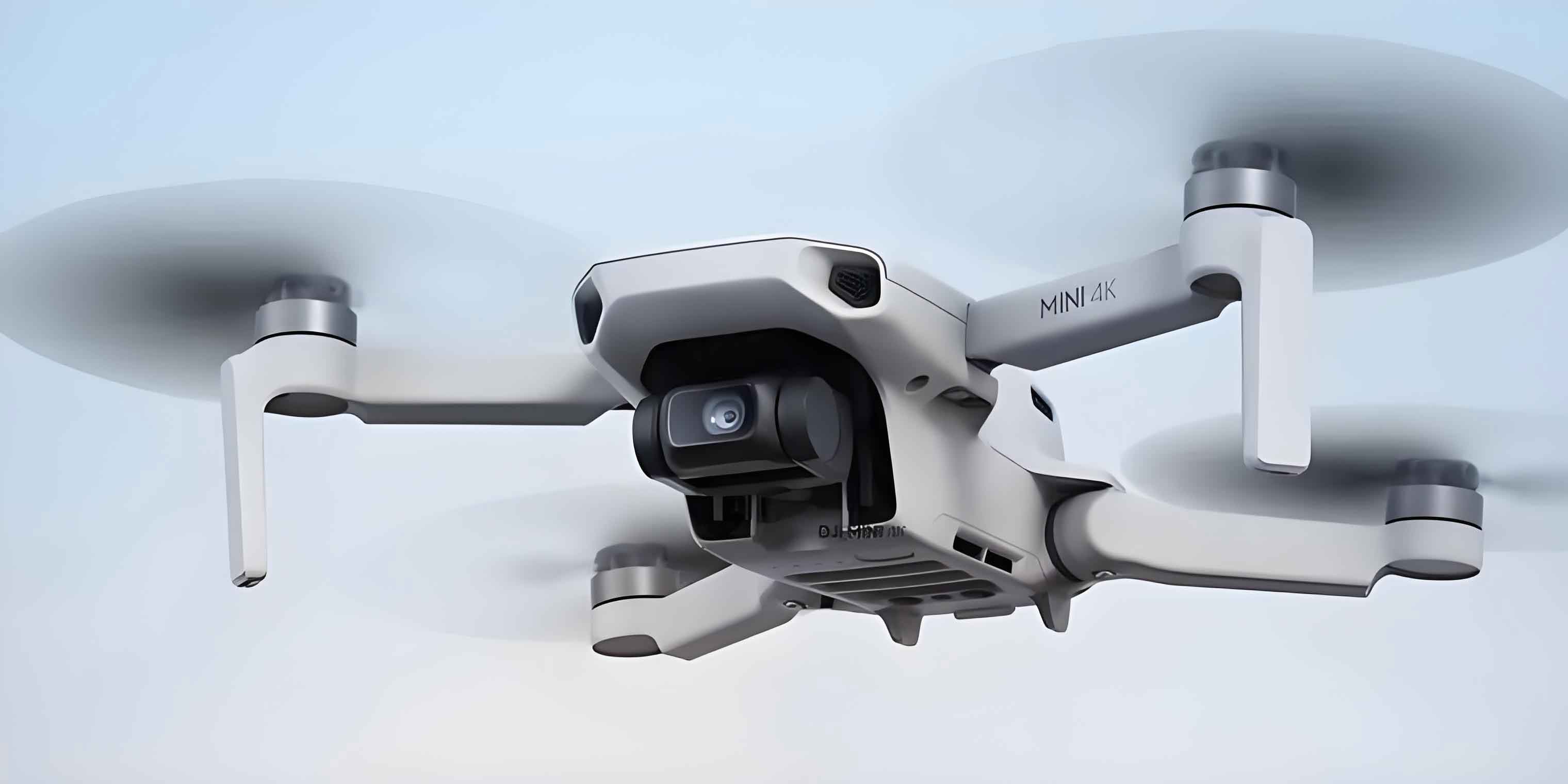
The core methodology rested on a tripartite approach: 1) High-precision data acquisition via China UAV drone, 2) Carbon sequestration estimation via i-Tree Eco, and 3) Management carbon emission accounting via LCA. A DJI Phantom 4 RTK China UAV drone was deployed for detailed aerial survey. Flight parameters were set at 50m altitude with 75-85% front overlap and 60-70% side overlap to ensure high-quality photogrammetry. Ground control points (GCPs) were established and measured with RTK-GPS for georeferencing accuracy. The acquired images were processed using Pix4Dmapper software to generate dense point clouds, digital surface models (DSM), and digital elevation models (DEM). The differential between DSM and DEM yielded an accurate 3D model of the park, enabling the extraction of key tree dimensions like crown height and crown diameter for each individual in the plots, overcoming the inaccuracies of traditional ground-based measurements for these parameters.
Tree data, including species, diameter at breast height (DBH), crown dimensions from the China UAV drone model, crown health, and light exposure, were compiled and input into the i-Tree Eco model (v6.1). The model, calibrated with local climate data, uses allometric equations to estimate annual carbon sequestration (C_seq) for each tree based on its growth and biomass accumulation. The plot-level sequestration was calculated by summing individual tree values.
The carbon emissions (C_em) associated with the maintenance of these plant communities were calculated using the Life Cycle Assessment (LCA) method, focusing on the operational phase. Data on irrigation, fertilization, pesticide application, pruning frequency, and associated machinery use (fuel and electricity consumption) were obtained from park maintenance records. Emissions were calculated using the IPCC-recommended emission factors. The formulas for major emission sources are listed below:
Irrigation Emissions:
$$ C_{irr} = \sum_{i=1}^{n} (Q_{i-w} \times E_{w}) $$
Where \( C_{irr} \) is annual irrigation carbon emissions (kg CO₂-e), \( Q_{i-w} \) is water consumption for plot \( i \), and \( E_{w} \) is the water emission factor.
Fertilizer Emissions:
$$ C_{fer} = \sum_{i=1}^{n} (Q_{i-f} \times E_{f}) $$
Where \( C_{fer} \) is annual fertilizer carbon emissions, \( Q_{i-f} \) is organic fertilizer consumption for plot \( i \), and \( E_{f} \) is the fertilizer emission factor.
Pruning & Machinery Emissions:
$$ C_{pru} = \sum_{i=1}^{n} (Q_{i-d} \times E_{d} + Q_{i-e} \times E_{e}) $$
Where \( C_{pru} \) is annual pruning-related emissions, \( Q_{i-d} \) and \( Q_{i-e} \) are diesel and electricity consumption for machinery in plot \( i \), and \( E_{d} \) and \( E_{e} \) are their respective emission factors.
The total annual management emissions for a plot is:
$$ C_{mai} = C_{irr} + C_{fer} + C_{pru} + C_{pes} $$
(where \( C_{pes} \) represents pesticide application emissions calculated similarly).
The net carbon budget (C_net) for each plant community was then determined as:
$$ C_{net} = C_{seq} – C_{mai} $$
A positive \( C_{net} \) indicates a net carbon sink, while a negative value indicates a net carbon source.
The analysis of the 25 plots yielded significant insights into the carbon budget of this regenerated brownfield. The average annual carbon sequestration was 10,244.04 kg C ha⁻¹ yr⁻¹, while the average annual management emissions were 8,342.51 kg C ha⁻¹ yr⁻¹. This resulted in an average positive net carbon balance of 1,901.53 kg C ha⁻¹ yr⁻¹, indicating that the park’s plant communities function collectively as a carbon sink. However, substantial variation existed among plots, as detailed in Table 2.
| Plot ID | Canopy Closure | Planting Density (stems/ha) | Annual C Seq. (kg C ha⁻¹ yr⁻¹) | Annual C Em. (kg C ha⁻¹ yr⁻¹) | Net C Budget (kg C ha⁻¹ yr⁻¹) |
|---|---|---|---|---|---|
| U23 | 0.73 | 1250 | 23002.00 | 9408.72 | 13593.28 |
| U20 | 0.78 | 1425 | 20205.00 | 9371.66 | 10833.34 |
| U4 | 0.75 | 1325 | 16025.00 | 9512.14 | 6512.86 |
| U16 | 0.75 | 1500 | 15450.00 | 9213.84 | 6236.16 |
| … | … | … | … | … | … |
| U13 | 0.45 | 325 | 1240.00 | 7511.80 | -6271.80 |
| U9 | 0.15 | 325 | 3800.00 | 7734.11 | -3934.11 |
| U10 | 0.15 | 375 | 5045.00 | 7567.94 | -2522.94 |
The results clearly demonstrate the profound impact of plant community structure on the carbon budget. Canopy closure emerged as a primary determinant. Plots with canopy closure greater than 0.50 consistently exhibited positive carbon budgets, with the highest sequestration and net benefits found in the 0.75-1.00 range. In contrast, plots with canopy closure of 0.50 or less frequently functioned as carbon sources (negative net budget), as their low sequestration capacity was overwhelmed by management emissions. This highlights the importance of achieving sufficient canopy cover to optimize the carbon sink function in brownfield landscapes.
Similarly, planting density showed a strong positive correlation with net carbon balance. The highest net carbon budgets were observed in plots with densities between 1,200 and 1,600 stems per hectare. Lower densities, particularly below 400 stems/ha, were associated with negative carbon budgets. The relationship can be conceptually summarized as:
$$ C_{net} \propto f(\rho, \kappa) $$
Where \( \rho \) represents planting density and \( \kappa \) represents canopy closure, indicating that net carbon balance is a function of increasing both parameters up to an optimal range.
Beyond structural factors, the study analyzed the correlation between plant trait factors and carbon sequestration for 12 common species using Spearman’s rank correlation. Data processed via Python revealed distinct patterns, summarized in Table 3.
| Plant Trait | Correlation Trend | Key Examples & Notes |
|---|---|---|
| DBH & Basal Area | Strong Positive (Correlation Coefficient ≈ 1.00 for many trees) | Primary factors. Camphor, Redbud, Pittosporum showed perfect correlation (1.00). Larger DBH directly correlates to greater biomass and carbon storage. |
| Leaf Area & Leaf Biomass | Variable (Strong Positive to Weak/Negative) | Strong positive for Celtis (0.95), Pittosporum (0.82). Weak/negative for Prunus serrulata (-0.10), Nerium (-0.09). Suggests species-specific photosynthetic efficiency and canopy architecture. |
| Crown Width (N-S & E-W) | Moderate to Variable | Moderate positive for Celtis (0.63-0.73), Ilex cornuta, Cercis (>0.70). Weak for Hibiscus, Ilex chinensis. Related to light capture but influenced by pruning and form. |
| Crown Health & Light Exposure | Generally Positive but Complex | Healthier crowns typically sequester more carbon, but the relationship is mediated by species and competition within the community. |
The integration of China UAV drone technology was instrumental in this analysis. The ability to derive accurate, plot-scale metrics like canopy closure and individual crown dimensions from the 3D model provided a level of detail and scale unattainable with manual methods alone. This precise structural data served as critical input for both the stratification of plots and the refinement of inputs for the i-Tree Eco model, enhancing the overall reliability of the carbon sequestration estimates. The China UAV drone approach represents a scalable and efficient method for monitoring and managing the carbon sequestration potential of urban green spaces, particularly in topographically or logistically challenging sites like regenerated brownfields.
In conclusion, this study demonstrates that regenerated brownfield landscapes can function as effective carbon sinks, but their performance is highly dependent on plant community design and management. The key findings are: (1) Canopy closure should be optimized above 0.50 to ensure a positive carbon budget, with the range of 0.75 to 1.00 yielding the best results. (2) Planting density should be targeted between 1,200 and 1,600 stems per hectare to maximize carbon sequestration benefits. (3) Plant selection is crucial; species with large DBH growth potential and high basal area accumulation should be prioritized, while the selection based on leaf area or crown width requires species-specific consideration. The successful application of China UAV drone modeling combined with the i-Tree Eco and LCA frameworks provides a powerful, replicable methodology for assessing and guiding the low-carbon development of urban green infrastructure. For future brownfield regeneration projects, designers and managers should aim to create densely planted, multi-layered communities with high canopy cover, composed of native, stress-tolerant species with known high carbon sequestration potential. Furthermore, maintenance practices should be optimized to reduce associated carbon emissions, ensuring the long-term viability of these landscapes as nature-based solutions for climate mitigation in urban areas. Continuous monitoring using China UAV drone technology can track the growth and structural development of these communities, allowing for adaptive management that sustains and enhances their carbon sink function over time.