
The rapid proliferation and technological advancement of Unmanned Aerial Vehicle (UAV) systems have fundamentally transformed operational methodologies across numerous sectors. Within the domain of emergency response, drones have evolved from novel gadgets into indispensable tactical assets. For fire and rescue services globally, these platforms offer unparalleled capabilities in situational awareness, operational safety, and mission effectiveness. They perform critical functions such as aerial reconnaissance in hazardous environments, thermal imaging for victim location, communication relay in degraded networks, payload delivery for equipment or suppressants, and large-area monitoring for wildfires or industrial incidents. However, the mere procurement of advanced drone hardware does not equate to operational readiness. The pivotal element determining the return on investment and, more importantly, the enhancement of life-saving potential, is a proficient, certified, and mission-ready operator. The current landscape for drone training is fragmented, primarily catering to commercial or recreational use, leaving a significant gap in standardized, scenario-specific education for emergency responders. This article, drawing from extensive research into existing civilian frameworks and the unique demands of firefighting, proposes a structured and comprehensive training system designed specifically for fire and rescue drone operators.
The urgency for a dedicated drone training pipeline stems from a critical disparity. While fire departments increasingly deploy drones, the number of personnel with formal, legally recognized qualifications often lags behind the inventory of equipment. Many operators rely on generic civilian certifications, which, while addressing basic airmanship and legal compliance, do not encompass the high-stress, complex, and physically demanding scenarios endemic to firegrounds and disaster zones. An operator must be more than a pilot; they must be an integrated part of the incident command system, understanding tactical fire behavior, rescue protocols, and operational safety in conjunction with UAV operation. Therefore, constructing a robust drone training ecosystem is not merely an administrative task but a strategic imperative to ensure legality, safety, and maximum operational utility.
Current Landscape of Drone Operator Certification
Before designing a specialized system, one must understand the existing frameworks that govern UAV operation. Currently, in many regions, there is no single, universally mandated “drone license.” Instead, a mosaic of certificates and licenses exists, each with its own governance, focus, and recognition. For fire and rescue agencies seeking to legitimize their operations, navigating this maze is the first step. The primary civilian-oriented drone training and certification pathways can be summarized as follows:
| Acronym | Full Name / Issuing Body | Primary Focus & Notes |
|---|---|---|
| COSL | National Vocational Skill Level Certificate (Human Resources) | A state-recognized vocational skill qualification. Assesses competency against national occupational standards for roles like “UAV Driver/Pilot,” “UAV Surveying Operator,” and “UAV Assembler & Adjuster.” |
| CAAC | Civil Aviation Administration License | The de facto regulatory license for commercial UAV operation, issued by the national civil aviation authority. It is the core legal document for operating drones within regulated airspace and is often the prerequisite for other certificates. |
| AOPA/CHALPA | Aircraft Owners and Pilots Association / China Civil Aviation Pilots Association | Industry association-issued certificates (like “Remote Pilot Certificate”). While not the regulating license itself, they are widely recognized. Often, holding a CAAC license allows for automatic issuance or endorsement of these association certificates. |
| ASFC | Aeronautical Sports Federation Certificate | Issued by the national aeronautical sports association. Focuses heavily on manual piloting skills and aerobatics for model aircraft and drones in sports contexts. It has international recognition in sporting events but less so for commercial or public safety operations. |
| UTC | Unmanned Aircraft Systems Operator Certificate | Offered by training centers affiliated with major manufacturers. Provides application-specific drone training (e.g., aerial photography, surveying, powerline inspection). It is often tailored to a particular ecosystem of hardware and software. |
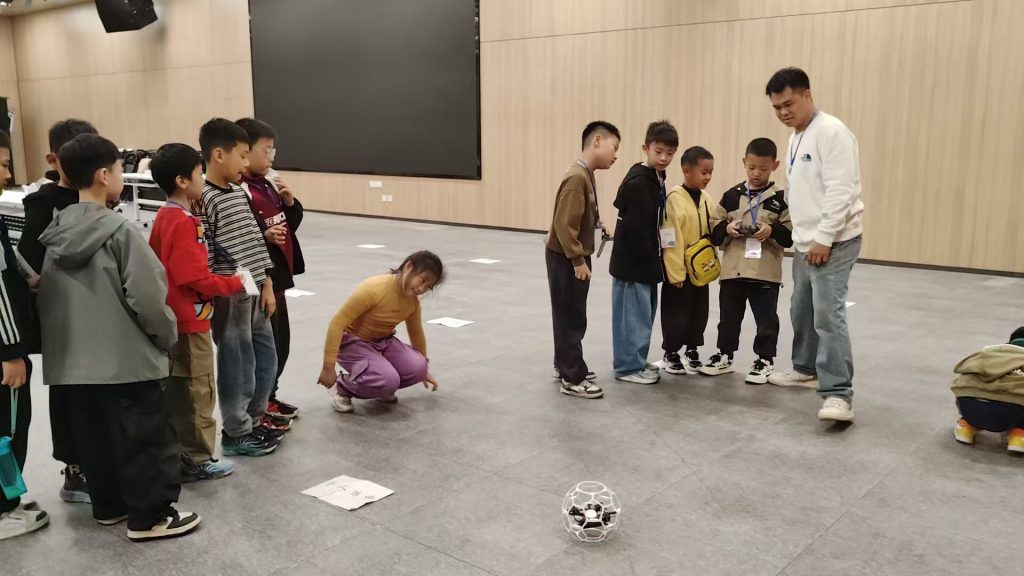
This analysis reveals that while these systems provide essential foundations in aviation regulation, basic flight mechanics, and specific applications, they operate in a vacuum concerning the core competencies of fire and rescue. A firefighter operating a drone during a structural collapse needs knowledge of structural triage, victim identification patterns, and coordination with ground teams—skills entirely outside the scope of a standard commercial drone training curriculum. This gap necessitates a bespoke system that layers mission-critical emergency response knowledge upon a foundation of certified airmanship.
Proposed Tiered Structure for Fire & Rescue Drone Operators
A one-size-fits-all approach to drone training is ineffective. The operational hierarchy within fire services must be mirrored in the drone operator qualification structure. We propose a three-tiered career and certification pathway: Operator (Pilot), Commander (Lead Pilot/Mission Coordinator), and Instructor. Each tier has distinct responsibilities, prerequisites, and training focus, creating a clear progression for professional development.
The foundational tier is the Operator. This individual is proficient in safely deploying and flying drones within visual line of sight (VLOS) to execute directed tasks. Their focus is on proficient aircraft handling, basic data capture, and following established procedures under supervision. The intermediate tier is the Commander. This role transcends basic piloting. A Commander is qualified for extended visual line of sight (EVLOS) or complex BVLOS operations, conducts mission planning and risk assessment, analyzes and processes captured data into actionable intelligence (like 2D/3D maps), and leads a small drone team on scene. The apex tier is the Instructor. This individual is responsible for the perpetuation of skills. They train and evaluate Operators and Commanders, develop and refine training curricula and standards, evaluate new equipment and tactics, and ensure the overall quality and evolution of the agency’s drone training program.
The proposed training duration for each level reflects this increasing complexity:
- Operator: 120 standard instructional hours.
- Commander: 160 standard instructional hours (often including prerequisite experience as an Operator).
- Instructor: 100 standard instructional hours (focused on pedagogy and evaluation, following significant field experience as a Commander).
Core Theoretical Knowledge Base
Effective drone training must be grounded in comprehensive theoretical knowledge. This foundation ensures operators understand not just how to control the aircraft, but why it behaves a certain way and under what legal and physical constraints it operates. The curriculum must be immersive, covering approximately 40 hours of classroom instruction. The core modules include:
- UAV Fundamentals & Classification: History, definitions, types (multi-rotor, fixed-wing, VTOL), and their respective performance characteristics relevant to fire service applications.
- Aerodynamics & Flight Principles: Basic physics of flight. For multi-rotors, understanding thrust, torque, and control. The relationship between propeller pitch, motor KV, and battery voltage can be summarized by the thrust equation for a propeller:
$$T = C_T \cdot \rho \cdot n^2 \cdot D^4$$
where $T$ is thrust, $C_T$ is the thrust coefficient, $\rho$ is air density, $n$ is rotational speed (RPS), and $D$ is propeller diameter. Understanding how $T$ changes with battery sag or air density is crucial for high-altitude or hot fireground operations. - UAV Systems Architecture: In-depth study of the airframe, propulsion system (motors, ESCs, batteries), flight controller (FC) and sensors (IMU, barometer, compass), communication data-links (radio control, telemetry, video), and payload systems (gimbals, cameras, thermal sensors, speakers, delivery mechanisms).
- Aviation Meteorology: Effects of wind, temperature, density altitude, precipitation, and visibility on UAV performance and safety. Interpreting weather reports and forecasts for mission planning.
- Airspace Regulation & Legal Framework: National and local aviation regulations, no-fly zones, altitude restrictions, frequency management, privacy laws, and incident reporting requirements. This ensures all operations are legally compliant.
- Safety Management & Emergency Procedures: Pre-flight checklists, risk assessment methodologies, failsafe procedures (Return-to-Home, contingency landing), and protocols for dealing with fly-aways, link loss, or mid-air failures.
- Basic Maintenance & Pre-flight Inspection: Systematic procedures for inspecting airframes, propellers, batteries, and systems to ensure airworthiness. Basic troubleshooting and maintenance logs.
Tiered Skill Requirements: From Operation to Instruction
The practical skill sets required escalate significantly with each tier. These skills can be categorized into mission phases: Planning, Preparation, Execution, and Post-mission. The following tables delineate the progressive skill requirements, illustrating the path from task execution to mission command and finally to educational leadership.
Operator (Pilot) Core Skills
The Operator is the tactical executor. Their skill matrix focuses on safe, competent handling and basic task completion under direction.
| Skill Category | Competency Requirements |
|---|---|
| Mission Execution (Flight) | Perform precise manual flight maneuvers (hover, orbit, linear flight, simple obstacle avoidance). Execute automated flight plans (waypoint missions). Monitor telemetry and aircraft status. Perform controlled emergency landings. Conduct VLOS operations. |
| Mission Execution (Payload) | Operate gimbal and camera controls to capture stable video and still images. Activate and monitor auxiliary payloads (e.g., turn on spotlight, start speaker broadcast). Perform basic payload attachment/release (e.g., hook for lightweight line). |
| Data Acquisition | Capture systematic aerial imagery for basic scene documentation. Manually trigger capture for photogrammetry (ensuring sufficient overlap). Record and label media files correctly. |
| Post-mission | Download and organize captured data from SD cards and UAV logs. Perform basic visual review of media. Conduct post-flight inspection and basic cleaning/charging. |
Commander (Lead Pilot) Core Skills
The Commander builds upon Operator skills, adding layers of planning, analysis, and command responsibility for complex missions.
| Skill Category | Competency Requirements |
|---|---|
| Mission Planning | Conduct site and airspace reconnaissance. Perform mission-specific risk assessment (weather, obstacles, RF environment). Plan BVLOS/EVLOS operations with contingency protocols. Calculate flight parameters (endurance, coverage) based on payload and battery data. Optimize automated flight paths for mapping or search patterns. |
| Advanced Execution | Lead BVLOS/EVLOS operations. Dynamically re-task the UAV based on real-time incident command needs. Execute complex payload operations (precision delivery, coordinated multi-sensor search). Operate in degraded visual environments (night, smoke). |
| Data Processing & Analysis | Process captured imagery into 2D orthomosaics and 3D models using software like Pix4D, DroneDeploy, or Agisoft Metashape. The core photogrammetric process involves solving for camera positions and a 3D point cloud using structure-from-motion (SfM), which can be conceptually simplified as solving a bundle adjustment problem minimizing reprojection error: $$\min_{\mathbf{P}_i, \mathbf{X}_j} \sum_{i=1}^{m} \sum_{j=1}^{n} v_{ij} \lVert \mathbf{x}_{ij} – \mathbf{P}_i \mathbf{X}_j \rVert^2$$ where $\mathbf{P}_i$ are camera matrices, $\mathbf{X}_j$ are 3D points, and $\mathbf{x}_{ij}$ are observed image coordinates. Create annotated maps, measure distances/areas, and identify key features for incident command. |
| Team Leadership & Reporting | Brief and debrief drone team members. Integrate UAV-derived intelligence into incident action plans. Provide real-time verbal and data-linked reports to command. |
Instructor Core Skills
The Instructor’s focus shifts from primary execution to the amplification of capability through education, evaluation, and program development.
| Skill Category | Competency Requirements |
|---|---|
| Curriculum Development | Design, write, and update drone training syllabi, lesson plans, and practical exercise guides for Operator and Commander levels. Develop written and practical evaluation standards. |
| Instructional Delivery | Deliver engaging classroom lectures on theoretical topics. Conduct safe and effective field demonstrations of all required flight and application skills. Provide constructive feedback during hands-on coaching. |
| Evaluation & Assessment | Administer and grade theoretical knowledge exams. Design and oversee practical skill check-rides, ensuring objective and consistent grading against established standards. Conduct final certification reviews. |
| Technology & Tactics Evaluation | Test and evaluate new UAV platforms, sensors, and software for potential fire service adoption. Develop and refine standard operating procedures (SOPs) and tactical playbooks for various incident types. |
Fire & Rescue Specific Application Skills
This is the critical differentiator of a specialized drone training program. Beyond generic flight skills, operators must master applications directly tied to saving lives and protecting property. These skills are tiered according to operational complexity.
| Skill Application | Operator (Pilot) Level | Commander (Lead Pilot) Level |
|---|---|---|
| Aerial Reconnaissance & Mapping | Capture basic overview video and photos. Manually capture images for a simple 360° panorama. | Plan and execute automated grid flights for rapid 2D/3D mapping of large incident areas (wildfires, HAZMAT, floods). Process data in near-real-time to produce geo-referenced maps and models for command posts. |
| Thermal Imaging & Search | Identify obvious heat signatures (hotspots, victims in open areas) using a thermal camera under supervision. | Systematically search complex areas (collapsed structures, dense brush) using thermal imaging, interpreting subtle differential heating patterns. Track hotspot progression on wildfires. |
| Communication Relay | Deploy a hovering drone with a repeater payload to extend radio comms as directed. | Plan and optimize the persistent position of a tethered or long-endurance UAV to provide stable communications coverage over a large operational area, calculating coverage patterns. |
| Payload Delivery & Deployment | Deliver light payloads (life vests, radios, medical supplies) to accessible locations. | Execute precision deliveries to specific windows, roofs, or trapped persons. Safely deploy and anchor rescue lines. Conduct accurate drops of fire suppressants (gels, retardants) or disruption charges. |
| Hazardous Environment Operations | Operate with basic awareness of smoke, wind, and heat around fire perimeters. | Plan and conduct missions in high-interference environments (strong RF, high heat plumes, heavy smoke) with appropriate risk mitigation and platform hardening strategies. |
Assessment and Certification Protocol
A rigorous and standardized assessment framework is the cornerstone of a credible drone training system. Certification should be contingent upon successfully passing multiple evaluation components, each with defined parameters. We propose the following structure:
1. Theoretical Knowledge Examination:
- Format: Closed-book, proctored computer-based test.
- Duration: Minimum 90 minutes.
- Content: Covers all modules of the core theoretical knowledge base, including regulations, aerodynamics, meteorology, and systems.
- Passing Score: 80% or higher.
2. Basic Flight Skills Evaluation:
- Format: Practical field examination on a predetermined course.
- Duration: Minimum 30 minutes of active testing per candidate.
- Content: For Operators: Basic maneuvers (take-off/land, hover box, figure-8, orbit). For Commanders: Advanced maneuvers, emergency procedure simulation, and manual flying under simulated stress (e.g., with time limit).
- Passing Criteria: Successful completion of all required maneuvers within defined tolerances for precision and safety.
3. Fire & Rescue Application Skills Evaluation:
- Format: Scenario-based practical evaluation.
- Duration: Minimum 30-60 minutes, depending on scenario complexity.
- Content: Candidates are presented with a simulated incident (e.g., “Search this collapsed structure grid,” “Map this wildfire flank,” “Deliver this payload to the rooftop victim”). They must plan, brief, execute, and report on the mission.
- Passing Criteria: Safe and effective mission execution, correct use of payloads, and accurate reporting of findings.
4. Comprehensive Review (For Instructor Certification):
- Format: Submission of a portfolio (lesson plans, evaluation rubrics) followed by an interview and demonstration lecture before a certification board.
- Duration: Minimum 30-minute interview/demonstration.
- Content: Assessment of pedagogical knowledge, curriculum development ability, and instructional delivery skills.
The weight of each component in the final certification decision should reflect the tier’s focus. A proposed weighting scheme is:
- Operator Certification: Theory (40%), Basic Flight (40%), Application (20%).
- Commander Certification: Theory (30%), Basic Flight (30%), Application (40%).
- Instructor Certification: Based on successful prior certification as a Commander, plus a 100% pass on the Comprehensive Review.
Conclusion and Path Forward
The integration of drones into fire and rescue operations is irreversible and accelerating. To harness their full potential responsibly and effectively, a dedicated, standardized, and tiered drone training ecosystem is non-negotiable. This proposed framework synthesizes the rigor of civilian aviation regulation with the brutal, practical realities of emergency response. It moves beyond teaching individuals merely to fly, aiming instead to cultivate integrated drone specialists—Operators who are reliable tactical assets, Commanders who are sources of critical intelligence, and Instructors who perpetuate excellence. The next critical steps involve the detailed development of standardized curricula for each tier, the creation of scenario libraries and evaluation rubrics, and the establishment of accredited training centers. By investing in this structured approach to drone training, fire and rescue agencies worldwide can ensure their aerial capabilities are not just operational, but optimally effective, transforming drones from visible tools into indispensable components of the modern life-saving mission.