
In the rapidly evolving landscape of China’s low-altitude economy, the demand for professional and systematic training for users of large fixed-wing drones has become increasingly critical. As a key player in the unmanned aerial vehicle (UAV) industry, our organization has developed a comprehensive training framework specifically tailored to the complexities of large fixed-wing drones. This paper presents our experience in constructing a user training system that follows the principle of “needs analysis—curriculum design—training implementation—evaluation and certification.” The system is modular, covering both ground crew and aircrew training, and emphasizes practical skills for operators, maintenance personnel, and mission planners. Through phased training and systematic evaluation, we ensure that trainees progressively enhance their competencies. Finally, a standardized assessment and certification process validates whether trainees meet industry requirements.
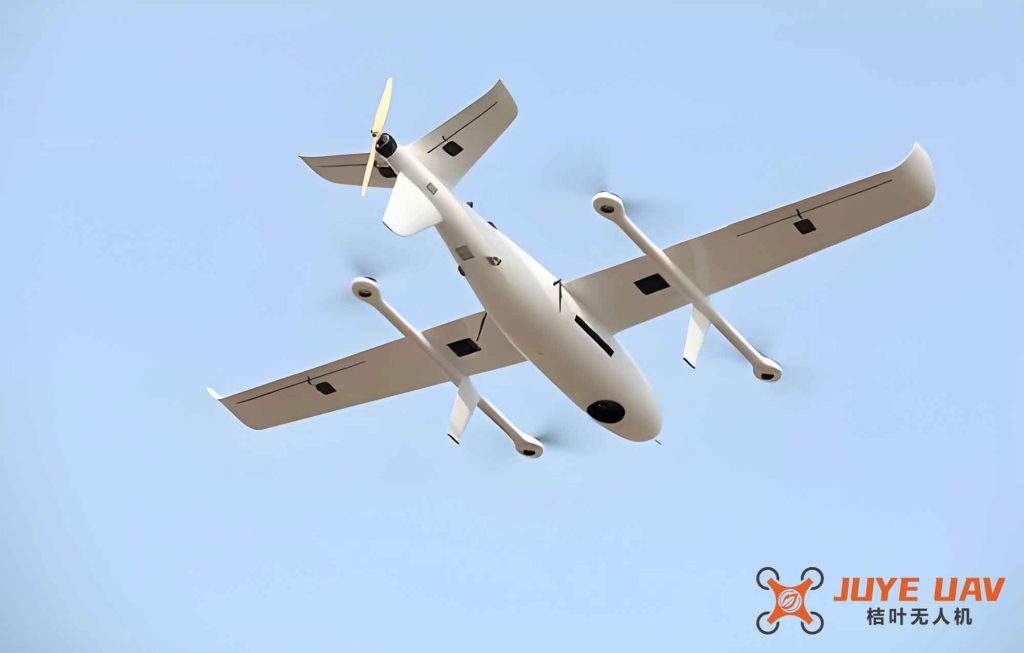
The low-altitude economy in our country currently encompasses general aviation, drone applications, low-altitude tourism, aerial logistics, and geological surveying. Among these, fixed-wing drones—especially large-scale ones—present unique challenges due to their high technical complexity, stringent operational environments, and elevated safety requirements. Unlike small rotary-wing drones, large fixed-wing drones require operators and maintainers to possess deep understanding of aerodynamics, flight control systems, data links, and mission payloads. Therefore, a well-structured training system is essential not only for product utilization but also for driving industry standardization and sustainable development.
I. Current State of Domestic Drone User Training
Currently, domestic drone user training primarily focuses on small fixed-wing drones, rotary-wing drones, and associated products such as engines and payloads. In contrast, training for large fixed-wing drones remains in its infancy. Dedicated and comprehensive training institutions for these complex systems are scarce. The existing training programs often lack the depth required to cover the full spectrum of system knowledge, operational procedures, maintenance practices, fault diagnostics, and safety protocols. Moreover, training curricula designed for one specific fixed-wing drone model may not be directly transferable to another, especially given significant differences in technical complexity and operational context.
Our organization recognized this gap and initiated the development of a training system specifically for large fixed-wing drones. In 2024, we were honored to receive the Civil Unmanned Aircraft Pilot Training Institution Certificate from the China Airline Pilots Association (ChALPA), becoming a CAAC-certified training provider. This milestone marked a significant step toward standardizing and professionalizing the training of fixed-wing drone operators and ground crews.
II. Fundamental Principles of Training System Construction
A scientific and systematic training system is the cornerstone of efficient and safe operation of large fixed-wing drones. The construction of such a system must adhere to the cyclical process of “needs analysis—curriculum design—training implementation—evaluation and certification,” as illustrated conceptually by the iterative nature of our approach.
2.1 Training Needs Analysis
Before any training program is developed, a thorough needs analysis is conducted to identify the knowledge levels, skill gaps, and learning objectives of the trainees. This step ensures that the training content is precisely matched to actual demands. To accommodate diverse user requirements, we adopt a modular curriculum design. Modules can be flexibly combined to create customized training plans. Additionally, specific modules can be intensified for certain user groups. This multi-level, multi-module planning satisfies both common needs and personalized requests, significantly enhancing the applicability and effectiveness of the training.
2.2 Training Curriculum Design
Based on the results of needs analysis, a targeted and systematic curriculum is designed. The curriculum covers operations, maintenance, fault diagnostics, safety flights, and mission planning. For large fixed-wing drones, the complexity of subsystems—such as the airframe, powerplant, landing gear, avionics, flight control, data link, and mission payload—demands a modular breakdown. Table 1 summarizes the typical classification of a large fixed-wing drone system.
| Subsystem Level | Subsystem | Description |
|---|---|---|
| Platform Level | Power and Fuel | Engine, propeller, fuel tank and accessories, control unit |
| Landing Gear | Main and nose landing gear, accessories, control unit | |
| Avionics | Electrical equipment, onboard wiring | |
| Mechanical & Structure | Airframe, skin, internal beams, missile launchers | |
| System Level | Flight Control | Core control unit, navigation equipment |
| Data Link | Ground station, ground data terminal, airborne data terminal | |
| Mission Payload | EO/IR, radar, missiles (non-platform parts) |
The training curriculum is divided into three progressive levels:
- Theoretical Training: Covers overall drone theory and subsystem theory, focusing on system composition, platform parameters, workflows, typical applications, and operational norms. The goal is to build a holistic understanding of the fixed-wing drone and its subsystems, laying the theoretical foundation for subsequent operation and maintenance. For large fixed-wing drones, trainees must master comprehensive knowledge, especially about flight control and mission payload coordination, to handle diverse flight environments and mission requirements.
- Practical Training: Divided into ground crew and aircrew categories. Ground crew training includes assembly/disassembly, maintenance, and testing of the platform-level subsystems. Aircrew training focuses on system-level operations such as flight control system manipulation, data link monitoring and tuning, and mission payload usage. For example, ground crew must become proficient in complex inspections and maintenance of the power/fuel system and avionics. Aircrew emphasize flight control during complex missions and payload operation capabilities, especially in long-endurance, long-range flights that demand system coordination and fault response.
- Advanced Training (Skill Enhancement): Aims to develop comprehensive abilities to operate fixed-wing drones in complex environments. Trainees learn fault diagnosis through typical failure modes and data analysis techniques. Emergency handling and contingency operations courses train responses to sudden events like equipment failures or adverse weather. Large fixed-wing drone operators and ground crews must execute tasks in more demanding environments, so courses on safety awareness and teamwork are included, with simulated drills to enhance collaboration and crisis response.
2.3 Training Implementation
The implementation phase involves the development of training materials and the construction of training equipment and scenarios. We combine theoretical lectures, simulation training, hands-on practice, and actual flight operations.
2.3.1 Training Material Development
For large fixed-wing drones, theoretical training materials are typically developed in-house by the manufacturer. We create slide decks, videos, and supplementary reference books. Slides use rich graphics and concise explanations of core principles. Videos include live demonstrations and animations to illustrate complex flight dynamics and system workflows. Practical training materials consist of technical manuals: maintenance plans, troubleshooting guides, flight manuals, flight checklists, pilot operating handbooks, service manuals, subsystem maintenance manuals, and illustrated parts catalogs. These documents are detailed and professional, fully supporting systematic learning.
2.3.2 Training Equipment and Scenario Construction
We provide specialized training equipment to replicate real operational environments:
- Engine Models: Allow trainees to practice assembly and disassembly, understand structure and working principles.
- Landing Gear Models: Enable practice of removal/installation, testing, and fault diagnosis for ground maintenance skills.
- Flight Simulators: Highly realistic simulation of large fixed-wing drone flight environments, helping trainees familiarize with flight control systems and mission execution procedures.
- Electro-Optical Payload Simulators: For training target search, identification, and tracking.
- Weapon Control Simulators (if applicable): For operating weapon systems or other mission payloads.
- Theoretical Classrooms: Equipped with physical models and wall charts of system schematics.
- Practical Training Areas: Include aircraft parking with real drones, support equipment and tool storage, subsystem-specific workstations, and flight control/mission payload simulation rooms. Actual flight training takes place at multiple field sites across the country to accommodate varying conditions.
2.4 Training Evaluation and Certification
The final link in the training system is evaluation and certification. This step not only assesses trainee learning outcomes but also provides feedback for system improvement. We evaluate from multiple dimensions: theoretical exams, practical skill assessments, and comprehensive capability tests. Trainees who pass receive certificates indicating professional competence at specific levels. This certification enhances career opportunities in the low-altitude economy and boosts the manufacturer’s industry recognition.
2.4.1 Evaluation Content
Evaluation covers four aspects:
- Theoretical and Knowledge Mastery: Systematically assesses understanding of drone theory, system composition, flight principles, and operating procedures.
- Skill and Operational Competence: Through simulated mission execution, equipment adjustment, maintenance operations, and fault troubleshooting, we test practical abilities and procedural compliance.
- Safety Awareness and Emergency Handling: Assesses familiarity with safety regulations, emergency plans, and the ability to identify risks and handle contingencies.
- Comprehensive Quality and Application Ability: Scenario-based exercises evaluate task collaboration, information judgment, problem-solving, and decision-making in realistic contexts.
2.4.2 Evaluation Methods
To ensure objectivity and fairness, we use a combination of quantitative and qualitative indicators. For example, in ground crew training, accuracy of equipment inspection and tuning is measured. In flight training, mission completion rate and emergency response time are quantified. These numerical metrics are supplemented by qualitative assessments from instructors regarding learning attitude, creativity in problem-solving, and overall performance. A composite score is calculated using weighted averaging:
$$ S = w_1 \cdot T + w_2 \cdot P + w_3 \cdot E + w_4 \cdot C $$
where \(T\) = theoretical score, \(P\) = practical score, \(E\) = emergency handling score, \(C\) = comprehensive ability score, and \(w_i\) are weights determined by training level and role (e.g., for pilots, \(w_2\) may be higher).
2.4.3 Certification Levels
We define three certification tiers tailored to large fixed-wing drone characteristics:
| Level | Requirements |
|---|---|
| Basic | Master fundamental theory of the specific fixed-wing drone model; understand principles and structure. Maintenance personnel: capable of equipment disassembly and replacement. Flight operators: able to use flight control software basically. |
| Intermediate | In addition to basic, master operational norms. Maintenance: perform periodic maintenance and servicing. Flight operators: independently complete routine flight operations. |
| Advanced | Comprehensive understanding of the fixed-wing drone system; ability to analyze flight data from all subsystems. Maintenance: conduct fault diagnosis. Flight operators: handle emergency and abnormal flight situations. |
III. Practical Implementation: A Case Study
Our training system for large fixed-wing drones has been implemented successfully at multiple levels. Below we elaborate on the actual structure of a typical training program for a specific fixed-wing drone model, using a modular breakdown.
3.1 Module Structure
We decompose the entire training into modules, as shown in Table 3. Each module corresponds to a subsystem or skill area. The modules are grouped into theoretical, practical, and advanced categories. The number of hours for each module is determined based on the complexity and the trainee’s background.
| Module ID | Module Name | Type | Target Group | Hours |
|---|---|---|---|---|
| M1 | Introduction to Fixed-Wing Drone Systems | Theory | All | 8 |
| M2 | Powerplant and Fuel System | Theory+Practice | Ground Crew | 16 |
| M3 | Landing Gear System | Theory+Practice | Ground Crew | 12 |
| M4 | Avionics and Electrical | Theory+Practice | Ground Crew | 16 |
| M5 | Airframe and Structure | Theory+Practice | Ground Crew | 12 |
| M6 | Flight Control System | Theory+Practice | Aircrew+Ground | 20 |
| M7 | Data Link | Theory+Practice | Aircrew+Ground | 16 |
| M8 | Mission Payloads (EO/IR, Radar, etc.) | Theory+Practice | Aircrew | 20 |
| M9 | Ground Crew Practical Assembly/Disassembly | Practice | Ground Crew | 40 |
| M10 | Ground Crew Maintenance & Testing | Practice | Ground Crew | 40 |
| M11 | Flight Simulator Training (Basic) | Practice | Aircrew | 20 |
| M12 | Flight Simulator Training (Advanced) | Practice | Aircrew | 20 |
| M13 | Real Flight Training (Dual Control) | Practice | Aircrew | 30 |
| M14 | Fault Diagnosis & Troubleshooting | Advanced | Ground Crew+Aircrew | 16 |
| M15 | Emergency Procedures & Safety | Advanced | All | 8 |
| M16 | Mission Planning & Team Coordination | Advanced | All | 8 |
3.2 Evaluation Metrics and Formulas
For each module, we define specific performance indicators. For example, in the powerplant module, trainees must achieve at least 90% accuracy in assembling the engine fuel system. The overall proficiency for a ground crew trainee is computed as:
$$ P_{\text{ground}} = \frac{\sum_{i=1}^{n} w_i \cdot s_i}{\sum w_i} $$
where \(s_i\) is the score for module \(i\) and \(w_i\) is the module weight. Similarly, for aircrew, the flight performance evaluation integrates simulator metrics such as altitude deviation, airspeed deviation, and mission task completion rate:
$$ F = 100 – \alpha \cdot \Delta h – \beta \cdot \Delta v – \gamma \cdot (1 – R) $$
where \(\Delta h\) is root mean square altitude error, \(\Delta v\) is root mean square airspeed error, \(R\) is task completion rate (0 to 1), and \(\alpha, \beta, \gamma\) are penalty coefficients determined by experts. For large fixed-wing drones, typical values are \(\alpha = 0.5\), \(\beta = 0.3\), \(\gamma = 20\).
3.3 Certification Process
Trainees must pass both theoretical exams (written) and practical assessments. The theoretical exam consists of 100 multiple-choice and short-answer questions covering all modules, with a pass mark of 80%. Practical assessments are conducted by certified instructors using standardized checklists. Each checklist item is scored as pass/fail. The number of critical items (e.g., pre-flight safety checks) that must be passed is defined. The final certification decision is based on a composite score:
$$ C_{\text{total}} = 0.4 \cdot T_{\text{exam}} + 0.6 \cdot P_{\text{practical}} $$
where \(T_{\text{exam}}\) is the normalized theoretical score (0-100) and \(P_{\text{practical}}\) is the practical score (0-100) derived from weighted checklist scores. For advanced certification, a supplementary oral examination and a scenario-based test are required.
IV. Application Outlook and Cross-Model Adaptability
Our training system, while specifically designed for large fixed-wing drones, offers a framework that can be adapted to other types of drones. The core philosophy of modular design, phased implementation, and rigorous evaluation is universally applicable. For example, the fault diagnosis and data analysis modules for pilots, as well as emergency response and team coordination training, can be referenced by training programs for small fixed-wing drones or rotary-wing UAVs. However, the specific technical content—such as flight control laws, aerodynamics of high-aspect-ratio wings, and data link characteristics—must be tailored to the target drone type.
As the low-altitude economy continues to expand, the demand for skilled operators and maintainers of large fixed-wing drones will only grow. Our system provides a robust foundation for producing competent professionals who can ensure the safe and efficient operation of these advanced platforms. Moving forward, we plan to incorporate virtual reality (VR) and augmented reality (AR) technologies into the training environment to further enhance immersion and learning effectiveness. Additionally, we are exploring the use of AI-driven adaptive learning systems that can personalize training pathways based on individual trainee progress.
V. Conclusion
In conclusion, building a systematic and efficient user training system for large fixed-wing drones is paramount to advancing the entire low-altitude economy. Our experience, rooted in the “needs analysis—curriculum design—training implementation—evaluation and certification” principle, has demonstrated that a modular structure covering theoretical knowledge, practical skills, and advanced competencies can effectively bridge the skill gap. The use of quantitative evaluation formulas and tiered certification ensures that trainees meet industry standards. By sharing this framework, we hope to contribute to the standardization and professionalization of fixed-wing drone training globally, fostering a safer and more capable workforce for the future.