
As a participant in the rapidly evolving hydrogen-powered drone industry, we recognize the immense opportunities and challenges that come with this emerging technology. With global emphasis on environmental sustainability and technological advancement, hydrogen drones are poised to revolutionize sectors such as logistics, emergency response, and infrastructure inspection. However, to achieve sustainable high-quality development, brand building is paramount. In this article, I will share our perspectives on the current state and strategies for brand development, focusing on innovation, quality, and market positioning, while emphasizing the critical role of comprehensive drone training in every aspect of operations.
The hydrogen drone market is still in its infancy, characterized by low consumer awareness and technical hurdles like hydrogen storage and fuel cell optimization. From our experience, building a strong brand requires a multifaceted approach that addresses these challenges head-on. We believe that by leveraging technological innovation, ensuring product quality, and engaging in strategic marketing, we can establish a trusted brand. Throughout this process, drone training emerges as a recurring theme—whether for our engineers, operators, or clients, it is essential for safety, efficiency, and brand credibility.
Current Status and Issues in Brand Building for Hydrogen-Powered Drone Enterprises
From our firsthand observations, many hydrogen drone companies struggle with brand differentiation. The market is flooded with products claiming suitability for applications like emergency rescue and logistics, but without clear positioning, brands blend together. For instance, drones may vary in response time, payload capacity, flight range, and environmental tolerance, yet these distinctions are poorly communicated. This vagueness reduces brand visibility and makes it hard for customers to discern advantages, ultimately hindering market penetration. We have seen that a lack of focused branding leads to missed opportunities in targeting specific clientele, such as those in precision agriculture or power line inspection, where drone training programs could highlight operational expertise.
Product quality inconsistencies further undermine brand trust. In the rush to capture market share, some firms compromise on quality control, leading to reliability issues. Research indicates that factors like power systems, operational competency, and flight control systems significantly impact accident risks. For hydrogen drones, challenges include incompatible interfaces with hydrogen refueling stations and safety hazards from user modifications. For example, a recent incident involved a fixed-wing hydrogen drone malfunctioning due to a faulty hydrogen tank valve, causing a crash and fire. This underscores the need for stringent quality measures and comprehensive drone training for maintenance personnel to prevent such failures.
Moreover, brand promotion remains inadequate. Despite projections showing robust growth—with China’s market size expected to reach ¥2.14 billion by 2027 and ¥14.13 billion by 2030, at a compound annual growth rate (CAGR) of 110.7%—many companies are invisible to the public. Traditional methods like trade shows dominate, while digital platforms and social media are underutilized. We argue that effective branding requires innovative outreach, including online campaigns and educational content on drone training, to boost awareness and engagement.
To quantify these issues, consider the following table summarizing key challenges and their impact on brand building:
| Challenge | Description | Impact on Brand | Role of Drone Training |
|---|---|---|---|
| Vague Brand Positioning | Lack of differentiation in applications like logistics and emergency response. | Low market visibility and customer confusion. | Training programs can specialize operators for niche uses, enhancing brand identity. |
| Inconsistent Product Quality | Variations in fuel cell compatibility and safety standards. | Erodes trust and increases accident risks. | Rigorous training for quality control teams improves reliability and safety. |
| Insufficient Promotion | Reliance on traditional marketing, limited digital presence. | Slow brand recognition and growth. | Incorporating training into promotional content educates customers and builds credibility. |
Strategies for Brand Building in Hydrogen-Powered Drone Enterprises
Enhancing Technological Innovation to Establish Brand Foundation
As a firm committed to excellence, we prioritize continuous R&D to stay ahead. For hydrogen drones, this involves breakthroughs in fuel cell efficiency, hydrogen storage, and system integration. We allocate at least 6% of our annual revenue to research, focusing on areas that directly impact performance and safety. A key aspect is drone training for our engineers, ensuring they master emerging technologies and apply them innovatively.
In hydrogen fuel cell technology, improving energy conversion efficiency is crucial. We model this using the following formula for fuel cell efficiency:
$$ \eta = \frac{V_{cell} \cdot I}{m_{H_2} \cdot H_{H_2}} $$
where $\eta$ is the efficiency, $V_{cell}$ is the cell voltage, $I$ is the current, $m_{H_2}$ is the mass of hydrogen consumed, and $H_{H_2}$ is the lower heating value of hydrogen (approximately 120 MJ/kg). By developing novel catalysts, we aim to increase $\eta$ from current benchmarks of around 50% to over 60%, thereby extending flight times and reducing costs. This innovation supports our brand promise of reliability and efficiency, which we reinforce through drone training sessions that demonstrate these technical advantages to clients.
For hydrogen storage, we optimize lightweight materials to enhance safety and capacity. The energy density of hydrogen storage systems can be expressed as:
$$ E_d = \frac{E}{m} $$
where $E_d$ is the energy density (in Wh/kg), $E$ is the stored energy, and $m$ is the system mass. Our target is to achieve $E_d > 500$ Wh/kg through advanced composites, making drones more competitive. Additionally, drone training for handling and refueling these systems is integral to our brand, as it minimizes risks and builds user confidence.
In system integration, we focus on flight stability and intelligence. The drone’s dynamics can be described by equations of motion:
$$ m \frac{d^2 \mathbf{r}}{dt^2} = \mathbf{F}_g + \mathbf{F}_t + \mathbf{F}_a $$
where $m$ is the drone mass, $\mathbf{r}$ is the position vector, $\mathbf{F}_g$ is gravity, $\mathbf{F}_t$ is thrust from propulsion, and $\mathbf{F}_a$ is aerodynamic forces. By refining control algorithms, we ensure stable flight in diverse conditions, a selling point we highlight in our drone training programs for operators. Collaborations with universities accelerate innovation; for example, joint projects on lightweight materials yield patents that strengthen our brand. We also host regular drone training workshops for staff, fostering a culture of continuous learning.
Improving Product Quality to Shape Brand Reputation
Quality is the cornerstone of our brand. We implement end-to-end quality management, from sourcing components to final testing. For instance, we vet suppliers based on certifications and conduct rigorous inspections. This process includes drone training for quality assurance teams, equipping them with skills to detect flaws and ensure compliance.
In design, we use computer-aided design (CAD) and finite element analysis (FEA) to simulate performance. A key metric is the factor of safety (FoS) for structural integrity:
$$ \text{FoS} = \frac{\sigma_{\text{yield}}}{\sigma_{\text{working}}} $$
where $\sigma_{\text{yield}}$ is the yield strength of the material and $\sigma_{\text{working}}$ is the maximum stress in operation. We target a FoS > 2.5 for critical parts, ensuring durability. Our testing protocol covers flight performance, battery safety, and communication reliability, as summarized in the table below:
| Test Parameter | Standard | Method | Drone Training Component |
|---|---|---|---|
| Flight Endurance | > 3 hours for logistics models | Controlled environment trials | Operators trained to monitor and optimize flight paths. |
| Hydrogen Leakage | < 0.1% per hour | Pressure decay tests | Maintenance staff receive specialized training in leak detection. |
| Communication Range | > 10 km | Field testing with obstacles | Training includes troubleshooting communication issues. |
| Payload Capacity | Up to 5 kg for inspection drones | Load testing | Operators learn safe loading techniques through drone training. |
We strive to set industry standards, moving from enterprise standards to national and international norms. This leadership enhances our brand as a quality pioneer. Internally, we conduct monthly quality training, including drone safety drills, to embed a quality-first mindset. Awards for excellence motivate employees, and we share success stories in marketing to bolster our reputation.
Precise Brand Positioning and Image Dissemination
Based on market analysis, we position our brand as a leader in high-endurance, stable drones for sectors like power inspection and logistics. Our core value proposition is “Efficiency and Reliability in Every Flight,” backed by technical feats such as a fixed-wing model with aluminum-based hydrogen storage offering 3-hour endurance after a 3-minute refuel. This differentiation attracts clients who prioritize uptime and performance, and we support it with tailored drone training that ensures optimal use.
We define our target audience, pricing, and brand image as professional, innovative, and eco-friendly. Our logo and messaging reflect this, and we propagate it through multiple channels. Digital marketing is key: our website features product details and case studies, while search engine ads drive traffic. We emphasize drone training in our content, offering free webinars and tutorials to educate potential customers. Trade shows are another platform; we design interactive booths and host launches to showcase innovations. At these events, we provide hands-on drone training sessions, allowing attendees to experience our technology firsthand.
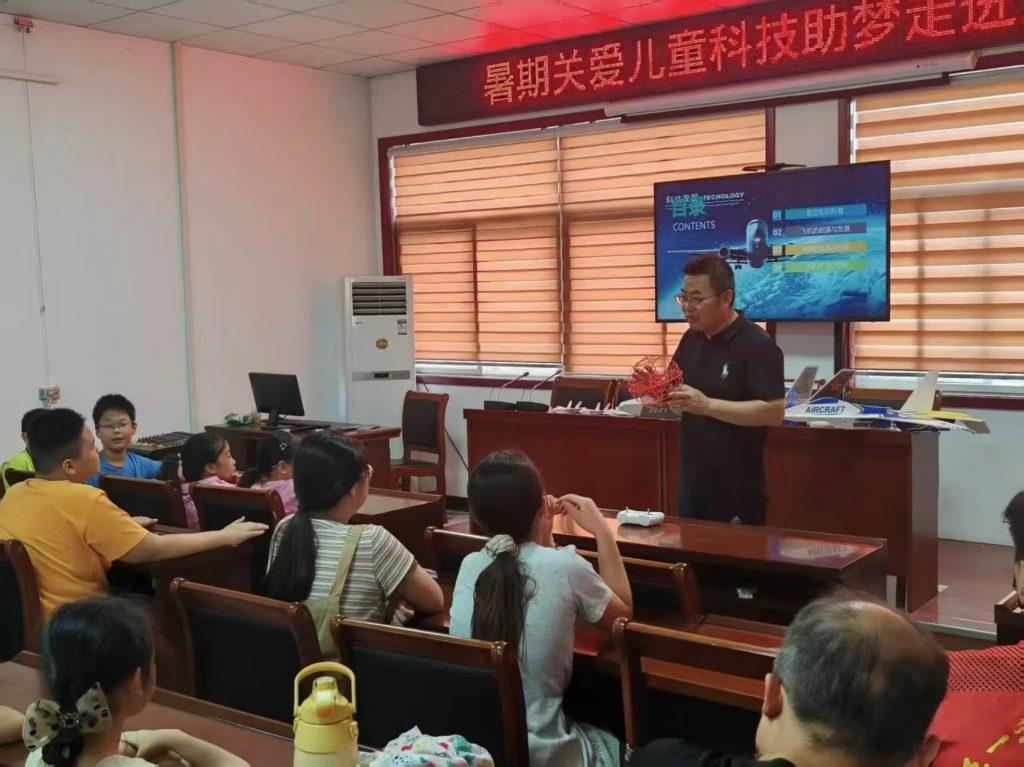
This image from one of our training events illustrates how we engage users—through practical drills that highlight safety and proficiency. Such initiatives not only spread brand awareness but also foster loyalty by demonstrating our commitment to customer success. We also partner with industry associations to develop certification programs for drone training, further solidifying our authority.
Strengthening Talent Development to Support Brand Growth
In this niche field, skilled personnel are vital. We invest heavily in recruiting and training experts in hydrogen technology and drone operations. Our talent management system includes competitive salaries,股权 incentives for core staff, and continuous learning opportunities. Drone training is central here; for R&D teams, we offer advanced courses on fuel cell dynamics, while for sales teams, we provide modules on product benefits and market trends.
We collaborate with universities to bridge skill gaps, hosting internships and joint research projects. For instance, we fund scholarships in aerospace engineering with a focus on hydrogen applications, and graduates often join our drone training academies. The competency of our workforce directly impacts brand perception; thus, we assess performance using metrics like innovation output and customer feedback. Regular drone training workshops keep skills sharp, and we encourage employees to obtain certifications, which we promote in our branding as a mark of expertise.
Perfecting Regulations and Standards to Foster a Brand-Friendly Environment
We advocate for clearer regulations to facilitate market growth. Governments should establish flight rules for hydrogen drones, specifying no-fly zones, altitude limits, and operational hours based on risk assessments. This legal framework, coupled with robust drone training for compliance, ensures safe integration into airspace and enhances public trust in our brand.
Standardization is equally important. We propose unified technical standards for performance and safety, as outlined below:
| Standard Category | Requirements | Impact on Brand | Drone Training Link |
|---|---|---|---|
| Performance Metrics | Endurance > 2 hours for logistics; payload ≥ 3 kg for inspection. | Ensures product reliability, boosting brand credibility. | Training programs align with these standards for operator certification. |
| Hydrogen Safety | Storage pressure ≤ 350 bar; leak rate < 0.05% per day. | Reduces accidents, enhancing brand safety image. | Specialized training for handling hydrogen systems is mandatory. |
| Flight Control | Redundant systems for fail-safe operations. | Demonstrates technological sophistication. | Operators undergo simulation-based training for emergency scenarios. |
We actively participate in drafting these standards, positioning our brand as an industry leader. Moreover, we support certification bodies by providing drone training materials and facilities, which reinforces our commitment to quality and safety. The formula for calculating flight range under standard conditions illustrates our adherence to benchmarks:
$$ R = \eta_f \cdot \frac{m_{H_2} \cdot H_{H_2}}{P \cdot t} $$
where $R$ is the range (in km), $\eta_f$ is the overall efficiency, $P$ is the power consumption (in W), and $t$ is the time (in hours). By optimizing these parameters, we meet and exceed standards, a fact we highlight in our drone training courses to educate clients on performance capabilities.
Conclusion
Building a strong brand for hydrogen-powered drones requires a holistic strategy centered on innovation, quality, and clear positioning. From our experience, integrating comprehensive drone training into every facet—from R&D and production to marketing and customer support—is indispensable. It not only enhances safety and efficiency but also differentiates our brand in a crowded market. As we navigate challenges like regulatory hurdles and technical complexities, we remain committed to fostering a culture of excellence through continuous learning. By doing so, we aim to not only lead the industry but also inspire trust and loyalty, ensuring sustainable growth for years to come.