
We begin by emphasizing the critical role of the aviation sports industry within the framework of the low altitude economy. As a strategic emerging sector, the low altitude economy encompasses economic activities conducted in airspace below 1,000 meters, utilizing aircraft and related equipment for various purposes. The aviation sports industry, involving sports like gliding, parachuting, and drone racing, is not only a vital component of this economy but also a catalyst for innovation and growth. In this paper, we explore the positioning, challenges, and optimization strategies for the aviation sports industry, drawing on methods such as literature analysis, logical reasoning, and field investigations. Our analysis reveals that the aviation sports industry serves as a practical carrier for policy implementation, a demonstration platform for management innovation, a driving engine for market expansion, and an incubation base for talent development in the low altitude economy. However, it faces significant hurdles, including weak policy systems, complex airspace management, high operational costs, and limited public participation. To address these, we propose targeted solutions aimed at fostering a synergistic and resilient industry ecosystem.
The concept of the aviation sports industry refers to the economic activities centered around sports conducted using civil aircraft and related equipment in low-altitude airspace. This includes a wide range of disciplines, such as sport aviation, hot air ballooning, gliding, parachuting, and aeromodelling, along with associated training, events, and education. Historically, aviation sports in many regions were dominated by state-run programs focused on military and competitive training, but reforms in low-altitude airspace management since 2010 have spurred market-oriented development. The industry now forms a comprehensive chain involving upstream R&D and manufacturing, midstream operations and infrastructure, downstream consumption and services, and overarching support systems like safety regulations and policy frameworks. For instance, the upstream segment covers the design and production of key components like engines and sensors, while midstream involves building and managing aviation sports camps and organizing events. Downstream activities include public experiences and derivative services, all underpinned by safety standards and policy incentives. The low altitude economy provides the essential context for this industry’s evolution, driving its integration into broader economic systems.
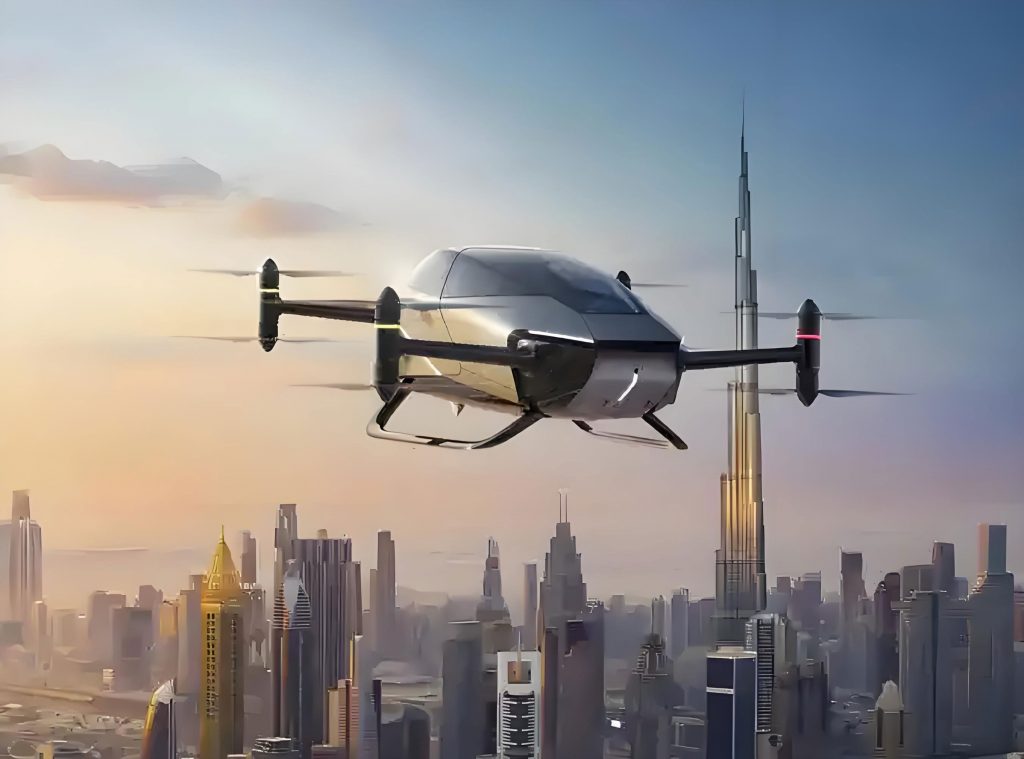
In the low altitude economy, the aviation sports industry plays multiple pivotal roles. First, it acts as a practical carrier for policy implementation by expanding application scenarios. For example, the inclusion of drone sports in national events has necessitated the development of temporary airspace allocation and rapid approval mechanisms, directly translating high-level policies into actionable practices. This aligns with the strategic goals of the low altitude economy, such as fostering innovation and industrial upgrading. Second, the industry serves as a demonstration platform for management innovation. Through initiatives like aviation sports camps, it has pioneered airspace coordination models that can be replicated across other low-altitude sectors, offering insights into standardized审批 processes and safety protocols. Third, it functions as a driving engine for market expansion by stimulating demand across the low-altitude value chain. The growth in aviation sports activities boosts infrastructure development, such as the construction of flight camps and navigation systems, while also encouraging advancements in aircraft manufacturing and diversified services like aerial photography and emergency response. Finally, the industry acts as an incubation base for talent development. By promoting public participation through events and education, it cultivates a skilled workforce, including pilots and technicians, essential for sustaining the low altitude economy. The following table summarizes these roles and their implications for the low altitude economy.
| Role | Description | Impact on Low Altitude Economy |
|---|---|---|
| Practical Carrier for Policy | Expands application scenarios to implement policies, e.g., through event-based airspace reforms. | Accelerates policy落地 and validation, enhancing governance efficiency. |
| Demonstration Platform for Management | Pioneers airspace management and safety standards via camps and events. | Provides replicable models for broader low-altitude sectors, reducing innovation risks. |
| Driving Engine for Market Expansion | Stimulates infrastructure and manufacturing demand, e.g., through flight camp construction. | Boosts economic output and industrial diversification in the low altitude economy. |
| Incubation Base for Talent | Fosters public engagement and skills development through training and events. | Builds a sustainable talent pipeline, supporting long-term growth of the low altitude economy. |
To quantify the economic impact of the aviation sports industry in the low altitude economy, we can model its contribution using a simple growth equation. Let \( G \) represent the gross output of the low altitude economy, and \( A \) denote the output of the aviation sports industry. Assuming a linear relationship, we have: $$ G = \alpha + \beta A + \epsilon $$ where \( \alpha \) is the base output, \( \beta \) is the multiplier effect of the aviation sports industry, and \( \epsilon \) is the error term. Empirical data suggest that \( \beta \) often exceeds 1 due to spillover effects, indicating that each unit increase in aviation sports output amplifies the overall low altitude economy. For instance, investments in aviation sports infrastructure can lead to downstream benefits in manufacturing and services, reinforcing the strategic importance of this sector within the low altitude economy framework.
Despite its potential, the aviation sports industry faces several practical dilemmas in the context of the low altitude economy. First, policy support systems are weak and fragmented, with inadequate要素保障. While national and local governments have introduced policies to promote the low altitude economy, they often lack specificity and coordination. For example, land use policies for aviation sports camps remain unclear, leading to prolonged approval processes, and financial support is inconsistent across regions. This undermines the industry’s ability to attract investment and scale operations. Second, airspace management is complex and inefficient, with limited resource availability and cumbersome审批 procedures. Low-altitude airspace is prioritized for military and commercial aviation, restricting access for aviation sports. Moreover, cross-departmental coordination for flight approvals is often slow, causing delays and increased costs for businesses. Third, enterprises struggle with high operational costs and limited profitability. The capital-intensive nature of aviation sports, involving expensive equipment and maintenance, coupled with reliance on weather-dependent activities, results in volatile revenues. Diversification into areas like low-altitude logistics is hindered by high barriers and weak collaboration mechanisms. Fourth, social participation is hampered by high costs and misconceptions. Public demand is suppressed by expensive体验 fees and safety concerns, while talent cultivation lags due to insufficient educational programs and training systems. The table below outlines these dilemmas and their effects on the low altitude economy.
| Dilemma | Key Issues | Impact on Low Altitude Economy |
|---|---|---|
| Weak Policy Systems | Fragmented policies, inadequate land and funding support, lack of central-local coordination. | Hinders industry environment optimization, slowing down the growth of the low altitude economy. |
| Complex Airspace Management | Limited airspace resources, inefficient审批 processes, poor inter-departmental synergy. | Reduces operational efficiency and resource utilization, constraining the low altitude economy’s potential. |
| High Enterprise Costs | Heavy asset investments, rigid maintenance expenses, reliance on seasonal activities. | Limits market vitality and innovation, affecting the sustainability of the low altitude economy. |
| Limited Social Participation | High price barriers, public safety misconceptions, inadequate talent training. | Weakens consumer base and human capital, undermining the low altitude economy’s foundation. |
A mathematical representation of the cost challenges can be derived using a cost-function model. Let \( C \) be the total cost for an aviation sports enterprise, composed of fixed costs \( F \) (e.g., infrastructure and equipment) and variable costs \( V \) (e.g., maintenance and operations). We express this as: $$ C = F + V = F + \gamma Q + \delta W $$ where \( Q \) is the quantity of services provided, \( \gamma \) is the variable cost per unit, and \( W \) represents external factors like weather disruptions. In practice, \( F \) is often high due to specialized infrastructure, and \( V \) can spike with unforeseen events, squeezing profitability. This equation highlights the need for strategies to reduce \( F \) and stabilize \( V \) to enhance the industry’s contribution to the low altitude economy.
To overcome these challenges, we propose optimization paths that align with the dynamics of the low altitude economy. First, building a synergistic and efficient policy support system is crucial. This involves enhancing top-level design with specialized national policies for the aviation sports industry, while ensuring local governments develop detailed implementation rules. Key elements include clarifying land use standards for aviation sports facilities and establishing diversified funding mechanisms, such as subsidies and low-interest loans. Additionally, policy integration with related sectors like tourism and education can create synergistic effects, further propelling the low altitude economy. Second, creating smart and intensive airspace management models is essential to unlock low-altitude resources. This includes refining airspace classification and dynamic management systems, leveraging technologies like low-altitude intelligent networks for real-time monitoring. Digital platforms for one-stop审批 and services can streamline processes, reducing administrative burdens. Learning from pilot regions, standardized guidelines can be developed to promote best practices across the low altitude economy. Third, cultivating a diverse and resilient enterprise development pattern is key to activating endogenous growth. Measures include reducing costs through equipment leasing and resource sharing, expanding business scenarios into areas like drone performances and public services, and fostering multi-level market players, from large corporations to startups. This enhances the industry’s adaptability within the low altitude economy. Fourth, establishing extensive and deep social participation mechanisms is vital for sustainable development. This entails lowering entry barriers through consumer subsidies and educational incentives, improving public awareness via科普 campaigns, and building a multi-tiered talent cultivation system through academic programs and vocational training. The following table summarizes these optimization paths and their expected outcomes for the low altitude economy.
| Optimization Path | Key Measures | Expected Impact on Low Altitude Economy |
|---|---|---|
| Synergistic Policy System | National-local policy coordination, land and funding support, cross-sector integration. | Removes institutional barriers, fostering a conducive environment for the low altitude economy. |
| Smart Airspace Management | Airspace classification reforms, digital审批 platforms, technology-driven monitoring. | Enhances resource efficiency and operational flexibility in the low altitude economy. |
| Diverse Enterprise Pattern | Cost reduction via leasing, business diversification, support for SMEs and startups. | Stimulates innovation and market vitality, strengthening the low altitude economy’s core. |
| Social Participation Mechanism | Consumer subsidies, safety education, talent training programs. | Builds a broad public base and skilled workforce, ensuring long-term growth of the low altitude economy. |
The effectiveness of these paths can be evaluated using a benefit-cost analysis framework. Let \( B \) represent the total benefits from implementing optimization measures, and \( C \) denote the associated costs. The net benefit \( NB \) is given by: $$ NB = B – C = \sum (b_i \cdot M_i) – \sum (c_j \cdot N_j) $$ where \( b_i \) and \( c_j \) are the unit benefits and costs of measure \( i \) and \( j \), respectively, and \( M_i \) and \( N_j \) are the quantities implemented. For instance, investments in digital airspace management (\( c_j \)) may yield high benefits (\( b_i \)) through improved efficiency and safety, ultimately boosting the low altitude economy. By prioritizing measures with high \( NB \), stakeholders can optimize resource allocation and maximize the aviation sports industry’s impact on the low altitude economy.
In conclusion, the aviation sports industry is integral to the advancement of the low altitude economy, offering unique opportunities for policy implementation, management innovation, market expansion, and talent development. However, addressing its practical dilemmas requires concerted efforts in policy refinement, airspace reform, enterprise support, and public engagement. As the low altitude economy continues to evolve, driven by technological advancements and strategic priorities, the aviation sports industry can serve as a model for sustainable and integrated growth. We encourage ongoing research and practice to refine these approaches, ensuring that the industry not only thrives but also contributes significantly to the broader goals of the low altitude economy. Through collaborative action, we can unlock the full potential of this dynamic sector, paving the way for a more resilient and prosperous future in the low altitude economy.