
In the realm of modern infrastructure maintenance, drone technology has revolutionized the way power line inspections are conducted. Unmanned Aerial Vehicles (UAVs) equipped with high-resolution cameras capture extensive imagery of electrical components, enabling rapid identification of potential faults. However, the automatic registration of these images remains a significant challenge due to variations in lighting, scale, and orientation. This study addresses this issue by proposing a novel method based on Convolutional Neural Networks (CNNs) for precise image alignment. By leveraging deep learning techniques, we aim to enhance the accuracy and efficiency of power inspection processes, ensuring reliable monitoring of critical assets.
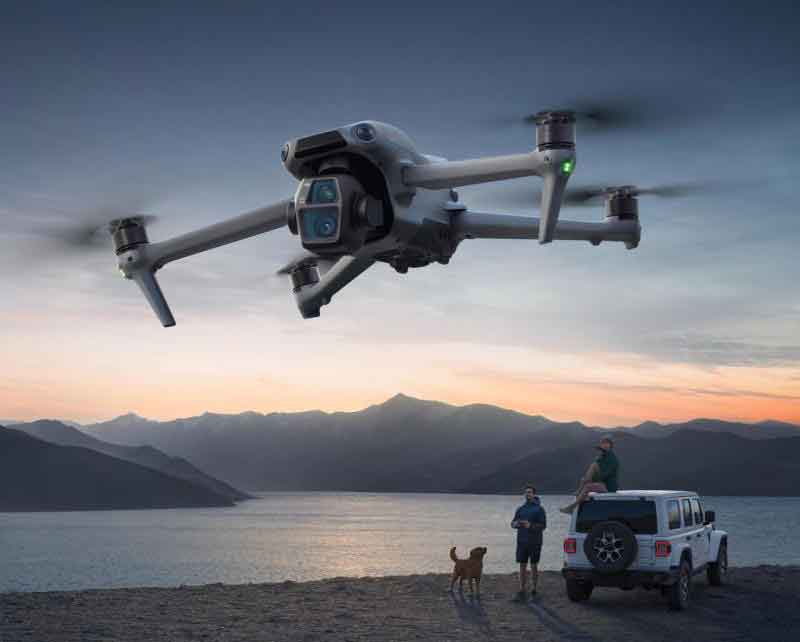
The integration of drone technology into power inspection workflows allows for comprehensive coverage of vast areas, but the collected images often suffer from geometric distortions and misalignments. Traditional image registration methods, such as those relying on handcrafted features, struggle with the complexities introduced by environmental factors. In contrast, CNNs offer a robust solution by learning invariant features directly from data. This research focuses on developing an automated pipeline that extracts deep features, matches key points, and applies geometric transformations to achieve seamless image registration. The use of Unmanned Aerial Vehicles in this context not only improves inspection speed but also enhances safety by reducing the need for manual interventions.
Our approach begins with feature extraction using a CNN model trained via asynchronous stochastic gradient descent. This process transforms high-dimensional image data into compact feature vectors, capturing essential patterns for subsequent matching. The feature matching step employs Euclidean distance to identify corresponding points between image pairs, followed by a geometric similarity-based technique to eliminate outliers. Finally, an affine transformation model is applied to align the images based on the refined matches. Experimental results demonstrate the effectiveness of this method in handling various image conditions, such as rotation and scaling, with significant improvements in registration accuracy. The following sections detail the methodology, experimental setup, and outcomes, highlighting the pivotal role of drone technology in advancing power inspection automation.
Feature Extraction with Convolutional Neural Networks
The core of our automatic image registration method lies in the efficient extraction of discriminative features from power inspection images captured by Unmanned Aerial Vehicles. Convolutional Neural Networks are employed due to their ability to learn hierarchical representations that are invariant to translations, rotations, and scales. Given an input image \( x_i \), where \( i \) denotes the image index, the output feature \( a^l_i \) from the \( l \)-th convolutional layer is computed as:
$$ a^l_i = \sum_{i=1}^{n} x_i \times W^l_i + b^l_i $$
Here, \( n \) represents the number of images to be registered, \( W^l_i \) is the convolution kernel for layer \( l \), and \( b^l_i \) is the bias term. This operation captures local patterns through sliding windows, enabling the network to detect edges, textures, and other salient structures in the images. The use of multiple layers allows the CNN to build complex features from simple ones, which is crucial for handling the diverse appearances of power components in drone-captured imagery.
Following the convolutional layers, a sampling layer is applied to reduce the spatial dimensions of the feature maps. Suppose the feature map \( a_i \) has a size of \( N \times N \), and it is divided into regions represented by the matrix \( C^{l-1}_i = (c^{l-1}_{sti})_{M \times M} \), where \( c^{l-1}_{sti} \) denotes an element in the feature matrix. Using a sampling window of size \( m \times m \), the output \( C^l_i = (c^l_{pqi})_{\frac{N}{m} \times \frac{N}{m}} \) is obtained through pooling. The pooling result is given by:
$$ c^l_{pqi} = K \rho^{l-1}_{sti} c^{l-1}_{pqi} $$
In this equation, \( K \) represents a randomly selected position value, which helps in maintaining robustness to small perturbations. This down-sampling step not only reduces computational complexity but also enhances the invariance of the features to minor deformations. The final extracted feature vector \( \bar{a}_i \) is derived through fully connected layers, expressed as:
$$ \bar{a}_i = f \left( \sum_{j=1}^{\eta} C_i w_{ij} + b_j \right) $$
where \( \eta \) is the number of units in the fully connected layer, \( w_{ij} \) denotes the weight parameters, \( b_j \) is the bias for the \( j \)-th unit, and \( f \) is the activation function, such as ReLU. This formulation encapsulates the high-level semantics of the input images, which are essential for accurate matching in subsequent stages.
To optimize the CNN parameters, we utilize an asynchronous stochastic gradient descent algorithm within a Parameter Server (PS) architecture. This distributed training framework involves multiple worker nodes that concurrently process data subsets, accelerating convergence. The steps are as follows: First, initialize the parameter server node \( Z \) and the number of worker nodes \( \phi \). Second, replicate the CNN structure across all workers. Third, initialize the network parameters randomly. Fourth, each worker \( g \) requests the current global parameters \( w^g_t \) and iteration step \( t \) from \( Z \). If \( t \) reaches the maximum \( t_{\text{max}} \), the algorithm terminates; otherwise, the gradient \( \nabla L(w^g_t) \) of the loss function \( L(w^g_t) \) is computed. The worker then retrieves the latest iteration \( t_{\text{new}} \) from \( Z \), calculates the delay \( \tilde{t} \), and sends the gradient along with \( \tilde{t} \) back to \( Z \). The server updates the parameters accordingly, and the process repeats until convergence. This approach ensures efficient training even with large-scale datasets typical in drone technology applications, enabling the model to generalize well to unseen inspection images.
Feature Matching and Outlier Removal
Once features are extracted from the power inspection images, the next step is to establish correspondences between feature points across different images. This is critical for aligning images captured by Unmanned Aerial Vehicles under varying conditions. Let \( (\bar{x}_i, \bar{y}_i) \) and \( (\tilde{x}_i, \tilde{y}_i) \) denote the pixel coordinates of the \( i \)-th feature in two images to be registered. The Euclidean distance between the feature vectors \( \bar{a}_i \) and \( \tilde{a}_i \) is calculated as:
$$ d(\bar{a}_i, \tilde{a}_i) = \sqrt{(\bar{x}_i – \tilde{x}_i)^2 + (\bar{y}_i – \tilde{y}_i)^2} $$
This distance metric quantifies the similarity between features, with smaller values indicating higher similarity. A threshold \( \epsilon \) is set to determine matches: if \( d(\bar{a}_i, \tilde{a}_i) < \epsilon \), then \( \bar{a}_i \) and \( \tilde{a}_i \) are considered a matching pair. This straightforward approach efficiently identifies potential correspondences, but it may include outliers due to noise or repetitive patterns common in drone-captured imagery.
To address this, we implement a geometric similarity-based method to remove mismatched points. The objective function for outlier removal is defined as:
$$ A^* = \arg \min F = \sum_{i=1}^{N} \mu_i \left| \sum_{i=1}^{N} \sum_{\beta=1}^{N} \sum_{\kappa=1}^{N} \frac{d(\bar{a}_i, \bar{a}_\beta)}{d(\tilde{a}_i, \tilde{a}_\beta)} – \frac{d(\bar{a}_i, \bar{a}_\kappa)}{d(\tilde{a}_i, \tilde{a}_\kappa)} \right| + \gamma \left| N – \sum_{i=1}^{N} \mu_i \right| $$
Here, \( N \) is the total number of matched feature points, \( \gamma \) is a threshold parameter controlling the inlier set, and \( \mu_i \) is a binary indicator that equals 1 if the \( i \)-th point is an inlier and 0 otherwise. The term inside the absolute value measures the consistency of distance ratios across triplets of points, which should remain stable under ideal geometric transformations. By minimizing this function, we identify the set of inliers that conform to a coherent geometric structure.
The decision rule for determining inliers is given by:
$$ \mu_i =
\begin{cases}
1, & \text{if } \sum_{i=1}^{N} \sum_{\beta=1}^{N} \sum_{\kappa=1}^{N} \left| \frac{d(\bar{a}_i, \bar{a}_\beta)}{d(\tilde{a}_i, \tilde{a}_\beta)} – \frac{d(\bar{a}_i, \bar{a}_\kappa)}{d(\tilde{a}_i, \tilde{a}_\kappa)} \right| \leq \gamma_i \\
0, & \text{otherwise}
\end{cases} $$
This process effectively filters out spurious matches, ensuring that only reliable points are used for subsequent transformation estimation. The robustness of this step is vital for handling the challenges posed by drone technology, where images may exhibit significant variations in viewpoint and illumination. By refining the feature matches, we enhance the overall accuracy of the image registration pipeline, making it suitable for real-world power inspection scenarios.
Image Registration via Affine Transformation
After obtaining a set of reliable feature matches, the final step is to compute the spatial transformation that aligns the images. We adopt an affine transformation model due to its ability to handle rotations, translations, scaling, and shearing—common distortions in images captured by Unmanned Aerial Vehicles. Consider two corresponding point pairs \( (O_{i^*}, O_{j^*}) \) and \( (S_{i^*}, S_{j^*}) \) from the reference and sensed images, respectively. The mapping \( Q \) satisfies \( O_{j^*} = Q(O_{i^*}) \) and \( S_{j^*} = Q(S_{i^*}) \). The affine transformation is expressed as:
$$ \begin{bmatrix} x_{O_j} \\ y_{O_j} \end{bmatrix} = \begin{bmatrix} \lambda_x \\ \lambda_y \end{bmatrix} + \begin{bmatrix} \varpi \cos \alpha & -\varpi \sin \alpha \\ \varpi \sin \alpha & \varpi \cos \alpha \end{bmatrix} \begin{bmatrix} x_{O_i} \\ y_{O_i} \end{bmatrix} $$
and similarly for the sensed image:
$$ \begin{bmatrix} x_{S_j} \\ y_{S_j} \end{bmatrix} = \begin{bmatrix} \lambda_x \\ \lambda_y \end{bmatrix} + \begin{bmatrix} \varpi \cos \alpha & -\varpi \sin \alpha \\ \varpi \sin \alpha & \varpi \cos \alpha \end{bmatrix} \begin{bmatrix} x_{S_i} \\ y_{S_i} \end{bmatrix} $$
In these equations, \( (\lambda_x, \lambda_y) \) represent the translation parameters, \( \alpha \) is the rotation angle, and \( \varpi \) is the scaling factor. These parameters define the geometric relationship between the images, allowing us to warp the sensed image to align with the reference image. By solving for these parameters using the best-matched feature points, we achieve precise registration.
To compute the transformation parameters, we derive the following relations from the affine model:
$$ \begin{bmatrix} y_{O_j} \\ y_{S_j} \end{bmatrix} = \begin{bmatrix} 0 \\ 0 \end{bmatrix} + \varpi \begin{bmatrix} \cos \alpha & -\sin \alpha \\ \sin \alpha & \cos \alpha \end{bmatrix} \begin{bmatrix} y_{O_i} \\ y_{S_i} \end{bmatrix} $$
This simplifies to:
$$ \varpi = \frac{ \begin{Vmatrix} y_{O_j} \\ y_{S_j} \end{Vmatrix} }{ \begin{Vmatrix} y_{O_i} \\ y_{S_i} \end{Vmatrix} } \quad \text{and} \quad \alpha = \angle \left( \begin{bmatrix} y_{O_j} \\ y_{S_j} \end{bmatrix} – \begin{bmatrix} y_{O_i} \\ y_{S_i} \end{bmatrix} \right) $$
where \( \angle \) denotes the angle of the vector difference. These equations provide the optimal scaling and rotation parameters, which are then used to transform the entire image. The integration of this affine model with the previously refined feature matches ensures a robust and accurate registration process, capable of handling the dynamic conditions encountered in drone-based power inspections.
Experimental Setup and Results
To evaluate the proposed method, we conducted experiments on a dataset comprising images collected by Unmanned Aerial Vehicles during power line inspections. The dataset includes various environmental conditions, such as different weather and lighting scenarios, to test the robustness of our approach. Key parameters of the dataset are summarized in Table 1.
| Parameter | Value |
|---|---|
| Total Images | 10,000 |
| Image Resolution | 4,096 × 2,160 pixels |
| Image Format | JPEG |
| Collection Period | January 1, 2023 – December 31, 2023 |
| Weather Conditions | Clear, Cloudy, Overcast, Light Rain |
| Lighting Conditions | Daytime, Dusk, Night (Infrared) |
| Drone Model | DJI Mavic 3 Enterprise |
| Sensor Types | Visible Light Camera, Infrared Camera |
| Sensor Resolution | Visible: 40 MP; Infrared: 640 × 512 pixels |
| Focal Length Range | Visible: 24-48 mm; Infrared: Fixed |
| Flight Altitude | 50-200 m |
| Flight Speed | 5-20 m/s |
We implemented the CNN model using a deep architecture with multiple convolutional and pooling layers, trained via asynchronous stochastic gradient descent. The feature extraction process successfully identified key points in the images, as illustrated by the example where 27 matched pairs were found between two sample images. The outlier removal step further refined these matches, eliminating inconsistent points and improving registration quality.
The performance of our method was assessed using two metrics: the Dice coefficient and the Average Pixel Distance (APD). The Dice coefficient measures the overlap between registered images, with higher values indicating better alignment. APD quantifies the average displacement between corresponding pixels after registration, where lower values denote higher precision. We tested the method under various image transformations, including rotation, scaling, and brightness changes. The results before and after parameter optimization are presented in Table 2.
| Image Condition | Parameter | Before Optimization | After Optimization | ||
|---|---|---|---|---|---|
| Dice | APD | Dice | APD | ||
| Rotation Angle | 5° | 0.898 | 2.59 | 0.999 | 1.47 |
| 15° | 0.881 | 2.65 | 0.982 | 1.53 | |
| 25° | 0.872 | 2.71 | 0.973 | 1.59 | |
| 35° | 0.867 | 2.77 | 0.968 | 1.65 | |
| 45° | 0.839 | 3.29 | 0.947 | 2.17 | |
| Scaling Factor | 0.7 | 0.824 | 2.73 | 0.915 | 1.61 |
| 0.8 | 0.876 | 2.69 | 0.967 | 1.57 | |
| 0.9 | 0.901 | 2.64 | 0.992 | 1.52 | |
| 1.0 | 0.927 | 2.48 | 0.999 | 1.36 | |
| 1.1 | 0.899 | 2.56 | 0.994 | 1.44 | |
| Brightness Coefficient | 0.6 | 0.842 | 2.69 | 0.933 | 1.57 |
| 0.8 | 0.897 | 2.63 | 0.988 | 1.51 | |
| 1.0 | 0.914 | 2.57 | 1.000 | 1.45 | |
| 1.2 | 0.893 | 2.62 | 0.984 | 1.51 | |
| 1.4 | 0.865 | 2.73 | 0.956 | 1.61 |
The results indicate that parameter optimization led to significant improvements in registration accuracy. For instance, at a rotation angle of 45°, the Dice value increased from 0.839 to 0.947, while the APD decreased from 3.29 to 2.17. Similarly, under a scaling factor of 1.0, the Dice value reached 0.999, and the APD dropped to 1.36. These enhancements demonstrate the effectiveness of our method in handling complex transformations, making it highly suitable for real-world applications in drone technology. The ability to maintain high precision across varying conditions underscores the robustness of the CNN-based approach, paving the way for more reliable power inspection systems using Unmanned Aerial Vehicles.
Conclusion
In this study, we have developed an automatic image registration method for power inspection drones based on Convolutional Neural Networks. The integration of deep feature extraction, robust matching, and affine transformation has proven effective in aligning images captured by Unmanned Aerial Vehicles under diverse conditions. The experimental results validate the method’s ability to achieve high registration accuracy, as evidenced by improved Dice coefficients and reduced Average Pixel Distances after parameter optimization. This advancement in drone technology not only enhances the efficiency of power line inspections but also contributes to the automation of infrastructure monitoring. Future work will focus on extending the method to handle more complex transformations and integrating real-time processing capabilities for dynamic environments.