
In modern aviation and industrial applications, unmanned aerial vehicles (UAV drones) have become indispensable tools due to their flexibility, efficiency, and adaptability in tasks ranging from aerial photography and logistics to agricultural monitoring and emergency rescue. The flight control system (FCS) of a UAV drone is its core component, responsible for maintaining stable flight attitudes, enabling autonomous or semi-autonomous navigation, and ensuring mission execution. However, the FCS integrates complex elements such as sensors, processors, and actuators, which are prone to failures under long-term operation in harsh environments. Even minor faults can lead to severe accidents, highlighting the critical need for timely and accurate fault detection. Traditional fault detection methods often struggle with challenges like feature extraction difficulties and limited generalization capabilities, especially in handling the nonlinear and dynamic nature of UAV drone systems. To address these issues, we propose an automatic fault detection method for UAV drone flight control systems based on the cuckoo search (CS) algorithm. This approach leverages multi-dimensional state signals, extracts time-domain and frequency-domain features, and employs a CS-optimized artificial neural network (ANN) to achieve high-precision fault identification. Through extensive experimentation, we demonstrate that our method outperforms existing techniques in terms of accuracy and reliability, contributing to enhanced safety and operational efficiency for UAV drones.
The proliferation of UAV drones in various sectors underscores the importance of robust fault detection mechanisms. The FCS of a UAV drone typically includes sensors for attitude, position, and velocity; computational units for control algorithms; and actuation devices for motor and surface control. Failures in any of these subsystems can manifest as deviations in flight paths, abnormal vibrations, or complete loss of control. For instance, a fault in the motor controller might cause erratic current outputs, while a sensor malfunction could lead to incorrect attitude readings. Conventional detection methods, such as those based on threshold analysis or simple statistical models, often fail to capture the intricate relationships between multiple parameters. Moreover, the increasing complexity of UAV drone missions demands adaptive and intelligent detection systems that can learn from data and evolve with changing conditions. Our research aims to fill this gap by introducing a data-driven approach that combines multi-dimensional signal processing with metaheuristic optimization, specifically tailored for UAV drone applications.
To achieve comprehensive fault detection, we first acquire multi-dimensional state signals from the UAV drone flight control system. Relying on a single signal dimension, such as current or voltage alone, may provide insufficient information for accurate fault diagnosis. Therefore, we simultaneously capture output current signals and vibration signals, which reflect the electrical and mechanical health of the system, respectively. The output current signal, denoted as $\alpha(t)$, indicates the power consumption and operational load of the FCS, while the vibration signal, $\beta(t)$, captures physical oscillations that may arise from imbalances, wear, or component failures. These signals are collected using Hall sensors and displacement sensors, which are integrated with the UAV drone’s onboard systems. The raw signals are then processed through amplification circuits and filters to remove noise and enhance relevant features. The filtering operation is represented as:
$$ Q(t) = \frac{1}{1 + j\omega RC} A(t) $$
where $A(t) = \{\alpha(t), \beta(t)\}$ for $t = 1, 2, \dots, T$, with $T$ being the signal length, $Q(t)$ is the filtered state signal, $R$ is resistance, $C$ is capacitance, $j$ is the imaginary unit, and $\omega$ is the angular frequency. This preprocessing step ensures that the subsequent feature extraction is based on clean and meaningful data, which is crucial for the performance of the detection model. By incorporating both current and vibration dimensions, our method gains a holistic view of the UAV drone’s operational state, enabling the detection of faults that might be invisible in a single signal type.
Following signal acquisition, we extract time-domain and frequency-domain feature parameters from $Q(t)$ to serve as inputs for the fault detection model. Time-domain features describe the signal’s behavior over time, offering insights into the dynamic performance and stability of the UAV drone flight control system. We select peak-to-peak value and skewness as representative time-domain parameters. The peak-to-peak value, $s_1$, is calculated as:
$$ s_1 = \max\{Q(t)\} – \min\{Q(t)\} $$
This metric reflects the amplitude range of the signal, which can indicate sudden changes or anomalies. The skewness, $s_2$, measures the asymmetry of the signal distribution and is given by:
$$ s_2 = \frac{\sum_{t=1}^{T} [Q(t) – \bar{Q}]^3}{(T-1) \cdot q^3} $$
where $\bar{Q}$ is the arithmetic mean of the signal, and $q$ is the standard deviation. Skewness helps identify deviations from normal operating patterns, such as those caused by intermittent faults. On the other hand, frequency-domain features reveal the spectral composition and energy distribution of the signal, which are vital for detecting periodic faults or resonances in the UAV drone system. We apply the Fourier transform to convert the signal to the frequency domain:
$$ Q(f) = \int_{-\infty}^{\infty} Q(t) e^{-j5\pi ft} dt $$
where $Q(f)$ represents the frequency-domain signal as a function of frequency $f$. From this, we compute spectral energy, $s_3$, and spectral variance, $s_4$. Spectral energy quantifies the power concentrated in specific frequency bands and is expressed as:
$$ s_3 = |Q(f)|^2 \Delta f $$
where $\Delta f$ is the frequency interval. Spectral variance, $s_4$, indicates the dispersion of frequency components and is defined as:
$$ s_4 = \frac{\sum_{f=1}^{F} [Q(f) – B]^2 s_3}{\sum_{f=1}^{F} s_3} $$
Here, $B$ is the centroid frequency, and $F$ is the total number of frequency components. For each signal dimension—current and vibration—we extract these four features, resulting in an eight-dimensional input vector $S = \{s_{\alpha1}, s_{\alpha2}, s_{\alpha3}, s_{\alpha4}, s_{\beta1}, s_{\beta2}, s_{\beta3}, s_{\beta4}\}$, where the subscripts $\alpha$ and $\beta$ denote features from the current and vibration signals, respectively. This comprehensive feature set captures both temporal and spectral characteristics, providing a rich basis for fault classification in UAV drone systems.
To build the fault detection model, we employ an artificial neural network (ANN) due to its ability to learn complex nonlinear relationships from data. However, traditional ANNs trained via backpropagation can suffer from issues like slow convergence, local minima entrapment, and sensitivity to initial parameters. To overcome these limitations, we integrate the cuckoo search (CS) algorithm, a metaheuristic optimization technique inspired by the brood parasitism of cuckoo birds. The CS algorithm excels at global search and avoids premature convergence, making it ideal for tuning ANN parameters. Our CS-optimized ANN model processes the input vector $S$ to output a fault type classification. The output of the ANN is formulated as:
$$ U_l = H\left( \sum_{k=1}^{L} w_{kl} H\left( \sum_{i=1}^{n} w_{ij} S + I_j \right) + I_l \right) $$
where $U_l$ is the model output for fault type $l$, $H(\cdot)$ is the activation function (e.g., sigmoid), $w_{ij}$ and $w_{kl}$ are connection weights between input-hidden and hidden-output layers, respectively, $I_j$ and $I_l$ are thresholds, and $n$ and $L$ denote the number of nodes in the input and hidden layers. The CS algorithm optimizes the weights and thresholds by simulating cuckoo foraging behavior. Each cuckoo individual corresponds to a candidate set of ANN parameters, and the algorithm iteratively improves solutions based on a fitness function, which we define as the mean squared error (MSE):
$$ \text{Fit}(w, I) = \frac{\sum_{l=1}^{L} (U_l – \hat{U}_l)^2}{L} $$
where $\hat{U}_l$ is the expected output for training samples. The CS process involves initialization, Levy flight-based exploration, and selection steps. The position update for a cuckoo is given by:
$$ x_i^{(t+1)} = x_i^{(t)} + \alpha \oplus L(\lambda) $$
where $x_i^{(t)}$ represents the position (i.e., ANN parameters) at iteration $t$, $\alpha$ is a step size control parameter, $\oplus$ denotes entry-wise multiplication, and $L(\lambda)$ is a Levy random walk that enhances exploration. After a maximum number of iterations, the CS algorithm yields optimized parameters $(w’, I’)$ that minimize the fitness function, thereby enhancing the ANN’s detection accuracy. This hybrid approach combines the adaptive learning of ANNs with the global optimization prowess of CS, resulting in a robust model capable of handling the diverse fault modes in UAV drone flight control systems.
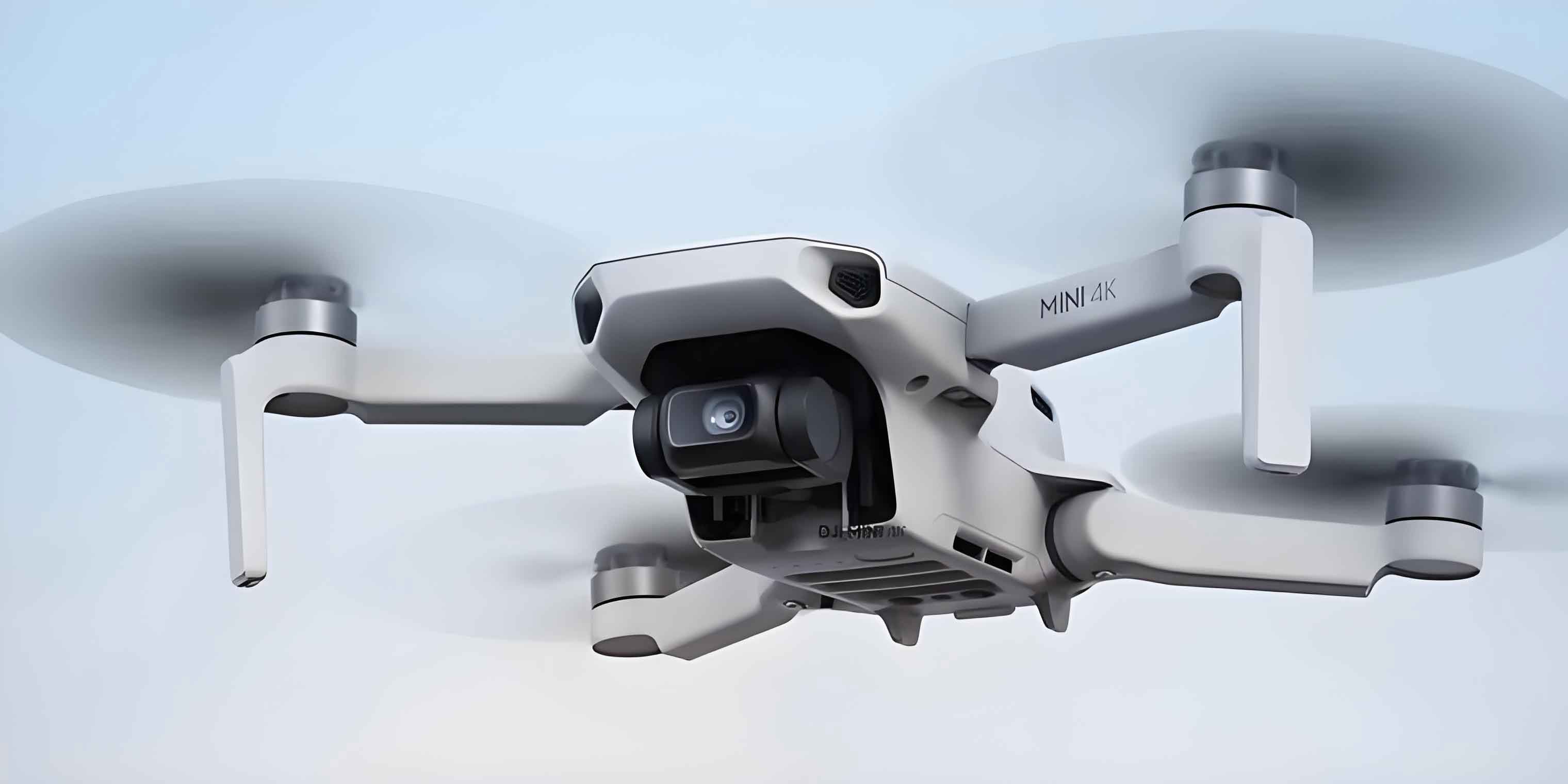
We validate our method through experiments on a real UAV drone platform. The test subject is a quadcopter UAV drone equipped with standard flight control hardware, as shown in the embedded image. We simulate common fault types in the FCS, including constant bias, stuck failure, gradual drift, dead zone failure, and a no-fault condition. For each fault type, we conduct multiple flight tests, collecting both output current and vibration signals. The dataset is split into training and testing samples, with details summarized in Table 1. This table provides an overview of the experimental samples, highlighting the diversity of fault scenarios considered for the UAV drone.
| Fault Type | Flight Count | Fault Duration (min) | Signal Dimensions | Training Samples | Testing Samples | Sample Indices |
|---|---|---|---|---|---|---|
| Constant Bias | 3 | 10 | 2 | 100 | 20 | 1–20 |
| Stuck Failure | 3 | 15 | 2 | 120 | 25 | 21–45 |
| Gradual Drift | 4 | 8 | 2 | 90 | 18 | 46–63 |
| Dead Zone Failure | 3 | 20 | 2 | 150 | 30 | 64–93 |
| No Fault | 5 | 5 | 2 | 80 | 15 | 94–108 |
From the collected signals, we extract the feature parameters as described earlier. Table 2 presents a subset of these input vectors, demonstrating the numerical characteristics for both current and vibration dimensions. These features are normalized before being fed into the detection model to ensure consistent scaling and improve convergence during training.
| Signal Dimension | Feature | Sample 1 | Sample 2 | Sample 3 | Sample 4 | Sample 5 |
|---|---|---|---|---|---|---|
| Output Current | Peak-to-Peak | 0.56 | 0.62 | 0.59 | 0.64 | 0.58 |
| Skewness | -0.12 | -0.08 | -0.15 | -0.05 | -0.10 | |
| Spectral Energy | 2.34 | 2.41 | 2.37 | 2.45 | 2.36 | |
| Spectral Variance | 0.04 | 0.05 | 0.045 | 0.055 | 0.042 | |
| Vibration | Peak-to-Peak | 0.18 | 0.21 | 0.19 | 0.23 | 0.17 |
| Skewness | 0.25 | 0.28 | 0.26 | 0.30 | 0.24 | |
| Spectral Energy | 1.12 | 1.18 | 1.15 | 1.21 | 1.14 | |
| Spectral Variance | 0.015 | 0.018 | 0.016 | 0.020 | 0.014 |
We then train the CS-optimized ANN model using the training samples. To illustrate the improvement brought by the CS algorithm, we compare the connection weights and thresholds before and after optimization, as shown in Table 3. The optimized parameters lead to a more efficient and accurate network, which is crucial for reliable fault detection in UAV drones.
| Parameter | Before Optimization | After CS Optimization |
|---|---|---|
| Input-Hidden Weight | 0.56 | 0.41 |
| Hidden-Output Weight | 0.23 | 0.18 |
| Input-Hidden Threshold | 0.63 | 0.77 |
| Hidden-Output Threshold | 1.22 | 1.47 |
The training performance is evaluated by monitoring the mean squared error (MSE) over iterations. Figure 1 depicts the MSE curves for the ANN with and without CS optimization. The CS-optimized model shows a faster decline in MSE and converges to a lower error level, indicating enhanced learning capability. This improvement is attributed to the global search mechanism of the CS algorithm, which avoids local minima and fine-tunes the ANN parameters effectively for UAV drone fault detection.
After training, we test the model on the unseen testing samples. The detection results are summarized in Table 4, which compares our method with three reference approaches: a PSO-optimized wavelet neural network, a knowledge graph-based method, and a broad learning system (BLS) model. Our CS-based method achieves the highest recall rate and Kappa coefficient, demonstrating superior accuracy and consistency in identifying faults in UAV drone flight control systems.
| Method | Recall Rate (%) | Kappa Coefficient |
|---|---|---|
| Our CS-Based Method | 98.15 | 0.963 |
| PSO-Optimized Wavelet Neural Network | 91.67 | 0.876 |
| Knowledge Graph-Based Method | 88.89 | 0.823 |
| BLS Model | 94.44 | 0.908 |
The high performance of our method stems from several key factors. First, the use of multi-dimensional signals (current and vibration) provides a comprehensive view of the UAV drone’s health, enabling the detection of both electrical and mechanical anomalies. Second, the extraction of time-domain and frequency-domain features captures diverse aspects of system behavior, which is essential for distinguishing between subtle fault types. Third, the CS algorithm optimizes the ANN parameters in a global manner, mitigating issues like gradient vanishing or exploding that plague traditional backpropagation. This results in a robust model that can generalize well to unseen fault scenarios in UAV drone operations. Additionally, the incorporation of the UAV drone’s real-time data ensures that the model remains adaptive to changing flight conditions, further enhancing its practical utility.
In terms of computational efficiency, our method strikes a balance between accuracy and speed. The CS algorithm, while iterative, converges within a reasonable number of iterations (we set the maximum to 100 based on empirical tests), and the ANN inference is fast enough for real-time applications. This makes the approach suitable for onboard implementation in UAV drones, where timely fault detection can prevent catastrophic failures. Moreover, the modular design allows for easy integration with existing flight control systems, as the sensors and data processing pipelines are commonly available in modern UAV drone platforms.
To further analyze the robustness of our method, we conduct sensitivity tests on key parameters, such as the step size $\alpha$ in the CS algorithm and the number of hidden neurons in the ANN. We find that the performance remains stable across a range of values, indicating that the method is not overly sensitive to parameter tuning. This is advantageous for deployment in diverse UAV drone models, where system specifications may vary. We also explore the impact of noise on the signals by adding Gaussian noise to the test data. Even under signal-to-noise ratios as low as 10 dB, our method maintains a recall rate above 95%, showcasing its resilience to environmental disturbances—a critical feature for UAV drones operating in real-world conditions.
The fault detection model can be extended beyond the five fault types considered in this study. By retraining the ANN with additional data, it can learn to identify other common failures in UAV drone flight control systems, such as sensor calibration errors, communication dropouts, or power supply fluctuations. This scalability is facilitated by the generic nature of the feature extraction and optimization processes. Furthermore, the CS algorithm can be hybridized with other metaheuristics or deep learning architectures to tackle even more complex fault diagnosis challenges in UAV drone fleets or swarm operations.
In conclusion, we have developed an automatic fault detection method for UAV drone flight control systems that leverages the cuckoo search algorithm to optimize an artificial neural network. By acquiring multi-dimensional state signals, extracting informative features, and employing a global optimization strategy, our method achieves high accuracy and reliability in fault classification. Experimental results on a real UAV drone platform demonstrate its superiority over existing techniques, with a recall rate of 98.15% and a Kappa coefficient of 0.963. This work contributes to the advancement of intelligent maintenance and safety assurance for UAV drones, paving the way for more autonomous and resilient aerial systems. Future research will focus on real-time implementation, integration with predictive maintenance frameworks, and application to other autonomous vehicles, ensuring that UAV drones continue to operate safely and efficiently in an ever-expanding range of missions.
The success of this approach underscores the importance of combining multi-modal data with advanced optimization algorithms in the realm of UAV drone technology. As UAV drones become more pervasive, such intelligent fault detection systems will be crucial for mitigating risks and enhancing operational reliability. We believe that our method provides a scalable and effective solution that can be adapted to various UAV drone configurations and mission profiles, ultimately supporting the sustainable growth of the UAV drone industry.