
As a researcher specializing in unmanned aerial vehicle (UAV) technology and defense systems, I have closely monitored the rapid evolution of UAVs, particularly in China, where the proliferation of low-slow-small (LSS) drones has introduced complex security challenges. In this paper, I will explore the construction of multi-source detection equipment systems and the assessment methods for their contribution rate, emphasizing advancements in China UAV drone detection capabilities. The integration of diverse sensors is critical to countering LSS UAV threats, which are characterized by low radar cross-sections, slow speeds, and small sizes, making them difficult to detect with单一 equipment. I will analyze the limitations of individual detection technologies, propose a systematic framework for multi-source systems, and evaluate contribution rates using quantitative models, all while highlighting the role of China’s innovation in this domain.
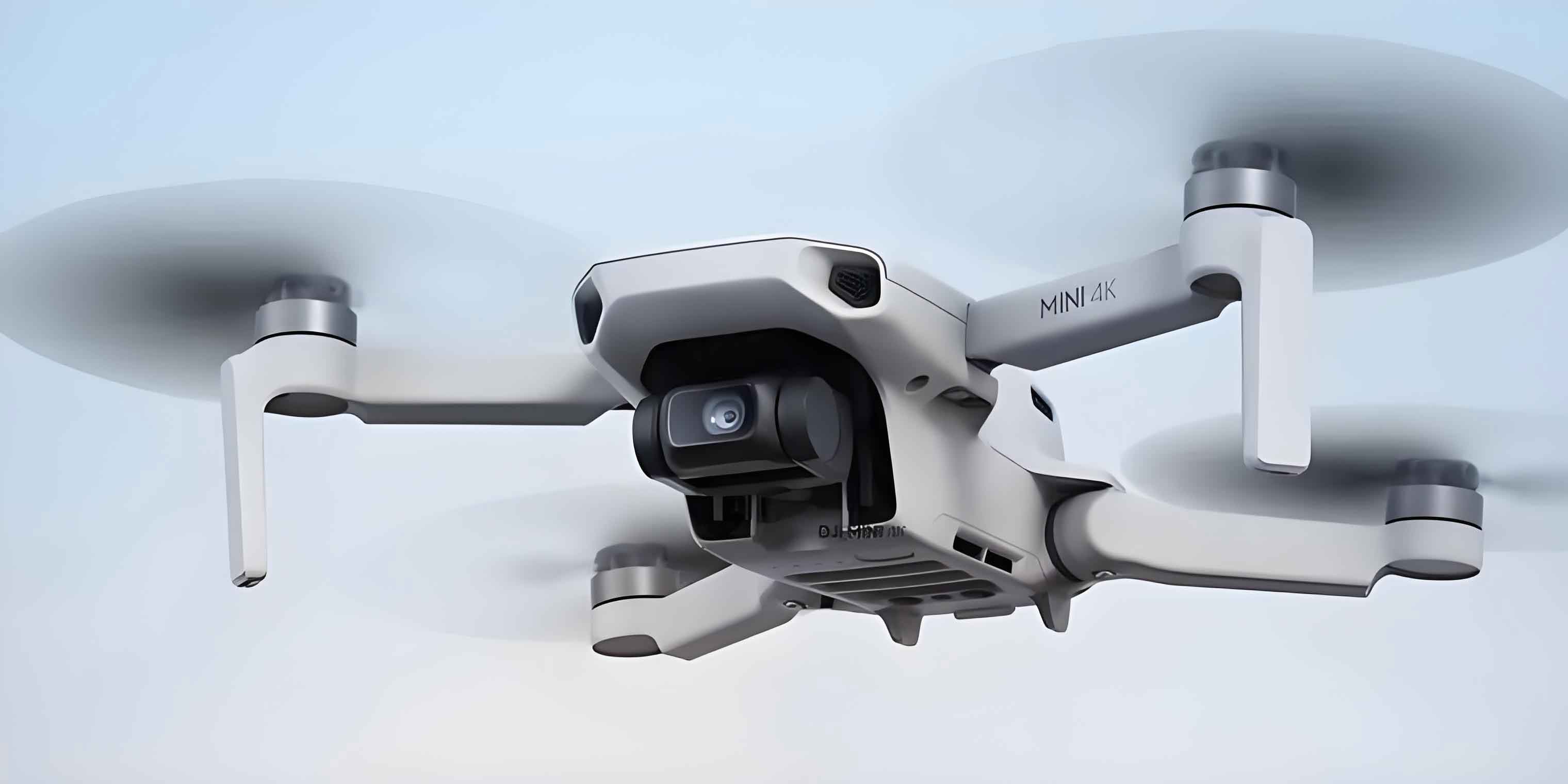
The growth of China UAV drone applications in military reconnaissance, surveillance, and civilian sectors like logistics and aerial photography has necessitated robust detection solutions. In my analysis, I consider LSS UAVs as a significant threat due to their隐蔽性 and affordability, which traditional防空 systems often fail to address. This paper aims to provide a comprehensive assessment methodology that can guide the optimization of detection装备体系 in China, ensuring enhanced security against drone incursions. I will begin by comparing single detection equipment, then构建 a multi-source体系, establish an evaluation index system, review assessment methods, and present a case study using the Analytic Hierarchy Process (AHP). Throughout, I will incorporate关键词 “China UAV drone” to underscore the relevance of this research to national defense and technological advancement.
Comparative Analysis of Single Detection Equipment for LSS UAVs
In my experience,单一 detection equipment for LSS UAVs, such as radar, radio frequency (RF) sensors, electro-optical (EO) systems, and acoustic devices, each has distinct advantages and drawbacks. I have summarized these in Table 1 to illustrate their effectiveness in various scenarios, particularly in the context of China UAV drone operations. Radar systems, for instance, offer long-range detection but struggle with low雷达截面积 targets common in LSS drones, while RF sensors are passive but cannot detect silent drones—a limitation often exploited by advanced China UAV drone models. Electro-optical systems provide high precision in ideal conditions, yet their performance degrades in恶劣 weather, which is a concern for all-weather defense in China. Acoustic sensors, though stealthy, have a short range and are prone to noise interference, making them less reliable in urban environments where China UAV drone activities are prevalent.
| Equipment Type | Effective Detection Range (km) | Key Advantages | Key Disadvantages | Applicability to China UAV Drone Scenarios |
|---|---|---|---|---|
| Radar Detection | 8.0 | All-weather capability, long-range, fast response | Susceptible to ground clutter, difficulty distinguishing drones from birds, low RCS challenges | Useful for wide-area surveillance in China’s border regions, but may miss small commercial drones. |
| Radio Frequency (RF) Detection | 3.0 | Passive operation, cost-effective, good for signal interception | Ineffective against silent drones, vulnerable to electromagnetic interference, limited to known频谱 | Effective for monitoring遥控 signals of China UAV drones in controlled environments, but less so in dense urban areas. |
| Electro-Optical (EO) Detection | 1.0 (visible), 4.0 (infrared) | High precision in target identification,不受无人机类型影响 | Weather-dependent (e.g., fog, rain), limited range in low-light, requires line-of-sight | Valuable for close-range identification of China UAV drones in clear conditions, such as critical infrastructure protection. |
| Acoustic Detection | 0.2 | Stealthy, can detect occluded targets, easy deployment | Very short range, highly sensitive to ambient noise, ineffective against quiet drones | Suitable for perimeter defense in quiet areas, but less practical for monitoring China UAV drone swarms in noisy cities. |
From my perspective, the limitations of单一 equipment underscore the need for集成 systems, especially as China UAV drone technology advances with features like stealth and autonomy. For example, radar may fail to detect drones with non-metallic materials, a common trait in many China-made drones, while RF sensors cannot counter drones using encrypted communication. This analysis motivates the development of multi-source detection体系, which I will discuss next, focusing on how China can leverage sensor fusion to enhance overall效能.
Construction of Multi-Source Detection Equipment Systems
Based on my research, I propose a multi-source detection equipment system that integrates雷达, RF, EO, and acoustic sensors into a cohesive体系. This system is designed to overcome the shortcomings of单一 approaches by exploiting complementary strengths, a strategy crucial for defending against sophisticated China UAV drone threats. I conceptualize this体系 through three dimensions: system morphology, fusion mechanisms, and hierarchical architecture. In terms of morphology, the system comprises heterogeneous sensors deployed in固定 and移动 configurations to cover diverse physical fields. For instance,雷达 stations provide wide-area coverage, while EO units offer precise identification—a combination essential for tracking fast-moving China UAV drones in complex environments.
The fusion mechanism is central to this体系, as it enables data integration across multiple levels. In my view, data-level fusion combines raw sensor data to improve detection probability, but it is computationally intensive. Feature-level fusion extracts characteristics like spectral signatures or visual patterns before merging, enhancing efficiency. Decision-level fusion aggregates outputs from individual sensors, offering robustness and real-time performance. I often use mathematical models to describe this; for example, the融合 output \(Y\) can be represented as a weighted sum of sensor inputs:
$$Y = \sum_{i=1}^{n} w_i \cdot S_i$$
where \(S_i\) denotes the signal from sensor \(i\) and \(w_i\) is its weight based on reliability. This approach is particularly relevant for China UAV drone detection, where environmental factors like electromagnetic干扰 can vary. Additionally, I advocate for a hierarchical体系 with远,中,近 layers:远层 (beyond 5 km) uses radar and RF for early warning;中层 (1-5 km) combines radar with EO for tracking; and近层 (under 1 km) employs acoustic and EO for confirmation. This tiered structure ensures comprehensive coverage, addressing the低空 penetration tactics often seen in China UAV drone incursions.
Evaluation Index System for Detection Capabilities
To assess the contribution rate of detection equipment within this体系, I have developed an evaluation index system focused on key capabilities aligned with operational needs against China UAV drones. This system includes six core indicators, each quantifiable and critical for mission success. I list them below with their significance:
- Detection Range (A1): The maximum distance at which a system can reliably detect a China UAV drone. This impacts early warning time and防御纵深.
- Detection Angle (A2): The azimuth and elevation coverage, influencing how many sensors are needed to monitor a given airspace in China.
- Recognition Accuracy (A3): The ability to correctly classify a target as a China UAV drone versus clutter (e.g., birds), reducing false alarms.
- Localization Precision (A4): The accuracy in determining the drone’s position, crucial for guiding countermeasures.
- Response Time (A5): The delay from detection to alert, vital for intercepting fast-moving China UAV drones.
- Environmental Adaptability (A6): Performance under adverse conditions like weather or干扰, ensuring reliability in diverse China scenarios.
I formalize these indicators in a vector form for assessment: let \( \mathbf{A} = [A1, A2, A3, A4, A5, A6] \) represent the capability set. The overall system capability \(C\) can be expressed as a function of these indicators, often using a weighted linear model:
$$C = \mathbf{w} \cdot \mathbf{A}^T = \sum_{j=1}^{6} w_j \cdot A_j$$
where \( \mathbf{w} = [w_1, w_2, …, w_6] \) is the weight vector derived from expert judgments or data analysis, reflecting the relative importance of each indicator in countering China UAV drone threats. This index system provides a foundation for contribution rate assessment, which I will elaborate on in the next section.
Methods for Assessing System Contribution Rate
In my practice, I have reviewed various methods to evaluate the contribution rate of equipment within a detection体系. These methods can be categorized into traditional approaches and neural network-based techniques, each with pros and cons for application in China UAV drone defense. Traditional methods include structure-oriented, function-oriented, process-oriented, and integrated approaches. For instance, structure-oriented methods like network analysis assess contribution based on topological importance in the system graph. If we model the detection体系 as a graph \(G = (V, E)\) with nodes as equipment and edges as interactions, the contribution rate \(CR_i\) of node \(i\) can be estimated using centrality measures such as betweenness:
$$CR_i = \frac{\sum_{s \neq i \neq t} \sigma_{st}(i)}{\sigma_{st}}$$
where \(\sigma_{st}\) is the total number of shortest paths between nodes \(s\) and \(t\), and \(\sigma_{st}(i)\) is the number passing through node \(i\). This highlights critical sensors in the network, but it may overlook dynamic behaviors during China UAV drone engagements.
Function-oriented methods, such as those based on the OODA (Observe, Orient, Decide, Act) loop, evaluate how equipment enhances specific作战 capabilities. In a simplified model, the contribution rate can be linked to the improvement in observation probability \(P_{obs}\) for detecting China UAV drones. If adding equipment \(X\) increases \(P_{obs}\) from \(P_0\) to \(P_1\), its contribution rate \(CR_X\) might be:
$$CR_X = \frac{P_1 – P_0}{P_0} \times 100\%$$
Process-oriented methods, like exploratory analysis, use simulation to model system behavior under varying conditions. Integrated methods combine multiple perspectives; for example, the Analytic Hierarchy Process (AHP) synthesizes expert judgments to compute weights for贡献率 assessment. I often prefer AHP for its simplicity and adaptability to China’s defense contexts, where expert input on China UAV drone trends is valuable. Neural network methods, though less common, offer potential for handling big data from diverse sensors, but they require extensive training datasets that may be scarce for China UAV drone scenarios.
I summarize these methods in Table 2, emphasizing their applicability to evaluating detection systems against China UAV drones.
| Method Type | Key Characteristics | Advantages | Disadvantages | Suitability for China UAV Drone Defense |
|---|---|---|---|---|
| Structure-Oriented (e.g., Network Analysis) | Focuses on system topology and connectivity | Intuitive, good for identifying critical nodes | Ignores dynamic interactions and environmental factors | Useful for planning sensor placement in fixed China installations, but may not capture mobile drone threats. |
| Function-Oriented (e.g., OODA Models) | Links equipment to mission capabilities | Aligns with operational goals, quantifiable metrics | Can be simplistic, may not account for emergent behaviors | Effective for assessing how specific sensors enhance China’s early warning against UAV drones. |
| Process-Oriented (e.g., Simulation) | Models dynamic作战 processes over time | Captures complex interactions, high fidelity | Computationally expensive, requires detailed scenario data | Valuable for testing China UAV drone swarm scenarios in虚拟 environments. |
| Integrated (e.g., AHP) | Combines multiple criteria through weighting | Flexible, incorporates expert judgment, handles subjectivity | Relies on expert consistency, may introduce bias | Well-suited for China’s context, where expert insights on drone technology are prioritized. |
| Neural Network-Based | Uses machine learning to predict contributions | Can handle非线性 relationships, adapts to data | Requires large datasets, black-box nature, limited interpretability | Promising for future China applications as data on UAV drone detections accumulates. |
From my assessment, integrated methods like AHP are currently most practical for China UAV drone detection systems, due to their balance of quantitative rigor and qualitative input. I will demonstrate this with a case study in the following section.
Case Study: AHP-Based Contribution Rate Assessment for a China UAV Drone Detection System
In this case study, I apply the Analytic Hierarchy Process (AHP) to evaluate the contribution rate of a multi-source detection system designed to counter China UAV drone threats. Assume we have a system comprising radar, RF, EO, and acoustic sensors, and we want to assess their relative contributions to overall capability based on the six indicators earlier. I involve three experts to provide judgments, reflecting the collaborative nature of defense planning in China. The steps are as follows, presented in first-person narrative to illustrate my methodology.
First, I define the goal: to determine the contribution rate of each sensor type in the system. The criteria are the six indicators \(A1\) to \(A6\), and the alternatives are the four sensor types. Experts compare the criteria pairwise using a scale (e.g., 1-9), resulting in judgment matrices. For example, Expert 1’s matrix for criteria might look like this for a subset, emphasizing detection range due to the long-distance nature of China UAV drone intrusions:
$$E_1 = \begin{bmatrix} 1 & 3 & 5 & 4 & 2 & 6 \\ 1/3 & 1 & 4 & 3 & 1/2 & 5 \\ 1/5 & 1/4 & 1 & 1/2 & 1/3 & 2 \\ 1/4 & 1/3 & 2 & 1 & 1/2 & 3 \\ 1/2 & 2 & 3 & 2 & 1 & 4 \\ 1/6 & 1/5 & 1/2 & 1/3 & 1/4 & 1 \end{bmatrix}$$
I then normalize each column and compute the priority vector \( \mathbf{w}_1 \) for Expert 1 using the eigenvector method. For simplicity, the normalized matrix \( \bar{E}_1 \) is obtained by dividing each element by its column sum. The weight vector \( \mathbf{w}_1 \) is the row averages of \( \bar{E}_1 \). This process is repeated for all experts, yielding vectors \( \mathbf{w}_1, \mathbf{w}_2, \mathbf{w}_3 \). I then check consistency using the consistency ratio \(CR\), ensuring it is below 0.1 for reliability. For instance, the consistency index \(CI\) is calculated as:
$$CI = \frac{\lambda_{max} – n}{n-1}$$
where \( \lambda_{max} \) is the largest eigenvalue of the judgment matrix and \( n = 6 \). If \(CR = CI/RI\) (where \(RI\) is the random index) is acceptable, I proceed.
Next, I aggregate the expert weights to form a综合 weight vector \( \mathbf{w} \). Assuming equal expert authority, I compute:
$$\mathbf{w} = \frac{1}{3} (\mathbf{w}_1 + \mathbf{w}_2 + \mathbf{w}_3)$$
Suppose the resulting weights are \( \mathbf{w} = [0.30, 0.20, 0.15, 0.10, 0.15, 0.10] \) for \(A1\) to \(A6\), respectively, highlighting the importance of detection range and angle in China’s vast airspace. Then, I evaluate each sensor alternative against each criterion using similar pairwise comparisons, deriving scores \( s_{ij} \) for sensor \(i\) on criterion \(j\). The overall score for sensor \(i\) is:
$$S_i = \sum_{j=1}^{6} w_j \cdot s_{ij}$$
Finally, the contribution rate \( CR_i \) of sensor \(i\) is its normalized score relative to the total system capability. If the system without sensor \(i\) has score \( S_{-i} \), the contribution rate can be defined as:
$$CR_i = \frac{S_{\text{with }i} – S_{-i}}{S_{\text{with }i}} \times 100\%$$
In a hypothetical scenario, let the scores for radar, RF, EO, and acoustic be 0.35, 0.25, 0.25, and 0.15, respectively, based on their performance against China UAV drones. Then, the contribution rates might be approximately 35%, 25%, 25%, and 15%. This indicates that radar plays a pivotal role, consistent with its long-range advantage in detecting China UAV drones early. However, RF and EO sensors are also crucial for识别 and tracking, especially as China drone technology evolves with stealth features. This case study demonstrates how AHP can quantify contributions, aiding decision-makers in optimizing resource allocation for China’s UAV defense体系.
Conclusion and Future Directions
In this paper, I have explored the assessment of contribution rates for UAV detection equipment systems, with a focus on applications in China. Through comparative analysis, I highlighted the limitations of单一 detection technologies and advocated for a multi-source体系 that integrates radar, RF, EO, and acoustic sensors. I proposed an evaluation index system centered on six key capabilities and reviewed various assessment methods, emphasizing the utility of integrated approaches like AHP for China UAV drone scenarios. The case study illustrated how AHP can derive quantitative contribution rates, supporting strategic planning for defense against LSS UAV threats.
Looking ahead, I believe that advancements in China UAV drone technology will continue to challenge detection systems, necessitating more sophisticated assessment models. Future research should incorporate real-time data from China’s defense exercises to refine权重 and指标. Additionally, machine learning methods could be integrated with traditional评估 to handle the动态 nature of drone swarms, which are becoming common in China’s security landscape. I recommend that China invest in collaborative sensor networks and standardized assessment frameworks to enhance interoperability and overall效能. By continuously evaluating and optimizing detection装备体系, China can strengthen its防御 posture against evolving UAV threats, ensuring national security in an era of pervasive drone technology.
Throughout this discussion, I have emphasized the importance of China UAV drone considerations in every aspect, from equipment selection to贡献率评估. As a researcher, I am confident that a systematic approach, as outlined here, will contribute to more effective counter-drone strategies in China and beyond. The integration of multi-source detection and robust assessment methods is not just a technical necessity but a strategic imperative in safeguarding airspace against unauthorized UAV activities.