
In modern warfare, the proliferation of unmanned aerial vehicles (UAVs) has introduced new challenges for air defense operations. As UAV technology advances toward swarm, intelligent, and diversified capabilities, anti-UAV operations have become a critical component of integrated air and missile defense (IAMD) systems. However, evaluating the combat capability of anti-UAV operations within such complex systems is fraught with difficulties, as it is influenced by multiple interconnected factors. Traditional evaluation methods often fail to capture the holistic nature of IAMD systems, leading to incomplete assessments. In this study, I address this gap by developing a comprehensive evaluation framework for anti-UAV combat capability in IAMD systems. I propose a multi-level indicator system, integrate subjective and objective weighting methods using game theory, and validate the approach through empirical data. This research aims to provide a theoretical foundation for enhancing anti-UAV effectiveness in joint defense scenarios.
The importance of anti-UAV operations cannot be overstated. UAVs are increasingly used for reconnaissance, surveillance, and even strike missions, posing significant threats to military and civilian assets. Within IAMD systems, which combine various domains such as land, sea, air, space, and cyberspace, anti-UAV capabilities must be seamlessly integrated to ensure overall defense effectiveness. Yet, existing studies on anti-UAV combat capability evaluation often focus on isolated aspects, such as command and control systems or equipment performance, neglecting the systemic interactions. This limitation underscores the need for an evaluation model that considers the broader IAMD context. In this article, I explore how anti-UAV operations can be assessed within IAMD systems, leveraging methodologies like the Analytic Hierarchy Process (AHP), entropy weighting, and game theory to derive robust indicators and weights.
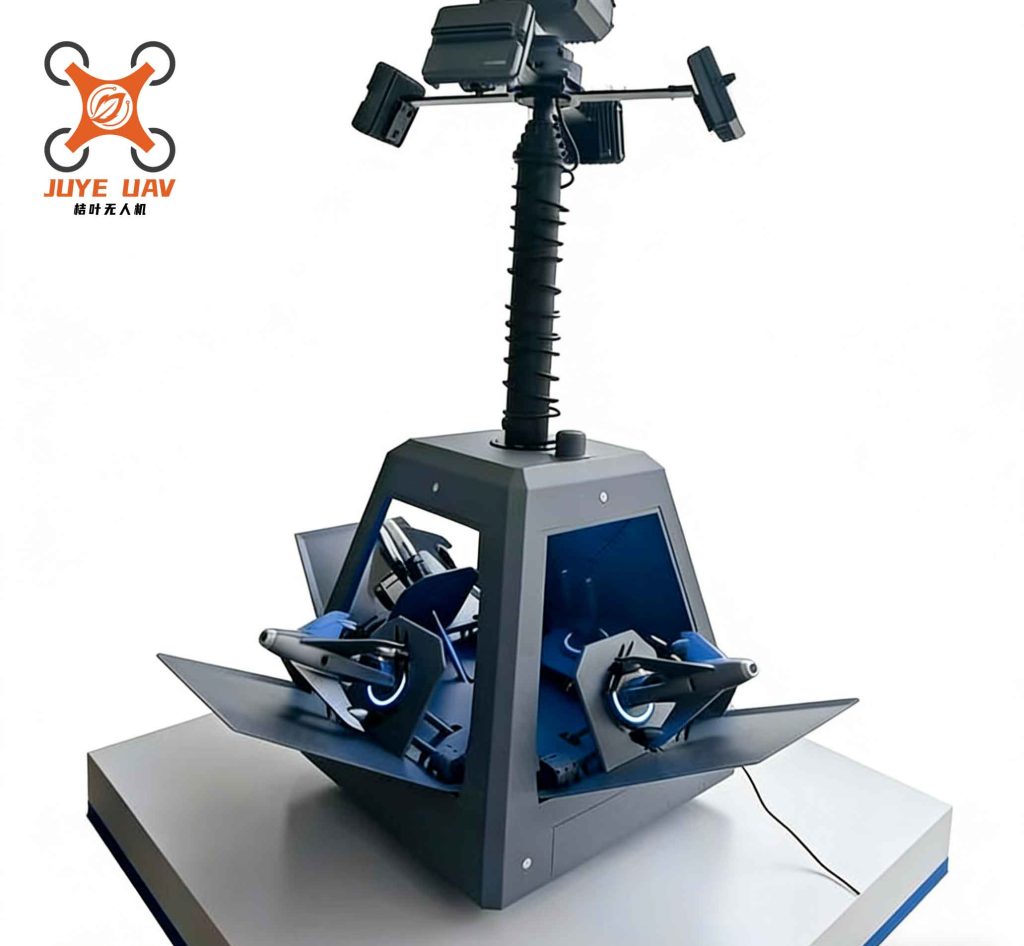
To begin, I review the foundational concepts of anti-UAV operations and IAMD systems. Anti-UAV combat involves detecting, tracking, and neutralizing UAV threats using a mix of hard-kill and soft-kill measures. In IAMD systems, these operations are part of a larger framework that includes surveillance, command, interception, and sustainment capabilities. Previous research has highlighted key areas for evaluation, such as early warning, firepower interception, and coordination, but few studies have systematically linked these to anti-UAV specifics. For instance, some works assess anti-UAV system efficiency based on neural networks or gray AHP, yet they often overlook the integration depth with IAMD. Therefore, my approach emphasizes a holistic view, where anti-UAV capability is evaluated through its alignment with IAMD components. This perspective is crucial for future conflicts where UAV swarms may overwhelm traditional defenses.
In developing the evaluation framework, I first construct a multi-level indicator system. This system is designed to capture the essential aspects of anti-UAV combat capability within IAMD systems. I identify five primary dimensions: system integration capability, detection and tracking capability, command and control capability, multi-means interception capability, and sustained combat capability. Each dimension is further broken down into secondary and tertiary indicators, totaling over 30 specific metrics. For example, system integration capability includes stability, depth, and breadth of integration, while detection and tracking capability covers target discovery, tracking accuracy, and identification. This hierarchical structure allows for a detailed assessment that reflects both technical and operational factors. The indicator system is summarized in Table 1 below.
| Primary Indicator | Secondary Indicator | Tertiary Indicator |
|---|---|---|
| System Integration Capability (A) | Integration Stability (A1) | Command Transmission Continuity (A11) |
| Integration Depth (A2) | Situation Sharing Capability (A21) | |
| Integration Breadth (A3) | Maximum Access Quantity (A32) | |
| Detection and Tracking Capability (B) | Target Discovery Capability (B1) | Target Discovery Range (B11) |
| Target Tracking Capability (B2) | Target Tracking Accuracy (B21) | |
| Target Resolution Capability (B3) | Target Type Identification (B32) | |
| Command and Control Capability (C) | Situation Mastery Capability (C1) | Enemy Situation Grasp (C11) |
| Operational Planning Capability (C2) | In-Mission Planning (C22) | |
| Command Decision Capability (C3) | Instruction Timeliness (C33) | |
| Emergency Response Capability (C4) | Ground Emergency Handling (C42) | |
| Multi-Means Interception Capability (D) | Target Selection Capability (D1) | Interception Feasibility Judgment (D13) |
| Force Application Capability (D2) | Target Damage Capability (D22) | |
| Comprehensive Cost-Effectiveness (D3) | Cost-Effectiveness Ratio (D31) | |
| Sustained Combat Capability (E) | Self-Protection Capability (E1) | Defense Against Enemy Strikes (E12) |
| Comprehensive Support Capability (E2) | Equipment Maintenance Capability (E21) |
The indicator system is foundational, but assigning appropriate weights to each indicator is equally critical. Weight determination reflects the relative importance of indicators in the overall anti-UAV combat capability assessment. I employ a combination of subjective and objective methods to address biases. The subjective method used is the Analytic Hierarchy Process (AHP), which relies on expert judgments to compare indicators pairwise. For instance, in AHP, a judgment matrix is constructed where elements represent the relative importance of one indicator over another. The weights are derived from the eigenvector of this matrix, and consistency is checked using the consistency ratio (CR). The formula for CR is given by: $$CR = \frac{CI}{RI}$$ where $$CI = \frac{\lambda_{max} – n}{n-1}$$ Here, $\lambda_{max}$ is the maximum eigenvalue of the judgment matrix, $n$ is the number of indicators, and $RI$ is the random consistency index. If $CR \leq 0.1$, the matrix is considered consistent. This process ensures that expert opinions are logically coherent, but it may introduce subjectivity due to individual biases.
To complement AHP, I use the entropy weighting method as an objective approach. Entropy weighting calculates weights based on the variability of data across samples, minimizing human influence. The steps involve normalizing data, computing the proportion of each indicator, determining information entropy, and deriving weights. The information entropy $e_j$ for indicator $j$ is calculated as: $$e_j = -\frac{1}{\ln m} \sum_{i=1}^{m} p_{ij} \ln p_{ij}$$ where $p_{ij}$ is the normalized value for sample $i$ and indicator $j$, and $m$ is the number of samples. The weight $w_j$ is then: $$w_j = \frac{1 – e_j}{\sum_{j=1}^{n} (1 – e_j)}$$ This method prioritizes indicators with higher variability, as they provide more information for discrimination. However, it can be sensitive to data fluctuations, which may not always align with strategic priorities in anti-UAV operations.
To harmonize the subjective and objective weights, I apply game theory combination weighting. This method treats the weight sets from AHP and entropy weighting as players in a game, aiming to find a Nash equilibrium that minimizes deviations. Let $W_{\text{subject}}$ be the weight vector from AHP and $W_{\text{object}}$ from entropy weighting. The combined weight $W_{\text{combined}}$ is expressed as: $$W_{\text{combined}} = \theta_1 W_{\text{subject}}^T + \theta_2 W_{\text{object}}^T$$ where $\theta_1$ and $\theta_2$ are combination coefficients optimized through a minimization model: $$\min \left\| \theta_1 W_{\text{subject}}^T + \theta_2 W_{\text{object}}^T – W_{\text{subject}}^T \right\|^2$$ $$\min \left\| \theta_1 W_{\text{subject}}^T + \theta_2 W_{\text{object}}^T – W_{\text{object}}^T \right\|^2$$ Solving this yields the optimal coefficients, which are normalized as: $$\theta_1^* = \frac{\theta_1}{\theta_1 + \theta_2}, \quad \theta_2^* = \frac{\theta_2}{\theta_1 + \theta_2}$$ The final combined weights provide a balanced perspective, enhancing the robustness of the anti-UAV combat capability evaluation. This integration is crucial for IAMD systems, where both expert knowledge and data-driven insights are valuable.
With the indicator system and weights established, I develop a quantification model to compute the overall anti-UAV combat capability score. The model uses a weighted sum approach across hierarchical levels. For primary indicators, the score $Q_k$ for dimension $k$ is: $$Q_k = \sum_{i=1}^{n} M_{ki} W_{ki}$$ where $M_{ki}$ is the quantified value of secondary indicator $i$ under primary indicator $k$, and $W_{ki}$ is its weight. Similarly, secondary indicators are computed from tertiary indicators. The tertiary indicators are quantified using specific formulas based on operational data. For example, command transmission continuity (A11) is calculated as: $$A11 = \frac{V_{\text{total commands}} – V_{\text{interrupted commands}}}{V_{\text{total commands}}}$$ and target discovery range (B11) as: $$B11 = \frac{V_{\text{max range}} – V_{\text{avg range}}}{V_{\text{max range}}}$$ These formulas translate raw performance metrics into normalized scores between 0 and 1, facilitating aggregation. The overall anti-UAV combat capability score $S$ is then: $$S = \sum_{k=1}^{5} Q_k W_k$$ where $W_k$ are the weights of the primary indicators. This model ensures a comprehensive assessment that aligns with the dynamics of IAMD systems.
To validate the proposed framework, I conduct an empirical study using sample data from anti-UAV exercises. The data includes three simulation runs involving UAV swarm scenarios, with metrics collected for all tertiary indicators. I first compute the weights using AHP, entropy weighting, and game theory combination. For AHP, I construct judgment matrices based on expert surveys. For instance, the primary indicator matrix compares system integration, detection and tracking, command and control, multi-means interception, and sustained combat capability. The computed weights are shown in Table 2, along with those from entropy weighting and combination. The combination coefficients are found to be $\theta_1^* = 0.43$ and $\theta_2^* = 0.57$, indicating a slight emphasis on objective data. The final weights reflect a balanced view, with multi-means interception capability receiving the highest priority due to its critical role in anti-UAV operations.
| Method | System Integration (A) | Detection and Tracking (B) | Command and Control (C) | Multi-Means Interception (D) | Sustained Combat (E) |
|---|---|---|---|---|---|
| AHP Weights | 0.0764 | 0.1611 | 0.2422 | 0.4700 | 0.0503 |
| Entropy Weights | 0.2000 | 0.1600 | 0.1600 | 0.1600 | 0.3200 |
| Combined Weights | 0.1500 | 0.1600 | 0.2000 | 0.2900 | 0.2000 |
Using the combined weights, I quantify the tertiary indicators from the simulation data. For example, in the first simulation run, command transmission continuity scored 0.95, target discovery range 0.88, and cost-effectiveness ratio 0.75. These values are aggregated upward to compute primary indicator scores. The results for the three simulations are presented in Table 3. The overall anti-UAV combat capability scores are 0.59 using AHP alone, 0.71 using entropy weighting alone, and 0.66 using the game theory combination. The combined score of 0.66 suggests a moderate capability level, with room for improvement in areas like system integration and sustained combat. This outcome demonstrates the method’s practicality, as it avoids extreme values from purely subjective or objective approaches, providing a more reliable assessment for IAMD systems.
| Simulation Run | System Integration (A) | Detection and Tracking (B) | Command and Control (C) | Multi-Means Interception (D) | Sustained Combat (E) | Overall Score |
|---|---|---|---|---|---|---|
| Run 1 | 76.63 | 84.35 | 93.24 | 87.38 | 82.69 | 85.06 |
| Run 2 | 69.86 | 87.69 | 91.79 | 85.34 | 84.16 | 83.77 |
| Run 3 | 71.39 | 90.21 | 92.62 | 86.40 | 82.76 | 84.68 |
The results highlight several insights for enhancing anti-UAV combat capability in IAMD systems. First, system integration capability, though weighted lower, shows variability across runs, indicating instability in network connectivity or data sharing. This aligns with the challenge of integrating diverse anti-UAV assets into a cohesive IAMD framework. Second, multi-means interception capability consistently scores high, reflecting effective use of hard-kill and soft-kill measures against UAV threats. However, the cost-effectiveness ratio (D31) could be improved by optimizing resource allocation. Third, sustained combat capability emerges as a critical factor in the combined weights, underscoring the need for robust logistics and protection measures in prolonged anti-UAV engagements. These findings suggest that future investments should focus on strengthening integration depth and support systems to bolster overall anti-UAV resilience.
Moreover, the evaluation framework offers flexibility for adapting to evolving UAV threats. As UAV technology advances toward autonomy and swarm behaviors, the indicators can be updated to include metrics like swarm detection accuracy or AI-driven decision speed. For instance, target resolution capability (B3) might incorporate algorithms for distinguishing between decoy and real UAVs in a swarm. The weighting methods can also be recalibrated with new data, ensuring the assessment remains relevant. This adaptability is vital for IAMD systems, which must counter dynamic asymmetric threats. Additionally, the use of game theory combination weighting mitigates the pitfalls of relying solely on expert opinion or historical data, providing a balanced approach that can inform strategic planning for anti-UAV operations.
In discussing limitations, I acknowledge that the study relies on simulated data, which may not fully capture real-world complexities of anti-UAV combat. The expert panel for AHP was primarily from air defense backgrounds, potentially overlooking insights from joint command or cyber domains. Future work should involve broader expertise and real exercise data to validate the model further. Also, the indicator system, while comprehensive, may need refinement as new anti-UAV technologies emerge, such as directed-energy weapons or electronic warfare suites. Despite these limitations, the framework provides a solid foundation for assessing anti-UAV capability within IAMD systems, contributing to both academic research and practical defense applications.
To conclude, I have developed and validated a comprehensive evaluation model for anti-UAV combat capability in integrated air and missile defense systems. By constructing a multi-level indicator system, combining AHP and entropy weighting through game theory, and applying a quantification model, I offer a method that balances subjectivity and objectivity. The empirical study demonstrates its effectiveness, revealing key areas for improvement in anti-UAV operations. This research underscores the importance of holistic assessment in enhancing IAMD performance against UAV threats. As UAVs continue to evolve, so must our evaluation approaches—this work serves as a step toward that goal, providing actionable insights for policymakers and military planners focused on strengthening anti-UAV defenses in joint operational environments.