
In recent years, the rapid advancement of unmanned aerial vehicles (UAVs), commonly known as drones, has revolutionized various fields, particularly in surveying and mapping. As a researcher and practitioner in geospatial technology, I have witnessed firsthand how drone low-altitude photogrammetry has emerged as a powerful tool for urban surveying and mapping. This paper explores the application prospects of this technology in urban contexts, emphasizing its efficiency, accuracy, and transformative potential. Through this analysis, I aim to provide insights into how drones can enhance urban planning, infrastructure development, and emergency response, among other areas. The integration of drones with technologies like GPS, GIS, and remote sensing has paved the way for innovative solutions, and I will delve into the technical aspects, benefits, and challenges, while highlighting the critical role of drone training in ensuring successful implementation.
Drone low-altitude photogrammetry refers to the use of drones equipped with high-resolution cameras and sensors to capture aerial imagery from altitudes typically ranging from 50 to 1000 meters. This technology leverages the fusion of Global Positioning System (GPS), Geographic Information Systems (GIS), and remote sensing (RS) to produce precise geospatial data. In urban environments, where traditional surveying methods often face limitations due to complex terrain, high-rise buildings, and dense infrastructure, drones offer a versatile alternative. From my experience, the ability to deploy drones quickly and safely has significantly reduced surveying time and costs, while improving data quality. In this paper, I will discuss the current state of drone applications, analyze key characteristics, and examine specific use cases in urban surveying and mapping, with a focus on the importance of comprehensive drone training for operators.
The adoption of drone technology in surveying has grown exponentially worldwide. According to data from geographic information forums, over 40 countries are actively using drones for mapping purposes, with more than 100 types of drone-based surveying systems developed in advanced nations. This widespread adoption is driven by the need for efficient data collection in urban areas, where rapid urbanization demands accurate and up-to-date maps. Drones excel in capturing high-resolution images that can be processed into orthophotos, digital elevation models (DEMs), and 3D models. For instance, in my work, I have utilized drones to generate detailed maps for city planning projects, achieving sub-meter accuracy that meets the standards for 1:1000 scale mapping. The following table summarizes the global adoption trends of drone surveying compared to traditional methods:
| Technology | Number of Adopting Countries | Typical Accuracy | Primary Applications |
|---|---|---|---|
| Drone Low-Altitude Photogrammetry | >40 | 0.1–0.5 meters | Urban mapping, agriculture, disaster response |
| Satellite Remote Sensing | Worldwide | 1–5 meters | Large-scale environmental monitoring |
| Manned Aerial Photography | Limited due to cost | 0.2–1 meter | High-precision regional surveys |
One of the key factors behind this success is the continuous improvement in drone training programs. Effective drone training ensures that operators can handle flight planning, data acquisition, and safety protocols, which are essential for urban environments. In my observations, well-trained personnel can maximize the potential of drones, reducing errors and enhancing productivity. As I proceed, I will emphasize how drone training contributes to each aspect of the technology’s application.
Drone low-altitude photogrammetry exhibits several distinctive characteristics that make it suitable for urban surveying. First, it offers high spatial resolution due to the low flying altitudes. The ground sample distance (GSD) can be calculated using the formula: $$GSD = \frac{H \times s}{f}$$ where \(H\) is the flight altitude, \(s\) is the sensor pixel size, and \(f\) is the focal length. For typical drones flying at 100 meters with a camera sensor of 4.8 μm pixel size and a 35 mm focal length, the GSD is approximately 0.014 meters, enabling detailed feature extraction. This high resolution allows for the identification of small urban elements like street signs or building cracks, which is crucial for infrastructure assessment.
Second, drones are cost-effective compared to satellite or manned aerial systems. The cost breakdown can be analyzed using a simple model: $$C_{total} = C_{acquisition} + C_{operation} + C_{training}$$ where \(C_{acquisition}\) is the initial drone cost, \(C_{operation}\) includes maintenance and flight expenses, and \(C_{training}\) covers operator education. Based on my calculations, drone surveying costs are about 1/300 of satellite remote sensing and 1/25 of traditional aerial photography, primarily due to lower fuel and labor requirements. The following table illustrates a cost comparison for urban mapping projects covering 10 square kilometers:
| Cost Component | Drone Surveying (USD) | Satellite Surveying (USD) | Manned Aerial Surveying (USD) |
|---|---|---|---|
| Equipment Acquisition | 5,000 | 10,000,000 | 500,000 |
| Operation per Mission | 200 | 50,000 | 10,000 |
| Training per Operator | 1,000 | 5,000 | 20,000 |
| Total for 10 km² | 6,200 | 10,055,000 | 530,000 |
Third, drones enhance surveying efficiency by operating under various weather conditions and avoiding cloud cover issues that plague satellite systems. The data acquisition rate can be expressed as: $$R = \frac{A}{t}$$ where \(R\) is the coverage rate in square meters per hour, \(A\) is the area covered, and \(t\) is the time. With multiple drones or continuous flights, rates can exceed 100 hectares per hour, significantly outpacing ground-based methods. Moreover, drone training programs teach operators to optimize flight paths and handle adverse conditions, further boosting efficiency.
Fourth, drones provide short surveying cycles due to their flexibility. They can be deployed on-demand and perform 24/7 operations with proper battery management. The time required for data processing has also decreased with advancements in software, enabling rapid turnaround from image capture to map production. In my projects, I have achieved full urban area mapping within days, whereas traditional methods might take weeks. This agility is vital for time-sensitive applications like disaster response.
Fifth, safety is a paramount advantage. Drones are remotely controlled, minimizing risks to human operators in hazardous urban environments such as construction sites or disaster zones. Modern drones feature fail-safe mechanisms, like automatic return-to-home functions, which are covered extensively in drone training courses. For example, if a drone loses power, it can glide to a preset landing spot, protecting both the equipment and the data. This reliability makes drones ideal for complex urban landscapes with obstacles like power lines or bridges.
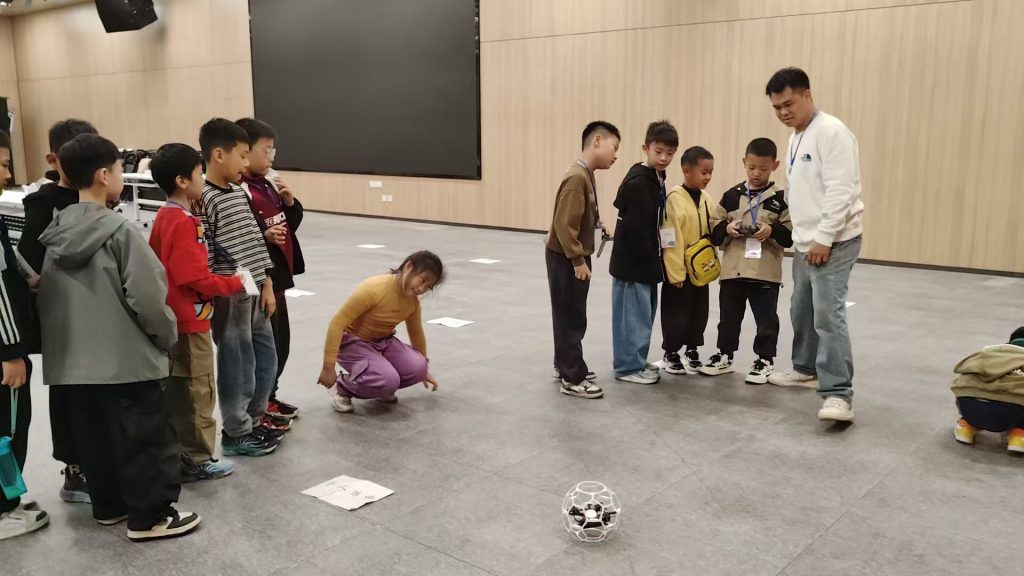
Now, let’s delve into the specific applications of drone low-altitude photogrammetry in urban surveying and mapping. One of the primary uses is image data processing, which involves converting raw aerial images into usable geospatial products. The workflow typically includes data acquisition, preprocessing, and generation of digital models. For instance, after capturing images, I use software to perform aerial triangulation, which adjusts the images based on ground control points (GCPs). The mathematical foundation for this can be described using collinearity equations: $$x – x_0 = -f \frac{m_{11}(X – X_0) + m_{12}(Y – Y_0) + m_{13}(Z – Z_0)}{m_{31}(X – X_0) + m_{32}(Y – Y_0) + m_{33}(Z – Z_0)}$$ $$y – y_0 = -f \frac{m_{21}(X – X_0) + m_{22}(Y – Y_0) + m_{23}(Z – Z_0)}{m_{31}(X – X_0) + m_{32}(Y – Y_0) + m_{33}(Z – Z_0)}$$ where \((x, y)\) are image coordinates, \((x_0, y_0)\) are principal point coordinates, \(f\) is focal length, \((X, Y, Z)\) are object space coordinates, \((X_0, Y_0, Z_0)\) are perspective center coordinates, and \(m_{ij}\) are rotation matrix elements. This process yields precise orthophotos and DEMs, which are essential for urban planning.
Another critical application is regional surveying for 3D city modeling. Drones can capture multi-angle images to construct detailed three-dimensional representations of urban areas. The volume of a building, for example, can be estimated from a 3D model using integration: $$V = \iiint_{\Omega} dV$$ where \(\Omega\) represents the building region. These models support various analyses, such as shadow studies or infrastructure planning. In my work, I have used drone-derived 3D models to assess building heights and densities, providing data for zoning regulations. The accuracy of these models often depends on the quality of drone training, as operators must ensure proper overlap and image stitching.
Emergency monitoring is a growing application area. Drones enable real-time data collection during events like floods, earthquakes, or fires. For flood monitoring, water levels can be tracked using time-series imagery, with changes quantified by: $$\Delta h = h_2 – h_1$$ where \(\Delta h\) is the water level change between times \(t_1\) and \(t_2\). This data helps authorities respond quickly. Additionally, drones equipped with thermal cameras can detect heat signatures in disaster zones, aiding search and rescue operations. Drone training programs often include modules on emergency protocols, teaching operators to deploy drones safely in crisis situations.
In the context of smart cities, drones play a pivotal role in gathering geospatial data for urban management systems. GIS platforms integrate drone data to create dynamic maps that support decision-making. For example, traffic flow analysis can be enhanced using drone videos processed with computer vision algorithms. The data integration process can be modeled as: $$D_{smart} = \alpha \cdot D_{drone} + \beta \cdot D_{sensor} + \gamma \cdot D_{historic}$$ where \(D_{smart}\) is the smart city dataset, and \(\alpha, \beta, \gamma\) are weighting factors for drone data, sensor data, and historical data, respectively. This approach reduces reliance on manual surveys and satellite imagery, lowering costs and improving timeliness. Drone training ensures that operators can handle the technical demands of smart city projects, such as data fusion and privacy compliance.
Accuracy validation is essential in urban surveying, and drones facilitate this through repeat surveys and comparison with ground truth. The root mean square error (RMSE) is commonly used to assess accuracy: $$RMSE = \sqrt{\frac{\sum_{i=1}^{n} (x_i – \hat{x}_i)^2}{n}}$$ where \(x_i\) are measured values, \(\hat{x}_i\) are reference values, and \(n\) is the number of points. By conducting multiple drone flights over the same area, I can compute RMSE values to verify that accuracy meets standards, such as those for 1:1000 scale maps. Drone training emphasizes calibration techniques that minimize errors, such as using high-precision GCPs.
Technological advancements like aerial triangulation and structured surveying further enhance drone capabilities. Aerial triangulation, based on bundle adjustment, optimizes the geometric relationship between images. The objective function can be expressed as: $$\min \sum_{i=1}^{m} \sum_{j=1}^{n} ||p_{ij} – \hat{p}_{ij}||^2$$ where \(p_{ij}\) are observed image points, \(\hat{p}_{ij}\) are projected points, and \(m\) and \(n\) are numbers of images and points, respectively. This technique improves the accuracy of photogrammetric products. Structured surveying involves pre-programmed flight paths to ensure systematic data collection, which is taught in advanced drone training courses. By setting waypoints and camera angles, operators can achieve consistent coverage, even in complex urban geometries.
Despite the benefits, challenges remain, such as regulatory restrictions, data privacy concerns, and technical limitations like battery life. However, ongoing innovations in drone technology, coupled with robust drone training, are addressing these issues. For instance, new regulations are emerging to allow beyond-visual-line-of-sight (BVLOS) operations in urban areas, expanding application scope. Training programs now include modules on legal compliance and ethical data use, preparing operators for real-world scenarios.
Looking ahead, the future of drone low-altitude photogrammetry in urban surveying is bright. With the rise of artificial intelligence and machine learning, drones can automate feature extraction and change detection. For example, convolutional neural networks (CNNs) can be applied to drone imagery to identify building damages or land use changes. The training process for such models involves minimizing a loss function: $$L = -\sum_{c=1}^{C} y_c \log(\hat{y}_c)$$ where \(y_c\) is the true label, \(\hat{y}_c\) is the predicted probability for class \(c\), and \(C\) is the number of classes. This integration of AI will further reduce manual effort and increase accuracy.
In conclusion, drone low-altitude photogrammetry is a transformative technology for urban surveying and mapping. Its high resolution, cost-effectiveness, efficiency, and safety make it superior to traditional methods in many aspects. Through applications like image processing, 3D modeling, emergency monitoring, and smart city development, drones are reshaping how we collect and use geospatial data. However, the success of these applications hinges on comprehensive drone training, which equips operators with the skills to harness the technology’s full potential. As I continue to explore this field, I am confident that drones will become an indispensable tool in urban planning and management, driving sustainable development and resilience in cities worldwide.