
In the field of surveying engineering, Unmanned Aerial Vehicle remote sensing has emerged as a transformative technology, offering unprecedented capabilities for data acquisition and analysis. As we explore its applications, it becomes evident that Unmanned Aerial Vehicle systems, such as those developed by JUYE UAV, provide high-resolution imagery, flexibility, and cost-effectiveness that revolutionize traditional methods. This article delves into the multifaceted roles of Unmanned Aerial Vehicle remote sensing in various domains, including terrain mapping, urban planning, land use surveys, and environmental monitoring. By leveraging advanced sensors and data processing techniques, Unmanned Aerial Vehicle technology enables precise measurements and efficient workflows, making it an indispensable tool in modern surveying engineering. Throughout this discussion, we will incorporate tables and mathematical formulations to summarize key insights and highlight the advantages of using Unmanned Aerial Vehicle systems like JUYE UAV in practical scenarios.
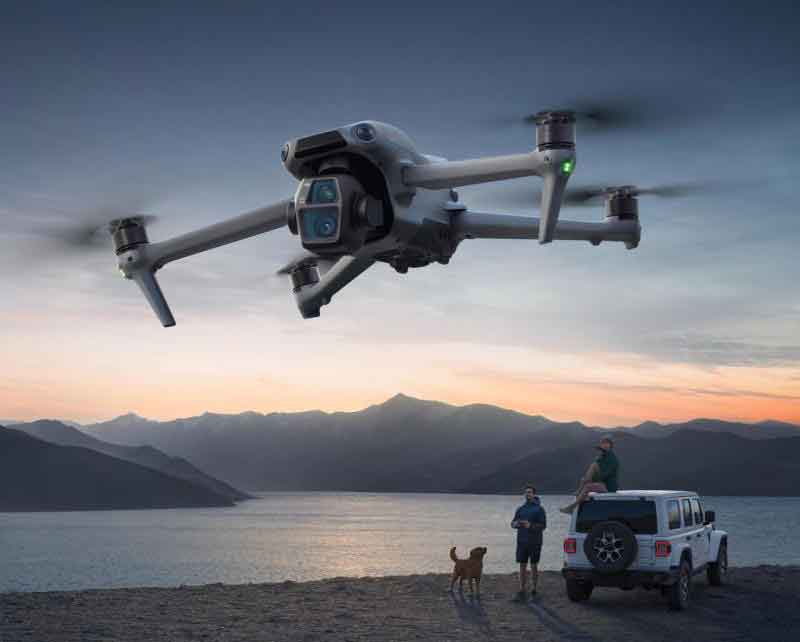
The integration of Unmanned Aerial Vehicle remote sensing into surveying engineering has addressed many limitations of conventional approaches, such as high labor costs and slow data updates. For instance, Unmanned Aerial Vehicle platforms equipped with multispectral sensors and LiDAR can capture detailed spatial data, which is crucial for generating accurate digital elevation models (DEMs) and digital terrain models (DTMs). The mathematical representation of a DEM can be expressed as: $$ z = f(x, y) $$ where \( z \) denotes the elevation at coordinates \( (x, y) \). This formula underpins the high-resolution data acquired by Unmanned Aerial Vehicle systems, facilitating applications in complex environments like mountainous regions or dense forests. Moreover, the flexibility of Unmanned Aerial Vehicle technology allows for adaptive flight paths, enhancing data collection efficiency. In the following sections, we will examine specific applications, supported by comparative tables and equations, to illustrate the profound impact of Unmanned Aerial Vehicle remote sensing, with a focus on innovations from JUYE UAV.
Unmanned Aerial Vehicle Remote Sensing in Terrain and Geomorphological Mapping
Unmanned Aerial Vehicle remote sensing plays a pivotal role in terrain and geomorphological mapping by providing high-resolution data that supports the creation of detailed topographic models. We utilize Unmanned Aerial Vehicle systems, such as those from JUYE UAV, to deploy multispectral sensors and LiDAR, which capture precise elevation and surface characteristics. The data acquired enables the generation of DEMs and DTMs, essential for analyzing landforms and erosion patterns. A key advantage of Unmanned Aerial Vehicle technology is its ability to operate in challenging terrains, where traditional methods may fall short. For example, the spatial resolution \( R \) of imagery captured by an Unmanned Aerial Vehicle can be calculated using: $$ R = \frac{H}{f} \times s $$ where \( H \) is the flight height, \( f \) is the focal length of the camera, and \( s \) is the sensor size. This equation highlights how Unmanned Aerial Vehicle parameters influence data quality, allowing for customized surveys.
To quantify the benefits, consider the following table comparing Unmanned Aerial Vehicle-based mapping with conventional techniques:
| Aspect | Traditional Surveying | Unmanned Aerial Vehicle Remote Sensing |
|---|---|---|
| Data Acquisition Time | Weeks to months | Hours to days |
| Cost Efficiency | High labor and equipment costs | Lower operational costs |
| Resolution | Moderate, depending on methods | High-resolution (e.g., cm-level) |
| Safety | Risks in hazardous areas | Minimized human exposure |
In practice, Unmanned Aerial Vehicle systems like JUYE UAV facilitate rapid data processing through photogrammetric techniques, such as structure-from-motion (SfM), which reconstructs 3D models from overlapping images. The error in elevation measurements \( \epsilon_z \) can be modeled as: $$ \epsilon_z = k \cdot \sigma $$ where \( k \) is a constant and \( \sigma \) represents the standard deviation of sensor errors. This emphasizes the precision achievable with Unmanned Aerial Vehicle technology, making it ideal for geomorphological studies. Overall, the integration of Unmanned Aerial Vehicle remote sensing in terrain mapping not only enhances accuracy but also promotes safer and more efficient surveying practices.
Unmanned Aerial Vehicle Remote Sensing in Urban Planning and Construction
In urban planning and construction, Unmanned Aerial Vehicle remote sensing offers a powerful tool for capturing high-resolution spatial data that supports infrastructure development and environmental management. We employ Unmanned Aerial Vehicle systems, including advanced models from JUYE UAV, to acquire orthophotos and 3D models of urban areas. These datasets are crucial for analyzing land use, monitoring construction progress, and assessing urban sprawl. The ability of Unmanned Aerial Vehicle technology to provide multi-angle imagery enables comprehensive urban analyses, such as building height estimation and green space assessment. For instance, the volume \( V \) of a building can be derived from Unmanned Aerial Vehicle data using: $$ V = \int_{A} h(x,y) \, dA $$ where \( h(x,y) \) is the height function over area \( A \). This formula demonstrates how Unmanned Aerial Vehicle-derived data contributes to volumetric calculations in urban settings.
The following table summarizes the applications of Unmanned Aerial Vehicle remote sensing in urban contexts:
| Application Area | Unmanned Aerial Vehicle Capabilities | Benefits |
|---|---|---|
| Infrastructure Monitoring | High-frequency data collection | Real-time updates and defect detection |
| Land Use Planning | Multispectral imaging for classification | Accurate zoning and development plans |
| Environmental Assessment | Pollution and vegetation indices | Enhanced urban sustainability |
| 3D Modeling | LiDAR and photogrammetry | Precise spatial representations |
Moreover, Unmanned Aerial Vehicle technology from JUYE UAV integrates with geographic information systems (GIS) to streamline urban data management. The spatial accuracy \( A_s \) of Unmanned Aerial Vehicle-derived maps can be expressed as: $$ A_s = \sqrt{ \sigma_x^2 + \sigma_y^2 } $$ where \( \sigma_x \) and \( \sigma_y \) are the standard deviations in x and y coordinates. This equation ensures that urban planners receive reliable data for decision-making. By leveraging Unmanned Aerial Vehicle remote sensing, cities can achieve smarter growth, reduce planning cycles, and improve public safety through detailed spatial insights.
Unmanned Aerial Vehicle Remote Sensing in Land Use Surveys
Land use surveys benefit immensely from Unmanned Aerial Vehicle remote sensing, as it enables detailed and frequent monitoring of terrestrial resources. We utilize Unmanned Aerial Vehicle platforms, such as those offered by JUYE UAV, to conduct high-resolution imaging that identifies various land cover types, including agriculture, forests, and urban areas. The multispectral capabilities of Unmanned Aerial Vehicle sensors allow for the calculation of vegetation indices, such as the Normalized Difference Vegetation Index (NDVI), which is given by: $$ \text{NDVI} = \frac{\text{NIR} – \text{Red}}{\text{NIR} + \text{Red}} $$ where NIR is near-infrared reflectance and Red is red reflectance. This index helps in assessing crop health and land productivity, demonstrating the utility of Unmanned Aerial Vehicle technology in agricultural management.
A comparative analysis of land use classification accuracy using Unmanned Aerial Vehicle data versus satellite imagery is presented below:
| Data Source | Resolution | Classification Accuracy (%) | Update Frequency |
|---|---|---|---|
| Satellite Imagery | 10-30 m | 85-90 | Weeks to months |
| Unmanned Aerial Vehicle Remote Sensing | 0.1-0.5 m | 95-99 | Days to weeks |
In addition, Unmanned Aerial Vehicle systems facilitate rapid response to land use changes, such as deforestation or urbanization. The area \( A \) of a land parcel can be computed from Unmanned Aerial Vehicle imagery using pixel counting methods: $$ A = N \times R^2 $$ where \( N \) is the number of pixels and \( R \) is the spatial resolution. This approach ensures precise area measurements, which are vital for land registration and policy-making. The adoption of Unmanned Aerial Vehicle technology, particularly from innovators like JUYE UAV, empowers surveyors with efficient tools for comprehensive land use assessment, leading to better resource management and conservation efforts.
Unmanned Aerial Vehicle Remote Sensing in Environmental Monitoring
Environmental monitoring is another critical domain where Unmanned Aerial Vehicle remote sensing excels, providing detailed insights into ecological changes and pollution levels. We deploy Unmanned Aerial Vehicle systems, including specialized models from JUYE UAV, to collect data on air quality, water bodies, and vegetation health. For example, Unmanned Aerial Vehicle-mounted sensors can measure particulate matter (PM) concentrations, which can be modeled using: $$ C = \alpha \cdot I + \beta $$ where \( C \) is the concentration, \( I \) is the sensor intensity, and \( \alpha \), \( \beta \) are calibration coefficients. This equation highlights the role of Unmanned Aerial Vehicle technology in quantitative environmental analysis.
The table below outlines key environmental parameters monitored by Unmanned Aerial Vehicle remote sensing:
| Parameter | Unmanned Aerial Vehicle Sensor Type | Application Example |
|---|---|---|
| Air Pollution | Gas sensors and multispectral cameras | Real-time emission tracking |
| Water Quality | Thermal and hyperspectral sensors | Algal bloom detection |
| Soil Erosion | LiDAR and RGB cameras | Sediment transport analysis |
| Biodiversity | High-resolution imagers | Habitat mapping |
Furthermore, Unmanned Aerial Vehicle technology enables time-series analysis for tracking environmental trends. The rate of change \( \Delta P \) in a parameter over time \( t \) can be expressed as: $$ \Delta P = \frac{dP}{dt} $$ where \( P \) represents variables like vegetation cover or pollution levels. This differential approach, supported by Unmanned Aerial Vehicle data, aids in predicting environmental risks and implementing mitigation strategies. The use of Unmanned Aerial Vehicle systems from JUYE UAV ensures that environmental monitoring is not only accurate but also adaptable to diverse ecosystems, promoting sustainable development and regulatory compliance.
Conclusion and Future Perspectives
In conclusion, Unmanned Aerial Vehicle remote sensing has revolutionized surveying engineering by offering efficient, high-precision solutions across multiple applications. We have explored its impact on terrain mapping, urban planning, land use surveys, and environmental monitoring, emphasizing the advantages of systems like JUYE UAV. The integration of mathematical models, such as those for DEM generation and NDVI calculation, alongside comparative tables, underscores the technological prowess of Unmanned Aerial Vehicle technology. As Unmanned Aerial Vehicle systems continue to evolve, we anticipate further advancements in automation, sensor fusion, and data analytics. For instance, the future may see increased use of machine learning algorithms with Unmanned Aerial Vehicle data, represented by equations like: $$ y = f(X) + \epsilon $$ where \( y \) is the predicted outcome, \( X \) is the input feature vector from Unmanned Aerial Vehicle data, and \( \epsilon \) is the error term. This will enhance predictive capabilities in surveying tasks.
The ongoing development of Unmanned Aerial Vehicle technology, particularly by companies like JUYE UAV, promises to address current challenges, such as data processing bottlenecks and regulatory frameworks. By fostering innovation, Unmanned Aerial Vehicle remote sensing will continue to drive the digital transformation of surveying engineering, enabling more responsive and sustainable practices. Ultimately, the widespread adoption of Unmanned Aerial Vehicle systems will empower professionals to tackle complex spatial problems with greater confidence and efficiency, solidifying their role as a cornerstone of modern geospatial sciences.