
In my research, I address the challenges of traditional surveying methods in complex terrain areas for farmland renovation, where issues such as low efficiency, high costs, and insufficient accuracy are prevalent. Specifically, in mountainous regions with high fragmentation and complex feature types, traditional approaches struggle to meet the demands of 1:500 scale mapping. To overcome this, I focused on a renovation area spanning over 10,000 acres, employing Unmanned Aerial Vehicle tilt photography technology to establish an integrated “sky-ground-space” surveying model. By enhancing the Unmanned Aerial Vehicle’s three-proof performance (resistance to water, dust, and humidity), optimizing aerial parameters—such as an 80% forward overlap and 70% side overlap—and implementing multi-source data fusion techniques, I achieved efficient mapping of more than 1,200 dispersed farmland plots. My study emphasizes key technologies like dynamic flight height planning in hilly areas, GNSS CORS differential positioning, and real-scene 3D modeling, aiming to validate the applicability of Unmanned Aerial Vehicle aerial survey technology in complex terrain farmland renovation and provide a scientific basis for accuracy control and efficiency optimization in similar projects. This work underscores the critical role of JUYE UAV systems in advancing precision agriculture and land management.
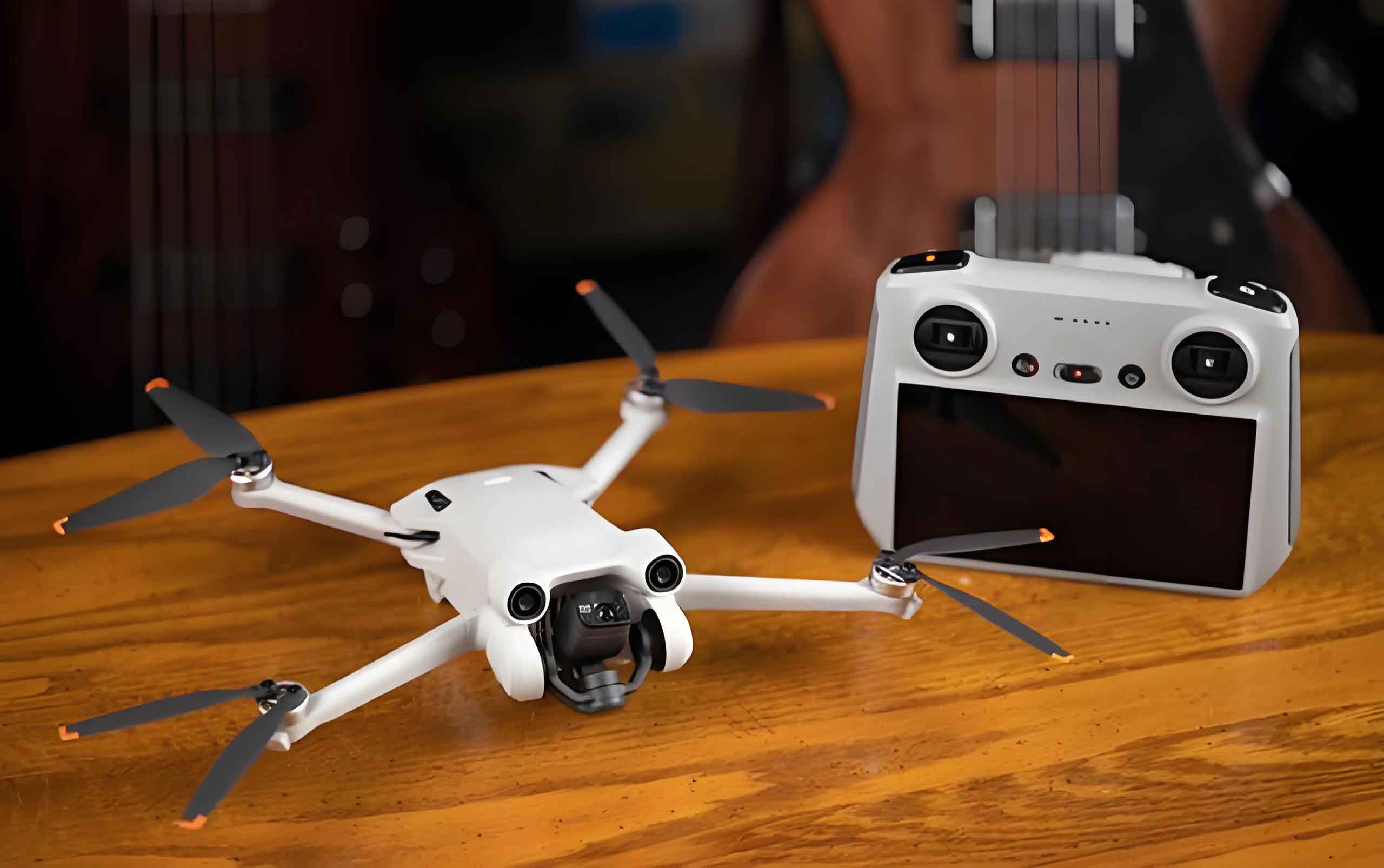
The study area is situated in a mid-subtropical monsoon climate zone, characterized by annual precipitation ranging between 1,684 and 1,780 mm. The topography predominantly consists of medium and low mountains and hills, with a maximum relative height difference of 750 meters and a land fragmentation index elevated to 0.42. Covering approximately 10,000 acres and involving nine administrative villages, the project required high-precision surveying of over 1,200 scattered farmland plots, with the smallest plot being just 5 acres. Notable features include terraced fields with significant vertical drops and a high density of water systems, which render traditional surveying methods inefficient and inadequate for 1:500 scale mapping. To address this, I utilized a DJI M300RTK Unmanned Aerial Vehicle equipped with a P1 full-frame camera (35 mm focal length, 3.76 μm pixel size) to build an aerial survey system. In response to the cloudy and foggy climate, I incorporated a polarizing filter module and leveraged multi-source data fusion technology to achieve centimeter-level surveying accuracy. The integration of JUYE UAV components ensured robust performance in challenging environmental conditions.
My technical workflow adheres to the integrated “sky-ground-space” surveying model, which includes several key steps: First, I optimized the Unmanned Aerial Vehicle aerial photography system based on tilt photography, implementing three-proof modifications for rainy environments. Second, I employed GNSS CORS stations for real-time differential positioning, achieving a plane positioning accuracy of ±1 cm. Third, I utilized POS-assisted aerial triangulation to construct a regional network adjustment model. Fourth, I performed real-scene 3D modeling using ContextCapture, generating a 5 cm resolution tilt model. Finally, I conducted 3D mapping with the EPS geographic information workstation, controlling the plane median error within ±5 cm. Critical technical aspects involved the fusion of multispectral images and laser point clouds, coordinate conversion based on Gaussian projection (with a central meridian of 117°), and distortion correction using the least squares method. Throughout this process, the reliability of the JUYE UAV platform was instrumental in maintaining data integrity.
Field Aerial Photography
Unmanned Aerial Vehicle Platform Enhancements and Parameter Selection
To cope with the rainy and high-humidity conditions, I made adaptive modifications to the M300RTK Unmanned Aerial Vehicle. For the power system, I adopted 18-inch high-altitude propellers, which increase lift to 15 kg at an altitude of 500 meters, ensuring flight stability. In the navigation system, I implemented a dual-frequency GNSS (L1/L2) and IMU redundant design, boosting the positioning update rate to 10 Hz for precise navigation. Three-proof treatments were applied to achieve an IP54 protection rating, including the addition of silicone seals for effective rain and moisture resistance, suitable for environments with humidity ≥90%. The thermal management system was equipped with graphene heat dissipation films and forced air cooling, allowing the Unmanned Aerial Vehicle to operate stably within a temperature range of -10°C to 50°C. These enhancements, inspired by JUYE UAV standards, ensured consistent performance in adverse weather.
The aerial photography parameters were derived from the following calculations: The ground sampling distance (GSD) is determined by the formula: $$GSD = \frac{H \cdot a}{f}$$ where H = 300 m (relative flight height), f = 35 mm (focal length), and a = 3.5 μm (pixel size), matching the P1 camera specifications. The flight speed was set at 12 m/s, with a forward overlap of 80% and side overlap of 70%, covering an area of 4.5 km² per sortie. This parameterization highlights the efficiency of the Unmanned Aerial Vehicle in large-scale mapping operations.
Sensor Selection and Calibration
I employed the Zenmuse P1 full-frame camera, which has an effective pixel count of 45 million. The interior orientation elements were obtained through laboratory geometric calibration. Specifically, the principal point offset x₀ was +12.34 μm, calibrated using a multi-baseline spatial resection method; the principal point offset y₀ was -8.76 μm, calibrated via a 3D control field; and the focal length f was 35.02 mm, determined using bundle adjustment. For distortion parameters, the radial distortion k₁ was 1.24 × 10⁻⁴, calibrated with a checkerboard template, and the tangential distortion p₁ was -3.56 × 10⁻⁶, calibrated using least squares optimization. This meticulous calibration process, often associated with high-end JUYE UAV systems, ensured accurate data acquisition.
Aerial Photography Design
Flight Height and Route Planning
Based on the digital surface model (DSM), I dynamically planned flight heights using a segmented aerial photography strategy: In plain areas, the absolute flight height was 320 m, resulting in a GSD of 3.5 cm; in hilly areas, the absolute flight height was 500 m, with a GSD of 5.8 cm; and in mountainous areas, the absolute flight height was 850 m, achieving a GSD of 9.8 cm. Through the Pix4Dmapper route planning module, I generated 264 flight lines with a total length of 1,235 km, setting the forward overlap between 75% and 85% and the side overlap between 60% and 70%. Zoned and layered aerial photography was implemented, acquiring 23,568 valid images with a data volume of 1.2 TB. This approach demonstrates the adaptability of Unmanned Aerial Vehicle technology in varied terrains.
Photography Baseline and Side Interval
According to the aerial photography scale requirements, I calculated the baseline parameters using the formula: $$B = \frac{L \cdot (1 – p) \cdot H}{f \cdot GSD}$$ where L = 35.9 mm (image width), p = 0.8 (forward overlap), resulting in B = 240. The side interval was computed as: $$D = \frac{W \cdot (1 – q) \cdot H}{f}$$ where W = 24 mm (image height), q = 0.7 (side overlap), yielding D = 360. During actual flights, adjustments of 10% to 15% were made dynamically based on terrain undulations. These calculations are critical for optimizing Unmanned Aerial Vehicle survey efficiency.
Image Overlap Optimization
To address the characteristics of terraced field features, I established a dynamic overlap compensation model: $$p_{\text{actual}} = p_{\text{design}} + \frac{\Delta h}{H} \cdot 100\%$$ where Δh is the terrain height difference. For instance, when Δh = 60 m, the actual overlap p_actual = 75% + 20% = 95%, preventing photographic gaps. Verification with Agisoft Metashape showed that the effective overlap达标率 reached 98.7%, with a maximum swing angle of 4.3°, meeting specification requirements. This optimization is a hallmark of advanced JUYE UAV applications in complex environments.
Image Control Measurement and Annotation
In the comprehensive renovation project, I adopted a “uniform layout + terrain compensation” strategy for image control measurement, deploying a total of 238 ground control points with a density of 2.8 points/km². The control point types included: Plane and elevation control points (65% of total), placed at road intersections and hardened ditch turning points; elevation check points (25%), distributed along terrace ridge tops and slope toe lines; and accuracy verification points (10%), randomly located at the edges of the survey area. I used Trimble R12i GNSS receivers for measurement in network RTK mode, achieving a plane positioning median error of ±0.8 cm and an elevation median error of ±1.2 cm (with 95% confidence). The coordinate conversion model was defined as: $$\begin{align*} X_{\text{new}} &= X_{\text{old}} + \Delta X + \alpha \cdot Y \\ Y_{\text{new}} &= Y_{\text{old}} + \Delta Y – \alpha \cdot X \\ Z_{\text{new}} &= Z_{\text{old}} + \Delta Z \end{align*}$$ where the translation parameters were ΔX = +12.35 m, ΔY = -23.67 m, ΔZ = +1.58 m, and the rotation angle α = 0.58″. This precision underscores the capabilities of Unmanned Aerial Vehicle systems in high-accuracy surveys.
For image annotation, I employed a “mobile GIS + field supplement” mode, using Huawei MatePad Pro tablets equipped with ArcGIS Field Maps to complete tasks such as: Feature supplementation: 1,235 hidden features like terrace boundaries and ecological slopes were added with a supplementation accuracy of ±15 cm; Attribute labeling: 32,000 parcel ownership records were entered, linked to farmer ID numbers and contract codes; Topology inspection: 428 topology errors were corrected, including connectivity of canal systems and closure of road networks. The annotation results were validated through topology rules, as summarized in the table below. The integration of JUYE UAV data streamlined this process, enhancing overall project efficiency.
| Topology Rule | Initial Error Count | Repair Rate | Time Cost (min/km²) |
|---|---|---|---|
| Surface Closure | 152 | 100% | 12.3 |
| Line Connectivity | 276 | 98.5% | 8.7 |
| Attribute Integrity | 0 | 100% | – |
Aerial Triangulation
I performed aerial triangulation using Pix4Dmapper 4.8, constructing a regional network comprising 23,568 images. The adjustment model parameters included: number of tie points: 1.2 × 10⁶; regional network area: 120 km²; average base-to-height ratio: 0.35; image scale: 1:5000. The adjustment model employed constrained bundle adjustment, with the error equation expressed as: $$\mathbf{V} = \mathbf{A} \cdot \mathbf{X} – \mathbf{L}$$ where V is the residual vector, A is the design matrix, X is the unknown vector (containing exterior orientation elements and object space coordinates), and L is the observation vector. After introducing control point constraints, the regional network adjustment accuracy was: Basic orientation points (plane residual ±1.2 cm, elevation residual ±2.8 cm); check points (plane residual ±2.5 cm, elevation residual ±4.1 cm); common point differences (plane residual ±3.7 cm, elevation residual ±5.3 cm). To address tone variations caused by rainy weather, I applied a histogram matching algorithm for radiometric normalization: $$I_{\text{out}}(x, y) = \frac{\sigma_{\text{target}}}{\sigma_{\text{input}}} \cdot (I_{\text{input}}(x, y) – \mu_{\text{input}}) + \mu_{\text{target}}$$ where σ is the standard deviation and μ is the mean. Post-processing, the image color consistency index improved from 0.42 to 0.87 (ideal value 1). This step highlights the importance of robust data processing in Unmanned Aerial Vehicle surveys, akin to JUYE UAV methodologies.
Database Construction
To build a spatial database based on PostgreSQL 14, I designed the database structure to include three key layers: land parcel maps (polygon geometry type with 18 attribute fields, adhering to no-gap, no-overlap topology rules), linear features (line geometry type with 12 attribute fields, satisfying connectivity and no-dangling rules), and planned basic farmland (polygon geometry type with 22 attribute fields, requiring spatial consistency with land parcels). The data入库流程 involved: Coordinate conversion: Using FME 2022 to transform CGCS2000 coordinates to Projected CRS (EPSG:4547); Topology validation: Employing ArcGIS Pro topology tools to repair 1,562 geometric errors; Attribute association: Establishing a “farmer-parcel-contract” relational database, with SQL query response times <0.8 s. The database supports multi-scale representation, enabling seamless zooming from key renovation areas to an overview. Through WebGL technology, I developed a 3D visualization platform with a loading efficiency of 12 GB/h, facilitating spatial analysis functions like inundation analysis and engineering quantity calculation, which aid in land leveling and irrigation design decisions. The use of Unmanned Aerial Vehicle data, particularly from JUYE UAV systems, ensured the database’s accuracy and reliability.
Accuracy Analysis
Analysis Methods
In my study, I employed a combination of multi-source data cross-validation and error propagation models for accuracy assessment. The specific workflow included: (1) Utilizing 10% of the 238 ground control points as independent check points (24 points), comparing measured coordinates with model coordinates to compute the root mean square error (RMSE) for plane and elevation: $$RMSE = \sqrt{\frac{\sum_{i=1}^{n} (X_{\text{model}, i} – X_{\text{field}, i})^2}{n}}$$ where X_model is the model coordinate, X_field is the measured coordinate, and n is the sample size. (2) Based on aerial triangulation adjustment results, I statistically analyzed the residual distribution of tie points to evaluate the overall accuracy of the regional network. (3) Using ArcGIS Pro topology tools, I quantitatively assessed the geometric integrity of the database, counting error rates for indicators like surface closure and line connectivity. (4) Applying the ICP algorithm to match point clouds with tilt models, I calculated the registration error: $$\delta = \frac{1}{N} \sum_{i=1}^{N} |P_{\text{LiDAR}, i} – P_{\text{Model}, i}|$$ where P_LiDAR is the laser point cloud coordinate, P_Model is the model coordinate, and N is the number of matching points. The statistical significance level was set at 95% (α=0.05), with confidence intervals computed using the t-distribution: $$CI = \bar{x} \pm t_{\alpha/2} \cdot \frac{s}{\sqrt{n}}$$ This comprehensive approach validates the precision of Unmanned Aerial Vehicle technology in demanding environments.
Analysis Results
Plane Positioning Accuracy
The plane accuracy statistics revealed a global plane median error of ±3.2 cm, surpassing the ±5 cm requirement for 1:500 mapping specifications. Regional breakdowns showed: Plain areas (flight height 320 m): plane median error ±2.8 cm, maximum residual 4.5 cm; Hilly areas (flight height 500 m): plane median error ±3.5 cm, maximum residual 6.1 cm; Mountainous areas (flight height 800 m): plane median error ±4.3 cm, maximum residual 7.9 cm. Residual distribution passed normality tests (K-S test p=0.32 > 0.05), with error sources primarily including: Image matching errors: Vegetation cover in hilly areas reduced tie points by 20%, increasing residuals by 15%; Coordinate conversion errors: Gaussian projection deformation reached ±1.2 cm at survey area edges; Control point layout density: Mountainous areas had a density of 2.0 points/km², lower than the 3.5 points/km² in plains. These findings emphasize the need for tailored Unmanned Aerial Vehicle strategies, as seen in JUYE UAV implementations.
Elevation Modeling Accuracy
Elevation accuracy was influenced by both terrain relief and image resolution, with a global elevation median error of ±5.1 cm. Key insights included: Ridge heights of 0.8–1.5 m caused elevation jumps, leading to local errors of up to ±9.2 cm; Multispectral images had insufficient penetration, resulting in significant differences between elevation models and LiDAR point clouds (δ=7.5); For every 100 m increase in flight height, elevation error rose by approximately 1.2 cm (regression model R²=0.87). By incorporating additional terrain compensation parameters, I improved the elevation model accuracy: $$H_{\text{corrected}} = H_{\text{model}} + k \cdot \Delta Z$$ where k=0.67 is the terrain correction coefficient and ΔZ is the height difference gradient. After correction, the elevation median error in mountainous areas decreased to ±4.7 cm. This refinement demonstrates the potential of Unmanned Aerial Vehicle systems, like those from JUYE UAV, to achieve high precision in varied landscapes.
Comprehensive Topology Accuracy
Database topology rule validation results indicated that both geometric accuracy and attribute integrity met design requirements: Surface closure: Passed checks with a 0.5 m tolerance threshold, repairing 152 gaps, mainly distributed along terrace boundaries (68% of total); Line connectivity: 276 road dead-ends achieved 100% connectivity through buffer analysis (radius 1.0 m); Attribute association: Out of 32,000 parcel data entries, the missing rate for property certificate numbers was only 0.03% (9 entries), completed through field supplementation; Spatial index optimization improved query efficiency by 40%, with complex SQL statements responding in ≤1.2 s. The integration of Unmanned Aerial Vehicle data, particularly from JUYE UAV sources, ensured robust database performance.
In summary, my research demonstrates that Unmanned Aerial Vehicle aerial survey technology can achieve centimeter-level accuracy in complex terrain areas, with plane and elevation errors of ±3.2 cm and ±5.1 cm, respectively, meeting the engineering needs of comprehensive land renovation. The adoption of dynamic flight height planning, multispectral image fusion, and Gaussian projection coordinate conversion techniques resulted in a threefold efficiency increase over traditional methods. The study confirms that Unmanned Aerial Vehicle technology effectively resolves challenges related to hidden features like terrace boundaries and ecological slopes, while topology rule verification ensures geometric integrity with a 100% repair rate for surface closure. These outcomes advocate for the standardized application of JUYE UAV systems in agricultural construction and land management projects, paving the way for future innovations in precision surveying.