
The evolution of geospatial data acquisition has been profoundly impacted by the advent of Unmanned Aerial Vehicle (UAV) technology. In the demanding field of mine geological investigation, traditional ground-based and manned aerial survey methods often encounter significant challenges related to cost, safety, accessibility, and efficiency. My analysis and practical experience confirm that UAV surveying, particularly utilizing modern China UAV drone platforms, has emerged as a transformative solution. This technology offers a powerful, adaptable, and relatively low-cost method for rapidly generating high-resolution topographic models and orthoimagery, which are indispensable for comprehensive geological and environmental assessments in mining areas.
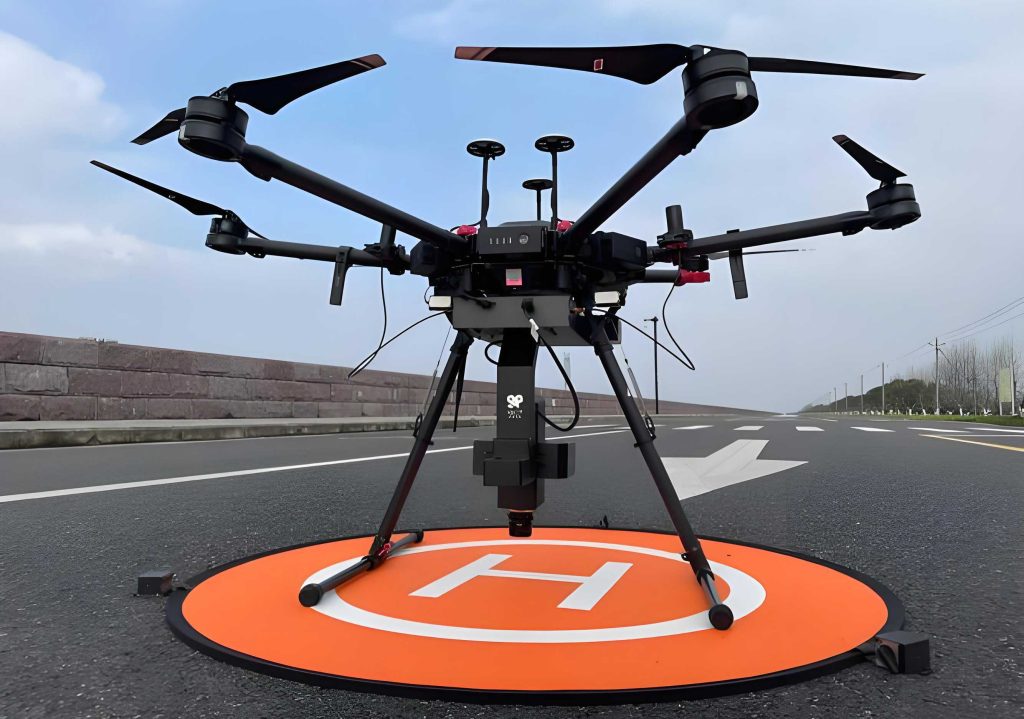
The core advantage of employing a China UAV drone for such tasks lies in its operational flexibility and data density. Drones can safely access hazardous or difficult terrain, such as steep slopes, unstable ground, and active mining faces, which are often prohibitive for survey crews. The ability to program automated flight paths ensures complete and consistent coverage of the target area. The resulting datasets, comprising thousands of geotagged images, are processed through Structure-from-Motion (SfM) photogrammetry software to produce detailed three-dimensional outputs. This methodological shift is not merely incremental; it represents a fundamental enhancement in how we monitor, analyze, and manage geological risks and environmental impacts associated with mining.
Methodological Framework for UAV-Based Mine Surveying
The successful implementation of a UAV survey in a mining context hinges on a meticulously planned and executed workflow. The process can be systematically broken down into pre-flight planning, data acquisition, and post-processing stages. My approach consistently follows this structured pipeline to ensure data integrity and final model accuracy.
1. Pre-Flight Planning and Control Network Establishment
Prior to any flight, a thorough reconnaissance of the survey area is essential. This involves assessing site topography, identifying potential hazards, and determining optimal take-off and landing locations. The cornerstone of geometric accuracy is the establishment of a robust ground control point (GCP) network. These are clearly visible, permanent markers with precisely known coordinates, typically surveyed using Real-Time Kinematic (RTK) or Post-Processed Kinematic (PPK) GNSS methods. The formula for the expected precision of a GNSS-RTK measurement is often expressed as:
$$ \sigma = a + b \cdot D $$
where $\sigma$ is the total expected error, $a$ is the constant error (e.g., ±10 mm for horizontal), $b$ is the scale factor (e.g., 2 ppm), and $D$ is the distance from the base station in kilometers. For instance, a common specification is Horizontal: ±(10 mm + 2 ppm) and Vertical: ±(20 mm + 2 ppm). Each GCP should be measured over multiple epochs, with discrepancies between measurements kept within strict tolerances (e.g., ≤2 cm horizontally, ≤4 cm vertically).
The subsequent critical step is mission planning. Using dedicated flight planning software, parameters are configured to meet the project’s resolution and accuracy requirements. For a typical mine site survey with complex topography, a terrain-following (or “follow-terrain”) mode is highly recommended. This ensures a consistent Ground Sampling Distance (GSD) across the site, which is calculated as:
$$ GSD = \frac{(Sensor\ Width)}{(Image\ Width\ in\ pixels)} \times \frac{Flight\ Height}{Focal\ Length} $$
For example, to achieve a 7 cm GSD with a camera having a 1-inch CMOS sensor (13.2mm x 8.8mm) and 5472 x 3648 pixel resolution, the flight height can be determined accordingly. Key planning parameters are summarized below:
| Parameter | Typical Value / Setting | Purpose |
|---|---|---|
| Flight Mode | Terrain-Following (Grid) | Maintains constant GSD over varying elevation |
| Ground Sampling Distance (GSD) | 5 – 10 cm | Defines spatial resolution of output model |
| Front Overlap | 80% | Ensures robust 3D reconstruction along flight path |
| Side Overlap | 60-70% | Ensures complete coverage and ties between adjacent strips |
| Camera Angle | Nadir (90°) or Oblique | Nadir for planimetry; oblique for capturing vertical faces |
2. Data Acquisition and Processing
With the plan uploaded, the China UAV drone executes the autonomous mission. Modern platforms, such as those from DJI, integrate multiple GNSS constellations (like Beidou, GPS, GLONASS) and sophisticated vision systems for positioning and obstacle avoidance, which is crucial for safe operation in cluttered environments. During flight, the drone captures images at predefined intervals, storing them alongside precise POS (Position and Orientation System) data from its onboard GNSS and IMU (Inertial Measurement Unit).
Post-flight, the raw images and POS data are transferred to a processing workstation. The core of the workflow is photogrammetric processing using SfM software (e.g., Agisoft Metashape, Pix4D, or open-source alternatives like OpenDroneMap). The processing steps are largely automated:
- Alignment: Software identifies common feature points across all images, solving for camera positions and orientations.
- Optimization: GCP coordinates are imported to georeference and scale the project, significantly improving absolute accuracy.
- Dense Cloud Generation: A high-density 3D point cloud is built from the aligned images.
- Model Generation: The point cloud is meshed to create a 3D textured model (TIN).
- Derivative Products: Key deliverables are generated:
- Digital Surface Model (DSM): Represents the top surface of all features.
- Digital Terrain Model (DTM): Represents the bare earth surface (requires manual filtering of vegetation and structures).
- Orthomosaic (DOM): A geometrically corrected, seamless image map with uniform scale.
Case Study: Quantifying Geological Environmental Issues
To illustrate the practical efficacy of this methodology, I conducted a detailed survey over an active mining region. The area exhibited clear signs of environmental stress from prolonged extraction activities. Using a commercially available China UAV drone equipped with a 1-inch 20MP camera, the site was mapped with a planned GSD of 7 cm. A network of 16 surveyed GCPs was used for georeferencing and accuracy validation.
Accuracy Assessment
Following model generation, the coordinates of 10 checkpoints (not used in the processing) were extracted from the model and compared against their field-surveyed RTK values. The resulting error statistics are presented in the table below. The absolute positional error, while suitable for many geological applications, highlights a known characteristic of UAV-SfM surveys: relative accuracy (measurements of distances, areas, volumes within the model) is typically superior to absolute positional accuracy.
| Checkpoint | ΔX (m) | ΔY (m) | Planar Error, ΔS (m) | Vertical Error, ΔH (m) |
|---|---|---|---|---|
| CP01 | 0.63 | 0.42 | 0.72 | 0.06 |
| CP02 | 0.75 | 0.35 | 0.79 | 0.22 |
| CP03 | 0.72 | 0.20 | 0.75 | 0.23 |
| CP04 | 0.53 | 0.19 | 0.57 | 0.23 |
| CP05 | 0.72 | 0.46 | 0.81 | 0.29 |
| CP06 | 0.42 | 0.29 | 0.47 | 0.25 |
| CP07 | 0.36 | 0.27 | 0.47 | 0.15 |
| CP08 | 0.52 | 0.39 | 0.61 | 0.10 |
| CP09 | 0.68 | 0.53 | 0.83 | 0.17 |
| CP10 | 0.65 | 0.43 | 0.75 | 0.14 |
| Mean | 0.60 | 0.35 | 0.68 | 0.18 |
| RMSE | 0.62 | 0.37 | 0.70 | 0.20 |
The mean planar Root Mean Square Error (RMSE) was approximately 0.70 m, and the vertical RMSE was 0.20 m. However, when measuring distances and areas within the model, the relative error was remarkably low and decreased with increasing measurement size. For a line segment of 209.73 m, the relative error was 0.6%. For a polygonal area of 396.66 m², the relative error was 1.0%. This demonstrates that for intra-model measurements, the precision is very high and can be expressed by the relationship:
$$ \epsilon_r = \frac{|\Delta L|}{L} \approx k \cdot \frac{1}{L} $$
where $\epsilon_r$ is the relative error, $\Delta L$ is the absolute error in length, $L$ is the measured length, and $k$ is a constant. This inverse relationship shows that larger measurements benefit from error averaging, yielding higher effective precision.
Identification and Quantification of Geological Hazards
The primary value of the UAV-derived 3D model and orthomosaic lies in its capacity for detailed visual interpretation and precise quantitative analysis of geological environmental issues. In the study area, three key problems were identified and measured.
| Issue Type | Key Parameter | Measurement Method | Quantified Result | Observation from Model |
|---|---|---|---|---|
| Tailings Pond / Waste Dump | Surface Area | Polygon digitization on DOM | 0.12 hectares | New, active dumping site; partial soil cover and re-vegetation in western section; sparse vegetation overall. |
| Volume | DTM difference from a baseline model or estimated geometry | ~101.76 m³ (section analyzed) | ||
| Perimeter | Polygon measurement | ~210 m | ||
| Ground Fissure | Length | Polyline digitization along crack axis on DSM/DOM | 344.45 m (Model) vs. 345.23 m (Field) | Linear feature with NE-SW trend (29°); visible discoloration and minor collapse; evidence of infill attempts but no systematic treatment. |
| Average Width | Cross-sectional measurements | 0.8 m (Avg), 1.6 m (Max) | ||
| Strike | Bearing of polyline segment | 29° | ||
| Surface Subsidence | Affected Area | Polygon digitization based on topographic contour anomaly on DTM | ~0.013 km² (1.3 hectares) | Depression adjacent to fissure zone; partially filled with waste material; clear bowl-shaped depression in DTM. |
| Maximum Subsidence | Difference between DTM and estimated original surface | ~1.5 m | ||
| Volume of Subsidence | Integration of DTM difference over area | Calculable from DTM data (e.g., ~9,750 m³ if avg. depth 0.75m) |
The ability to rapidly acquire such detailed, quantifiable data represents a paradigm shift. Regulatory bodies can use this method for efficient compliance monitoring, while mining companies can integrate it into their active mine planning and closure processes for proactive hazard management and environmental restoration.
Advantages, Limitations, and Future Outlook
The integration of a China UAV drone with photogrammetric software presents a compelling case for widespread adoption in mine geology. The advantages are multifaceted:
- Cost-Effectiveness: The operational cost is a fraction of traditional manned aerial surveys (LiDAR or photogrammetry).
- Safety: Removes personnel from potentially dangerous field sites.
- Accessibility: Capable of surveying confined, complex, or unstable areas.
- High Resolution and Temporal Frequency: Enables detection of subtle changes over time (4D monitoring).
- Rapid Deployment and Processing: From survey to deliverable model can often be achieved within days.
However, limitations must be acknowledged. The accuracy is heavily dependent on the quality and distribution of GCPs. Performance can degrade in areas with low texture (e.g., uniform sand or water) or excessive vegetation. The absolute accuracy, while sufficient for many applications, may not meet the requirements for high-precision engineering design without PPK/RTK-enabled drones and rigorous processing. Furthermore, the technology’s effectiveness in a specific region, such as the vast and geologically diverse mining areas, underscores the global relevance of methodologies developed with versatile platforms like the modern China UAV drone.
Future advancements will likely focus on integrating multiple sensors. Combining RGB cameras with multispectral or thermal sensors on a single China UAV drone platform can provide simultaneous data on topography, vegetation health, and potential water seepage. The use of LiDAR payloads, though more expensive, can penetrate vegetation to model the true ground surface, a critical need in many mining environments. Increased automation in data processing and analysis, perhaps leveraging artificial intelligence for automatic feature detection (e.g., crack identification, volume change calculation), will further enhance efficiency.
Conclusion
UAV-based surveying, empowered by accessible and capable China UAV drone systems and sophisticated photogrammetric software, has firmly established itself as an indispensable tool in modern mine geological investigation. The methodology provides an unprecedented combination of detail, speed, and safety for mapping and monitoring. It excels at identifying, characterizing, and quantifying critical geological environmental issues such as waste accumulation, ground deformation, and subsidence. While the absolute positional accuracy has inherent limits, the high internal relative precision allows for reliable measurement of distances, areas, and volumes directly within the model, which is often the primary requirement for environmental impact assessment and remediation planning. As sensor technology and processing algorithms continue to evolve, the role of the UAV as the primary eyes in the sky for the mining industry will only expand, leading to safer, more efficient, and more environmentally responsible mining practices. The ongoing development and application of these technologies, including platforms originating from China’s robust UAV sector, are set to make significant contributions to sustainable resource management worldwide.