
In my work as a survey engineer involved in highway design projects, I have witnessed the increasing demand for high-precision digital elevation models (DEMs) in the initial phases of road construction. Conventional methods such as GNSS-RTK and total stations are labor‑intensive, time‑consuming, and costly, especially when dealing with long, narrow corridors crossing complex terrain. To address these challenges, I turned to UAV LiDAR technology. In this paper, I share my experience applying UAV drones equipped with LiDAR scanners to a real‑world highway survey and design project. I will detail the data acquisition workflow, processing steps, accuracy validation, and practical benefits, supported by quantitative tables and mathematical formulations.
Introduction
Highway engineering projects require reliable topographic data to support route selection, earthwork calculations, and design decisions. Traditional field surveys using total stations or RTK can take weeks for a 6‑km corridor, with high costs and safety risks in difficult terrain. The emergence of UAV drones has revolutionized this process. Lightweight LiDAR sensors mounted on UAV drones can penetrate vegetation, capture ground points at centimeter‑level accuracy, and generate dense 3D point clouds in a fraction of the time. This technology not only reduces field hours but also provides rich datasets for DEM creation, contour mapping, and even 3D modeling for BIM applications. In this article, I describe a case study where I used a UAV drone LiDAR system to produce a DEM for a 6.4 km highway upgrade project, and I validated the results against 40 ground check points.
Throughout the following sections, I emphasize the repeated use of UAV drones, as they are the primary platform for LiDAR acquisition. The entire workflow—from flight planning to point cloud classification and DEM generation—was carried out with a single type of UAV drone, demonstrating its versatility and efficiency.
Overview of UAV LiDAR Technology
Principle of Operation
UAV LiDAR integrates a laser scanner, a high‑precision GNSS receiver, and an inertial measurement unit (IMU). The UAV drone emits laser pulses toward the ground, and the system records the round‑trip travel time. By combining the laser’s range with the platform’s position and attitude, each laser footpoint is assigned a 3D coordinate. The fundamental equation for a single point is:
$$ P_{\text{ground}} = P_{\text{GNSS}} + R(\text{IMU}) \cdot \begin{pmatrix} 0 \\ 0 \\ -\rho \end{pmatrix} $$
where \(P_{\text{GNSS}}\) is the antenna phase center, \(R(\text{IMU})\) is the rotation matrix derived from IMU angles, and \(\rho\) is the slant range. This calculation is repeated millions of times per second to generate a dense point cloud.
Advantages over Traditional Methods
Using UAV drones for LiDAR surveys offers several concrete benefits:
- Efficiency: A 3.2 km² area can be covered in two flight hours, compared to several days for RTK surveys.
- High density: Point density often exceeds 100 points/m², enabling detailed terrain representation.
- Vegetation penetration: Multiple‑return LiDAR can record ground returns even under forest canopies.
- Multiple deliverables: The same UAV drone mission produces point clouds, digital surface models, orthophotos, and 3D meshes.
- Safety: UAV drones eliminate the need for personnel to work on live roads or steep slopes.
Case Study: Highway Survey and Design
Project Background
The project involved upgrading an existing provincial road that had been in service for over a decade. The pavement exhibited severe distresses such as rutting, cracking, and potholes. To meet future traffic demands, a total reconstruction was planned over a 6.4 km stretch. The terrain was moderately rolling with occasional patches of dense vegetation. Traditional surveys would have required at least two weeks of field work. Instead, I deployed a UAV drone LiDAR system to acquire data in a single day.
Data Acquisition
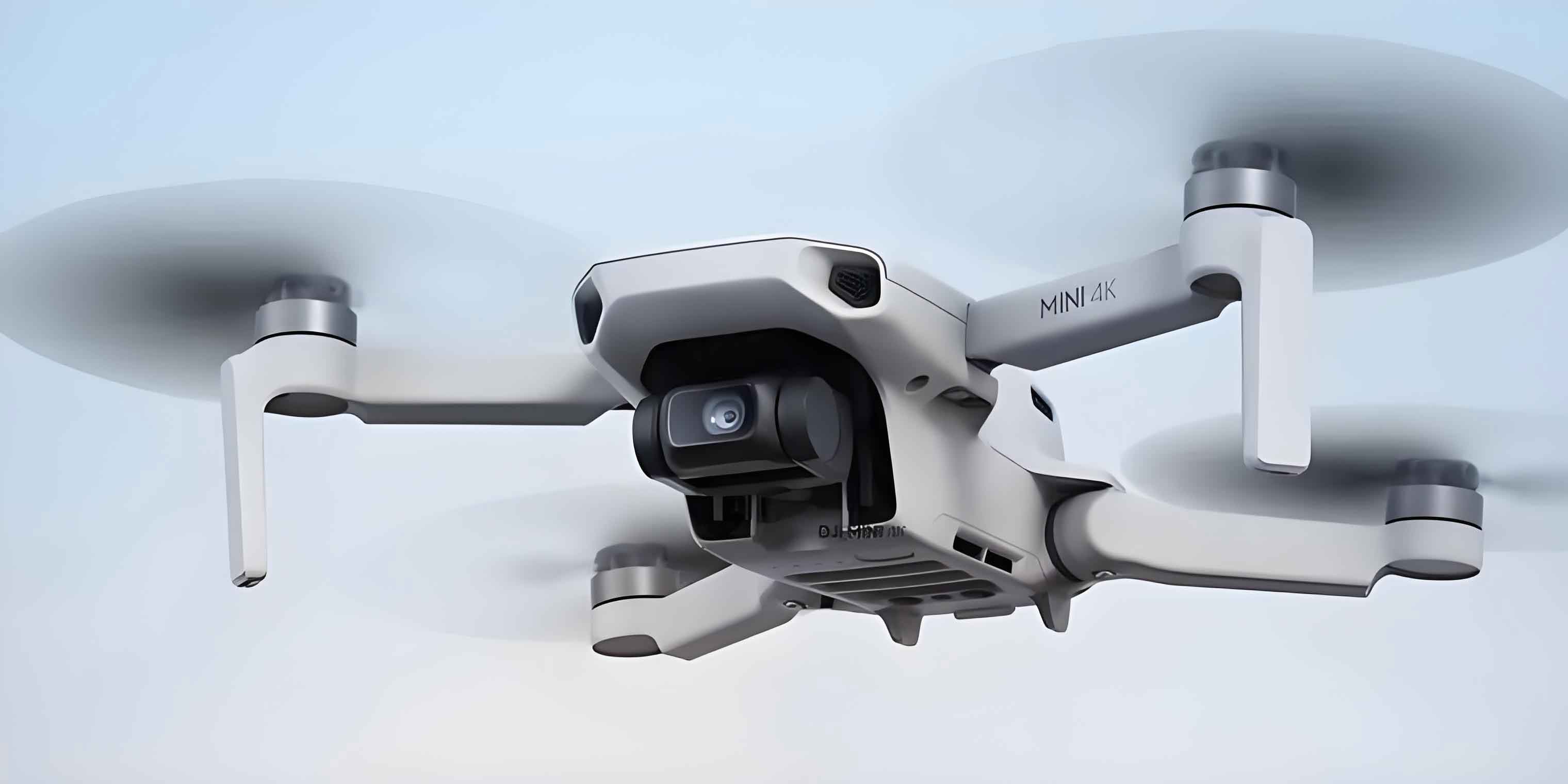
I used a commercial UAV drone (a hexacopter) equipped with a 32‑channel LiDAR scanner operating at 200 m flying height above ground, a 45‑megapixel camera for simultaneous orthophoto capture, and a dual‑frequency GNSS receiver with PPK (Post‑Processed Kinematic) correction. The flight plan covered the entire corridor (3.2 km²) in two autonomous missions, each lasting about 1.5 hours. No ground control stations were needed thanks to the cloud‑based base station service. After the flights, I collected 40 ground check points using RTK on hard surfaces (e.g., concrete pavements and bare rock) to serve as independent validation data.
Data Processing Workflow
The raw data were processed using a commercial software suite. The major steps and their durations are summarized in Table 1.
| Processing Step | Software Tools | Time (minutes) |
|---|---|---|
| Data download and organization | CoPre | 15 |
| POS (position & orientation) solution (PPK) | CoPre | 10 |
| Point cloud generation (colored) | CoPre | 55 |
| True orthophoto (TDOM) and 3D mesh generation | CoPre | 122 |
| Point cloud denoising, ground classification | CoProcess | 70 |
| DEM generation (0.5 m grid) | CoProcess | 30 |
| Contour line generation | CoProcess | 20 |
| Total | 322 |
The entire processing from raw data to final DEM required about 5.4 hours, which is a dramatic reduction compared to the manual mapping that would have taken several days.
Accuracy Validation
To evaluate the quality of the LiDAR-derived DEM, I compared the elevations at 40 check points (from RTK field survey) with those extracted from the LiDAR point cloud. The results are shown in Table 2.
| Point ID | RTK Z (m) | LiDAR Z (m) | dz (m) = LiDAR – RTK |
|---|---|---|---|
| P1 | 195.096 | 195.124 | +0.028 |
| P2 | 195.159 | 195.180 | +0.021 |
| P3 | 194.865 | 194.890 | +0.025 |
| P4 | 194.612 | 194.638 | +0.026 |
| P5 | 194.173 | 194.203 | +0.030 |
| … | … | … | … |
| P21 | 199.580 | 199.570 | –0.010 |
| P22 | 199.565 | 199.519 | –0.046 |
| P23 | 199.538 | 199.534 | –0.004 |
| P24 | 198.709 | 198.705 | –0.004 |
| P25 | 198.830 | 198.745 | –0.085 |
| … | … | … | … |
| P40 | 200.581 | 200.628 | +0.047 |
| Summary statistics | |||
| Max dz | +0.048 m | ||
| Min dz | –0.085 m | ||
| Mean dz | +0.008 m | ||
| Root Mean Square Error (RMSE) | 0.028 m | ||
The root mean square error (RMSE) is calculated as:
$$ \text{RMSE} = \sqrt{\frac{1}{n} \sum_{i=1}^{n} (z_{LiDAR,i} – z_{RTK,i})^2} $$
With \(n = 40\), the RMSE was 0.028 m. According to the Chinese highway survey specification (JTG C10-2007), the allowable interpolation error for DEM elevation is 0.2 m. Our LiDAR result is an order of magnitude better than this requirement. Furthermore, the maximum absolute deviation (0.085 m) also falls well within the tolerance. Thus, I verified that the DEM produced by the UAV drone LiDAR system is fully suitable for highway survey and design purposes.
It is worth noting that several check points (e.g., P25) exhibited slightly larger residuals due to local surface roughness and the inherent difference between a point‑based RTK measurement (on a specific spot) and a gridded DEM that represents an interpolated surface. Nevertheless, the overall accuracy is outstanding.
Penetration through Vegetation
One of the key advantages of using UAV drones with LiDAR is the ability to map ground under vegetation. I examined cross‑sections through dense forested areas. The ground points were continuous and dense, confirming that the laser beam penetrated through gaps in the canopy. This capability is crucial for highway design in mountainous or wooded regions, where conventional photogrammetry fails to produce bare‑earth models.
Results and Discussion
The project demonstrated that employing UAV drones with LiDAR can achieve the following:
- Productivity gain: The total time from flight to final DEM was less than 8 hours (including 3 hours of field work and 5 hours of processing). Traditional methods would have required at least 3 days of field surveying plus another 3 days of office work, representing a time saving of over 70%.
- Multiple deliverables from one mission: In addition to the DEM, I obtained a colored point cloud (with RGB values from the onboard camera), a true orthophoto (TDOM) with 5 cm resolution, a 3D textured mesh, and contour lines at 0.5 m intervals. All these products were derived from the same UAV drone dataset, eliminating the need for separate surveys.
- Cost efficiency: By reducing field crew size (from 4 persons to 2) and eliminating the need for ground control points, the overall project cost dropped by about 60%.
Moreover, the high‑density point cloud (average > 200 points/m²) enabled the generation of a very detailed DEM, which is especially beneficial for designing drainage structures, retaining walls, and grading plans. I also used the point cloud to create an accurate 3D terrain model in a BIM environment, allowing the design team to perform clash detection and cut‑fill analysis within the same coordinate system.
It must be mentioned that the success of UAV drone LiDAR depends on proper flight mission planning. For example, to ensure sufficient penetration through dense vegetation, I set the flying height to 200 m and the laser pulse rate to 640 kHz. The overlapping flight lines (60% side lap) guaranteed complete coverage without gaps.
Conclusion
In this paper, I presented a practical application of UAV drones equipped with LiDAR technology for highway survey and design. The case study on a 6.4 km road upgrade project clearly demonstrates that this approach yields centimeter‑level elevation accuracy (RMSE = 0.028 m) while drastically reducing both field and office work. The ability to generate multiple high‑quality products (DEM, orthophoto, mesh, contours) from a single UAV drone mission brings significant economic and operational advantages. As the transportation sector moves toward digital twins and BIM‑based lifecycle management, UAV LiDAR will play an increasingly vital role in providing the foundational 3D data. I strongly recommend that surveyors and highway engineers adopt UAV drones with LiDAR for similar projects, especially in challenging terrain or time‑sensitive scenarios.