
In modern agriculture, crop spraying drones have become indispensable tools for precision farming, enabling efficient pesticide application and crop monitoring. However, the aerodynamic performance of these spraying UAVs heavily relies on the design of their rotors, which often feature complex geometries that are challenging to model using traditional forward engineering approaches. To address this, we propose a comprehensive reverse engineering framework for reconstructing high-fidelity digital models of rotor blades from physical prototypes. This method leverages advanced data acquisition, point cloud processing, and computational fluid dynamics (CFD) simulations to ensure accuracy and reliability. By focusing on a typical crop spraying drone rotor, we demonstrate how reverse engineering can bridge the gap between physical assets and digital twins, facilitating optimization and performance analysis. The integration of this technology is crucial for enhancing the efficiency and sustainability of agricultural operations, as it allows for precise control over spray patterns and reduced chemical usage. Throughout this article, we emphasize the application of reverse engineering in the context of crop spraying drones and spraying UAVs, highlighting its potential to revolutionize agricultural aviation.
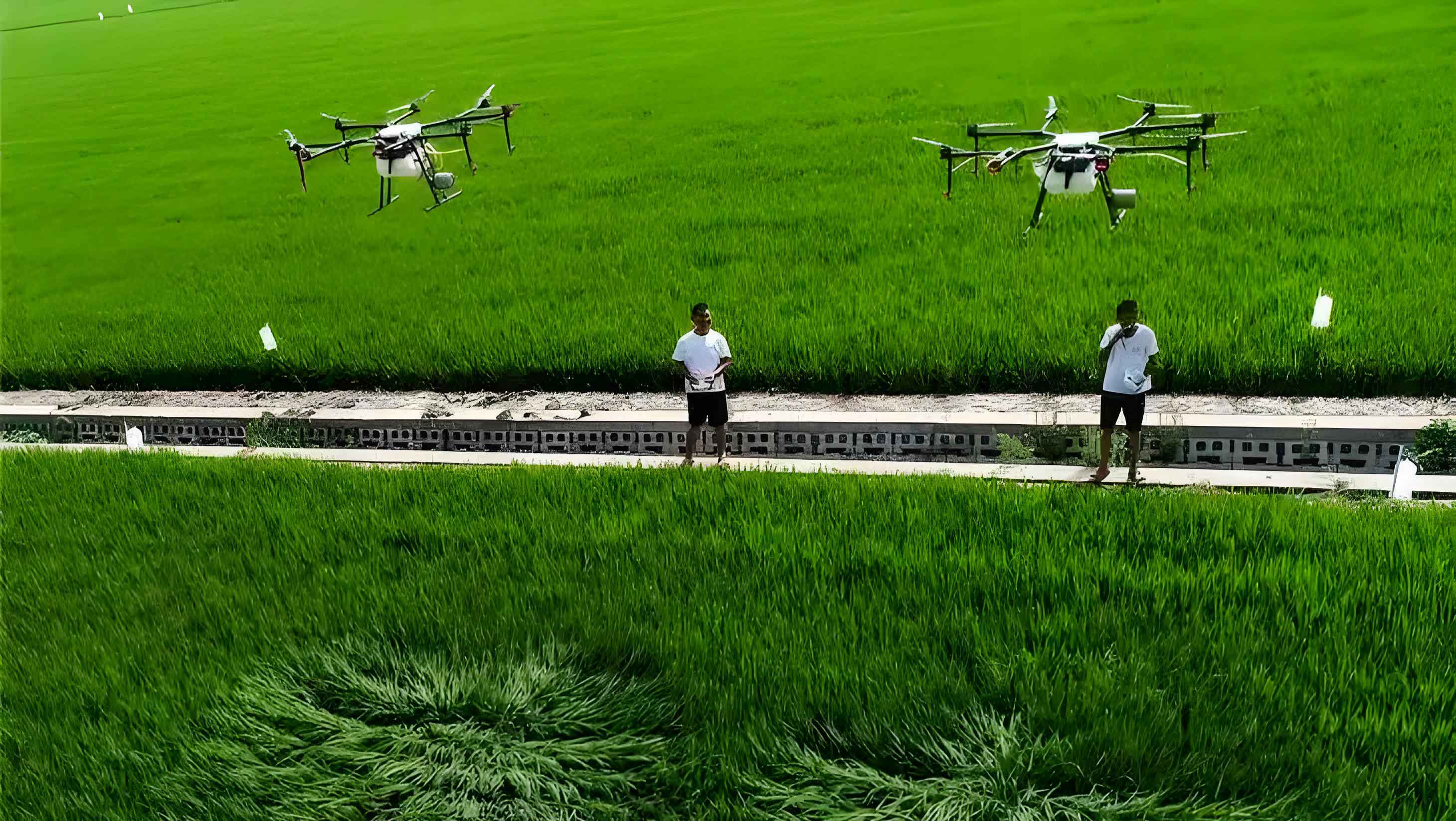
Reverse engineering, also known as back engineering or reverse modeling, is a technology-driven process that involves deconstructing a physical object to create a digital representation. Unlike conventional design workflows that follow a “design-to-product” sequence, reverse engineering inverts this logic by starting from an existing product and generating a computer-aided design (CAD) model. This approach is particularly valuable for crop spraying drones, where rotor blades may have evolved through iterative field testing rather than theoretical design. The core of reverse engineering lies in its ability to capture intricate details of complex shapes, such as the airfoil profiles of spraying UAV rotors, which are critical for aerodynamic efficiency. The process typically encompasses three main stages: data acquisition using 3D scanning devices, point cloud data processing to refine and align measurements, and geometric modeling to produce parametric CAD entities. For instance, in agricultural applications, this enables the replication and improvement of rotor designs without access to original blueprints, thereby accelerating innovation and customization for specific farming environments.
The technical implementation for a crop spraying drone rotor begins with meticulous data acquisition. We utilize a non-contact optical 3D scanner equipped with white LED lighting and a camera resolution of 1.3 megapixels, capable of operating within a depth of field ranging from 290 mm to 480 mm. To overcome the low reflectivity of carbon fiber materials commonly used in spraying UAV rotors, we apply a uniform coating of white contrast enhancer, such as a specialized imaging spray, which minimizes measurement errors. The scanning strategy involves partitioning the rotor surface into multiple segments due to the scanner’s limited single-shot coverage of 200 mm × 150 mm. For a standard 33-inch diameter rotor, this results in approximately 15 segmented scans, each overlapping with at least three reference points to ensure accurate alignment during post-processing. The initial point cloud data accumulates to around 3 million points, capturing the entire surface geometry, including critical features like the leading and trailing edges, hub, and tip regions. This phase is foundational for subsequent modeling steps, as it directly influences the fidelity of the digital twin for the crop spraying drone.
Following data acquisition, point cloud processing is conducted to transform raw measurements into a clean, manageable dataset. We employ software tools like Geomagic Wrap for this purpose, starting with the removal of noise points, outliers, and non-connected elements that arise from scanner movement or environmental interference. The point cloud is then simplified through sampling algorithms that prioritize retention of data in high-curvature areas, such as the rotor edges, while reducing density in flatter regions. This step reduces the data volume from 3 million to approximately 300,000 points, balancing computational efficiency with geometric accuracy. Next, the points are converted into a polygon mesh, which requires alignment with a global coordinate system. We define the coordinate system based on the rotor’s physical attributes: the XZ plane coincides with the mid-plane of the hub, the X-axis aligns parallel to the tip plane, and the Y-axis is perpendicular to XZ. Any mesh defects, such as holes or intersecting faces, are repaired using automated and manual tools to produce a watertight model. This processed mesh serves as the basis for surface reconstruction, enabling the creation of smooth, continuous surfaces that represent the rotor’s aerodynamic profile.
Surface reconstruction and solid model generation are critical for translating the polygon mesh into a parametric CAD model suitable for simulation and manufacturing. Using software like SolidWorks, we fit mathematical surfaces to the mesh, focusing on achieving high accuracy in regions with rapid curvature changes. The deviation between the reconstructed model and the original point cloud is analyzed through color-coded maps, which highlight areas of discrepancy. For the crop spraying drone rotor, the overall deviation typically falls within a range of -0.05 mm to 0.05 mm, with maximum errors of up to 0.42 mm occurring at the leading and trailing edges due to point cloud sparsity in high-curvature zones. The root mean square (RMS) error is estimated at 0.0235 mm, indicating that the model meets engineering tolerances for most applications. To validate the geometric integrity, we perform iterative adjustments to surface boundaries and continuity, ensuring that the digital model accurately reflects the physical rotor of the spraying UAV. This step is essential for downstream processes like CFD analysis, where minor geometric inaccuracies can significantly impact simulation results.
To assess the aerodynamic performance of the reverse-engineered crop spraying drone rotor, we conduct CFD simulations based on the reconstructed CAD model. The flow field is governed by the three-dimensional incompressible Navier-Stokes equations, which account for viscous effects and turbulence. The integral form of the continuity and momentum equations can be expressed as:
$$ \frac{\partial}{\partial t} \int_{\Omega} Q \, d\Omega + \oint_{\partial \Omega} [F(Q) – G(Q)] \cdot \mathbf{n} \, dS = 0 $$
where \( \Omega \) represents the control volume, \( \partial \Omega \) is its boundary, \( Q \) is the vector of conservative variables, \( F(Q) \) and \( G(Q) \) denote the convective and viscous flux vectors, respectively, and \( \mathbf{n} \) is the unit normal vector to the boundary. For turbulence modeling, we adopt the Realizable k-ε model due to its robustness in handling rotating flows and complex geometries typical of spraying UAV rotors. The computational domain is divided into a rotating zone enclosing the rotor and a stationary outer region, using the Multiple Reference Frame (MRF) approach to simulate steady-state conditions. This simplification reduces computational cost while maintaining accuracy for performance prediction.
Mesh generation is a pivotal aspect of the CFD setup, as it influences solution accuracy and convergence. We design the computational domain based on the rotor diameter D, with a rotating cylindrical region of diameter 1.05D and height 0.15D. The stationary domain extends 6D from the inlet to the rotating zone’s upper surface, 6D radially to the walls, and 12D from the outlet to the lower surface, ensuring fully developed flow. An unstructured mesh is employed, with refined elements near the rotor surface: maximum size of 5 mm, minimum of 1 mm, and a boundary layer consisting of 10 layers with a first layer thickness of 0.25 mm and total thickness of 2 mm. The interface between rotating and stationary domains has a mesh size of 25 mm, resulting in approximately 2 million cells overall. A grid independence study confirms that this resolution yields stable lift predictions, as summarized in Table 1.
| Mesh Resolution | Number of Cells (millions) | Simulated Lift (g) at 1000 rpm | Relative Error (%) |
|---|---|---|---|
| Coarse | 1.0 | 1500 | 5.2 |
| Medium | 2.0 | 1580 | 1.8 |
| Fine | 3.5 | 1605 | 0.3 |
Boundary conditions include pressure inlet and outlet set to standard atmospheric pressure, while the rotor surface is treated as a no-slip wall relative to the rotating domain. The SIMPLE algorithm couples pressure and velocity fields, with second-order upwind discretization for spatial terms. Convergence is achieved when residuals drop below \( 10^{-5} \), indicating a steady-state solution. The CFD simulations predict rotor lift across a range of rotational speeds, and the results are compared with experimental data from physical tests on the crop spraying drone rotor. Table 2 presents a detailed comparison, highlighting the accuracy of the reverse-engineered model.
| Rotational Speed (rpm) | Experimental Lift (g) | CFD Simulated Lift (g) | Absolute Error (g) | Relative Error (%) |
|---|---|---|---|---|
| 256 | 82 | 84 | +2 | 2.4 |
| 468 | 313 | 307 | -6 | 1.9 |
| 740 | 860 | 833 | -27 | 3.1 |
| 992 | 1618 | 1543 | -75 | 4.6 |
| 1246 | 2595 | 2429 | -166 | 6.4 |
| 1496 | 3678 | 3357 | -321 | 8.7 |
The results show that the CFD simulations closely match experimental data at lower speeds, with errors不超过 3.1% for rotations up to 740 rpm. At higher speeds, such as 1496 rpm, the error increases to 8.7%, primarily due to limitations in turbulence modeling for high-speed rotational wakes and boundary layer resolution. Nonetheless, the overall agreement validates the reverse engineering approach for crop spraying drone applications, as the errors remain within acceptable engineering margins of 10%. This demonstrates that the digital model can reliably predict aerodynamic behavior, enabling optimization of rotor designs for improved efficiency in spraying UAVs.
In addition to geometric and aerodynamic validation, we explore the mathematical foundations of point cloud processing to enhance model accuracy. The point cloud reduction process can be formulated as an optimization problem aimed at minimizing information loss while reducing data density. Let \( P = \{p_1, p_2, \dots, p_N\} \) represent the original point cloud with N points, and \( S = \{s_1, s_2, \dots, s_M\} \) be the simplified set with M points (where M < N). The objective is to minimize the error E defined by:
$$ E = \sum_{i=1}^{N} \min_{s_j \in S} \| p_i – s_j \|^2 $$
This ensures that points in high-curvature regions, critical for capturing the aerodynamics of a spraying UAV rotor, are retained. Similarly, surface fitting involves non-uniform rational B-splines (NURBS) to represent complex curves. A NURBS surface of degree p in the u-direction and degree q in the v-direction is given by:
$$ S(u,v) = \frac{\sum_{i=0}^{n} \sum_{j=0}^{m} N_{i,p}(u) N_{j,q}(v) w_{i,j} P_{i,j}}{\sum_{i=0}^{n} \sum_{j=0}^{m} N_{i,p}(u) N_{j,q}(v) w_{i,j}} $$
where \( P_{i,j} \) are control points, \( w_{i,j} \) are weights, and \( N_{i,p}(u) \) and \( N_{j,q}(v) \) are the B-spline basis functions. This mathematical representation allows for precise control over the rotor’s geometry, facilitating adjustments based on CFD feedback. For crop spraying drones, such computational techniques are vital for iteratively refining designs to achieve optimal spray distribution and energy consumption.
The integration of reverse engineering with CFD analysis offers a robust framework for advancing spraying UAV technology. By continuously refining the digital model through simulation and experimental correlation, we can address challenges like noise reduction, vibration mitigation, and enhanced lift-to-drag ratios. Future work may involve incorporating machine learning algorithms to automate point cloud processing or extending the approach to full assembly models of crop spraying drones. In conclusion, reverse engineering proves to be a transformative tool for agricultural aviation, enabling the development of high-performance rotors that contribute to sustainable farming practices. The methodologies outlined here underscore the importance of digital twinning in modern agriculture, where crop spraying drones and spraying UAVs play a pivotal role in ensuring food security and environmental stewardship.