
In the field of solid mineral exploration, the relocation of drilling equipment in complex terrains poses significant challenges, including high labor intensity, safety risks, and environmental damage. Traditional methods such as manual transport or road construction often lead to prolonged timelines and ecological disruption. To address these issues, we explored the use of multirotor drones as a sustainable and efficient alternative for drilling equipment relocation. This article details our application of multirotor drones in challenging terrains, focusing on performance requirements, operational processes, and comparative analysis with conventional methods. Through this study, we aim to demonstrate the advantages of multirotor drones in enhancing efficiency, reducing human effort, and promoting green exploration practices.
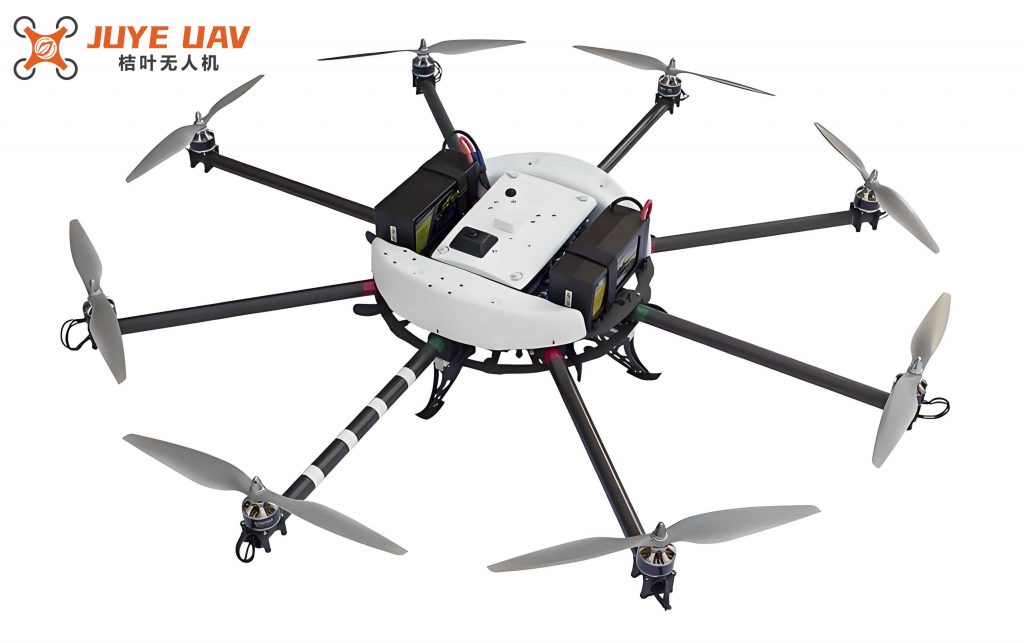
The selection of an appropriate multirotor drone is critical for successful equipment relocation. Key performance parameters include payload capacity, endurance, and safety features. For instance, the payload capacity must exceed the weight of the heaviest drilling module, which in our case was under 180 kg after disassembly. We prioritized multirotor drones with a maximum payload of at least 200 kg to ensure safe and efficient transport. Endurance was another crucial factor; we required multirotor drones to complete multiple round trips on a single battery charge, with a minimum range of 12 km under full load. Safety considerations involved features like obstacle avoidance, automatic return, and fire-resistant materials to mitigate risks in forested areas. Based on these criteria, we evaluated several multirotor drone models, and their specifications are summarized in Table 1.
| Parameter | Model A | Model B | Model C |
|---|---|---|---|
| Dimensions (folded, mm) | 3670×3670×1100 | 3737×3737×1455 | 3860×3860×750/1200 |
| Rotor Configuration | 8-axis, 16 rotors | 8-axis, 16 rotors | 8-axis, 16 rotors |
| Empty Weight (kg) | 160 | 180 | 158 |
| Max Payload (kg) | 230 | 200 | 240 |
| Endurance (min, 200 kg load) | 10 | 20 | 18-20 |
| Charging Time (min, 50% to 100%) | 30-40 | 25-35 | 30-40 |
| Max Speed (m/s) | 20 | 22 | 20 |
| Wind Resistance | ≤7级 | ≤6级 | ≤7级 |
The operational process for using multirotor drones in drilling equipment relocation involves several key steps: equipment disassembly and bundling, route planning, and flight operations. First, we disassembled the modular drilling rig into units weighing no more than 150 kg each to ensure safe handling by the multirotor drone. This included separating components like the power unit, drill base, and slurry pump. We then bundled loose materials such as drill pipes and fuel into standardized packages. Route planning was conducted based on safety and efficiency principles, avoiding no-fly zones and obstacles while minimizing flight distance and altitude changes. The flight path was optimized using real-time data, and we employed a dual-control mode for beyond-visual-line-of-sight operations to maintain communication reliability. During flight, the multirotor drone carried out hoisting tasks, with battery swaps performed after each round trip to maintain continuous operation. The entire process emphasized the robustness of multirotor drones in adverse conditions.
To quantify the efficiency of multirotor drones, we developed a formula for relocation time estimation. The total time $T_{\text{total}}$ for relocating all equipment can be expressed as:
$$ T_{\text{total}} = N \times \left( \frac{D}{v} + t_{\text{load}} + t_{\text{unload}} \right) + T_{\text{battery}} $$
where $N$ is the number of trips, $D$ is the round-trip distance, $v$ is the average flight speed of the multirotor drone, $t_{\text{load}}$ and $t_{\text{unload}}$ are the loading and unloading times, and $T_{\text{battery}}$ is the total time spent on battery changes. For instance, with $N = 926$ trips, $D = 4$ km, $v = 20$ m/s, and $t_{\text{load}} + t_{\text{unload}} = 2$ minutes, the calculated $T_{\text{total}}$ aligns with our observed 146 hours of flight time. This formula highlights how multirotor drones optimize relocation by reducing manual labor and accelerating transport.
We conducted a comparative analysis of multirotor drone relocation versus traditional methods, such as manual labor and heavy machinery. The analysis focused on efficiency, cost, safety, and environmental impact. As shown in Table 2, multirotor drones significantly outperformed other methods in terms of time savings and reduced ecological disruption. For example, in one work area, multirotor drones completed relocation in 3 days compared to 15 days for manual methods, representing a 4-fold efficiency improvement. Safety was enhanced due to minimized human exposure to hazardous terrains, and environmental damage was limited to less than 150 m² per site, adhering to green exploration standards.
| Method | Relocation Time (days) | Cost (thousand USD) | Safety Risk | Environmental Impact (m²) |
|---|---|---|---|---|
| Manual Labor | 15 | 6-7 | High | 1800 |
| Heavy Machinery | 7-8 | 3-4 | Moderate | 4500 |
| Multirotor Drone | 3 | 4.5 | Low | <150 |
The application of multirotor drones also involved addressing technical challenges, such as battery management and payload distribution. We used a battery rotation system with three sets, ensuring that one set was always fully charged while others were in use. The energy consumption per trip for a multirotor drone can be modeled as:
$$ E = P \times t = \frac{1}{2} \rho C_L A v^3 + m g h $$
where $E$ is the energy consumed, $P$ is power, $t$ is time, $\rho$ is air density, $C_L$ is the lift coefficient, $A$ is rotor area, $v$ is velocity, $m$ is mass, $g$ is gravity, and $h$ is altitude gain. This equation helped us optimize flight paths for minimal energy use, further enhancing the endurance of multirotor drones. In practice, we achieved up to 4 round trips per battery charge, demonstrating the reliability of multirotor drones in sustained operations.
In conclusion, our experience confirms that multirotor drones offer a transformative solution for drilling equipment relocation in complex terrains. They provide high efficiency, low labor intensity, and minimal environmental impact, aligning with the principles of green exploration. However, to fully leverage multirotor drones, we recommend further advancements in payload capacity, battery technology, and multi-control systems. For instance, increasing the payload of multirotor drones to 300 kg or more would allow for the transport of larger drilling modules, reducing the number of trips. Additionally, improving battery energy density and charging efficiency would extend the operational range of multirotor drones, making them suitable for longer-distance relocations. We also suggest optimizing drill rig modularity to better match the capabilities of multirotor drones, facilitating seamless integration. Overall, multirotor drones represent a promising tool for the future of mineral exploration, and their continued development will undoubtedly enhance sustainable practices in the industry.
Through this analysis, we have highlighted the critical role of multirotor drones in overcoming traditional relocation challenges. The data and formulas presented underscore their superiority in terms of performance and adaptability. As technology evolves, we anticipate that multirotor drones will become even more integral to exploration projects, driving efficiency and environmental stewardship. Our findings serve as a reference for similar applications in other regions, encouraging the adoption of multirotor drones for safe and green drilling operations.