
With the global push towards carbon neutrality and the increasing adoption of renewable energy, distributed rooftop photovoltaic (PV) power stations have emerged as a key component in the transition to sustainable energy systems. These systems, often installed on industrial, commercial, or residential rooftops, present unique challenges in the survey and design phases due to their dispersed nature and complex structural environments. Traditional surveying methods, such as total stations and GPS-RTK systems, have been widely used but often fall short in efficiency, safety, and the ability to capture comprehensive three-dimensional (3D) data. In this context, multirotor drones have revolutionized the approach to surveying by offering a non-contact, high-precision, and rapid data acquisition solution. This article explores the application of multirotor drone technology in the survey and design of distributed rooftop PV stations, detailing the processes of data collection, processing, 3D reconstruction, and accuracy validation, while emphasizing the advantages over conventional methods.
The integration of multirotor drones into photovoltaic power station surveys addresses several limitations of traditional techniques. For instance, rooftops with complex geometries, such as sloped or curved surfaces, are difficult to measure accurately with manual tools, and accessing these areas can pose safety risks to surveyors. Multirotor drones, equipped with high-resolution cameras and advanced positioning systems, enable the collection of detailed imagery from multiple angles, facilitating the creation of accurate digital surface models (DSMs) and 3D reconstructions. This capability is crucial for designing optimal PV panel layouts, assessing shading effects, and simulating energy output. Moreover, the use of multirotor drones reduces field time and costs, while improving data completeness. In the following sections, I will describe a practical application case, covering data acquisition, processing methodologies, and the evaluation of results, supported by formulas and tables to summarize key aspects.
In a typical distributed rooftop PV project, the survey area may span multiple buildings with varied roof types, such as flat, pitched, or curved structures. Traditional methods would require extensive ground control points (GCPs) and manual measurements, which are time-consuming and prone to errors. In contrast, a multirotor drone survey can cover large areas quickly, with minimal human intervention. For example, in a project similar to the one described here, the survey area covered approximately 1.1 square kilometers, including administrative buildings, residential structures, and industrial facilities like coal storage sheds. The multirotor drone used in this case was a DJI Phantom 4 RTK, chosen for its portability, real-time kinematic (RTK) capabilities, and ease of deployment. The drone’s camera captured high-resolution images, which were processed to generate DSMs, digital orthophoto maps (DOMs), and detailed 3D models. This approach not only accelerated the survey process but also provided designers with immersive 3D data for better planning and analysis.
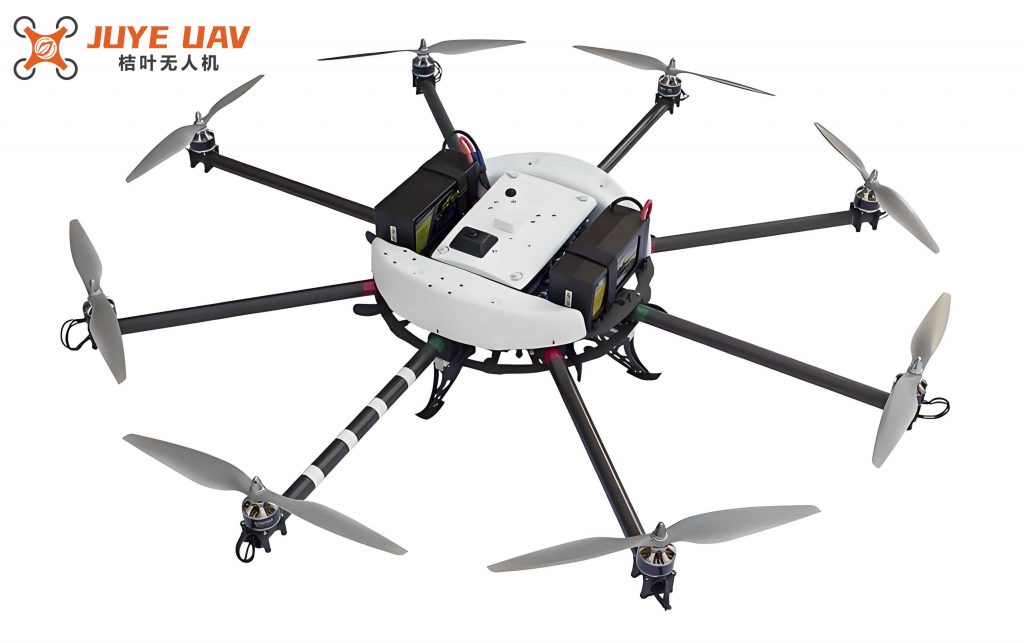
The data acquisition phase begins with careful flight planning to ensure comprehensive coverage and high accuracy. For multirotor drones, parameters such as flight altitude, overlap rates, and camera settings are critical. In this application, the flight plan was designed with an 80% forward overlap and 70% side overlap to minimize gaps and ensure robust feature matching during processing. The multirotor drone’s agility allows it to navigate complex environments, capturing images from various perspectives, including oblique angles, which are essential for detailed 3D reconstruction. The drone’s onboard GPS-RTK and inertial measurement unit (IMU) provide precise position and orientation data for each image, reducing the need for ground control points. This is particularly beneficial in inaccessible or hazardous areas, such as high rooftops or confined industrial sites. The entire survey involved multiple flights, totaling about an hour, and yielded hundreds of high-resolution images. The efficiency of the multirotor drone in this phase underscores its superiority over traditional methods, which might require days of manual work.
Following data acquisition, the processing stage involves several steps to transform raw images into accurate geospatial products. First, the images undergo preprocessing to correct lens distortions and calibrate the camera parameters. This is done using software like DJI Terra, which automates the calibration process based on the drone’s metadata. Next, aerial triangulation is performed to align the images and reconstruct the scene geometry. This step includes feature extraction, matching, and bundle adjustment, which refine the camera positions and generate a sparse point cloud. The accuracy of this process is vital, as it直接影响 the quality of subsequent outputs. For instance, the bundle adjustment minimizes errors by solving for the optimal camera parameters and 3D points, using least-squares estimation. The error function can be expressed as:
$$\min \sum_{i=1}^{n} \sum_{j=1}^{m} ||x_{ij} – P_i(X_j)||^2$$
where \(x_{ij}\) is the observed image point, \(P_i\) is the projection matrix for image \(i\), and \(X_j\) is the 3D point. This equation highlights the mathematical foundation of aerial triangulation, ensuring that the reconstructed model aligns with the actual terrain.
Once aerial triangulation is complete, dense matching algorithms generate a dense point cloud, which is then used to create the DSM and DOM. The DSM represents the earth’s surface, including all objects, and is essential for analyzing roof slopes and elevations. The DOM provides a geometrically corrected image map, useful for visual interpretation and measurement. Finally, 3D mesh models are constructed by texturing the dense point cloud, resulting in photorealistic representations of the survey area. These models can be integrated into design software like PVsyst or SketchUp for further analysis, such as solar potential assessment and panel placement optimization. The entire processing workflow, from image alignment to 3D modeling, is highly automated, reducing manual effort and ensuring consistency. The use of multirotor drones in this context enables rapid turnaround times, allowing designers to make informed decisions based on up-to-date data.
To validate the accuracy of the drone-derived products, a set of check points is typically used. These points are surveyed independently using high-precision methods, such as GPS-RTK, and compared to the coordinates extracted from the drone model. The errors in planimetry and elevation are calculated to determine the overall accuracy. For example, the planar error \(M_p\) is given by:
$$M_p = \pm \sqrt{M_x^2 + M_y^2}$$
where \(M_x\) and \(M_y\) are the root mean square errors (RMSE) in the x and y directions, respectively:
$$M_x = \pm \sqrt{\frac{\sum_{i=1}^{n} \Delta x_i^2}{n}}$$
$$M_y = \pm \sqrt{\frac{\sum_{i=1}^{n} \Delta y_i^2}{n}}$$
Similarly, the elevation error \(M_h\) is computed as:
$$M_h = \pm \sqrt{\frac{\sum_{i=1}^{n} \Delta h_i^2}{n}}$$
Here, \(\Delta x_i\), \(\Delta y_i\), and \(\Delta h_i\) represent the differences between the measured and drone-derived coordinates for each check point, and \(n\) is the number of points. In practical applications, these errors should conform to industry standards, such as those outlined in mapping guidelines for large-scale surveys. For instance, in the case study, 20 check points were used, and the results demonstrated that the multirotor drone-based survey met the required accuracy for 1:500 scale mapping. The table below summarizes the accuracy assessment results:
| Parameter | Number of Check Points | Maximum Error (m) | RMSE (m) |
|---|---|---|---|
| Planimetry | 20 | 0.044 | 0.032 |
| Elevation | 20 | 0.164 | 0.067 |
This table illustrates the high precision achievable with multirotor drones, even in complex environments. The minimal errors confirm the reliability of the technology for distributed PV station surveys, where accurate measurements are critical for design and installation.
Beyond accuracy, the application of multirotor drones offers numerous advantages in the design phase of distributed PV projects. The 3D models generated from drone data allow designers to perform detailed analyses, such as identifying optimal panel orientations, evaluating shading from surrounding objects, and estimating material requirements. For example, the slope and aspect of roofs can be derived from the DSM using gradient calculations:
$$\text{Slope} = \arctan \left( \sqrt{\left( \frac{\partial z}{\partial x} \right)^2 + \left( \frac{\partial z}{\partial y} \right)^2} \right)$$
$$\text{Aspect} = \arctan \left( \frac{-\frac{\partial z}{\partial y}}{\frac{\partial z}{\partial x}} \right)$$
where \(z\) represents the elevation values in the DSM. These parameters are crucial for determining the best angles for PV panels to maximize solar exposure. Additionally, the 3D models enable virtual simulations of the PV system’s performance, integrating factors like solar path and seasonal variations. This proactive approach reduces the risk of suboptimal designs and enhances the overall efficiency of the power station. The multirotor drone’s ability to capture fine details, such as ventilation shafts or other obstructions, ensures that the design accounts for all potential issues, leading to more robust and cost-effective solutions.
Another significant benefit of using multirotor drones is the improvement in safety and accessibility. Surveying rooftops, especially in industrial settings, often involves risks such as falls or exposure to hazardous materials. By deploying a multirotor drone, surveyors can avoid these dangers, as the drone can safely capture data from a distance. Moreover, the drone’s flexibility allows it to access confined or elevated areas that would be challenging for human operators. This non-contact method also minimizes disruption to ongoing operations at the site, making it ideal for surveys in active facilities like factories or power plants. The multirotor drone’s rapid deployment and data collection capabilities further enhance productivity, enabling multiple surveys to be conducted in a single day. This efficiency is particularly valuable in large-scale distributed PV projects, where time is often a critical factor.
In terms of data processing, the integration of multirotor drone imagery with advanced software tools streamlines the workflow. Modern photogrammetric software, such as Agisoft Metashape or Pix4D, automates many steps, including feature matching, dense cloud generation, and texture mapping. These tools often incorporate machine learning algorithms to improve the accuracy and speed of processing. For instance, semantic segmentation can be used to classify different roof types or identify obstacles automatically. The output models are typically in standard formats like OBJ or LAS, which are compatible with various design and simulation platforms. This interoperability facilitates a seamless transition from survey to design, allowing engineers to leverage the 3D data for detailed planning. The table below compares traditional surveying methods with multirotor drone-based approaches in key aspects:
| Aspect | Traditional Methods | Multirotor Drone-Based Methods |
|---|---|---|
| Data Acquisition Time | Days to weeks | Hours to days |
| Safety Risks | High (e.g., roof access) | Low (remote operation) |
| Data Completeness | Limited to accessible areas | Comprehensive coverage |
| Cost Efficiency | Higher due to labor and equipment | Lower with reduced field time |
| Output Types | 2D maps and limited 3D data | High-resolution DOM, DSM, and 3D models |
This comparison highlights the transformative impact of multirotor drones on surveying practices, making them an indispensable tool for modern PV projects.
Looking ahead, the role of multirotor drones in distributed PV station surveys is expected to grow with advancements in technology. For example, the integration of LiDAR sensors with multirotor drones could enhance the ability to penetrate vegetation or capture detailed structural elements, further improving accuracy. Additionally, the development of automated flight planning and real-time data processing will reduce the need for expert intervention, making the technology more accessible to a wider range of users. As the demand for renewable energy increases, multirotor drones will play a pivotal role in accelerating the deployment of PV systems by providing reliable, high-quality data for design and optimization. The continuous improvement in battery life and payload capacity will also expand the applications of multirotor drones, enabling longer flights and the use of multiple sensors simultaneously.
In conclusion, the application of multirotor drones in the survey and design of distributed rooftop photovoltaic power stations represents a significant advancement over traditional methods. By enabling rapid, safe, and accurate data acquisition, multirotor drones facilitate the creation of detailed 3D models that are essential for optimal design and performance simulation. The mathematical foundations of photogrammetry, combined with the versatility of multirotor drones, ensure that the resulting products meet rigorous accuracy standards. As demonstrated in this article, the use of multirotor drones not only improves efficiency and safety but also provides a comprehensive dataset that supports informed decision-making throughout the project lifecycle. With ongoing technological innovations, multirotor drones are set to become even more integral to the renewable energy sector, driving the transition towards a sustainable future.