
The effective management of rural domestic sewage is a critical component of advancing rural revitalization and improving living environments. The success of such engineering projects hinges fundamentally on the availability of highly accurate and timely topographic data. The design of treatment systems, the rational layout of pipeline networks, and the accuracy of hydraulic models all rely on precise Digital Elevation Models (DEMs) and detailed large-scale maps as their foundational support. In rural areas characterized by complex, undulating terrain and dispersed settlement patterns, the requirement for surveying with millimeter-level slope precision presents a formidable challenge to conventional topographic mapping methodologies.
Traditional ground-based surveying techniques, such as total station or Real-Time Kinematic (RTK) GNSS surveys conducted by field crews, exhibit significant limitations in this context. These methods are often labor-intensive, time-consuming, and costly. More critically, in areas with dense vegetation, steep slopes, or limited accessibility, they struggle to achieve the consistent, high-density data coverage needed for precise slope analysis. This technological bottleneck can compromise the scientific planning and economic feasibility of large-scale rural sewage treatment initiatives, where pipeline gradients must be meticulously calculated to ensure gravity-driven flow.
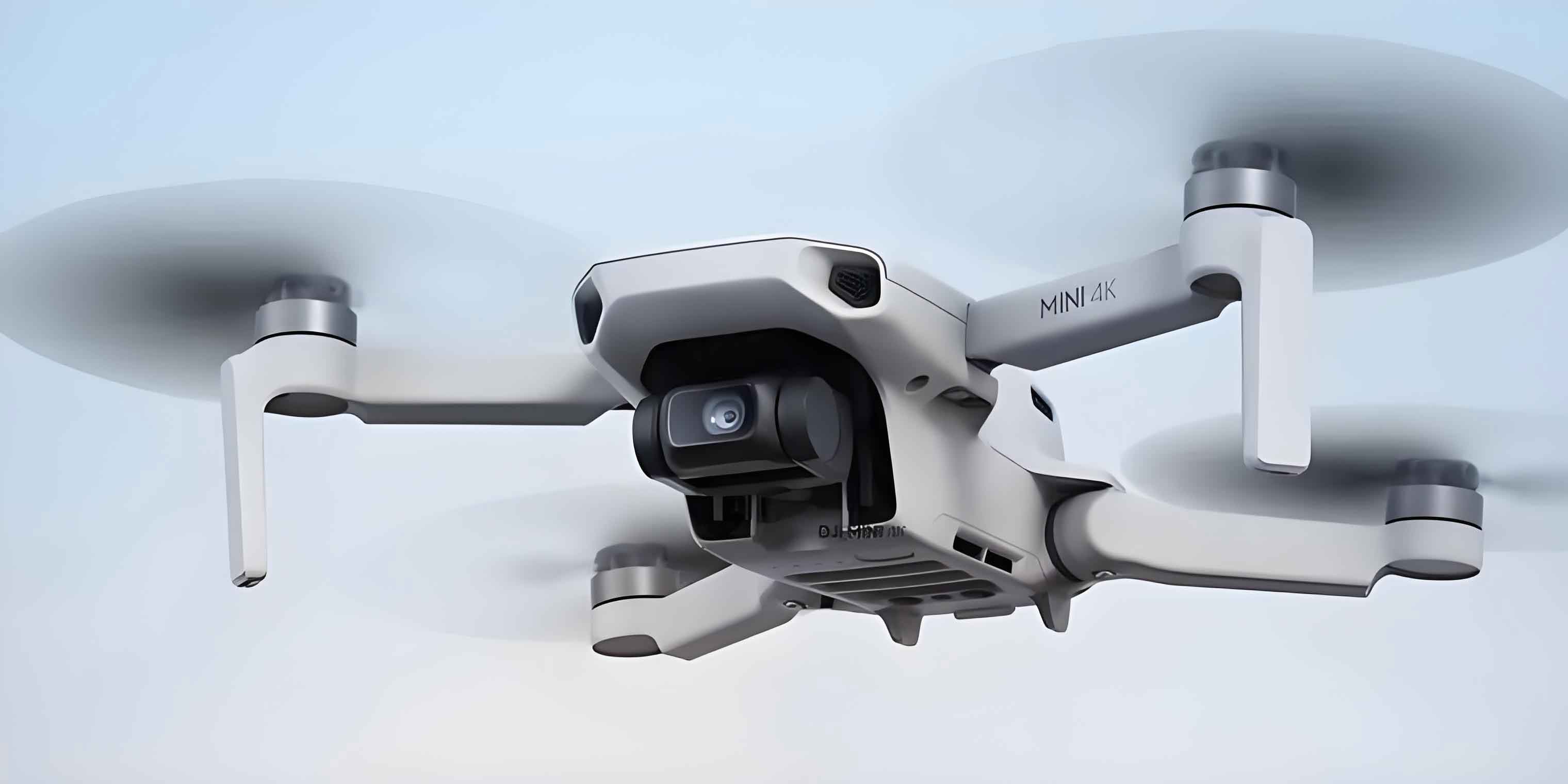
High-precision surveying using Unmanned Aerial Vehicles (UAV drones) emerges as a transformative solution to these challenges. As an advanced geospatial data acquisition platform, UAV drones offer unparalleled efficiency, flexibility, and cost-effectiveness. Equipped with high-resolution imaging sensors and integrated high-precision positioning systems, UAV drones can rapidly capture extensive areas of terrain data while maintaining exceptional accuracy even in complex landscapes. Compared to traditional methods, UAV drone surveying significantly enhances data acquisition efficiency, reduces field labor intensity and safety risks, and lowers overall project costs. This study, grounded in practical project experience, systematically explores the application advantages and technical pathway of UAV drone high-precision surveying within rural sewage treatment projects, constructing a complete technological framework and validating its outcomes through empirical analysis.
Technical Methodology and Implementation Framework
The successful application of UAV drone technology for high-precision topographic mapping follows a structured, systematic workflow. This framework ensures data integrity from mission planning to final deliverable generation.
System Configuration and Flight Planning
The core of the system is a multi-rotor UAV drone platform, selected for its stability, vertical take-off and landing capability, and maneuverability at lower flight altitudes. The platform is typically integrated with a professional-grade, full-frame digital camera equipped with a fixed focal length lens (e.g., 35mm) to minimize distortion. A pivotal component for achieving direct georeferencing is the use of Network Real-Time Kinematic (NRTK) GNSS technology onboard the UAV drone, which provides centimeter-level positioning for each captured image, drastically reducing the need for extensive ground control points (GCPs).
Flight planning is a critical pre-processing step. Key parameters are determined based on the desired ground sampling distance (GSD), which dictates the spatial resolution of the final orthophoto and model. The flight altitude (H) is calculated based on the sensor’s focal length (f) and pixel size (p), and the required GSD:
$$ GSD = \frac{H \times p}{f} $$
To ensure robust 3D model reconstruction through photogrammetry, high overlap rates between consecutive images are essential. Standard parameters involve an 80% forward overlap and 70% side overlap. The flight path is designed in a grid pattern, often with added cross-strips over critical areas to strengthen the geometric network.
| Parameter | Specification / Value |
|---|---|
| Platform Type | Multi-rotor UAV |
| Imaging Sensor | Full-frame camera with fixed lens |
| Positioning System | Integrated NRTK GNSS |
| Typical Flight Altitude | 80m – 120m (for 1:500 scale) |
| Forward Overlap | 80% |
| Side Overlap | 70% |
| Coordinate System | Project-specific (e.g., UTM, State Plane) |
| Vertical Datum | Project-specific (e.g., NAVD88, local geoid) |
Data Acquisition and Processing Pipeline
Data acquisition is executed autonomously by the UAV drone following the pre-defined mission plan. The primary output is a collection of hundreds or thousands of highly overlapping, geotagged aerial images.
The subsequent data processing pipeline involves several sophisticated steps performed in specialized photogrammetric software:
- Aerial Triangulation (AT) & Bundle Block Adjustment (BBA): This process identifies common points (tie points) across multiple overlapping images and uses the image coordinates, camera calibration parameters, and GNSS positioning data to solve for the precise exterior orientation (position and attitude) of each image. The mathematical model is based on the collinearity equations, minimizing the reprojection error. The overall error can be expressed as the root mean square error (RMSE) of the bundle adjustment.
- Dense Point Cloud Generation: Using the oriented images, a high-density 3D point cloud of the scene (a Digital Surface Model – DSM) is generated through multi-view stereo matching algorithms.
- Digital Terrain Model (DTM) Extraction: For engineering design, the ground elevation (bare earth) is required, not the elevations of buildings and vegetation. Advanced classification algorithms, including those using machine learning, are applied to the dense point cloud to filter out non-ground points (buildings, trees) to produce a clean DTM. The accuracy of this step is crucial for slope calculation.
- Orthophoto and Line Map Generation: An orthorectified image mosaic (Digital Orthophoto Map – DOM) is created by correcting image distortions using the DTM/DSM. A Digital Line Graph (DLG) representing man-made features (buildings, roads) can be digitized from the DOM or extracted semi-automatically from the 3D data.
The key to handling vegetated areas lies in the fusion of image-based point clouds with techniques capable of penetrating vegetation to some extent, such as algorithms that statistically identify the lowest points within a search radius as potential ground points.
Accuracy Assessment and Validation
The utility of UAV drone-derived data for precision engineering is contingent upon rigorous accuracy validation. The assessment is multi-faceted, evaluating both internal geometric consistency and absolute positional accuracy against independent ground truth.
Internal Bundle Adjustment Precision
The quality of the aerial triangulation is evaluated by analyzing the residuals of the bundle adjustment. Key metrics include the RMSE of the image coordinate residuals for tie points and the estimated accuracy of the camera station positions. For projects utilizing a reduced number of GCPs for calibration, the RMSE at the GCP locations provides a direct measure of internal precision. A well-adjusted block should have residuals that are randomly distributed and within 1-2 pixels. The precision of derived object point coordinates can be estimated from the covariance matrix of the bundle adjustment solution.
External Absolute Accuracy Validation
This is the definitive test. A set of high-accuracy checkpoints, surveyed independently using methods like static or RTK GNSS (with accuracy superior to the UAV drone product), are used. These points are not used in the photogrammetric processing. The coordinates of these checkpoints are then compared to their corresponding coordinates extracted from the final UAV drone products (DTM and orthophoto).
The standard accuracy metrics are calculated: the mean error (bias), the root mean square error (RMSE), and the standard deviation. For a project targeting 1:500 scale mapping, a common standard might require a horizontal RMSE of less than 0.3 meters and a vertical RMSE of less than 0.15 meters. The formulas for RMSE in Easting (X), Northing (Y), and Height (Z) are:
$$ RMSE_X = \sqrt{\frac{\sum_{i=1}^{n}(X_{UAV,i} – X_{Check,i})^2}{n}} $$
$$ RMSE_Y = \sqrt{\frac{\sum_{i=1}^{n}(Y_{UAV,i} – Y_{Check,i})^2}{n}} $$
$$ RMSE_Z = \sqrt{\frac{\sum_{i=1}^{n}(Z_{UAV,i} – Z_{Check,i})^2}{n}} $$
The horizontal RMSE is then:
$$ RMSE_{Horizontal} = \sqrt{RMSE_X^2 + RMSE_Y^2} $$
Empirical results from practical applications in rural settings consistently demonstrate that modern UAV drone systems equipped with NRTK can achieve remarkable accuracy. Typical results often surpass standard requirements.
| Accuracy Metric | UAV Drone Survey Result (Typical) | Traditional Survey (Typical) | Common 1:500 Scale Specification |
|---|---|---|---|
| Horizontal RMSE | 0.05 m – 0.15 m | 0.20 m – 0.50 m | ≤ 0.30 m |
| Vertical RMSE (DTM) | 0.05 m – 0.15 m | 0.15 m – 0.30 m | ≤ 0.15 m – 0.25 m |
| Relative Point Density | ~20-50 pts/m² | ~0.1-1 pts/m² | Feature-dependent |
The superior accuracy of UAV drones translates directly into engineering capability. For sewage pipeline design, the allowable slope error ($\Delta S$) is a function of the elevation error ($\Delta Z$) and the horizontal distance ($L$):
$$ \Delta S = \frac{\Delta Z}{L} $$
With a vertical RMSE ($\Delta Z$) of 0.10 m over a standard pipe segment length (L) of 50 m, the potential slope error is 0.002 (or 2‰), which is within the typical tolerance for gravity sewer design. This validates that UAV drone-derived DTMs are fully capable of supporting millimeter-per-meter slope calculations.
Comprehensive Evaluation of Application Effectiveness
Quantitative Advantages in Efficiency and Cost
The efficiency gains offered by UAV drone surveying are transformative, especially for large or logistically challenging rural areas. A comparative analysis reveals dramatic improvements.
Let $A$ represent the survey area, $R_{traditional}$ the daily coverage rate of a traditional survey crew, and $R_{UAV}$ the daily coverage rate of a UAV drone system. The time saving factor ($TSF$) for field data acquisition can be modeled as:
$$ TSF_{acquisition} = \frac{A / R_{traditional}}{A / R_{UAV}} = \frac{R_{UAV}}{R_{traditional}} $$
Empirically, $R_{UAV}$ can be 5 to 20 times greater than $R_{traditional}$ for topographic mapping. Furthermore, the reduction in required Ground Control Points (GCPs) due to NRTK technology slashes field reconnaissance and monumentation time. The overall project cost ($C$) is a function of labor ($C_L$), equipment ($C_E$), and processing ($C_P$) costs. UAV drone surveying significantly alters this equation:
$$ C_{Traditional} = (C_{L,field} + C_{L,office})_{Traditional} + C_{E,traditional} + C_{P,traditional} $$
$$ C_{UAV} = (C_{L,field} + C_{L,office})_{UAV} + C_{E,UAV} + C_{P,UAV} $$
The major savings come from drastic reductions in $C_{L,field}$ and often in $C_{E,traditional}$ (e.g., vehicle use, long-term GNSS base station rental). While $C_{P,UAV}$ (software, computing) and $C_{E,UAV}$ (drone, sensors) exist, the net effect is a substantial reduction in total cost per unit area. A typical finding is a 30-50% reduction in total project cost for topographic mapping deliverables.
| Performance Indicator | UAV Drone Surveying | Traditional Ground Survey | Improvement Factor |
|---|---|---|---|
| Daily Area Coverage (rough terrain) | 1.5 – 3.0 km² | 0.2 – 0.5 km² | 5x – 10x |
| Field Crew Size | 1-2 operators | 2-4 surveyors | ~50% reduction |
| Field Work Duration (for 25 km²) | 3-7 days | 30-60 days | ~10x faster |
| Ground Control Point Requirement | Minimal (for check/calibration) | Dense network required | 70-90% reduction |
| Total Project Timeline | 2-4 weeks | 8-16 weeks | 3-4x faster |
| Estimated Cost per Unit Area | Lower | Higher | 30-50% savings |
Enhanced Engineering Design and Management Support
The high-resolution, high-accuracy geospatial products from UAV drones provide multifaceted support throughout the lifecycle of a rural sewage treatment project.
- Optimized Pipeline Routing: The detailed DTM and high-resolution orthophoto allow engineers to design pipeline routes that minimize cut-and-fill volumes, avoid existing underground utilities (when combined with other data), and navigate natural and man-made obstacles efficiently. The ability to calculate precise slopes at every point enables the design of energy-efficient gravity-flow systems, reducing the need for pumping stations.
- Earthwork Quantification and Optimization: Volumetric calculations for excavation and backfill are far more accurate with a UAV drone-derived DTM compared to interpolated data from sparse ground points. This leads to more precise cost estimation and reduces the risk of budget overruns. By optimizing trench routes and manhole locations in the digital environment, material movement can often be reduced by 15-25%.
- Construction Planning and Monitoring: The orthophoto and 3D model serve as an excellent visual basis for planning construction access, material staging areas, and worker facilities. Furthermore, the same UAV drone system can be deployed periodically during construction to monitor progress, verify as-built conditions, and update the site model. This facilitates rapid identification of discrepancies and supports dynamic project management.
- Hydraulic Modeling Support: Accurate node elevations (for manholes, inlets, outlets) extracted from the DTM are critical inputs for hydraulic simulation software (e.g., SWMM, InfoWorks). The detailed surface model also aids in defining catchment boundaries and estimating runoff characteristics more reliably than with coarser datasets.
Conclusion and Forward-Looking Perspectives
The integration of high-precision UAV drone surveying into rural sewage treatment engineering represents a significant technological advancement with proven practical benefits. The empirical evidence demonstrates that UAV drones are not merely an alternative but a superior methodology for acquiring the foundational topographic data required for these projects.
The primary conclusions are:
- Unmatched Precision for Critical Applications: UAV drone systems consistently achieve horizontal and vertical accuracies significantly better than the standards for 1:500 scale mapping. This precision, often with RMSE values below 0.15 meters, is directly applicable to and fulfills the stringent requirements for calculating sewer pipe slopes, which are critical for functional gravity-based systems.
- Dramatic Improvements in Project Economics and Timelines: The efficiency of data acquisition with UAV drones reduces field time by an order of magnitude and cuts overall project duration by factors of 3 to 4. This translates into direct cost savings of 30% to 50% for the surveying component and enables faster project initiation and completion.
- Comprehensive Digital Deliverables for the Project Lifecycle: Beyond simple contour maps, UAV drones generate a rich suite of interoperable digital products—DTMs, DSMs, DOMs, and 3D meshes. These products actively support every phase, from initial planning and optimized design (reducing earthworks by 15-25%) to construction oversight and asset management.
- Resilience in Logistically Challenging Terrain: The agility of UAV drones makes them uniquely suited to the dispersed and topographically complex nature of rural areas, overcoming the accessibility limitations that hamper traditional survey crews.
Future developments will further cement the role of UAV drones. Key areas of advancement include: the integration of LiDAR sensors with UAV drone platforms for improved vegetation penetration and direct 3D measurement; the maturation of AI-driven algorithms for automatic feature extraction and point cloud classification; enhanced real-time processing capabilities through edge computing; and the development of standardized data schemas to seamlessly integrate UAV drone survey outputs with BIM (Building Information Modeling) and GIS (Geographic Information Systems) platforms used by environmental engineers. In conclusion, high-precision UAV drone surveying is a mature, reliable, and economically compelling technology that provides an indispensable foundation for the scientifically sound, efficient, and sustainable implementation of rural sewage treatment infrastructure, thereby making a tangible contribution to environmental protection and rural revitalization goals.