
In recent years, the rapid industrialization and urbanization in China have intensified environmental pressures, making ecological protection a critical priority. As an environmental professional, I have observed that traditional methods of data collection often fall short in providing timely and accurate information for decision-making. However, the advent of drone technology, particularly first person view (FPV) systems, offers a transformative solution. This article explores how China FPV drones are revolutionizing ecological environment protection, emphasizing their technical characteristics, applications, and future potential. By leveraging the unique advantages of FPV drone technology, we can enhance environmental monitoring, enforcement, and disaster response, ultimately contributing to sustainable development.
The first person view technology, commonly referred to as FPV, represents a significant branch of unmanned aerial vehicles (UAVs). Unlike conventional drones designed for stable aerial photography, FPV drones prioritize agility, speed, and immersive real-time viewing. In my experience, the China FPV models excel in environmental applications due to their compact design and high maneuverability. These drones typically feature multi-rotor configurations, enabling vertical take-off and landing without the need for specialized infrastructure. The core of FPV lies in its real-time video transmission, which allows operators to navigate through complex environments as if they were onboard the drone. This capability is crucial for ecological assessments where precise, close-range observations are necessary. For instance, the China FPV drone’s ability to fly at speeds up to 130 km/h and perform rapid directional changes makes it ideal for dynamic environmental monitoring tasks. The integration of first person view systems not only improves data accuracy but also reduces operational risks in hazardous areas.
To better understand the advantages of FPV drones, consider the following table summarizing their key characteristics compared to traditional UAVs:
| Feature | FPV Drone | Traditional UAV |
|---|---|---|
| Size | Typically under 300 mm in span, lightweight (<3 kg) | Larger, often requiring more space |
| Maneuverability | High agility, capable of sharp turns and rapid acceleration | Limited to stable, pre-planned flights |
| Operational Simplicity | Easy to deploy with minimal training; no license required for micro/light models | Often requires specialized training and licensing |
| Application Flexibility | Suited for close-range inspections and complex terrains | Best for wide-area surveys |
The operational workflow of an FPV drone system can be divided into three phases: pre-flight preparation, on-site operation, and post-processing. In pre-flight, the China FPV drone requires minimal setup compared to traditional UAVs, which often involve detailed route planning. For example, a basic check of the drone’s components—such as the flight platform, ground control unit, and video transmission system—suffices for most missions. During on-site operations, the first person view allows real-time adaptation to environmental conditions. As an operator, I can adjust flight paths instantly based on live footage, ensuring optimal data collection. This is particularly useful in unpredictable scenarios like pollution tracking. The post-processing phase involves analyzing captured data using software tools; for instance, spatial data can be processed with applications like ContextCapture to generate 3D models. The efficiency of this workflow underscores why FPV drones are becoming indispensable in ecological protection.
In environmental impact assessments (EIA), the China FPV drone proves invaluable for gathering detailed geographical and visual data over large areas. Traditional site surveys often struggle to cover extensive project sites or linear infrastructures, leading to gaps in EIA reports. However, with an FPV drone, I can rapidly capture high-resolution imagery and topographic information, facilitating accurate evaluations. For instance, when assessing a proposed industrial zone, the drone’s ability to fly low and navigate obstacles allows for comprehensive site documentation. The data collected can be used to create detailed maps and models, aiding in the identification of potential environmental sensitivities. Moreover, the first person view perspective provides an intuitive understanding of the terrain, which enhances the reliability of impact predictions. This application not only speeds up the EIA process but also ensures that decisions are based on robust, verifiable data.
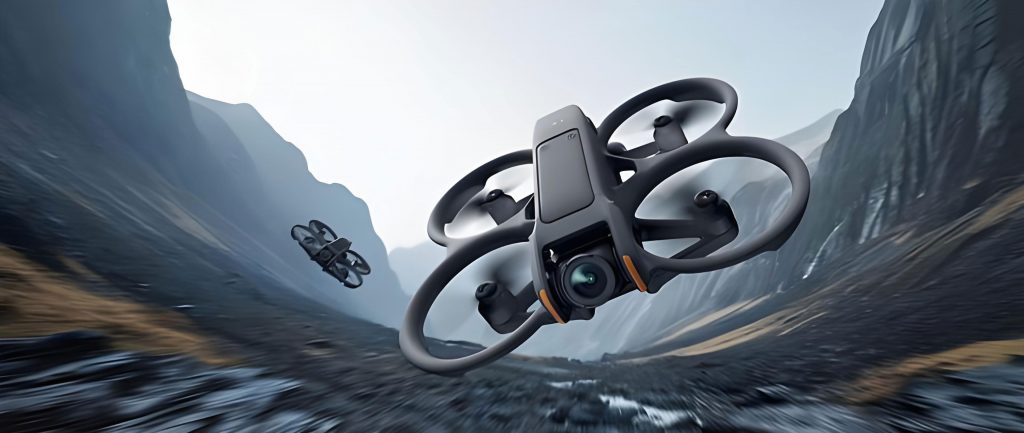
Environmental law enforcement benefits significantly from the deployment of FPV drones, especially in complex industrial settings. In many cases, inspectors face challenges in accessing potentially hazardous areas, such as confined spaces or elevated structures where pollutants may be emitted. The China FPV drone enables close-range inspection without endangering personnel. For example, during a compliance check at a manufacturing plant, I used an FPV drone to fly through narrow passages and capture real-time video of emission sources. This provided concrete evidence for regulatory actions. Additionally, the drone’s speed makes it effective for monitoring mobile pollution sources, like vehicles on highways. By tracking these sources dynamically, the FPV drone helps in collecting emission data while minimizing disruption to traffic. The first person view capability ensures that operators can maintain visual contact with targets, even in fast-moving scenarios, thereby improving the precision and efficiency of enforcement activities.
In environmental disaster response, the China FPV drone excels by accessing perilous zones that are unreachable by humans or larger drones. Consider a chemical spill incident: the core area may be contaminated with toxic substances, posing severe risks to responders. Using an FPV drone, I can conduct reconnaissance from a safe distance, transmitting live footage of the spill’s extent and identifying hotspots. The drone’s agility allows it to weave through damaged structures or dense smoke, providing critical data for emergency planning. Furthermore, with advancements in payload capacity, multiple FPV drones can协同 perform tasks like air sampling and real-time monitoring. This multi-drone approach enhances situational awareness and reduces exposure risks. The first person view system ensures that operators have a immersive view of the disaster site, enabling quick decision-making. In such high-stakes environments, the FPV drone’s role in saving lives and mitigating environmental damage cannot be overstated.
Protected natural areas, such as forests and reserves, often present logistical challenges for routine monitoring due to their rugged terrain and dense vegetation. The China FPV drone is ideally suited for these environments because of its ability to navigate through tight spaces, like forest canopies. During my work in conservation, I have employed FPV drones to conduct aerial surveys of wildlife habitats and detect illegal activities like logging. The first person view allows for detailed observations without disturbing the ecosystem. For instance, by integrating mobile data modules, the drone can stream live footage to remote stations, enabling real-time analysis. This reduces the physical strain on rangers and increases the frequency of patrols. The following table highlights the effectiveness of FPV drones in various ecological applications:
| Application Area | Key Benefits of FPV Drone | Example Use Case |
|---|---|---|
| Environmental Impact Assessment | Rapid data collection over large areas; enhanced spatial accuracy | 3D modeling of construction sites |
| Law Enforcement | Close-range inspection; real-time evidence gathering | Monitoring industrial emissions |
| Disaster Response | Access to hazardous zones; multi-drone coordination | Chemical spill assessment |
| Natural Reserve Monitoring | Navigation in dense environments; reduced human intrusion | Wildlife habitat surveillance |
The future prospects of China FPV drones in ecological protection are promising, driven by technological innovations such as augmented reality (AR) and virtual reality (VR). As these technologies merge with first person view systems, operators can overlay virtual data onto live feeds, creating an enriched decision-making environment. For example, in monitoring air quality, an AR interface could display pollutant concentrations directly on the video stream, allowing for immediate analysis. Moreover, artificial intelligence (AI) integration will enable FPV drones to autonomously respond to environmental triggers. Imagine a scenario where a drone detects a sudden change in water turbidity; it could automatically navigate to the source and record footage for further investigation. This level of automation, powered by AI algorithms, will significantly boost the efficiency of environmental monitoring networks. The continuous improvement in battery life and sensor technology will further expand the capabilities of FPV drones, making them a cornerstone of smart ecological management.
From a technical standpoint, the performance of FPV drones can be modeled using mathematical formulas. For instance, the flight time \( T \) of a drone is influenced by battery capacity \( B \) and power consumption \( P \), given by the equation: $$ T = \frac{B}{P} $$ where \( B \) is measured in watt-hours (Wh) and \( P \) in watts (W). In practical terms, optimizing this ratio allows for longer missions in environmental surveys. Additionally, the coverage area \( A \) of a drone during a survey can be estimated based on flight speed \( v \) and sensor width \( w \), using: $$ A = v \times w \times t $$ where \( t \) is the total flight time. These formulas help in planning efficient operations with China FPV drones, ensuring maximum data acquisition within limited resources. The integration of such calculations into flight planning software enhances the precision of ecological assessments.
In conclusion, the adoption of China FPV drones in ecological environment protection represents a significant advancement in environmental stewardship. The first person view technology not only improves data quality and operational safety but also opens new avenues for innovative applications. As I reflect on my experiences, it is clear that FPV drones are more than just tools; they are enablers of a proactive and data-driven approach to conservation. By continuing to invest in research and development, we can unlock even greater potentials, such as swarm robotics for large-scale monitoring or AI-driven predictive analytics. The journey toward sustainable ecological management is challenging, but with the relentless evolution of FPV drone technology, we are better equipped to face these challenges head-on. Let us embrace this new era of environmental protection, where technology and nature harmoniously coexist for the benefit of future generations.